mxx1's avatar

Offshore Westerly

While we’re on the subject of Kierkegaard, he also said:

Life is not a problem to be solved, but a reality to be experienced.”

This is great advice for some people, some of the time.

However I would reconstitute it into a more general averment, one that recognizes the power of reflection.

Life is nothing if not a problem to experience and a reality to be solved.

image

mxx1's avatar

Kierkegaard

“Life can only be understood backwards; but it must be lived forwards.”

Although I agree in the main with Kierkegaard’s sentiment, I prefer to rephrase it thus:

Life must be lived in the ‘now’; but with forbearance earned from understanding the past, that of your own and that of others.

image

mxx1's avatar

False and Misleading Advertising

Recently Philip Morris challenged Australia’s tobacco plain packaging legislation citing a 1993 agreement between the governments of Australia and Hong Kong for the promotion and protection of investments.

Philip Morris Asia argued that Australia’s tobacco plain packaging measure constituted an expropriation of its Australian investments in breach of Article 6 of the agreement.

It further argued that Australia’s tobacco plain packaging measure was in breach of its commitment under Article 2(2) of the agreement to accord fair and equitable treatment to Philip Morris Asian investments.

It also asserted that plain packaging constituted an unreasonable and discriminatory measure and that Philip Morris Asian investments had been deprived of full protection and security in breach of the agreement.

Me thinks Philip Morris should have taken a different route.

They could have argued false and misleading advertising on two counts by the Australian government, thus breaching their own legislation on the subject:

1. Firstly, there’s nothing ‘plain’ about the packaging, and

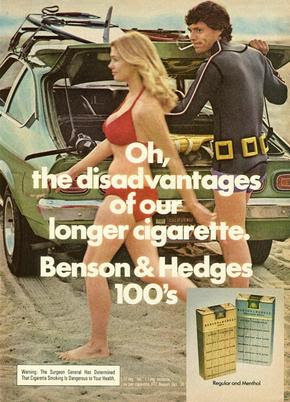
2. Secondly, the government’s claims of health issues relating to cigarettes are grossly overstated. For example, compare the two images below; you’d have a better chance of picking up the chick than you would of getting the gangrene.

image

image

mxx1's avatar

Dots

One benefit of age is the knowing that no matter what pain you’re feeling, time will cure it better than any plan or even any unplanned course of action.

There’s the knowing this is true, in your bones, which is very different from being told it’s true.

Dots, we can join them up, us humans.

But some dots can only be joined through hard earned experience.

Somewhere in there is a definition of wisdom.

image

mxx1's avatar

Confirmation Bias

Rule of thumb; take a single data point and use it to confirm whatever prejudices you are nurturing.

If for some reason you get a data point that doesn’t fit then use that as confirmation bias that your confirmation bias is right at all other times.

After all, rules are defined by their exceptions.

image

mxx1's avatar

FFS

School Application Form Question: As a parent(s) what is the most important thing you want for your child for his/her High School experience?

My answer: Father’s view – I would prefer my daughter to have a challenging but happy time at High School. Values that are important to me are: cultural diversity, free thinking, rational thinking, high quality writing, social empathy and alternative views to the current focus in our society of materialism and nanny state protectionism. I do note of course that my personal views may not be now, or in the future, shared by my daughter.

image

mxx1's avatar

Crisis what crisis?

The closer that a society comes to crisis, the more aggressively it seeks out those that not only speak the truth, but that also have genuine solutions to the crisis.

War is an obvious example.

In a documentary that I watched the other day, during WW2 Hitler repeatedly turned to Ferdinand Porsche for engineering solutions because Porsche was a genius that could create amazingly unexpected solutions.

It says something about Hitler too; he could obviously recognise and promote rare talent.

Hitler wanted a tank that was 10x bigger than any other and to achieve this Porsche invented the diesel-hybrid-electric drive to save the weight of the gearbox (weight being an issue in the bogging of the big heavy tank). This revolutionary drive train wasn’t re-used until the 90’s when Toyota introduced the Prius.

I think I’m going to have to find a good book on the subject of Ferdinand.

To book-end the opening remark, if there is no crisis then there is no need for those that carry the truth, nor those that have the less-than-obvious solutions.

Australia in 2015; it would appear that we are in crisis, if you care to listen to the media. Terror, Economic Collapse and Climate Change; the sky is falling in.

But it isn’t really.

Unfortunately our politicians have learned to peddle crisis chatter in order to help them get re-elected. Our media is short of content in their 24/7 reporting cycles so they mega-phone this trash-talk.

The only thing that prevents us from being fully dilated by all these crises is the needs of the local services business sector. This non-voting lobby group that represents about 70% of our GDP wants consumer confidence promoted and crises silenced, so that revenues and profits keep growing.

The truth is that there is no crisis:

1. Climate change – we are well placed to weather the storm  in Australia. We’re a big country with very few people and, in any case, the rest of the world will deal with this issue for us.

2. Terror – we know it’s not a real problem because if it was we wouldn’t hear about it. The best way to promote terror is to incessantly report on it.

3. Economy collapse – apparently we are just about buggered. Resources are down and we are out of export opportunities so we need to ‘innovate’ before we become the next Sudan. Yeah if you believe that the you may as well believe in Santa Claus. The truth is that we have enough land and resources to sell off (to whichever the next developing economy is) such that we will be luxuriating in consumer gadgets for the next few centuries

If there is a crisis in this country it is a moral one. But to accept this you would have to agree that greed and stupidity represent a moral crisis. And if you are greedy and stupid you would be very unlikely to accept that you are greedy and stupid. Unless you were loopy, in which case you would be shunned. And if you weren’t greedy and stupid you would be labelled as loopy and shunned anyway.

If a crisis does head our way it’s going to be damned interesting watching a nation of greedy and stupid people adapting to it. My guess is that it wouldn’t be pretty.

fafdbb85-768a-4a50-9d06-d10613289d51-original


mxx1's avatar

Entrepreneur

A quick precis of a key point that I made in a conversation yesterday:

“The true art of an entrepreneur is not only having great ideas but ignoring them and only exploiting the great ideas of others”

Odd isn’t it?

An entrepreneur is by his very nature is an ‘ideas man’ (pardon the gender specific nature of this sentence, but that’s a reference to The Castle).

And yet, the successful entrepreneur has learnt the discipline of ignoring her own ideas and sponging good ones off others (see, I am good at the gender balancing).

It’s all about managing risk – the risk of not being able to effectively argue with yourself while assessing your own ideas.

In fact, minimising risk is one of the primary skills of an entrepreneur. It’s just as important as the ability to take a risk.

I have in my time met successful pseudo-entrepreneurs that have had one good idea, gone for it, and made it work.

I can assure you, they could never do it again. And some of them are even smart enough to know this; not many of them though.

image

mxx1's avatar

Bring Back Tony

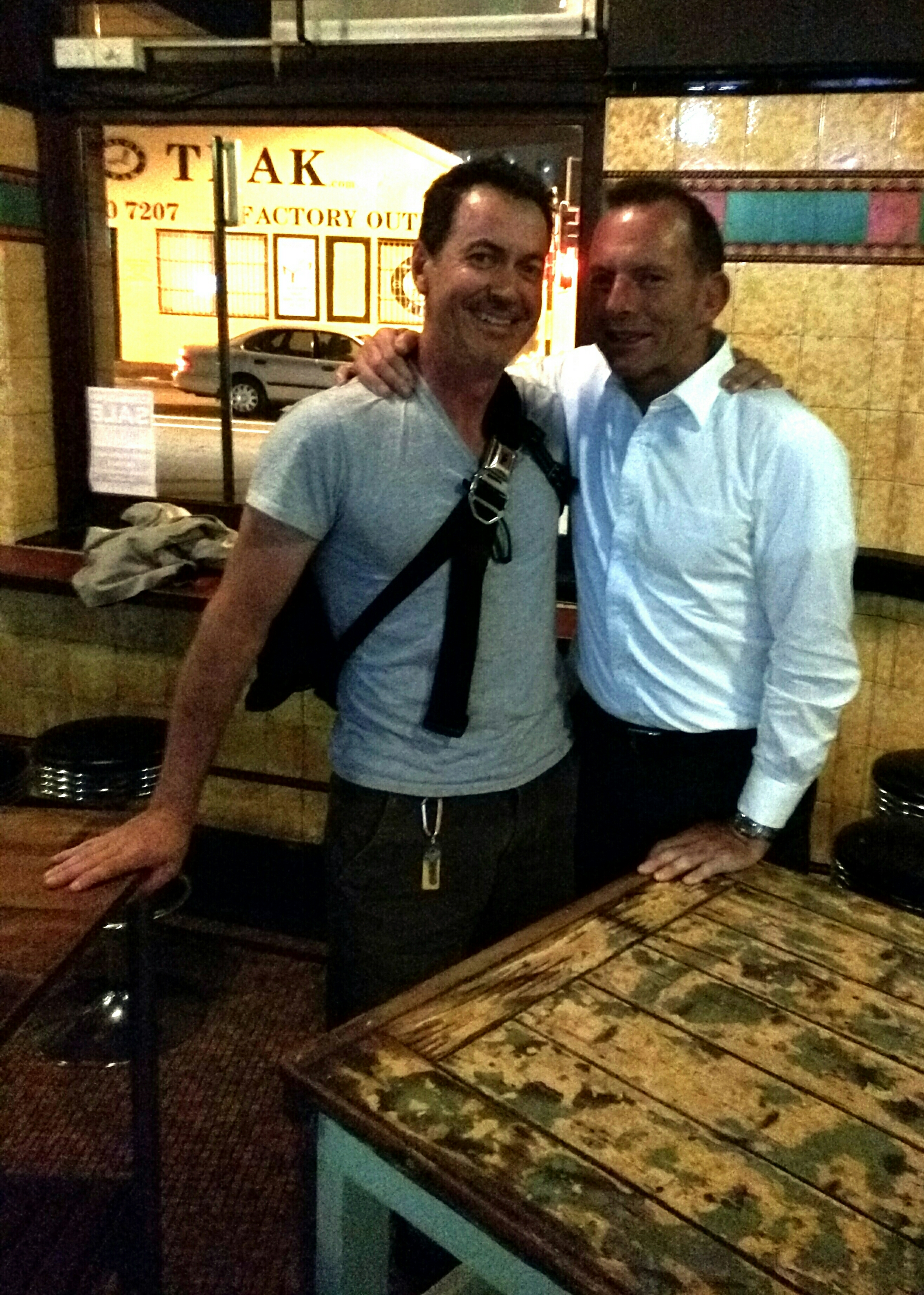
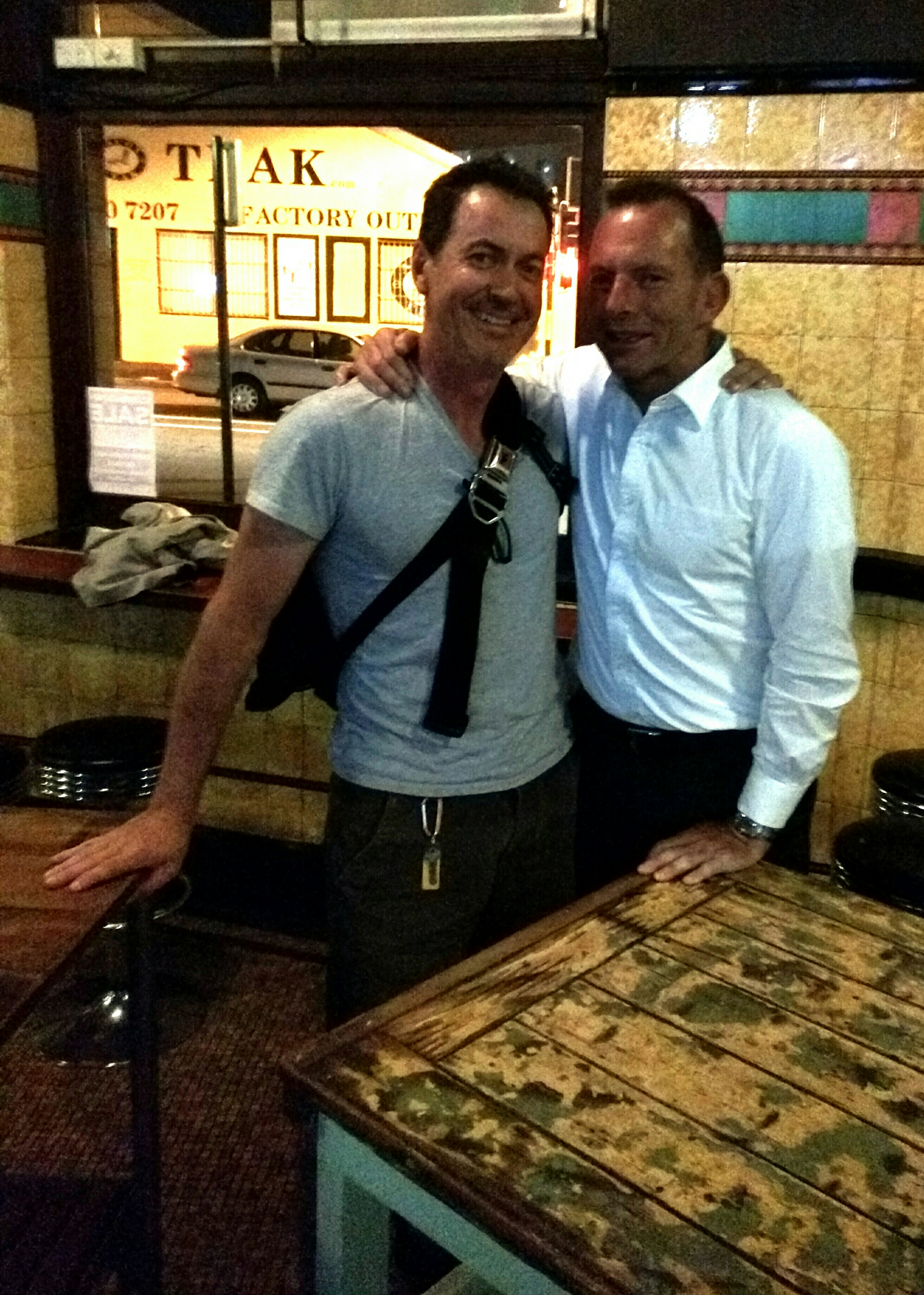
Whilst having a beer with Tony I told him that I was a fan and that he should make a comeback.

I was being truthful.

Apart from being very entertaining, Tony was a train wreck for consumer confidence upon which our services-led economy feeds.

This meant depressed consumption, less greenhouse gas emissions, less foreign debt, and downward pressure on the Australian dollar, which is good for me since I run an export business.

If the economy was depressed for long enough, in sheer desperation some others might actually start figuring out how to develop and export high tech products and services.

So you see, if you could look past the embarrassment factor, Tony was good for us.

Malcolm the Second, on the other hand, has learned from his prior failures in politics that his is a role in which he cannot depart from the script.

He will appease the business sector and the proletariat by measuring every action by its impact on promoting consumer confidence.

And there will be absolutely no serious effort to create real change of any sort in the economy except to increase the GST so that government can do even more inefficiently that which shouldn’t be done at all.

image

mxx1's avatar

Versatility

A group of hippopotamuses or hippopotami or hippos (they are all correct) is called a pod, a herd, a dale, or a bloat, although they answer to none of these.

When Lola was very little, while watching some animal show, she asked me what a hippo critter was, wondering if the 2 tonne charging beast on the LCD was indeed such a thing.

I had to explain that a lot of words in English that sound similar are in fact unrelated and that the word hypocrite derives from ancient Greek word for acting, not a over-sized swimming horse.

The hippo’s closest living relative is the whale, which explains the ‘pod’.

The ‘herd’ makes sense since they are sort of horse like and hang around in bunches.

And ‘bloat’ is self explanatory.

It’s the ‘dale’ that confuses me. I must recuse myself to my own explanation and assume that these collective nouns were fabricated by a bunch of Victorian hypocrites.

image

mxx1's avatar

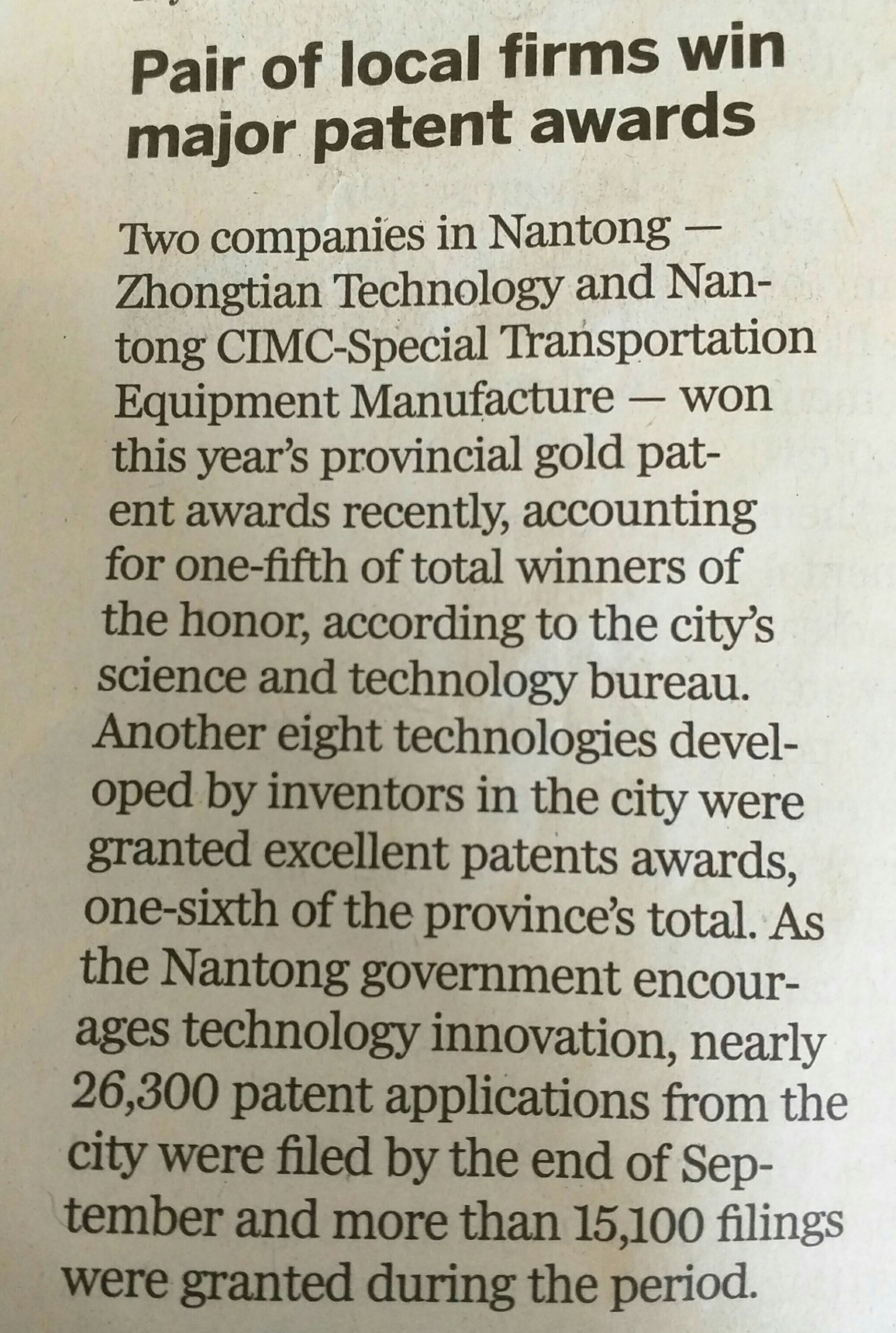
Nantong leads the way

Now there’s an idea; IP Australia, in a bid to sexy itself up and get a bit of mainstream attention, could launch the Australian Patent Academy Awards.

It’s not like the awards need to be based on any form of logic; hardly any of the others are, e.g. the Eurekas or the PM’s various awards.

Which is a good thing since the only award that matters for patents is the value in dollars of the monopoly granted, or the proceeds from enforcement. Of which neither IP Australia or Nantong city has any inkling.

And you’d have to admit, we are a bit skinny on awards in Australia. There should be one major award per head of population per year I reckon.

image

mxx1's avatar

Brand?

This is the first watch I’m building with my new watch company. Designed it myself using Gimp, which is the open source version of Photoshop. Now all I have to do is turn that into 3D CAD using the new app which we’ve only just started.

newdesign10

mxx1's avatar

Hook, line and sinker

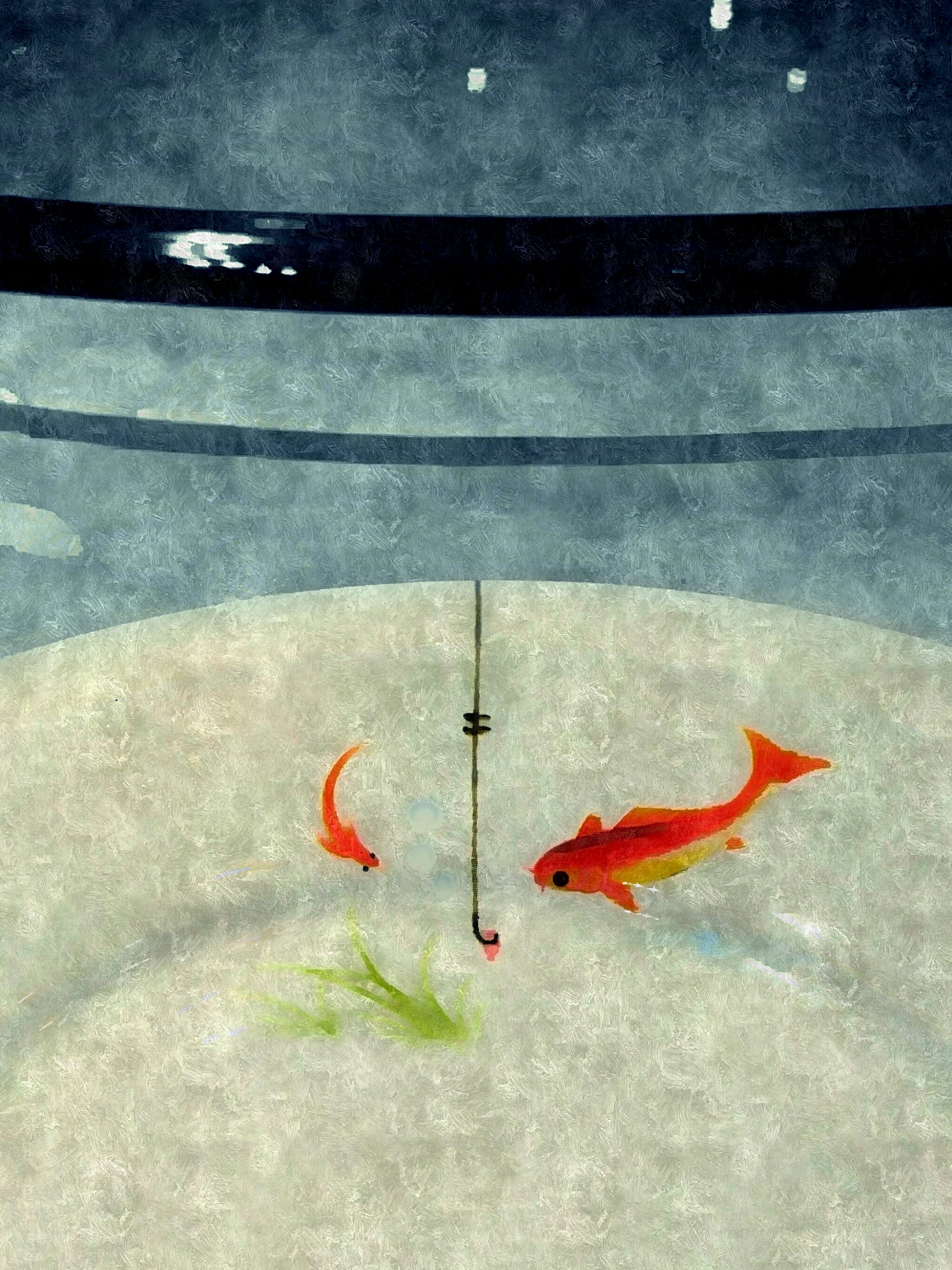
Two goldfish, one fishing line and tackle, a glazing of river weed, three bubbles, a plate and one Lazy Susan, known as a rotary pan (direct translation) in China.

Previously I had been lied to under the influence of rice spirits and led to believe that there is no Chinese name for such a rotating contraption.

Now why would the local communist party secretary in province 2542799 commute such a fabrication?

image

mxx1's avatar

Humanity

Tell me, is it harder to express humanity towards strangers or towards friends?

Hang on, with friend it’s empathy and with strangers it’s humanity.

There’s a clue there I think; humanity in the broader sense may be the sum of all empathy.

Or at the individual level it could be empathy, projected onto strangers.

My guess is that those who are naturally empathetic are more likely to naturally express humanity, compared to those that express a forced form of humanity but that are less likely to be genuinely empathetic to friends.

A guess; humanity can’t exist without humility. And humanity is a cousin of empathy which must also need some form of humility.

image

mxx1's avatar

Jackpot

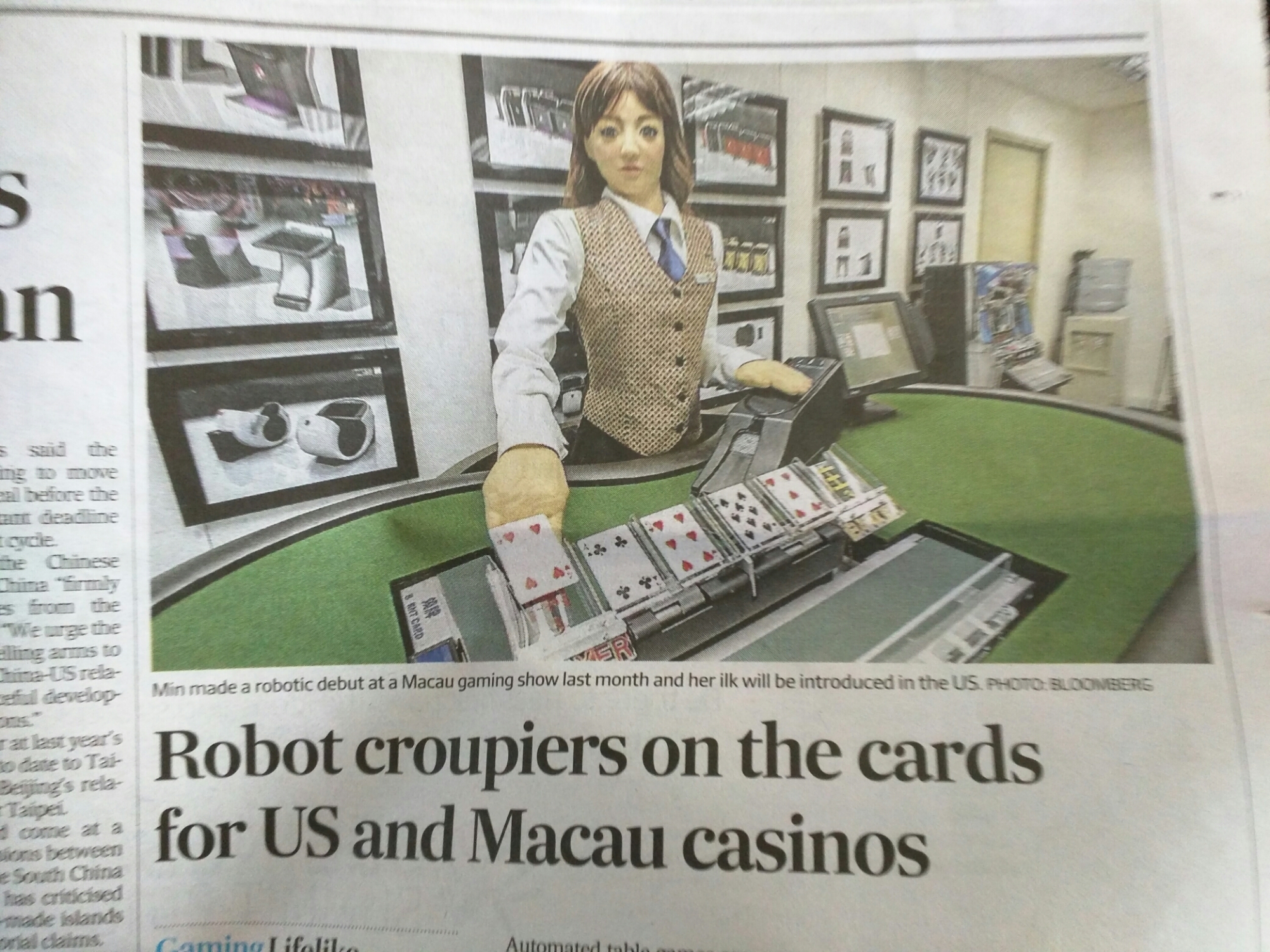
And just to prove that gambling is an addiction that can’t be controlled by any form of logic, casinos, in an effort to lower costs, are introducing robotic croupiers.

I for one would have liked to see a rotating head and an open mouth on the robot, porn doll style, so customers could pop in the odd ping pong ball for a special jackpot.

image

mxx1's avatar

Innovation

I’ve been struggling for sometime to come up with a good definition of innovation.

Why does it matter? Only because the word innovation is being thrown about by all sorts of people just at the minute and very few of them have any clear idea as to what they mean upon the utterance.

Vaguely, they will mumble, it implies something new-ish and that is also of value to someone, or someones.

More definitely they will say that promoting it will lead to good economic outcomes by means that are somewhat mysterious.

And most assuredly the promotion of it necessarily implies a government grant or tax cut, a government paid job, or similar. Without such a blood sacrifice the spirits of innovation can’t be bribed into working their magic.

So I have decided, after much review, that innovation can be defined thus:

Any government funded activity that aims to create positive economic outcomes but rarely does, and that can be publicised as being an activity (n.b. not an outcome) that is either new-ish or mostly forgotten.

image

mxx1's avatar

Wongfully Penitent

It’s hard to know where to start with this one.

But you’d have to agree that zero is less than thirty and therefore logically included in the ‘up to 30’. And you’d have to be mad to apologise for not stabbing your local neurosurgeon.

Unless he did a shit job; then it’s on him.

image

mxx1's avatar

Me and KP

KP, surprisingly I’m with you on this one – see story below. It’s happened to me once and I couldn’t get in to collect my free newspaper.

However, the ‘no thongs’ rule in the Qantas lounge is designed to keep as many of the bogans out as possible. They simply drink too much of the free grog and they aren’t wanted in this particular buffet.

Essentially our society has five strata defined by their preferred airline;

1. Qantas – the deluded conservatives
2. Virgin – the noveau riche
3. Jetstar – your bog standard bogans
4. Tiger – ultra-bogans, the unemployed and the mentally unstable
5. Rex – that odd collective of rural dwellers, clearly also suffering mental issues, that haven’t migrated to the suburbs yet

Qantas filters out the undesirables in the other four categories by high pricing, their ambience (which makes bogans oddly uncomfortable), condescending geriatric staff, unbearable muzak, and the no-thongs rule. It’s all they’ve got.

image

mxx1's avatar

buddha.com

The office of Buddha is closed for an IT overhaul.

The database is being wiped and allowed to reincarnate as whatever the fuck it wants, possibly as an ad server for Redtube.

Buddha himself has retreated to the dunny with a Readers Digest which has an interesting lead story on miracles that stunned doctors.

The marketing team is holed up in an off-site in Ubud considering the merits of a definitive tome.

The finance team are in California brokering a micro payment deal with PayPal.

And the strategy team has been sent to Sweden to negotiate options for a proposed co-branding campaign with Ikea.

Taking advantage of the absence of whiny Western Buddhists, solar panels are being installed on the roof of the Indian HQ in what looks like a haphazard pattern but which has been carefully arranged to prevent further leaks.

The grand plan is to relaunch after the Paris Accord with carbon credits guaranteed for certified practising adherents.

An app is being developed, Reincarbonate, so followers can track their progress up the food chain and into the next life.

And a plan for a new carbonated coconut water drink with the same name, sourced from the low hanging islands of Tuvalu, is being hatched under a licence deal with Pepsi.

An IPO is planned for 2020 with the capital raised to be used to mop up a few other minor religions in an attempt to solidify fourth place in global market share.

The ultimate strategy is to attract the faithful of the fastest growing category of pseudo-religious faiths, materialism, before the three market-leading incumbents wake up to the flaws in their old-school legacy products and their total lack of R&D budgets.

IMG_0860

mxx1's avatar

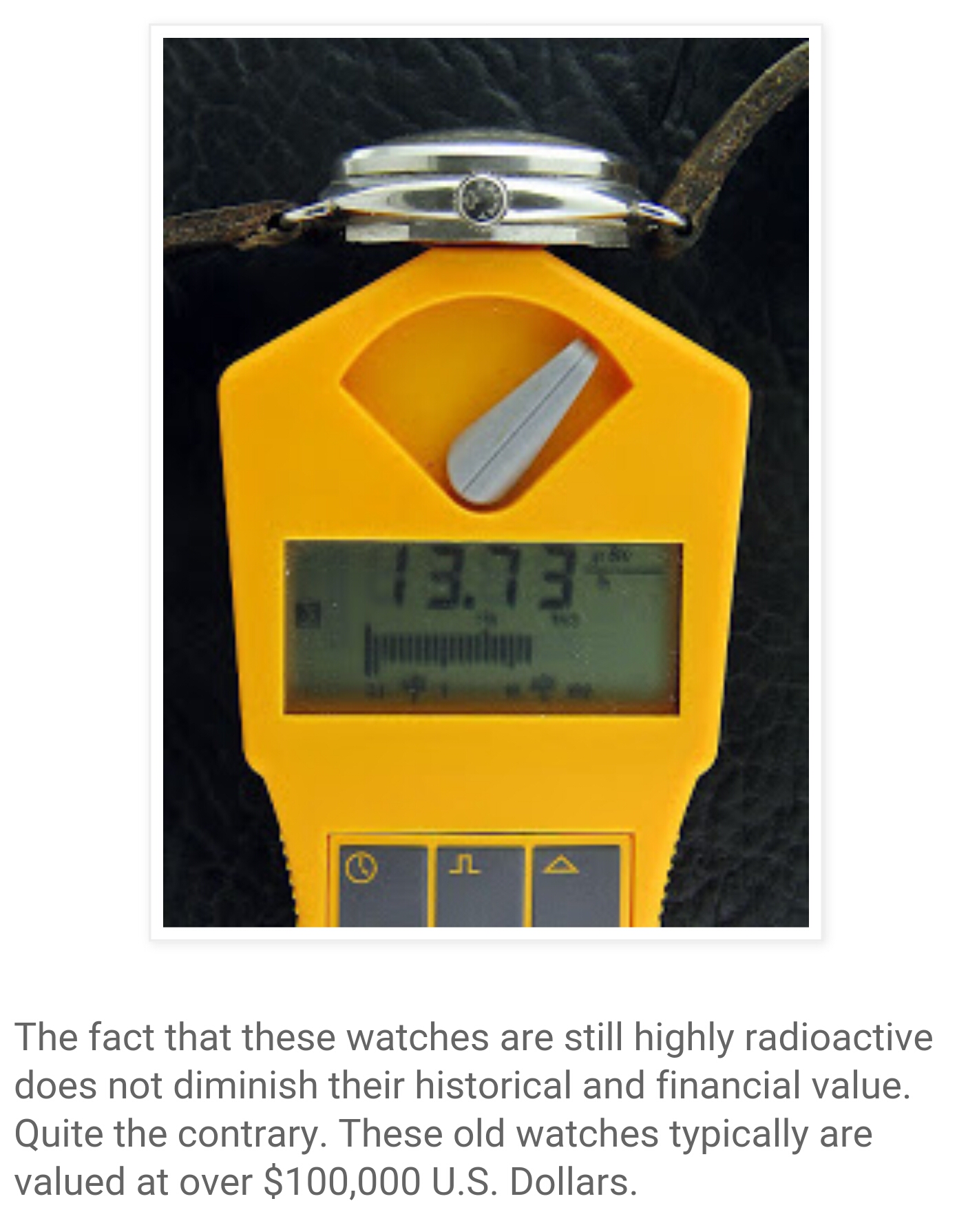
Panerai

This appeals to me for reasons I cannot fully explain.

Panerai are an old brand of upmarket Italian slash Swiss watches that are avidly collected by wealthy business folk.

You can buy new ones, and many do, but it’s the old ones that aficionados really lust after.

The founder of Panerai knew Marie Curie and shortly after she discovered radium he figured out how to mix it with copper-doped zinc sulfide to make a glow-in-the-dark watch.

Which just happened to kill everyone involved in making the watches and everyone that wore them.

The old Panerai watches don’t glow anymore because the zinc sulphide crystal structure has been degraded by all that radium which is still emitting it’s radiation and will do so for the next few aeons.

But the best bit is this …

image

mxx1's avatar

New Word for the Day

There is nothing so useless as doing now that which should not be done at all.

We need a new word; evadericate – to speak or act in an evasive way for bloody good reasons.

Prevaricate without the pejorative.

image

mxx1's avatar

City of Villages

In the 1990’s we were the ‘smart’ country.

Then in the 2000’s it was the ‘knowledge’ nation.

Now we’re the ‘innovation’ nation

The truth is that since the 90’s high tech exports shrank and shrank, down to just over 1% of our exports.

That’s not too smart.

Google’s taken care of knowledge.

And just about the only thing innovative about Australia is the government marketing that attempts to create the impression that the opposite is true.

It reminds me of the City of Sydney signs plastered with the logo ‘City of Villages’.

Clearly untrue, no one seems particularly perturbed that this unachievable aspirational goal is promoted as a reality.

The only conclusion that I can draw is that Australians are so used to fabrications that don’t matter that the fabrications simply don’t matter.

Which begs the question, why does anyone bother with them at all?

The answer is that all this people in the marketing sector that are efficiently beavering away at that which should not be done at all aren’t particularly smart or innovative.

Hence they must just look to, say, Germany for their next nation-building branding exercise.

It probably takes them 5 minutes on Google to come up with their next decade long theme.

At least they got the knowledge bit right.

image

mxx1's avatar

Extensions Needed Urgently

Alan Jones tells Tony Abbott that he has been subject to “vilification from the media class and pretty feral opposition in the Senate.”

I would like to point out that the Federal Anti-Vilification Act makes it “unlawful for a person to do an act, otherwise than in private, if the act is reasonably likely, in all the circumstances, to offend, insult, humiliate or intimidate another person or a group of people; and the act is done because of the race, colour or national or ethnic origin of the other person, or of some or all of the people in the group.”

I reckon Tony and Alan ought to start a movement to get this extended to acts done because of the stupidity, forgetfulness, egocentric nature, meanness or lack of irony of some or all of the people in the group.

Then they’d have a legal case to chase. Otherwise it’s just a case of calling a spade a fucking idiot.

1449790286142

mxx1's avatar

Royal Society for the Prevention of Cruelty to Submariners

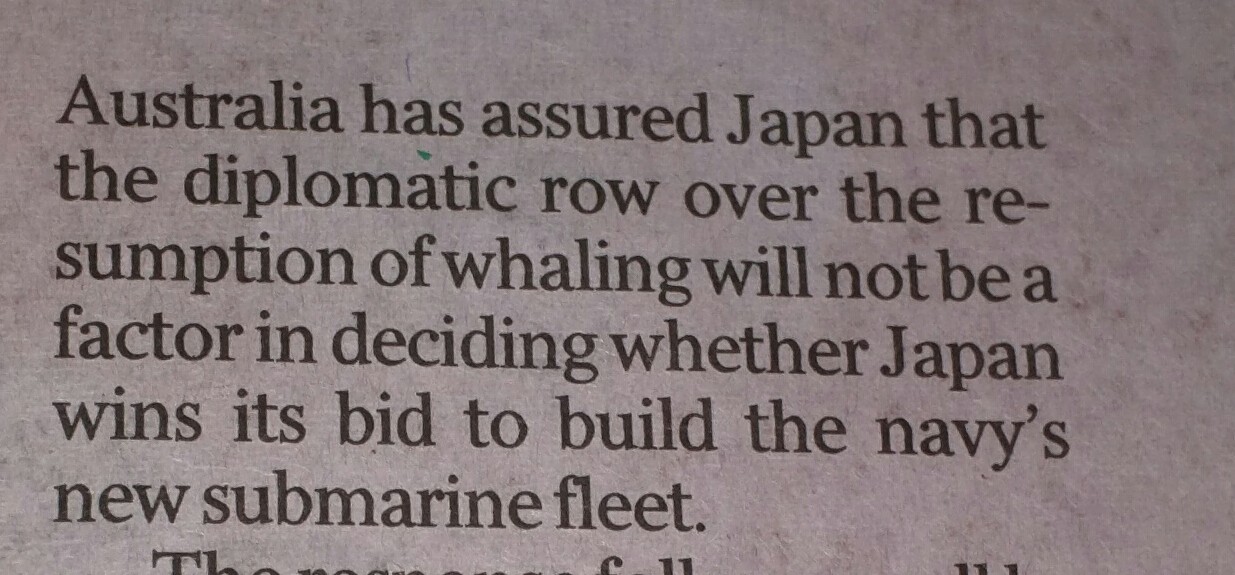
Herman Melville was onto something. If they can train cockroaches to carry little go-pros and surreptitiously enter hostage situations why not train whales to carry comms systems and the odd inter-continental ballistic missile?

image

mxx1's avatar

Time Warp

Sandy Hook, Dec 14 2012.

Since that atrocity more than 90,000 Americans have been shot and killed with guns; more than 210,000 have been shot and injured; and there have been more than 1000 mass shootings where four or more people have been shot at one time.

There’s something very, very weird about the US. They seriously need some bullet control but have got totally sidetracked by the gun control debate.

It’s like they are a whole nation of Gen Y’s stepping to the right when they should be considering a pelvic thrust with their knees in tight.

image

mxx1's avatar

Services Sector

Today a mystery was solved, courtesy of an economist who has given me the clues I have been seeking.

He said that the floating of the Australian dollar in the 1980’s has allowed our economy to buffer itself against changes and hence remain stable and in growth for almost three decades.

His actual words were that “the free floating dollar is our shock absorber”.

But it has also meant that our exports are mostly limited to resources, agriculture and just two segments of the services sector, education and tourism.

In education and tourism we import people and provide services to them while they are in the country.

There are no strong exports of services themselves and now I know why.

Our currency fluctuates wildly and this discourages people from exporting services because there is too much risk on cash flow when one is selling into a foreign currency but the costs are in local currency.

So services companies are actively encouraged to focus only on the domestic market where costs and revenues are in the same currency.

Added to this encouragement is the stable nature of the local market, itself a product of the currency’s free floating habits.

It’s a double whammy that works against our services sector expanding into exports other than where we are servicing foreigners buying their services in Australian dollars.

Given that the services sector is now 68% of our GDP I see a problem ahead if resources and agriculture remain depressed.

We possibly need to find another way to import people and get them to use local services while they are here. Gaols maybe? The Chinese buying real estate is another.

Or we need to find service sector exports that don’t require local labour and have costs in other currencies. One example is the disintermediating internet businesses like Uber and AirBnB. But to develop these we also need risk capital, and lots of it; we don’t have it.

Otherwise we must rely on the four current export sectors and live with any currency-led depression of our individual and collective purchasing power. It’s not such a bad option when I think about it properly.

image

mxx1's avatar

Invention of the Day

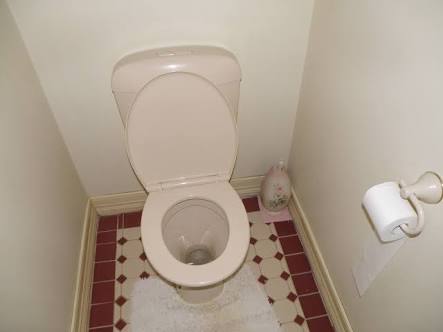
An automated toilet where certain functions (open and closing the seat, flushing, etc.) can be programmed (on an app on your phone) to automatically occur when you make a certain noise (e.g. whistle, click of the fingers, etc).

image

mxx1's avatar

Conspiracy Code

From a software engineer to me: “Interested readers might be interested in reading about the effects of George Selden’s patent on the car, Samuel Colt’s patent on the revolver, and the Wright brothers aviation patents.”

That’s a lot concatenated interests pointed at an ancient singularity.

Many software types often hate patents. It’s a required trait for membership of their club.

I suspect this has evolved from emotional issues related to their inherent introversion and consequent childhood experiences of exclusion, which had led to a disliking of any authority that constrains their keyboard tapping constructions.

They then support their patent hating position with cherry picked data, revealing their lack of training in any discipline of logical reasoning. Or in any form of constructing a non binary sentence.

But hey, at least in these characteristics they are with the majority in this post enlightenment era that we live in.

image

mxx1's avatar

Quote of my day

The fashion designer Tom Ford once said; “The right thing, at the wrong time is still the wrong thing.”

Man’s a genius; said the right thing for any time.

Having said that I once had a pair of Tom Ford sunnies that I lost a week after (the expensive) purchase.

That’s a case of the right thing lost at the wrong time being a very wrong thing.

image

mxx1's avatar

Tiger Air

Tiger Air has an interesting market development plan.

They seem to have decided to shrink their SAM (serviceable available market) by pissing off customers so much that they, the customers, vow never to return.

The cunning aspect of this plan is that by the time they are done the only passengers that will even want to fly with them will be those that for some inexplicable reason don’t mind the shoddiness of their service.

In this category are:

  1. People that get to the airport a day before flying just so they can’t possibly miss their flight
  2. People that are travelling for no fixed reason and hence don’t mind if they get to their destination a day late
  3. Gen Y’s who don’t find it odd that a service provider doesn’t provide any service, and
  4. Gen Y’s who find the vague statements of other Gen Y’s that work for an airline sort of comforting. Or to put this in another way, Gen Y’s that find logically decipherable answers somewhat threatening to their dissonance.
  5. People that aren’t smart enough to figure out that a cheap ticket is only cheap if they don’t have to buy another one when the first one becomes useless for some reason or another.

Given that the residual customers will need to satisfy all five of these conditions I predict that Tiger will end up with about, oooo, 1% of the domestic air travel market.

But that 1%, they’ll be worth having. The big data on these easily-deluded fuckwits could be re-sold at great profit to every retailer in the country for big bikkies.

Which is to say, Tiger Air is just a loss-leader for identifying the most gullible consumers in the country. And that is GENIUS!

tigerair-australia.jpg


mxx1's avatar

Innovation Statement

And to add to the commentary, our gubment has just released their ‘innovation’ statement.

It’s another example of the wrong starting point.

Trying to create innovation is very easy but attempting to boost high tech exports from their current 1.5% of all exports is bloody hard and they have ‘wisely’ ignored the subject in their report.

To be clear, just about anything can be labeled as innovation, e.g. changing the font on Telstra’s logo, hiring a new Chief Scientist or releasing a report on innovation.

In any case here’s the major initiatives in the innovation statement:

1. Give more money to CSIRO! Eek, CSIRO should be wound up and given to the universities. No matter where you’re going you wouldn’t start from where CSIRO is today.

2. Helping startups by softening ‘trading insolvent’ rules (which are ignored anyway) and letting crowd funding get up – a bad idea because everyone will lose money and there will be a big backlash.

3. Some more cash for science research in universities which is not needed in this IT century.

4. Changes to university grant funding processes which will actually hurt universities and their export earnings. Basically the government has failed to recognise that universities and businesses don’t interact because Australian business are mostly in the services sector and use off-the-shelf technology platforms from foreign vendors. The universities are their OWN business and they are our third largest exporter; the grant schemes need to be designed to get them up the global uni rankings so they can charge their foreign students even more.

5. A marketing budget for STEM education that ignores the fact that we already training about 5x too many SEM graduates and not enough T graduates.

6. An entrepreneur’s incoming visa scheme to help boost the taxi driver ranks.

7. A cyber security growth centre designed to hand over our private data to commercial entities.

8. Landing pads for Australian startups in foreign places like Silicon Valley and Tel Aviv. This is white collar welfare for the operators. And who in their right mind would take a start up to Israel?

9. Tax offsets and relief from capital gains tax for investments in start ups. This is guaranteed to bring the white shoe brigade back into the scene to ensure the whole thing goes belly up in a few years when the rorts are outed by the ATO.

image

mxx1's avatar

Watt Report

I just had a quick review of the Watt review on Australian university research funding – http://www.education.gov.au/boosting-commercial-returns-research

My opinion is that the whole thing is based on a false premise…

1. Observation: low levels of engagement between universities and Australian business with respect to research outcomes

2. The assumed cause, which is incorrect, is that universities aren’t incentivised through the research grant system and hence don’t properly engage with business

3. The proposed actions that will make no difference: fiddle with the grant schemes yet again

The reason that universities aren’t engaged much with Australian business is that 70% of our GDP is in the services sector and most of the companies in the services sector are users of off-the-shelf technology platforms serving the local market and not developers of technology platforms for export sales.

I see no upside in the fiddling with the grant schemes for universities if business (note I say business and not industry, which is a misnomer) has no interest.

Having said that, I would note that university education is our third largest export (sad that).

Since the business sector lacks interest in research outcomes I would focus the grant process on helping universities get up the university rankings in order to help the value of those educational exports. This is the only way that fiddling with university grants could help our exports.

So sad to say, I think the report is extremely misguided.

image

mxx1's avatar

Little Ned

Tannoy on the train …”You could be fined for putting your feet on the seats”

Little boy, “Mum, what does ‘fined’ mean?”

Unintelligible mumble from mum.

Little boy, “I’m going to do it”

And he did.

Little boy, “Mum, nothing happened!”

Right there, State Rail has lost the moral imperative with yet another customer and a rebel is born. There is hope yet.

image

mxx1's avatar

The IT Century

Paraphrasing a recent chat with some university senior manager types:

I said to them that if their university really wanted to rise up the rankings then my suggestion is that all their research becomes IT focused.

I picked chemistry by way of example.

There’s a global chemical industry and supply chain. And then there is chemistry departments in universities training chemists and also doing research in the discipline of chemistry.

I proposed that all the chemistry research at the university change to the development of IT technologies for use in the chemical sector and that there be no research in the discipline of chemistry itself because it has a much lower IRR and the benefits to society and industry are really quite incremental compared to the benefits of applying new IT technologies to the chemical sector.

This shift to IT focused research could occur right across the university and within no time the university would be the most relevant university within thousands of miles.

This suggestion is based on the fact that we are in the IT century. The relevance and return on non-IT research is much much lower.

This transition had already occurred in the venture capital sector where 99% of current investment is in IT. Real tech accounts for 1% (for example, where the product contains hardware device but usually using off the shelf technology), and there are virtually no science based start-ups being funded anywhere.

PS the photo below has zero relevance to this thesis but even so it’s far more useful than, say, Australian university research into the free radical kinetics of emulsion polymerisation.

image

mxx1's avatar

Cone of Silence

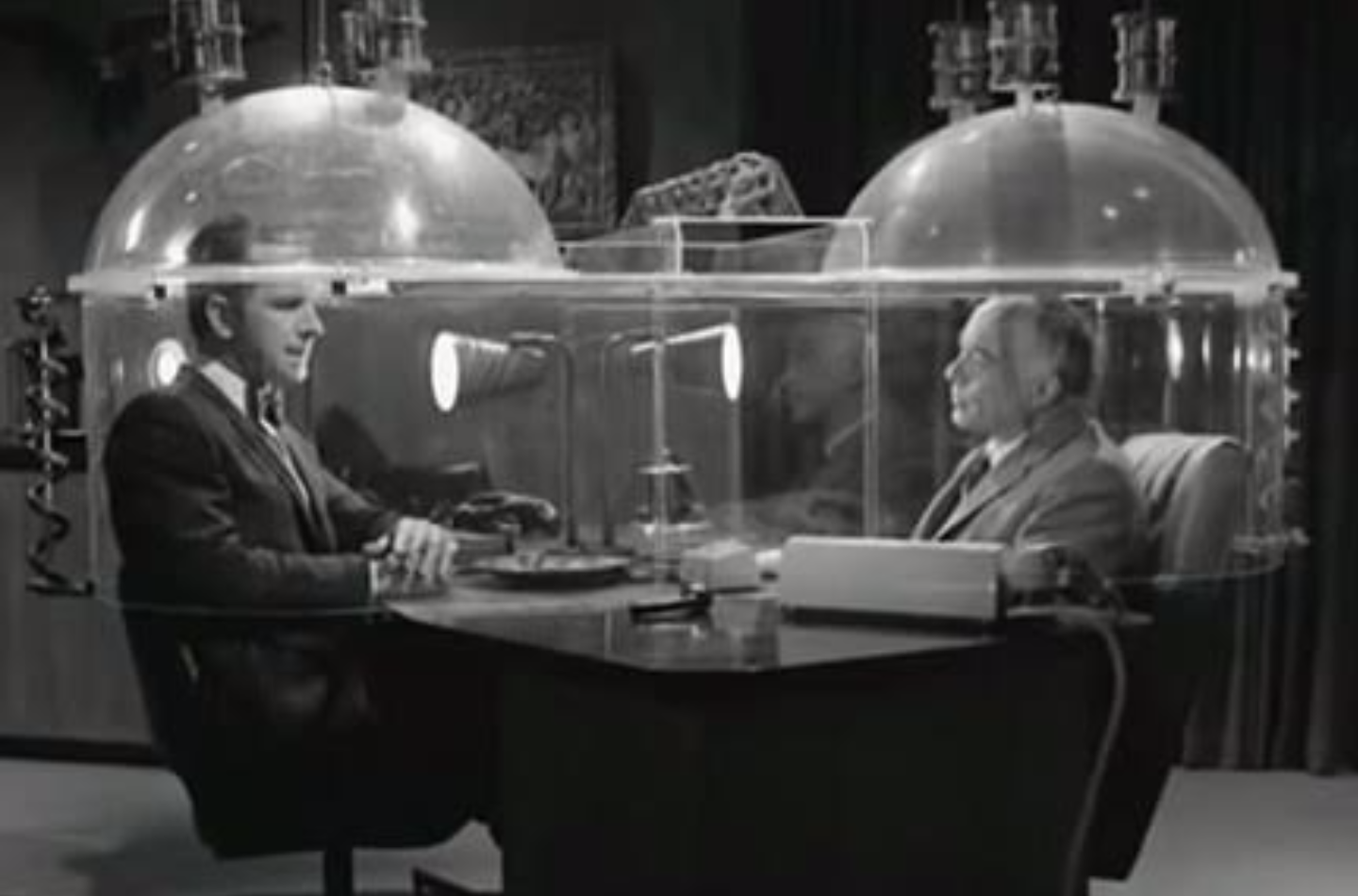
“So to not breech non-disclosure deeds, may I organise our IT to issue you with a temporary guest email account to allow us to correspond more privately?”

I might just suggest wax-sealed scrolls sent by carrier pigeons or their nearest modern equivalents. What’s that droning noise?

image

mxx1's avatar

Australian Stock Exfile

I was at business function today where I heard, for the umpteenth time, about the movement to promote schemes that result in more women in senior business roles in Australia.

The data is compelling; the percentage of female CEOs and board members in Australia’s listed companies is well, well below 50%.

But I thought to myself, where’s the same argument applied to ethnic minorities and indigenous people? It doesn’t exist.

Why not?

The truth is that women have got to a certain representation that allows them to have a voice and promote the issue that they felt unduly made their own journey’s more difficult than their male colleagues.

Somehow every ‘minority’ has to magically get to some minimum threshold of representation whereafter they can collectively fight for their cause from within.

As an aside, this argument for representation in listed companies sort of proves that these roles have no genuine function; anyone can do them so long as they are sufficiently trained.

By comparison, privately owned and developed companies; the only barrier to entry here is character and perseverance. Sex, race, religion; they matter not a twat.

You don’t hear anyone who has started their own business talk about ‘representation’. It’s a term which makes no sense to them. You want it? Make it happen.

image

mxx1's avatar

Three Things

I discovered three very useful things today.

One, someone reckons that I’m not a narcissist.

Two, I not only dislike pocket squares but I also instantly distrust those wearing them.

Three, I can still be surprised. Ahmed at the local convenience store asked me, in quite a severe fashion, to take off my bike helmet in his shop. Then he broke down laughing at the look on my face

image

mxx1's avatar

Technology Asylum

The other day I spent a couple of hours chatting to a Russian asylum seeker at the Asylum seekers drop-in/help centre.

An academic from Siberia, he has his hands on a couple of Russian technologies that he hopes to get funded here and to work on, if he is granted asylum.

One observation is that the centre would be a very interesting place to work at. Probably one of the most interesting.

A second is that the chances of finding a great and unknown Russian technology is pretty skinny these days. Maybe that first decade after the wall came down there might have been a few gems but now, less likely.

The third was, as I tried to explain through the telephone interpreter, Australia is the last place you’d seek asylum for a displaced technology. There’s simply no taste for risk investment here, especially into hardware technologies that the Russians seem so intent on developing.

I will do my best to help this fellow if he follows up. But only because of his situation. Any citizen that had approached me with these technologies would have got the usual advice. Nyet.

As a footnote, technologists in Australia would be well placed to flee and seek asylum elsewhere, owing to a well-founded fear of being persecuted for reasons of membership of a particular social group and possessing certain progressive and bloody unpopular opinions. Also these guys are unable or, owing to such fear, unwilling to avail themselves of the protection of Club Australia for fear of being condemned to a life of servitude in a university, CSIRO or McDonalds.

image

mxx1's avatar

Edit not, young lady

I just spent a small effort explaining to my daughter the folly of using grumpiness or anger to get someone to act in a more amenable fashion.

The first effort failed because she was grumpy and angry.

The second effort seemed to work, after the grumpiness and anger had faded.

She acknowledged that editing other people just causes them to hide their true feeling. She also admitted that she wouldn’t like her family or friends modifying themselves just to avoid her ill humor.

She could see the potential for a lifelong pattern to emerge, one that would do her no favours.

image

mxx1's avatar

Solar Fibs

At the Paris Climate Change summit, grasping at straws, our PM said “And by 2018 over 60 per cent of the world’s solar cells are to use technology developed by Australian researchers.”

That is 60% of cells might incorporate technology concepts developed at UNSW. In terms of the total contribution of all Australian solar technology I’d put the number closer to 1%.

And the licence fees for using this technology? Currently it’s zero and will remain so.

Exports of technology products? Currently we have one company exporting main stream solar technology. And I run it.

Fuckwits.

image

mxx1's avatar

Invention of the Day

A Fitbit style band that goes around the base of a bloke’s cock.

Measuring all key metrics including a thrust monitor, blood pressure, diameter changes, etc, it transmits all the data via Bluetooth to your phone.

It also will include vibration alarms setup to alert the user to premature ejaculations and frequency tables.

Couples can pour over the data and setup frequency and thrust strength profiles to see if they can improve things.

Users can also download preset profiles guaranteeing different results.

Social media sharing will help promote good profiles and good sex.

Fucking endless possibilities…

PS just Googled it and its been done … The Lovely. Imagine doing actually doing this startup? Bloody Gen Y ignorance blows me away.

image

mxx1's avatar

Sungevity

Last night on the ABC I watched some dodgy docco on renewable energy.

Basically it was an advertisement for action on climate change masking as new information. You’d have to be pretty gullible to suck this shit up.

Anyway, the highlight for me was a segment on the Australian Founder of Sungevity, a Californian company that provides very un-sexy engineering services to solar installers in the US.

Working very hard to look like any other Californian start-up gone all unicorn, their offices are multi-coloured, they have an in-house crappy music band, an incubator run by the usual chick using her tits to get ahead, and the mad founder still hanging around in an advisory role and annoying the fuck out of everybody.

Well, they put on a ‘party’ for the ABC cameras and I swear the mad founder actually said ‘we’re here to be the most successful solar company and TO MAKE THE WORLD A BETTER PLACE’.

Clearly they have never watched ‘Silicon Valley’ and/or completely lack a sense or irony and/or completely lack a bullshit detector and/or are complete fuckwits (which covers all the others really).

It made my night. LOL

ps the incubator with tits is on the left and the founder is second from the right. The other two have jobs, were employed early on, and are pets of the founder since they were nice to him (by necessity) when he was their boss; he hardly knows anyone in the company now. The woman on the far right was sent to keep any eye on the founder in case he got too pissed.

6982802-3x2-700x467


mxx1's avatar

Culpability

A person is culpable if they cause a negative event and

(1) the act was intentional;
(2) the act and its consequences could have been controlled (i.e., the agent knew the likely consequences, the agent was not coerced, and the agent overcame hurdles to make the event happen); and
(3) the person provided no excuse or justification for the actions.

Culpability descends from the Latin concept of fault, culpa.

The concept of culpability is intimately tied up with notions of agency, freedom, and free will. All are commonly held to be necessary, but not sufficient, conditions for culpability.

A lack of control is the usual defence against a charge of culpability.

Or in the converse, if someone acts purposely, they also act knowingly. If someone acts knowingly, they also act recklessly and can be culpable.

Just occasionally someone might argue that they they become less reckless when they are not in control.

Which is to say, the good person is aware of their lack of control and purposefully and knowingly becomes less reckless as a means to avoid becoming culpable.

image

mxx1's avatar

Pyschopath

A sure sign that you’re part of the problem is deciding that someone else is the problem.

Indeed, my muse tells me that any outward projection of negative energy is a sign of a refusal to look in the mirror.

The solution is within and not without.

This is worth remembering when dealing with former spouses and double agents.

image

mxx1's avatar

Chuck-ra

I have just boned up on the Chakras.

These appear to me to be the medico-psychological equivalent of the horoscope, developed before we, the people of the planet, had any understanding of medical or psychological mechanisms.

For example, a blocked Root Chakra is described thus:

“When one feels that there is no support system in one’s life or there is a lack of nurturing (or just a perceived lack), low back pain is usually the first symptom (can include sciatica). There can be blockages in the body, including varicose veins, tumours or polyps in the rectal region, depression, immune-related disorders, mental or emotional problems, a lack of self- esteem, attachment to family background and beliefs and behaviours learned from them, superstitions, kidney problems, pain in the legs, feet, and everything that flows down from the lower back into the toes.”

And this is just the start of it … the list goes on for another few pages on conditions and causes.

The cure for a blocked Root Chakra?

Some prefer healing visualizations and meditations.

That is, if you believe that what you are doing will work then it has as much chance as any medical or psychological intervention, probably due to the impact of the mind on things like the effectiveness of the immune system (and the like).

Combined with any medical or psychological intervention you’d have to think things are improved, so long as you can suck it up and believe this stuff.

Others note that any physical activity can help unblock the Root Chakra, from walking to doing chores around the house, and even yoga and dancing. The key they say is to be present in the moment and aware of your movement.

My issue with the Chakras is that they are so few in number that the breadth of conditions associated with each is also very broad.

This results in proposed responses to issues in the Chakras that are also quite vague and generic (basically all issues in all Chakras are dealt with in the same manner).

I suppose this has the benefit of leaving open some wriggle room for the practitioners when the process doesn’t work.

And there is no use in going to see a practitioner for advice. Being poor hippies they are predisposed to sell you their specific therapy which happily can be applied to all Chakra problems. There’s no money back guarantee.

This reminds me of the issues related with going to see a GP about a condition. Based on a description of your symptoms the GP will prescribe a treatment based on their best guess, independent of whether that guess has, say, only a 20% probability of being correct.

My personal view is that an educated person would be well placed to rule out any specific medical conditions in the first instance.

If there are none, then any psychological or spiritual process that can be used to get one’s mind off the issue will help it go away.

If there are specific medical issues that can be identified then all the usual Chakra healing stuff can be used in conjunction with the proposed medical solution in order to help it’s effectiveness by harnessing the power of the mind over the body.

image

mxx1's avatar

Long Tail Money Printing

It strikes me that at a high level, any country that prints a lot of money (faster than the rate of economic growth) has three possible objectives.

First, by devaluing the currency, to temporarily increase the export efficiency of that country relative to other countries that aren’t printing as much cash.

Secondly, to prime liquidity in their financial markets often in response to credit freezes based on the fear of defaults. Again a short term measure.

Noting that wealth is neither created nor destroyed by printing money – the value of everyone’s existing currency is just depreciated proportionally – money printing probably aids and abets the redistribution of wealth in favour of the few and especially those with non-currency assets.

So, if I were a conspiracy theorist I might argue that financial crises are good for the wealthy and insiders that are generally closer to the central bank that prints the money.

The proportional benefit of new money must be very positive for those who first handle it.

As it goes through multiple hands the benefit that sticks probably decreases quite non-linearly.

Eventually, towards the bottom of the pyramid there would be recipients worse off than they were before the printing.

image

mxx1's avatar

Alice

‘When I use a word,’ Humpty Dumpty said in rather a scornful tone, ‘it means just what I choose it to mean — neither more nor less.’

‘The question is,’ said Alice, ‘whether you can make words mean so many different things.’

That is their purpose Alice!

image

mxx1's avatar

Home Economics

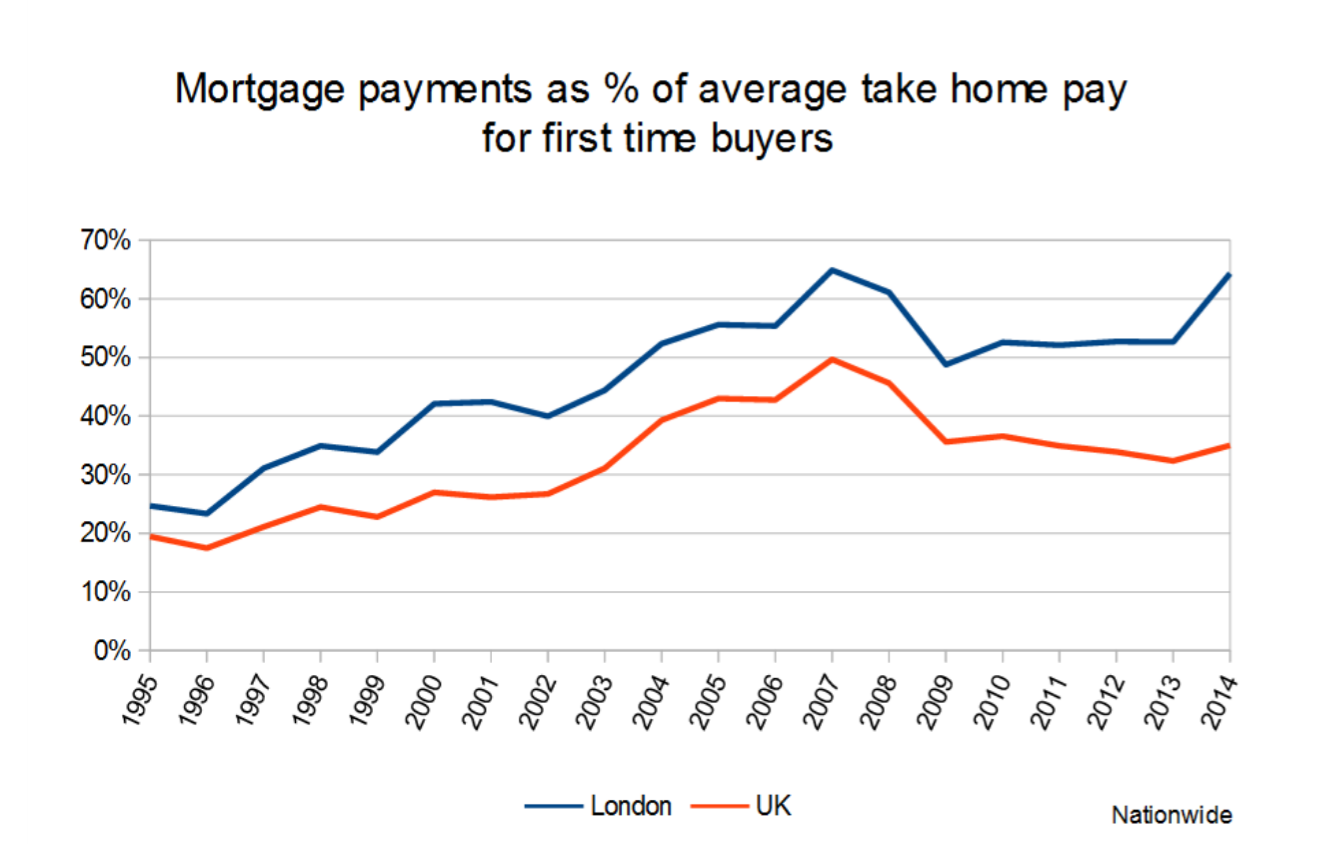
Shocking news from the rock of the Hunter; the affordability of housing is terrible in the UK and getting worse.

See the plot below which shows the percentage of average salaries used to service mortgages in the UK and London.

The odd thing, not recognised by many, is that the purchasing power of the income not spent on housing has also gone up in the same time despite the fact that it has shrunk as a proportion of total expenditure.

This, due to increased productivity in the manufacturing of goods and services.

All the angst that people feel is related to the fact that their desire to own stuff and have an exciting lifestyle has gone up faster than productivity.

So they have to get the house and then suffer increasingly because this causes an unwanted trade off in lifestyle.

There’s no plot for this effect but its very much related to the improvements in the effectiveness of marketing.

Technology and psychology, a powerful mix.

image

mxx1's avatar

A.D.D.

Attention Deficit Disorder is no such thing.

These kids always have their attention on something; just not what the labeller has in mind.

The condition is better known as PTOCD (parents and teachers with obsessive compulsive disorder).

image

mxx1's avatar

A Rocketgram

Human nature would usually have us wanting more than our fair share.

In days gone by there was, broadly speaking, two groups of self interested travelers, the church and state, that have ganged up for power with great success.

And then we had the industrial revolution and the enlightenment.

What happened next was either natural progression, or if you are so wired, a multi century long game/conspiracy theory.

By increasing the material wealth of the masses the wealthy actually increased their own wealth and slowly destabilised the authority of the religions.

The end game is no religions, just materialism.

Once achieved the usual control mechanisms can be (and are being) used to distort the relative wealth distribution in favour of a few.

They’ll probably overdo it.

Religious authorities in countries retarded in their development of a materialist culture see all of this as a threat.

You’d expect them to go for a preemptive strike to protect their patch. Hence they could reasonably become the bad guy and be wiped out quick smart.

Sound familiar?

As Bertrand said, life is but a race to be the criminal rather than the victim.

image

mxx1's avatar

Materialism v. VQSV

Of every 10 people in the world 3 are Christian, 2 are Muslim, 2 Hindu, 1.5 non-religious and 1.5 are something else.

The non-religious group is by far the fastest growing category.

Up from zero a hundred years ago the category is accelerating in it’s penetration of market share.

There are three major categories of non-religious types; atheists, humanists and materialists.

However all the growth is occurring in the materialism category.

Religion, even in its mildest forms, seems to get in the way of fully enjoying all the benefits of our Western materialism.

And as materialism spreads to the second world so does religion decline.

Atheists and humanists are a product of the enlightenment; rational people reasoning themselves away from fairy tales.

As we progress further into the post-enlightenment era these categories are fading.

My question is this; if we ever need to curb materialism because of global pollution or diminishing resources, will that cause a contraction of the non-religious category?

Just as an aside, one commentator claims that the jihadists of ISIS are more motivated by preventing the growth of materialism at home and less by converting the rest of the world to their faith.

Last year the Saudis introduced a law defining atheism as a terrorist offence. Now that must sit pretty hard with all their material wealth bartered from oil exports

It just goes to show that religion has always been about the control of power structures.

The Saudis just haven’t figured out that materialism is also a religion of sorts but one that is easier to control because there is no central religious authority to contend with.

Indeed, as materialism has spread in the West so has the need or motivation to question and understand. This is what I mean by the post-enlightenment era.

If pressed, I would call materialism a religion. Lacking a creator and a book of fairytales, this statement might seem sacrilegious.

But materialism requires the adoption of beliefs that aren’t questioned and that are slavishly obeyed.

It even goes one step further, to deny the mandate of other religions in the tradition of all good Abrahmic religions.

On this basis I reject it and exile myself to a shrinking minority of humanists slash atheists.

I’d better start being quiet about all this because the chief vendors of materialism will eventually get around to persecuting non-adherents in the non-religious categories after they are done with the religious categories.

In fact, the trick will be to just pretend that I’m a crap materialist. That shouldn’t be too hard.

image

mxx1's avatar

Post Enlightenment Era

A clear sign that we are in a post enlightenment era is that intelligent people in positions of significant influence simply can’t be arsed trying to improve society. And in fact that can be quite attracted to the idea of the trailer park solution, in its broader context.

image

mxx1's avatar

Transistor Fail

Now here’s a catchy title for a talk that I was just invited to; “Active electronic impurity doping of silicon nanovolumes: Failure and alternatives.”

This reminds me of another tech dream that I had the other night.

This time I imagined a new way to make an organic transistor.

Rather than having a material that is generally an electronic semiconductor I dreamt of creating a conductive path only at the interface of two phases of molecules.

Applying a voltage (or any other driving force) would cause the normally mixed molecules to separate into two phases with that resulting clever conductive interface allowing for current flow.

Imagine two largish molecules or two phases of smaller molecules of say 2-4 nm in radius disentangling and separating due to an applied voltage. Phase separation.

Then at the interface, a previously non existent conductive path. Hey presto, a transistor.

Which makes me realise that nature has all the tools it needs in order to build a binary computer.

Of course the applied voltage could be anything. Thermal energy, pressure, or just about any energy input.

And the conductive path could be diffusive, where molecules flow rather than electrons.

Ah, if I was a mad academic I’d build one of these transistors and claim a Nobel prize. I could even power it with an organic solar cell using organic conductors to get an all organic computer.

Fortunately I have more sense than that.

image

mxx1's avatar

Mantra

Here’s the Bill Ferris, AO, story.

Bill is an old mate of my former aging venture capital business partners, Roger & Roger. He formed the first venture capital fund in Australia back in 1970 before quickly switching to private equity.

Yep 1970, six years after I was born.

So he is as old as Gough Whitlam or thereabouts. But still alive, just.

Bill looks preserved in the bottling sense. Like those old dudes running around St Tropez with the acquired wisdom that a tan hides all wrinkles.

False economy, I call that.

Anyway, being a 45 year veteran of Sydney’s business functions and charity events, Bill is well connected to the other veterans of the business functions and charity events in this fair city of ours.

One of these is the current prime minister, the master of eloquence, the saviour of the chattering classes, Malcolm the Second.

Malcolm has just appointed Bill as the Chair of Innovation Australia, yet another of the scourge of oxymoronic federal government advisory boards with dyslexic monikers.

Last week The Conversation asked me to pen an article on the subject of Bill and his chair. I momentarily forgot my mantra (‘It doesn’t matter, leave it alone’) and emailed Bill’s pitbull of a personal assistant to line up a coffee chat.

Before I had a reply I managed to read some of Bill’s ‘big’ ideas. More STEM education, ‘no liability’ corporations for the tech sector, more tax breaks, a ‘patent box’, and more university research funding. All of these are recycled headlines that either make no sense at all, or no sense without a previously unvoiced context.

And most puzzling, “Mr Ferris also said governments should make it easier for companies to access capital for high-risk, high-reward investments. Companies should also be given much greater access to government data to experiment with, he said, with appropriate privacy and security safeguards.”

To the first one I say, how exactly? Another white collar welfare handout? And “no!” to the second one.

Just when I was having major second thoughts about writing this article, Toni, the pitbull, gets back to me saying that The Conversation had doubled up; they had asked both Michelle Grattan and myself to do a piece on the wrinkly subject. Toni seemed outraged at such duplicity and inefficiency.

I took this as divine intervention and I have extracted myself from a process that could only be described as a hiding to nothing.

It’s clear to me that Bill has no genuine subject matter expertise which is not surprising given his age and the fact that he has been in Private Equity his whole life.

Private Equity is not a bastion of innovation. It’s all about using capital to clean up established companies that are poorly managed and/or poorly owned, for profit.

So it seems that Bill’s insights into converting Australia into an innovative exporting nation have been gleaned from the media where 30 years of self serving whining from the recipients of government handouts has framed the discussion.

Chestnut central, doomed to fail, constructed on a scaffolding built with a complete lack of rational critique.

And it all survives because it is a very complex economic issue understood by very few. Just for the record, any plan that doesn’t have at its core a blueprint to drag our large oligarchical corporations in the services sector into the development and export of high tech solutions is a furphy.

Back to my Mantra.

I have discovered, no matter how eloquently or diligently I express myself, that a comprehensive and thorough review of the subject (of how to fix Australia’s lack of high tech exporters) falls on deaf ears.

Why? For some the subject is simply too complex. For others the discussion too long. A large grouping finds that the truths sit uncomfortably with their arguments for further government handouts. Many of those interested in the subject are experts in some other aspect of business but just don’t know what they don’t know – the scourge of the Australian business sector, this. Many others don’t give a shit.

I decided some time back to get myself into this latter category as a means of maintaining a higher degree of personal contentment.

It’s a tough transition to pull off. I am genuine child of the enlightenment living in the post-enlightenment era. I just have to suck it up and move on.

I will get there! I always achieve my goals eventually.

image

mxx1's avatar

New word

Imaginate. A verb related to the act of imagining, another verb.

Imaginate, as per masturbate, meditate, assassinate, innovate or cogitate.

I struggled to get my head around this grammatical black hole. ‘Imagining’ is either a transitive or intransitive verb as would be ‘imaginate’.

It’s as though the verb ‘imaginate’ doesn’t exist because imagining is not seen as a routine task done the same way by many people and certainly not something that can be planned.

As per:

I am going to meditate
I am going to imaginate

Compare this to:

I am going to imagine …

The latter implies an intention to do a specific task which by common consensus can’t be planned ahead of time. Let’s call ‘imagine’ a transient or ephemeral verb. Which is why we don’t imaginate.

I do though.

image

mxx1's avatar

Varoufakis

Here are some deluded comments from another well meaning economist … the first paragraph is spot on. The second, displaying a complete absence of subject matter expertise.

“Echoing the call for innovation by new prime minister Malcolm Turnbull, Varoufakis said Australia should redirect its economy from “rent” in the shape of selling commodities to “entrepreneurial profit” in the form of greater innovation.” Here he’s correctly identified a problem and suggested a viable hypothesis for a solution.

“Australia has excellent pockets of innovation such as CSIRO. But there is a glass ceiling where they usually have to sell up and move to the US in order to progress.” Here we have one untrue statement followed by a non sequitur.

So in order; we get a truth, a hypothesis, an untruth, and a non sequitur. Next up would be an unintelligible noise followed by a death gargle, and then silence.

image

mxx1's avatar

Tendency

“The nanoscale biocompass has the tendency to align itself along geomagnetic field lines and to obtain navigation cues from a geomagnetic field”

This from an article implying that we the animals have built in bio compasses.

The inclusion of the words ‘tendency’ and ‘cues’ worries me. It implies an alpha technology that works every now and again.

Just like the GPS in this phone.

wpid-img_20150105_133732_20150105144759083.jpg

mxx1's avatar

Innovation Council, Harper Review & IP

Most lucid observers note that our economy is too dependent on the export of resources and that it is also 70% in the services sector by GDP. In the services sector we have relatively few exporters and certainly no major providers of technology platforms, primarily because our companies have been and are operating in a protected oligarchical environment to the extent that they are not innovative and would not survive open global competition.

Ian Harper wants to get rid of the oligarchies by removing the hidden barriers to competition from foreign players and new entrants in the Australian services sector. Inexplicably he also wants to water down our already weak IP rights which would further reduce the incentives for our services companies to invest in IP creation.

This big stick of removing the hidden barriers to foreign competition, he argues, would force our companies to compete more aggressively to keep their market share to the point that they would be competitive enough to export their services.

I think that this is a fallacious argument.

Firstly, they would fight the changes and collectively they would win such a battle.

Secondly, even if by some miracle these changes came to pass, our oligarchies would simply lose out to foreign service providers well before they could change their cultures sufficiently to compete in a truly open market.

Australia would be worse off.

My personal preference is to go for the carrot and not the stick. I argue that government can give the same lazy oligarchies a strong incentive to invest in (a) innovation in the areas of their core revenues using substantial tax breaks for both foreign income and income related to innovation (through the patent box scheme) and (b) invest their cheap capital (while they have it) overseas, again through tax breaks.

Any such increased profits must align with senior management incentives and, if so, management would find a way to take advantage of these measures while they still had all that lazy capital to do it with. Indeed, we could even reduce the personal income tax rate for long term senior management incentives related to such increases in export incomes and income derived from genuine innovation.

And then, once this transition is well on it’s way, of course we could open up the Australian services markets with some surety that our companies had the skills to defend their local patch, based on their already successful foreign ventures.

On the subject of “innovation” I would note that it is not an outcome of any sort by itself. It is a habit of individuals and companies that is required to flourish in the modern era.

I would argue that any government policy should not attempt to create an “innovative culture” – that is the wrong approach. All that government can do is give the right people and companies the correct incentives to be innovative and successful. And we should also introduce changes to make IP enforcement simple, easy and lucrative for those whose IP rights have been infringed.

My current fear is that the certain measures, like the patent box, will be introduced in the wrong fashion and this will just result in the local service providers gaming it for the tax breaks as they currently do the R&D tax incentive.

For a complete view please see my article one the subject at https://www.academia.edu/8093846/How_Australia_can_Invent_a_Thriving_Technology_Export_Sector

image

mxx1's avatar

Odd Idea

Here’s an odd thought I had in a meeting today….

I think professional CEOs should gang up into groups of 5-10 and share their income and long term incentives.

This would give them portfolio protection of their income and upside.

Also it would create a ‘personal board’ for each CEO in a partnership model which would ensure they perform to their peak.

Indeed such a system would lower the risk to investors in these companies safe in the knowledge that the CEO partnership would moderate bad behaviour and enhance performance.

Indeed they could eject a poorly performing member and be responsible for replacement.

They could even create greenfield groups with an initial investment by the members into a fund for co-investment into the companies they pick.

I suspect that such a model would align CEOs more closely with the risk-return profile of professional investors such as VC and PE.

image

mxx1's avatar

Hate

She now hates me. Why?
Because I am not the ‘me’ she thought I was, and I have removed the ‘me’ from her presence entirely. This is very inconvenient and she depended upon and loved (well sometimes hated as well) a version of ‘me’ that was in her head. As well, for some reason it’s emotionally harder to be left than to do the leaving – this is probably due to a lack of emotional preparation and pride.

Who did she think I was?
She had an image of me that wasn’t really me, that’s what she had in her mind. What was in her mind I couldn’t say for sure but I would guess a doting husband that shared her mind space on all matters, often fucked up (a value judgement highlighting the differences) as they are.

Whose fault was that?
Well, everyone’s.

How did it occur?
Two unformed people editing themselves over the years to make everyday life less stressful.

Where did the stress come from?
A form of Pavlovian dog training where one spouse gets what they want but they aren’t very careful to be careful of what they want.

Why would they do such a thing?
Because this is what people do. They want something and they get it, much the same way that people keep eating that  sugar even as they get fatter and fatter. They get positive reinforcement of a kind that certain behaviours get results. And they get practised in these arts. 

So what happened?
I started thinking and questioning and then the dissonance between the morphing me and the edited me got too great.

But couldn’t you have tried to bring her along this journey of change?
I did but she not only resisted the journey, she denied it’s very existence and condemned it’s basic principles.

What was so bad about the journey?
All I have ever wanted was to understand myself and the world around me. I know I am heading in the right direction because as I travel I feel more and more at peace within myself. I guess the questioning that is required to begin and commute on this journey leads to some very uncomfortable personal reflections; many baulk at this, even subconsciously.
So now you have left and she thinks you are a pathological so-and-so and will learn to hate you?
Yes.

How does that make you feel?
Terrible. I was either brought up to, or am congenitally designed to empathetically feel the pain in others that I cause. In an earlier version of me I have therefore avidly avoided causing pain in others. Having said that, I now know that pain that is deferred is pain multiplied. And also, that without pain there is no gain. And finally, that pain must be felt, whether that is mine or that of others; it is the price of love and freedom.

What can you do now?
Nothing. I have changed my path and made my choices. There is nothing I can do other than feel her pain, draw it into me and blow it back out. She now has to wear it herself after I am done with it. 

If you could advise her?
I would not. It’s time she faces her own reality. She cannot continue to blame the world and others for the predicament that she finds herself in. That is hiding, hiding, hiding. A path to nowhere, which is exactly what she has achieved with my complicitness. I have done her no favours by waiting so long.


And is that all?
Yes, anything else is Hollywood sentiment of very little value and no authenticity.

image

mxx1's avatar

Lex Parsimoniae duo

Of course Raymond Carver made the same point but much more eloquently … let’s call it the artistic form of Occam’s Razor applied to our connective psychology.

“And did you get what you wanted from this life, even so?

I did.

And what did you want?

To call myself beloved, to feel myself beloved on the earth.”

And there’s so much water so close to home …

image

mxx1's avatar

Lex Parsimoniae

If I were stuck in a stalled elevator by myself for the rest of my life (one with a magic pudding fridge and a toilet) would it matter who I thought or felt I was?

I doubt that I’d even give it a thought after a month or two.

Which is to say, much of our psychological energy is spent on filling in the gaps and defects in ourselves, defined by interactions with other people.

To this I would note, be very careful who you spend your time with.

And also, coinciding with all the other folks is much harder than coinciding with yourself.

On the positive side of the ledger, it’s also much more interesting.

I just reckon that applying a psychological form of Occam’s Razor to our social interactions makes for a more content life.

“Among competing hypotheses for self improvement (read social improvement), those with the fewest psychological bypassing contortions should be selected.”

image

mxx1's avatar

Jet Lag

Jet lag got me last night, so I spent a good fraction of the night awake and thinking about what I would usually do while asleep.

Somewhere in there I got to thinking about my current approach to not communicating much with people that (a) are hostile to me, and (b) don’t use logic to arrive at opinions.

Whilst my position is unassailable from a rational point of view, that might just be the issue.

All that most people want to see is that someone else is sharing their pain and bugger the facts.

This also got me imagining a bunch of conversations where I to get to speak my mind, or vent my feelings, or speak my truths.

The issue is that I would have to recall all of these in real time – I am getting better and better at this.

But I do have to remember the trick of calling a time-out whilst I collect my inner cohort of bouncing madness balls to share with my adversary.

Just the one thing to remember – time-out – I should write that on my hand.

Time enough for truth.

image