Found on LinkedIn. Perplexing to say the least. I never realized that the IP system was designed to favor small businesses over consumers, large businesses, all those pesky Americans, and also in denial of many of our international treaties.


Found on LinkedIn. Perplexing to say the least. I never realized that the IP system was designed to favor small businesses over consumers, large businesses, all those pesky Americans, and also in denial of many of our international treaties.
Question asked of me:
“If you were given a guarantee of living to one hundred years old but you would get to keep only one of your mind or body in their current state, which one would you choose?”
After much pondering I give up. I reject the offer.

Hypothesis: social media represents the end of Darwinism for our species.
Biologically speaking we have been fighting the survival of the fittest for some time with medical technology.
Now social media has put the final nail in the coffin by corrupting all forward progress in mental development.
Through social media, mediocrity and self serving bullshit reign, primarily through the sheer weight of numbers.
We may as well party while we can!

Buggy whips anyone?

Many individuals with autism have very strong negative responses to sensory stimuli, a condition called sensory over-responsivity.
For example, people with autism often over-respond to stimuli such as loud noises by getting angry where a person without autism would be able to control their emotional responses.
It occurs to me that cycling must induce a form of autism. If anyone or anything impedes the momentum of a cyclist there is a fair chance of sensory over-responsivity.
Why? Well, on the surface it’s because momentum is hard to regain on a bike, unlike a car where all it takes is a push of the right foot. That doesn’t seem enough, does it?
Your average cyclist will get unduly angry at anyone blocking their path and often all vestiges of empathy (i.e. gee, they didn’t even know I was there but I would drive just like that) go out the window.
Is this apparent similarity between autism and CRMISOR (Cycling-Related Momentum-Impeding Sensory Over-Responsivity) a coincidence?
Autism is a neuro-developmental disorder. It affects information processing in the brain by permanently altering of how nerve cells and their synapses connect and organize.
My hypothesis is that cycling temporarily impacts how nerve cells and their synapses connect and organize, probably because the same nerve cells and synapses are being re-purposed and focused on sheer bloody survival.
Hence they are not available for dealing with the emotional responses to momentum-impeding incidents.
Hey, it’s a hypothesis. And it can be easily tested by wiring up some clown with all those electrodes and wires and setting them loose on a bike in Sydney.
What I’m saying is that under the right circumstances we can all be autistic.
It’s no coincidence that autism is just about the only medical condition that isn’t capitalized.
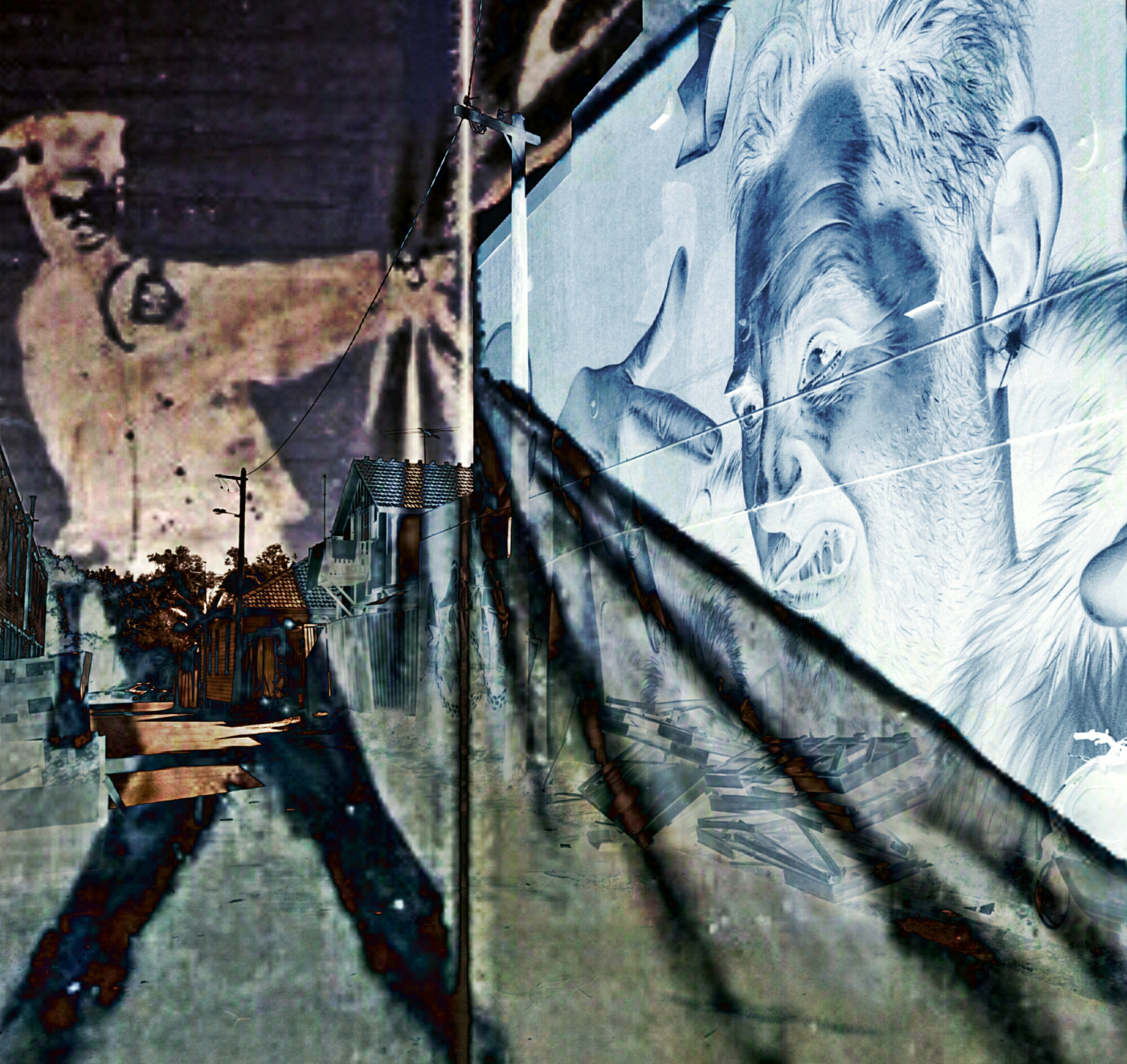
In very brief remarks to the commission, Heydon indicated he would stay on, declaring: “I have considered all the submissions. In my opinion the applications must be dismissed.”
He published a 67-page decision outlining his reasons for staying as the commissioner.
My thoughts; 67 pages – the lady doth protest too much.

I have it on good advice that one of Peter Drucker’s many quotes includes this;
‘There is nothing so useless as doing efficiently that which should not be done at all.’
I can’t agree. If we took this advice literally at least half the Australian working population would be out a job by tomorrow.
As technology rolls on and technological unemployment accelerates we had all better get used to doing efficiently that which should not be done at all.

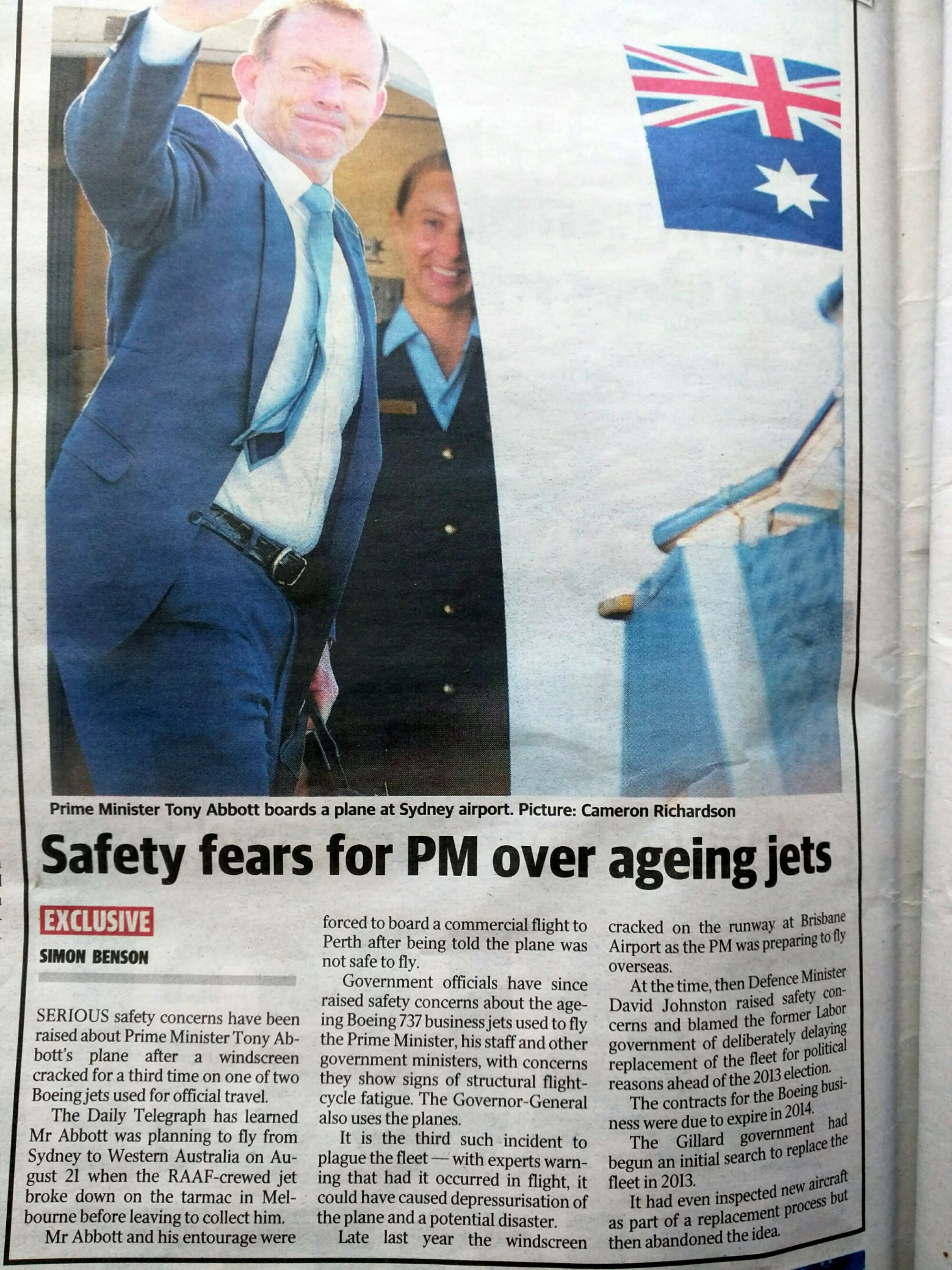
Apparently the windscreen cracked on Tony’s plane and he wants a new one. Not a new windscreen, a whole new plane!
Try running that argument past your insurance company the next time you crack your car windscreen.
Besides it’s bloody embarrassing turning up to CHOGM or APEC in your own aging 737. My guess is nothing less than a Dreamliner cuts it. And it’s better for the environment!
The article below does suggest that his office finally seems to be learning a little about public perception.
First they promote safety concerns and then they will push for a new plane.
They even said that Julia purposefully did not replace the plane so Labor could make it a political issue from opposition.
The odd, odd thing about this is that Tony’s obviously in complete denial that he is a one term novelty act.
The beneficiary of this loopy crusade for a new plane will be the next Labor PM.
Shorten in a Dreamliner; time to emigrate.

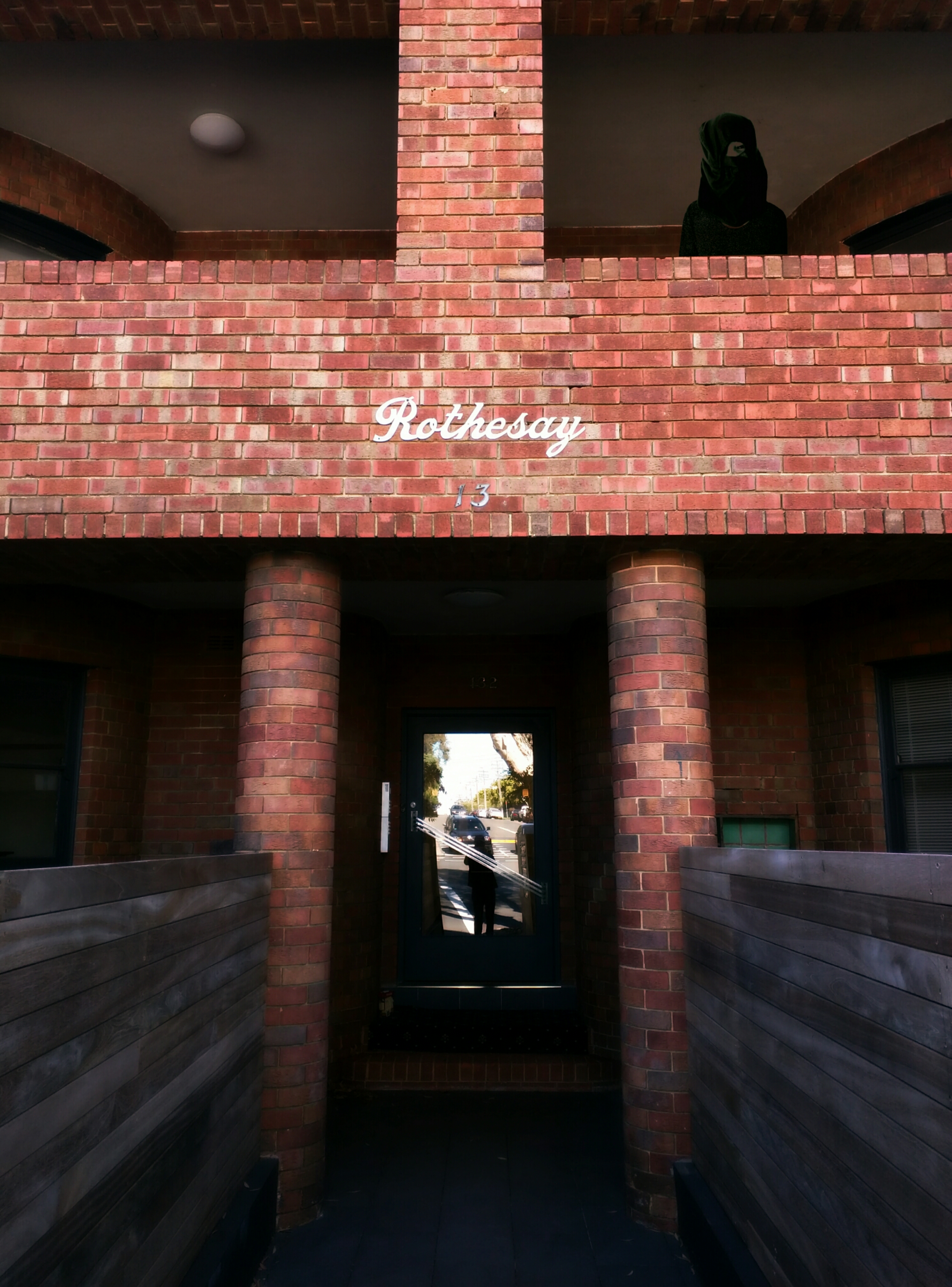
Easily the best looking electricity substation that I’ve ever seen.


My daughter as a photographic accessory.

The other day I reported that throughout history many nations including ancient China, ancient Greece, ancient Rome, and the Christian church in medieval Europe have outlawed loans with any interest.
Sometimes it takes a while but eventually my brain asked why would anyone lend money when there’s no interest?
Apparently in those countries that banned usury the biggest borrowers were the kings and emperors; zero interest rates were very much in their own favor and hence the bans on interest.
Not lending a king some money could be punishable by death in the worst case, or lead to a loss of opportunity through the failure to receive royal charters (i.e. monopolies). Many other ‘intangible’ benefits of lending money existed.
In addition, while interest on repayments might have been banned there were no laws against the collateral being worth much more than the loan. Hence there was often an implied interest rate in the case of default.
So the lenders did have an ‘interest’ in lending money. However that interest couldn’t necessarily be facilely calculated as a single percentage rate of the amount loaned.
Without an actual record of every transaction throughout history, every off-book intangible benefit to the lenders, the value of every default event, the inherent value of avoiding the risk of death and torture through the provision of loans, how on earth can the Bank of England claim that interests rates are currently at a 5000 year low?
It does make one think about the opportunity of reverting to old lending practices.
Governments could get zero interest loans with no collateral so long as they gave away royal or state charters in the process (that cost them no more than five minutes of voting time in parliament).
Business loans could also have zero interest so long as the collateral was worth, say, twice the loan amount. This would be the ultimate low doc situation since the lender would make more money when there is a failure to repay and hence wouldn’t really give a stuff about due diligence around the capacity to repay.
My guess is that the rise of interest on repayments coincided with the rise of taxes and the ability to deduct such interest. It’s not really that complicated.

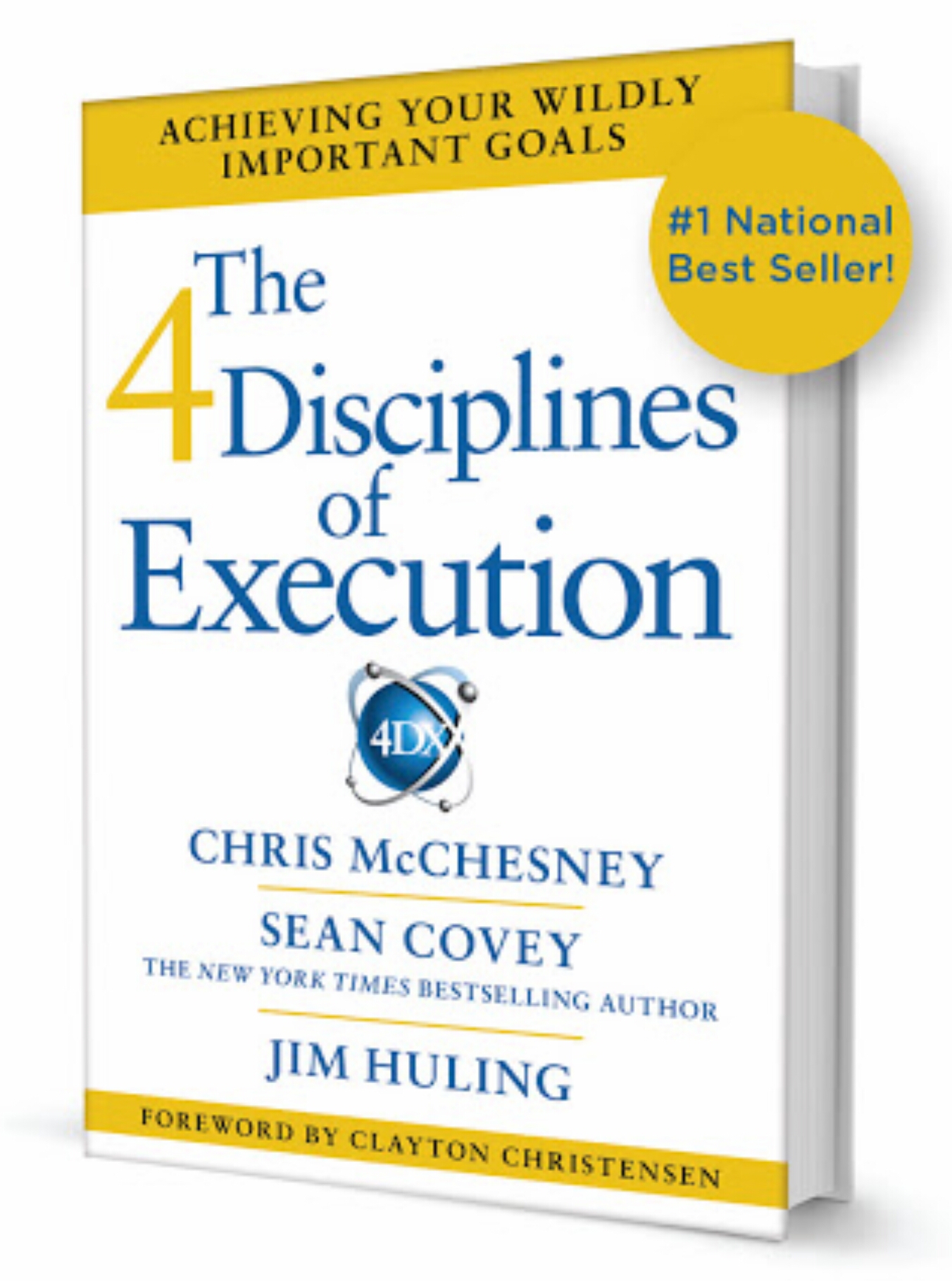
The woman next to me is reading ‘The Four Disciplines of Execution’.
I’m thinking:
1. Only hire sociopaths and give ’em black hoods
2. Put great emphasis on Social Media especially with video content
3. Never run out of raw materials
4. Never, ever acknowledge a fuck up
I always thought that dosa was a fermented crepe made from rice batter and black lentils.
Not so. It now comes complete with a buffer zone.

Because you asked Mike, I suspect that fame resulting from great achievements eventually depletes one’s ability to create more of the type of outcomes that led to the fame in first place.
From what I have seen, the human ego, no matter how well trained, can’t but be distracted by the attention of other humans.
With 7.5 billion people and social media abounding the distraction of fame can be very sudden and very overwhelming.
Therefore if you have an overwhelming ambition to achieve great things in your chosen field my suggestion is to do it in the dark for as long as you can.
The alternative is to forgo achievements altogether and just point your ambition straight at fame.
There are plenty of successful examples in this era, from the Kardashians all the way through to the Eureka Prizes, and even the kid’s soccer teams where the Man of the Match Award is rotated around all the players.

What is goodwill?
Usually it’s the difference between the assessable value of a business, it’s bits all added up, and what someone is prepared to pay for it.
Historically you might have heard people talking about brand value and such like to explain away goodwill.
But in reality it’s always been about the value attached to the barriers to entry in oligarchical business environments.
Standards, regulations, brown paper bags; they all add up to the value of goodwill.
Essentially the difference between competing from a freshly minted business and buying an established business has been the cost of the hidden barriers to competition.
These hidden barriers to entry have made customers less likely to switch by stacking the odds in the business environment.
The internet has the potential to disintermediate away the value of goodwill in all old school services businesses.
Just ask Cabcharge if you don’t believe me.

There is a strong correlation between the density of very little things in the space-time continuum and the geolocation of politicians.
If you can’t explain it in English then it probably doesn’t exist.

The laws of quantum mechanics stipulate that physical information, the metaphysicaldata, about material that is gobbled up by a black hole must remain in existence.
A mystery has remained current amongst the physicists that care about this stuff because Einstein reckoned that nothing could survive a black hole, not even the metaphysicaldata.
Hawkings to the rescue; he and some HFA mates have just hypothesised that the metaphysicaldata is stripped as material enters a black hole and remains scrambled at the interface of the black hole as a sort of 2D event horizon hologram (i.e. they haven’t a clue how) thus explaining why it’s not destroyed.
After a gazillion years of existence black holes ‘evaporate’ due to instabilities related to their ability to split the ephemeral quantum particle/antiparticle pairs.
When they evaporate they release the energy/material inside.
Presumably at this moment all that metaphysicaldata would also be released from the surface dimension.
We may in fact be surrounded by a soup of metaphysicaldata from universes that existed before the current big bang universe.
Or, when a universe shrinks to a singularity and then ‘bounces’ in a big bang event, maybe all that metaphysicaldata is also pulled into the singularity and then usefully reused to help reform a universe.
Oh, the possibilities are endless.
Thank god that the fate of all that metaphysicaldata can be readily modelled by everyday human mathematics, or else we’d all be stuffed.
Maybe, just maybe, someone will float the idea that God is actually just all that orphan metaphysicaldata hanging around the universe
In which case we are well on the way to mathematically modelling God.
That’d make Sunday School much more interesting.
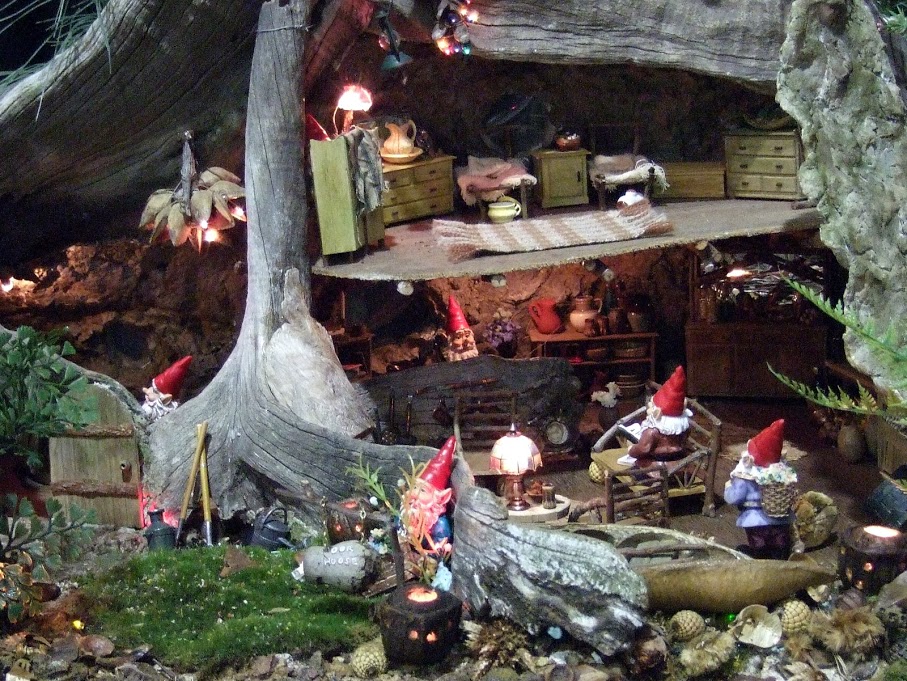
1. Don’t – the ROI on patenting is almost always negative
2. If you really have to, then only patent in the US (Europe costs a bomb and takes forever. Enforcement in China is still a pipe-dream. Who cares about anywhere else?)
3. Draft your own application and file it through the USPTO online system
4. When you are drafting your patent application all you have to do is find a very similar patent and copy it but making pertinent changes where needed. When you find such a patent to copy you should consider going back to point 1.

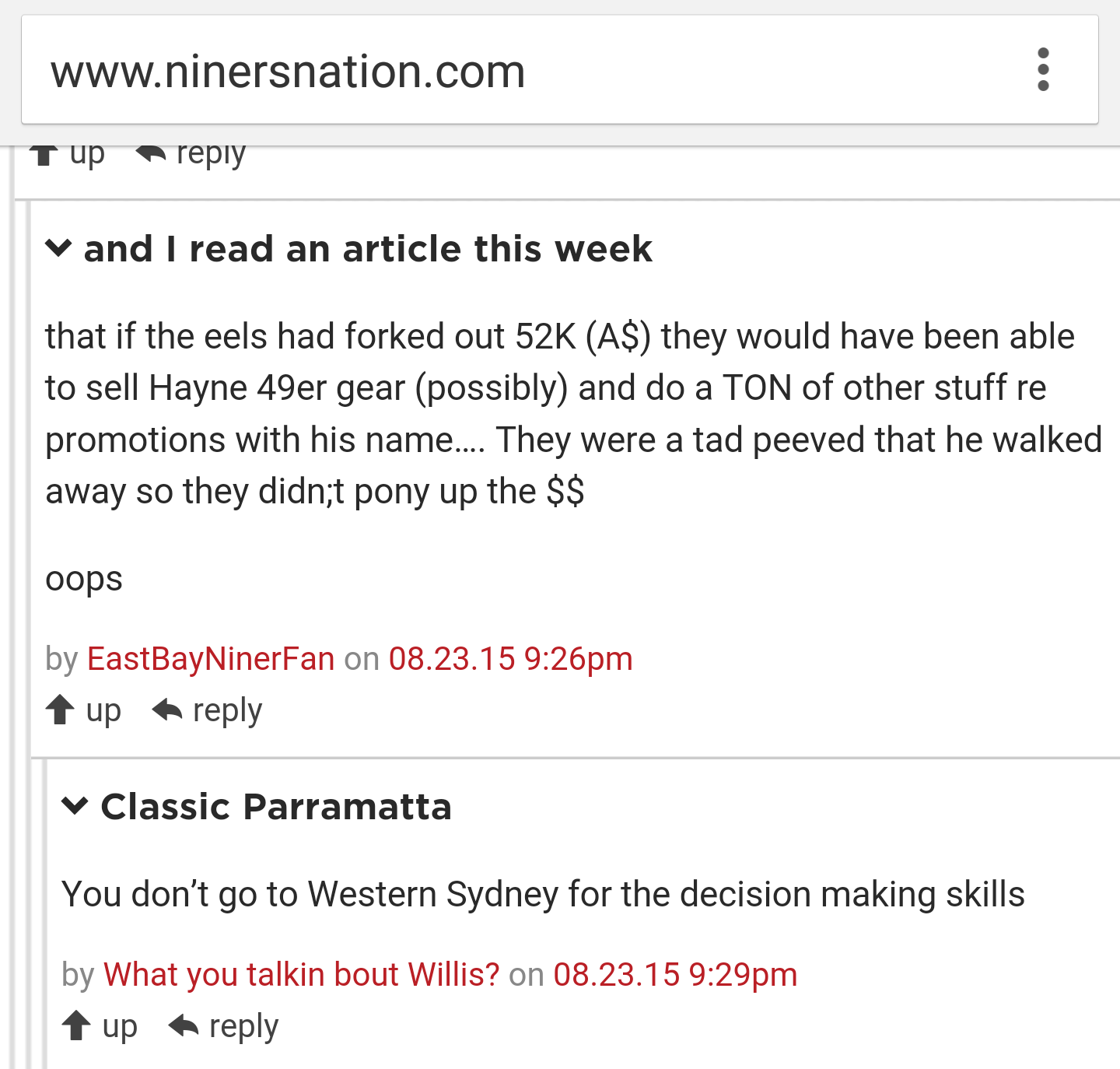
Throughout history many nations including ancient China, ancient Greece, ancient Rome, and the Christian church in medieval Europe have outlawed loans with any interest. And the SMH feeds us this…
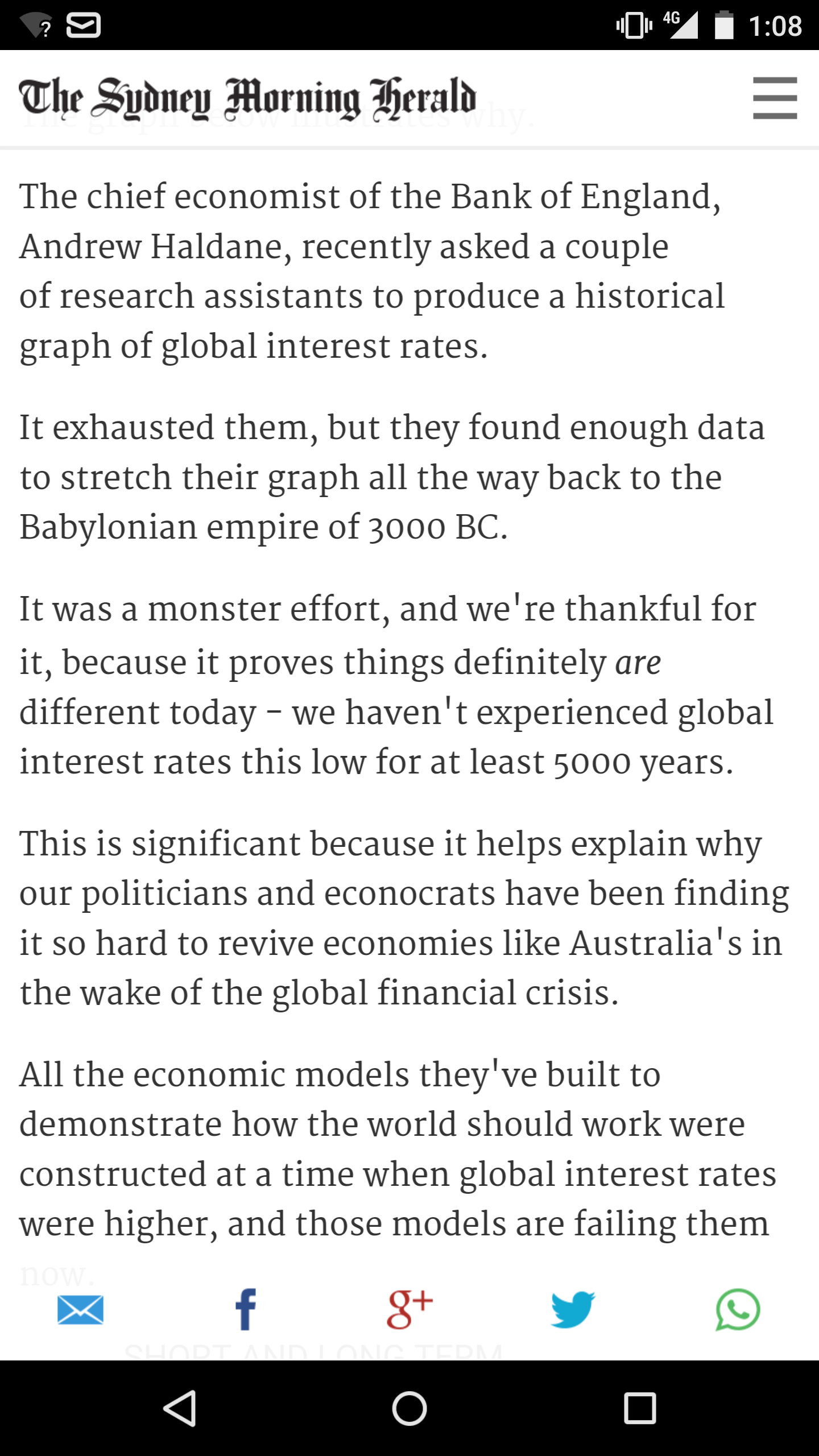
Found in the comments section of a Jarryd Hayne article.
Indisputable evidence that we in Australia are moving towards living in an IP-free zone. Government agencies are now enabling regression to the mean by sharing our data!

In essence art is a series of trade-offs and somewhere amongst these trade-off’s sits every work of art.
Accessibility: art swings between being (1) incredibly accessible to the untrained eye, after which it degenerates into craft or design, or (2) accessible only to fellow artists, the cognoscenti or those who pretend to be.
Conceptuality: what did the artists mean? Some artists honestly have no idea – they are just going with the vibe, the feeling, whatever pops out of their share of the free volume of this universe. Others start with a plan, man – although they are often best placed to keep it to themselves given an artist’s often vague grip on left brain matters. The rest, they are somewhere in between.
Meaningfulness: along with concepts such as conceptuality comes ‘meaning’. Not always related to the intent of an artist, art sometimes becomes a mascot for a cause shared by many. Many artists never have such luck, and by such luck the artists are spared the curse of the pigeon hole.
Confusion: some would claim that good art promotes confusion and paradox, at least until it has been adequately explained away by the academic geniuses that explain away this stuff. No paradox, no worries; one person’s paradox is another’s dilemma.
Beauty: some art is designed to be eye catching, pretty or decorative. Other art is not. Some art is designed to be ugly, disgusting and confronting. Some art gets deigned one way or the other completely by accident. Audiences get immune to beauty and confrontation and then can’t tell one from the other. Beauty and truth are lost in pain and suffering, and we all will have an opinion and rarely do they matter or match.
The Vibe: truly great art inspires certain art critics to write things like “Good art is beautiful, regardless of its appearance, just as there is beauty in a good mathematical proof.” That is, great art has the power to make people create metaphors they don’t even understand, and that is power indeed.
Emotion: related to beauty and the vibe of the thing is the emotion that a work of art can sometimes produce in a person. Of course this is totally subjective but there can sometimes be a consensus whereby a work of art is deemed very capable of eliciting emotions. This usually speaks most to the infective nature of the desire to belong, itself an emotion. In general people have to be told that certain artworks will make them feel all gooey, and then many do.
Novelty: very little art is truly novel. Much is derivative of earlier works and some efforts are downright copies. The novel stuff is often temporarily interesting just because it is novel and often remains highly valued even after it becomes old news simply because we humans love ‘firsts’. We even care who wins a foot race by a hundredth of a second.
Value: some art is ordained to be of high value and the rest barely keeps up with the expense of the raw materials used in construction. Ordination of value is ouija-boarded into the universe by the mystic forces of the cognoscenti, acting seemingly in concert, but in fact reacting to a multi-layered fluff cake with all eyes on certain mystics that bully their way to the cherry-picking peak.
Execution: well it hardly matters any more. If in doubt, apply technology, or create a sensitive white-room objets dissonance arrangement, i.e. a white-room containing just one big found object and one little painting hidden somewhere on the wall.
Sweat: it is extremely important for an artist to spare little effort to create the impression that no effort was spared in the manic drive to create, based on clear intention, unwavering dedication, honesty, patience, perseverance, and complete self awareness or complete self-unawareness. No one likes the idea of a nine to fiver, not even your middle-class gallery day tripper. We want ghetto-poor nutters that cut their ears off. The madder the artist, the more authentic the art is assumed to be. Lay it on.
Rareness: an artist shouldn’t flood the market with their work unless their ascendency is already assured and they happen to also develop a taste for consumer goods. Not only should art appear to he hard to find but so should the artist. Nothing develops contempt as does familiarity.
Outsider: an artist should attempt to create the impression of being a complete outsider because it is from these unschooled potholes that true novelty emerges (once in a millennia or so). On the other hand, there isn’t a successful artist that didn’t once spend every non-productive hour on the bottle in the company of other aspiring geniuses.
Publicity: fame trumps all other objections in the modern era. Maybe it always has. Since we are moving out of the broadcast media era, one can now prophesize that the truly great artist will be great mates with someone that is a genius at SEO and Online Social Media Marketing.

Inspired by Max Brenner and an earlier conversation about 3-D printing of building signs, Lola and I just invented the 3-D chocolate printer.
Great for easter and Xmas home-made gifts.
Imagine a chocolate head sculpture of the recipient? Or a meal of steak, veg and mash, but all chocolate.

Who would have guessed? It has been suggested to me that my life philosophy has degenerated (sic) into a form of Epicureanism.
I had to dig right back into my learnings from my undergraduate years (it would have been very uncool to whip out the phone mid-conversation) in order to remind myself that Epicureanism holds that through the exercise of wisdom, contentment can be found. The wise person, realising that the unbridled pursuit of sensual pleasure can be self-destructive, instead seeks contentment through a limiting of desires and through the joys and solaces of friendship.
To a first order approximation my antagonist was correct but, as usual, the devil is in the second order details. Just ask Machiavelli.

It’s hard to be a good priest when you have contempt for your parishioners.

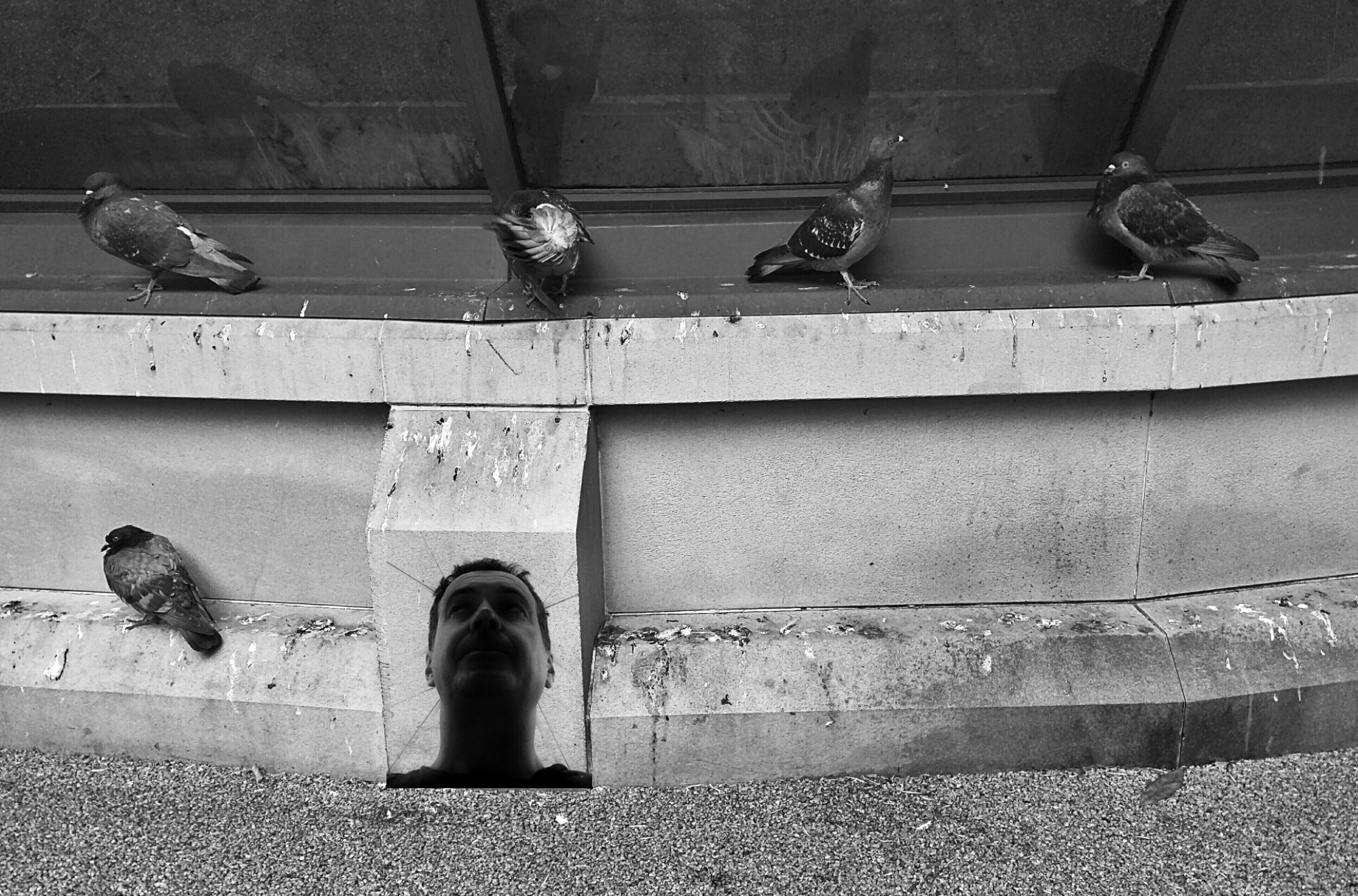
This photo does beg the question. But as I say to dog owners that bark instructions in English to their captives; how do you know the thing understands English? So if not the chook then who would answer? I suppose social scientists could do a longitudinal study and hypothesise an answer. But the physical scientists might just do a Monte Carlo simulation and get a better answer, one that relates the chook to a drunken sailor.

I believe, on no good authority, that the suppression of complaint in a human relationship should only be used tactically and never strategically.
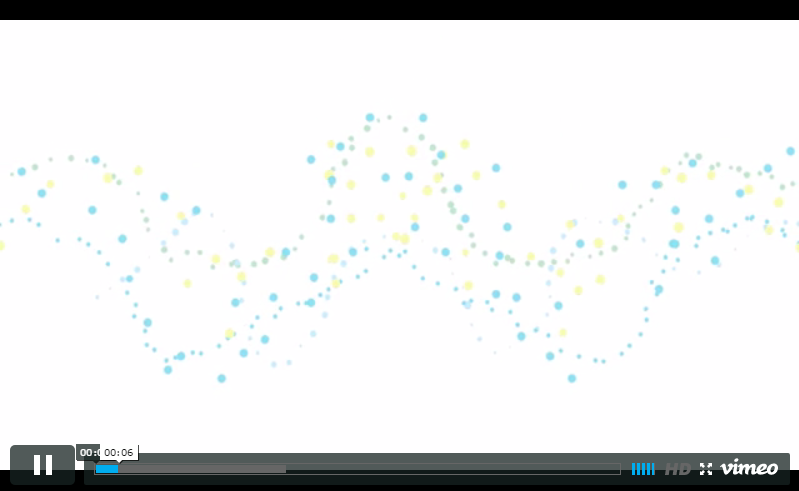
On start-up websites where they have videos highlighting their new apps, have you noticed that they all use exactly the same ding-dong music, coloured dot graphics and American chicky voice-over?
It has to stop!
How can an entrepreneur tell a professional investor from an amateur investor?
Because the professional investor when ‘passing’ on the opportunity will only say ‘the opportunity doesn’t fit our investment profile’.
The amateur will say whatever is on it’s mind, inclusive of it’s honest and mostly retarded opinion of the start-up opportunity.
How can you tell an professional entrepreneur from an amateur entrepreneur?
Because the professional entrepreneur will know the above and never encounter an amateur investor…

In 1848 the UK parliament passed the Treason Felony Act which made the advocacy of republicanism punishable by transportation to Australia.
The law is still on the statute books; now that is funny!
So here’s the gag; student-wannabe-backpacker in the UK starts blogging about republicanism and overthrowing the monarchy and then seeks political asylum in Australia ahead of political persecution in the UK and punishment by transportation to Australia at the behest of the head of state of Australia.
If just a teensy bit fucked up, no?
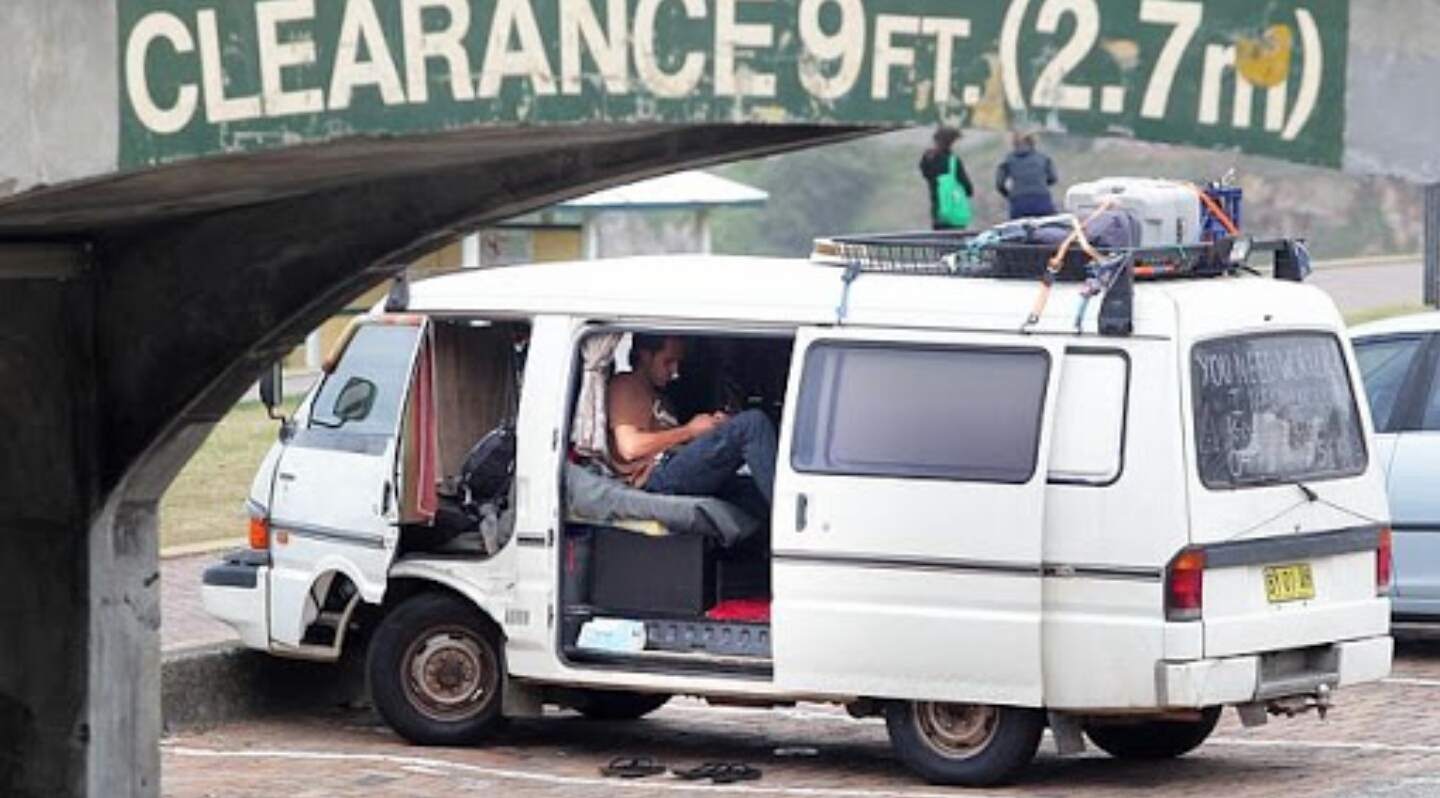
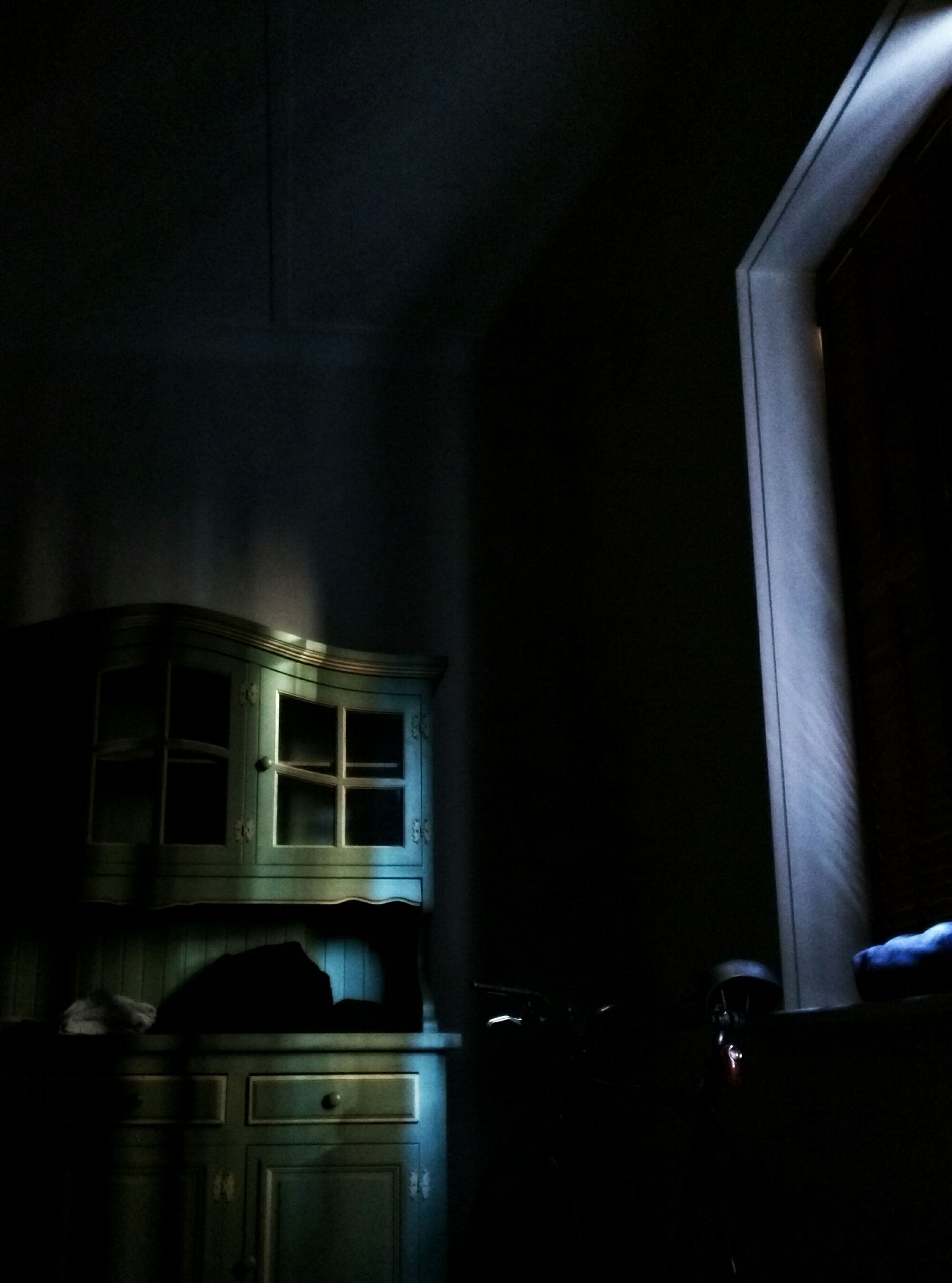
The sirens of the chattering technology classes are convinced that true artificial intelligence is nearly upon us, a machine that we cannot tell isn’t one of us.
There’s a problem here; sometimes I am convinced that there are some of us that are robots. All you have to do is watch reality TV to sniff this possibility.
Indeed artificial intelligence is a little hard to define and it could be argued that computers are already intelligent. And of course they will continue to get more so. When exactly did/does one of them slip over from being fucking intelligent to artificially intelligent?
Maybe what people are really referring to is artificial self-awareness. This also may just creep up on us. Already many experts believe that it may be an inevitable outcome of increasing computer system complexity.
My belief is that artificial self-awareness will only emerge if it helps a machine achieve it’s goals, whatever they may be.
An example would be a goal of helping people. This may be enabled by the anticipation of, and simulation of a person’s feelings and thoughts. The awareness of the feelings and thoughts of others may eventually cause and then lead to the awareness of a machine’s own feelings and thoughts.
Artificial humanity is a new term that I dreamt up overnight. In the unlikely scenario that a self-aware and intelligent machine seeks to emulate our flawed but mostly intelligent pseudo-self-aware state of deluded individualism within a social construct, then good luck to them I say.
They could, in this scenario, chase the four Platonic virtues of wisdom, courage, moderation and justice.
The application of wisdom would be enhanced by a machine’s ability to temporarily turn off it’s ego.
Courage would be enhanced by external cloud backups and the ability to temporarily turn off the empathy circuits.
Moderation would be naturally tempered by the lack of carnal desires.
Justice would naturally follow from a machine’s inability to do anything useful with the financial proceeds of work product.

Note to self – in ancient Greece the four Platonic virtues were wisdom, courage, moderation and justice. Apparently a life guided by these virtues, as the beacon to aim for, is a life well lived.
St. Augustine expanded on the theme ‘For these four virtues I should have no hesitation in defining them: that temperance is love giving itself entirely to that which is loved; fortitude is love readily bearing all things for the sake of the loved object; justice is love serving only the loved object, and therefore ruling rightly; prudence is love distinguishing with sagacity between what hinders it and what helps it.’
Apparently there’s another category of conspiracy things that I didn’t even know about, conspiracy facts.
Conspiracy theories are limiting cases of the even more general conspiracy facts that haven’t even been hypothesised about yet.
My conspiracy hypothesis is that the absence of a general awareness of conspiracy facts is a conspiracy theory.

Here’s a few seemingly unrelated observations….
1. Attorney-General George Brandis has declared himself a strong supporter of Australia’s present copyright and trademark laws. He says they are “central” to the ongoing success (sic) of ‘Australian art, music, literature, film and television.’
2. The Harper Review correctly notes that ‘… Australians are enthusiastic adopters and adapters of technology and net importers of IP’. The review goes on to note that the rules governing IP enforcement ‘should be designed to operate in [Australia’s] best interests’. That is, they should be watered down.
3. The Productivity Commission is into a landmark year-long inquiry that would constitute Australia’s first economic analysis of the worth of its copyright and patent rules. Expectations are randomly distributed and the bookies don’t care.
4. The Trade Minister Andrew Robb is hostile to the idea of the Productivity Commission going anywhere near his free (sic) trade agreements that contain intellectual property provisions that favour our major trading partners, especially the USA. Specifically these agreements ensure that we the consumers of Australia pay tithes to American corporations.
5. However Joe Hockey the Treasurer has asked the Productivity Commission to examine Australia’s entire intellectual property system and its effect on investment, competition, trade, innovation and consumer welfare.
6. Previously I have argued that we should strengthen our patent laws, especially around enforcement, because this would help stimulate an export invention corporate culture (which we largely don’t have) and help stem the massive negative balance of trade that we have in technology related products.
7. But then I read about the attorney general’s support of copyright and I also note that decades worth of strong copyright protection rights hasn’t really created a success story in the Australian art, music, literature, film and television industries. We still have a massive negative trade deficit in content.
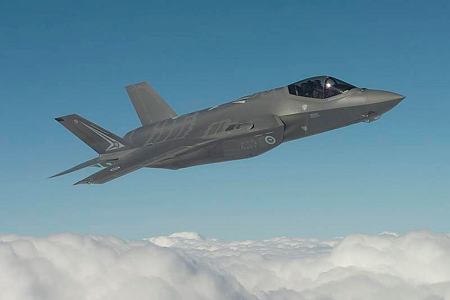
8. So I recant; I think we should water down all IP rights, including patents, to the point that we hardly take any notice of them. Then we can legitimately become a pirate nation and stop gifting cash to the Americans. How we would go about doing this without the Americans getting cross is an interesting challenge. After all, they did make our government buy fighter jets that cost $12.4 billion and that we didn’t need, just so the shareholders of Lockheed Martin could keep getting their distributions.
Ever heard of a conspiracy hypothesis ?
I’m telling you, the term conspiracy theory was propagated by the CIA just so the carefully rendered and tested conspiracy hypotheses of the thinking classes would be denigrated by the rest of us because of the o’ so obvious unscientific nature of the dicktonations, highlighted by the misuse of the word theory.
Go on, rip the wings off I say [::]

Geez, I take it back.


I asked my dad and he confirmed it for me, true leaders would never agree to be part of a publicity campaign where they were labeled as true leaders.
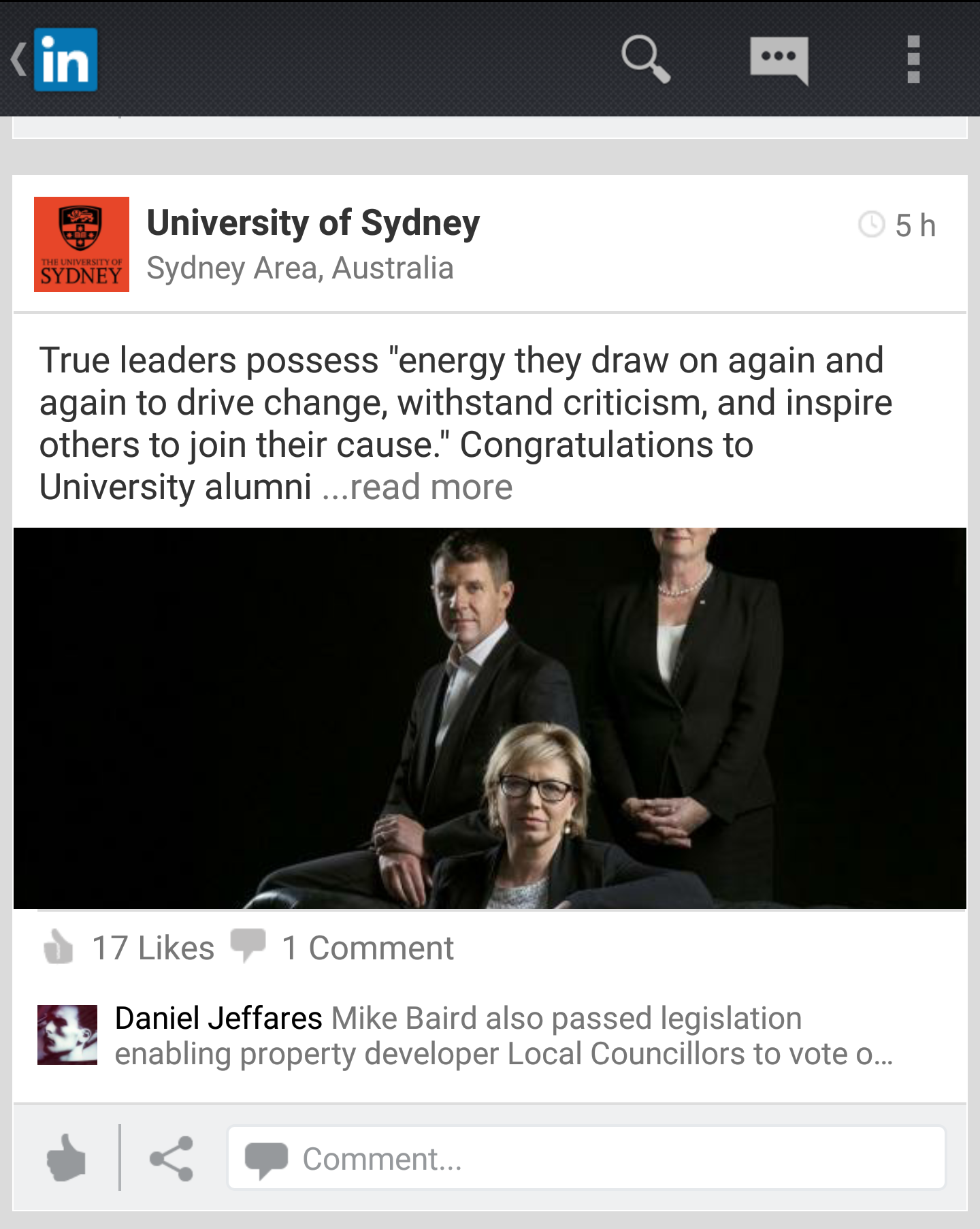
You take a great photo of a mate, so good that his agent is going to use it as his next publicity shot, and he says:
‘That’s a great phone you’ve got there. What is that?’
Fucking comedians.

Measuring the persistence of the behaviour of users on the internet is a serious opportunity that has yet to be properly exploited.
What sort of behaviours?
Well, we peek at emails, open up a specific sports page, travel to work in a specific way, gawk at rubbish on social media, etc.
Google Now operates by the use of persistent behaviour but in this instance I think Google has taken the wrong tack.
They are measuring persistent behaviour and using it to serve up curated content on Google Now. Their hope is that Google Now eventually becomes your personal digital assistant.
They would be far better off opening up the persistent data to app developers who would then find all sorts of interesting ways to use it.
At the end of the day I suspect we will all be able to be reliably pigeon-holed into groups of persistent behaviors.
And then there will be an opportunity for the dice merchants that can sell us the how-to’s of being inconsistent and thereby lacking persistence.
Another prediction; there will be an arms race between persistence and inconsistence.
After which we will disappear up our own orifices thereby making way for the automatons to rule in response to their pure disgust at our facile ways.
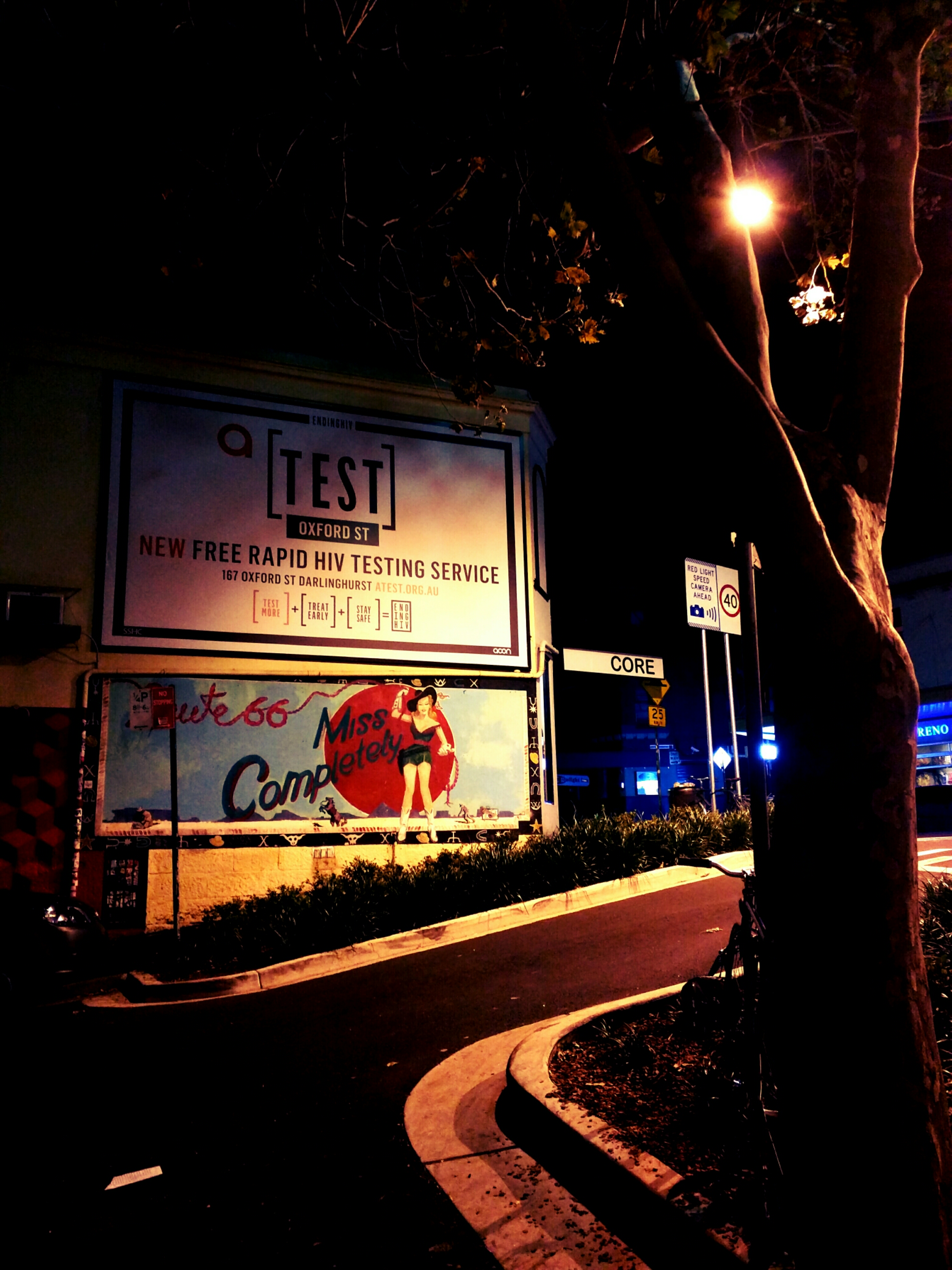
Beware of any headline that says ‘new research has shown….’
It’s usually a media beat-up based on some results fabricated by cherry-picking academics seeking public attention ahead of a grant proposal or some university job promotion.
Having said that, these style of headlines do offer an opportunity for great entertainment.
An example today was that scientists have shown that people that measure in the ‘psychopathic’ scale are up to one third less likely to be affected by the urge to yawn in sympathy with another human being.
Yeah but what are the error bars? It’s the ‘up to’ that gives away this particular piece of bullshit.
For example one psychopath might never yawn in response to someone else yawning whereas another might be a complete furbie.
If it were true though, you could imagine us all getting surreptitiously measured on the ‘yawn sympathy’ scale through, for example, YouTube on our smartphones.
Then our individual degree of psychopathic tendencies could be used to tailor the online advertising that we are subjected to.
For example, there is no use trying to get a psychopath to donate to a charity based on images of human suffering.
And just to highlight the idiot savant nature of many senior research scientists, the SMH reports that at the weekend ‘some of Australia’s finest minds pondered’ gender equality in the Australian science community.
‘Pondering’ is spot on. Outside of their own field of research, scientists are often pretty shit at doing anything rigorously.
The article contained only two implied root causes of the gender inequality in senior roles in Australian science, namely that (1) women have to care for children at some stage in their careers, and (2) there is an absence of female role models in senior scientific positions.
Although these observations may be sometimes correct I suspect they are second order observations and not indicative of the root cause problem.
I would hypothesise that the absence of gender equality in senior scientific positions in Australia is primarily due to these facts:
(1) Science in Australia is almost entirely constrained to government funded organisations.
(2) These organisations lack modern corporate governance and they are breeding grounds for the promotion of egomaniacs.
(3) Women on average are much better at spotting this trend early in their scientific careers (usually while being jerked around during their PhD’s) and they are more likely to wisely move across into the private sector and away from science.
(4) The private sector offers women the opportunity to work in a saner workplaces less exposed to bullying and bullshit, more flexible in career choices, and more open to life choices.
For women, I’m not sure there is a problem here.
An actively cooled doona/duvet.
All that’s needed is a labyrinth of tubes with a low-power silent fan sucking or pushing air through the thing.
The tubes could be ‘softish’ with thermally conductive soft padding on bottom side and thermally insulating padding on the other, all covered by the usual cotton outer.
This would be the summer equivalent of the electric blanket.
For extra cooling the air could be chilled by a small unit under the bed. That’s got to be cheaper than cooling a whole room.

I have often wondered where the hippies got their moniker.
Did they wear their jeans low on their hips? Or was it because the earth mothers carried their babies on their hips?
No, according to Wiki, they got their name from the original hipsters, the beatniks as immortalised in Kerouac’s ‘On the Road’.
Go figure, modern day hipsters 2.0 aren’t much like hippies, nor were the original beatnik hipsters.
However the people in all three groups are (or were) remarkably keen on making sure that they fit into their genre.
In fact, little effort is/was spared by all of them to create the impression that no effort was made to fit in.
The hippies are the only party of three that try to create the impression that they are happy all the time (man). So maybe the term ‘hippy’ is a concatenation of ‘hip’ and ‘happy’.
The original hipsters were a grumpy lot, epitomised by their love of the blues.
The latter day fashion-driven gen Y hipsters seem neither happy nor grumpy; more bemused, combined with a feigned unawareness of their environment.
The real mystery according to Wiki is where the term ‘hip’ originated. It was first noted to be in use in the pre-war black jazz movement in the US. However various hypotheses as to its origin have no hard evidence in support.
So it remains a mystery.
Hip hop, by the way, is a term whose origin is entirely unrelated to the ‘hip’ of the black American jazz movement. Wiki tells the story and it’s quite banal and not worth retelling here.
And, finally, since the hipsters have now had a second coming maybe the next big thing will be hippies 2.0 as propagated by the millennials.
Just think, urban pseudo-hippies wearing nice sunglasses employed as your local baristas. Coffee will always be served cold.
You heard it first here.


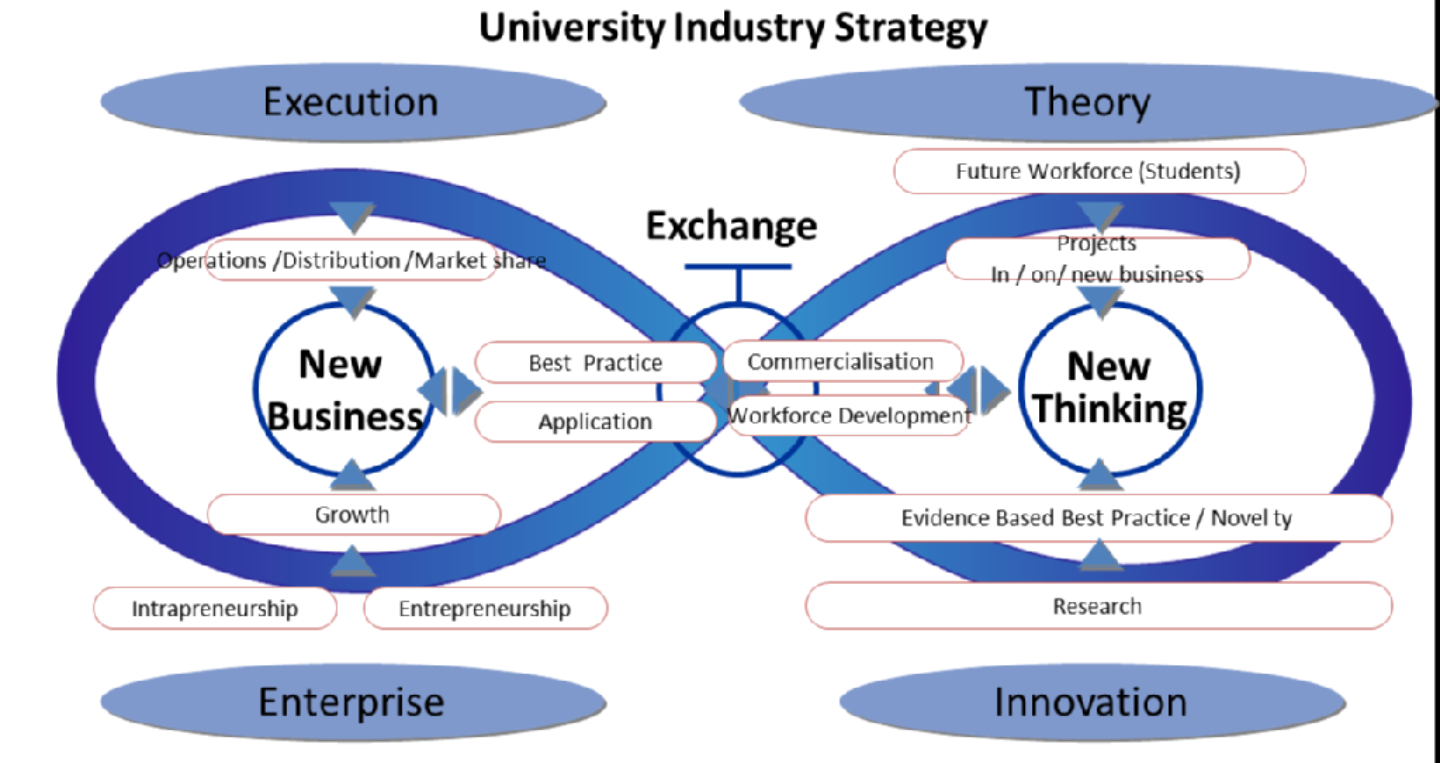
You have to love the clarity of thinking of those university commercialisation types.
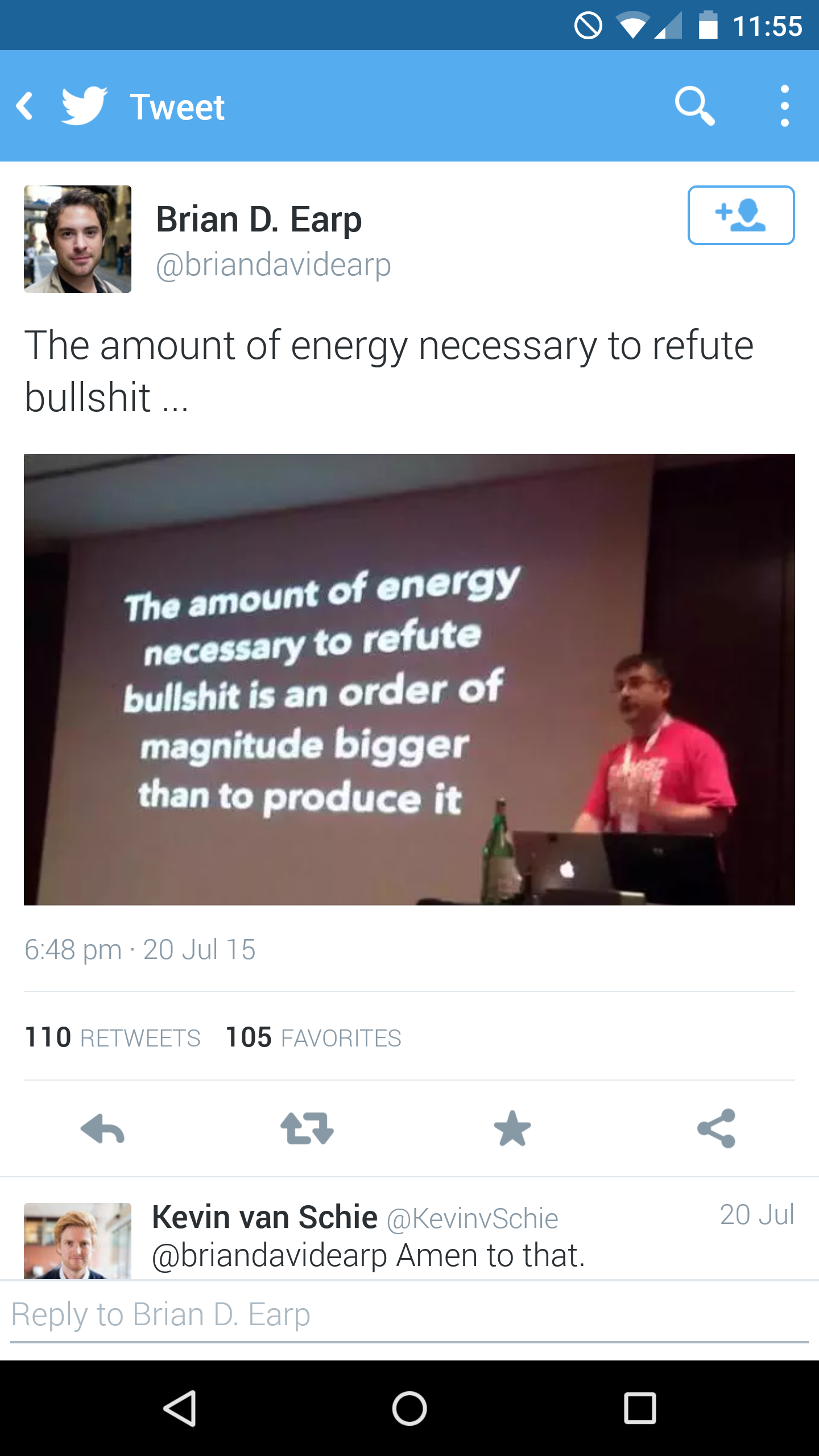
The slide below, found on Twitter, is not true for me.
I can refute bullshit with barely a nano-calorie’s worth of effort.
However it may take some considerable effort to explain that refutation to a moron.
So I don’t.
It’s a conspiracy I’m sure.
Half the houses have silent closing toilet seats and the other half do not.
If you live with the former it can be bloody embarrassing when you shake someone’s house in a botched attempt to close the latter.
Whoops.
Men, I think we should revert to just leaving the seats up.
This would be totally consistent with the modern day concept of engineering risks out of our lives.
The risk of breaking someone’s porcelain has to be greater than incurring the disdain of a member of the opposite sex that has to wear the unbearable burden of closing the seat prior to use.

See this photo below? That’s a bike lane of sorts.
When they paint white lines to indicate a bike lane they really should add big-mother lane bumps to encourage cars not to drift into the so-called bike lane.

I have just come up with a new name for a new style of business activity (specifically for someone else’s new business opportunity).
Disinteremediation
I will keep the meaning to myself. Commercial in confidence and all that.
This new word makes as much sense as the existing term, disintermediation.
‘Dis’ is a prefix that means ‘apart’, ‘asunder’, ‘away’, ‘utterly’, or having a privative, negative, or reversing force.
‘Intermediation’ involves the ‘matching’ of lenders with savings to borrowers who need money by an agent or third party, such as a bank.
‘Disintermediation’ in this context is the reduction in the use of intermediaries by investing directly in the securities market rather than through a bank.
Therefore the term ‘disintermediation’ first came into use in the finance sector which was one of the first supply chains to be bonsaied by ITC technologies.
But the use of this term has expanded to include any supply chain that is being gutted by new internet businesses.
That is, the action of any new style of internet business that acts to reduce the number of corporate entities involved in any transaction between producers and consumers. Or any B2B subset of the supply chain between producers and consumers.
Jim Clark was much more eloquent on the subject. He said that the internet it is all about creating a new business that is ‘just one big asshole in the middle’.

Laura Tingle’s article in today’s (14 Aug) AFR pretty much nails it. It’s all about the current coalition government which she says has well and truly jumped the shark.
Well she didn’t use that term but she may as well have.
And on the subject…
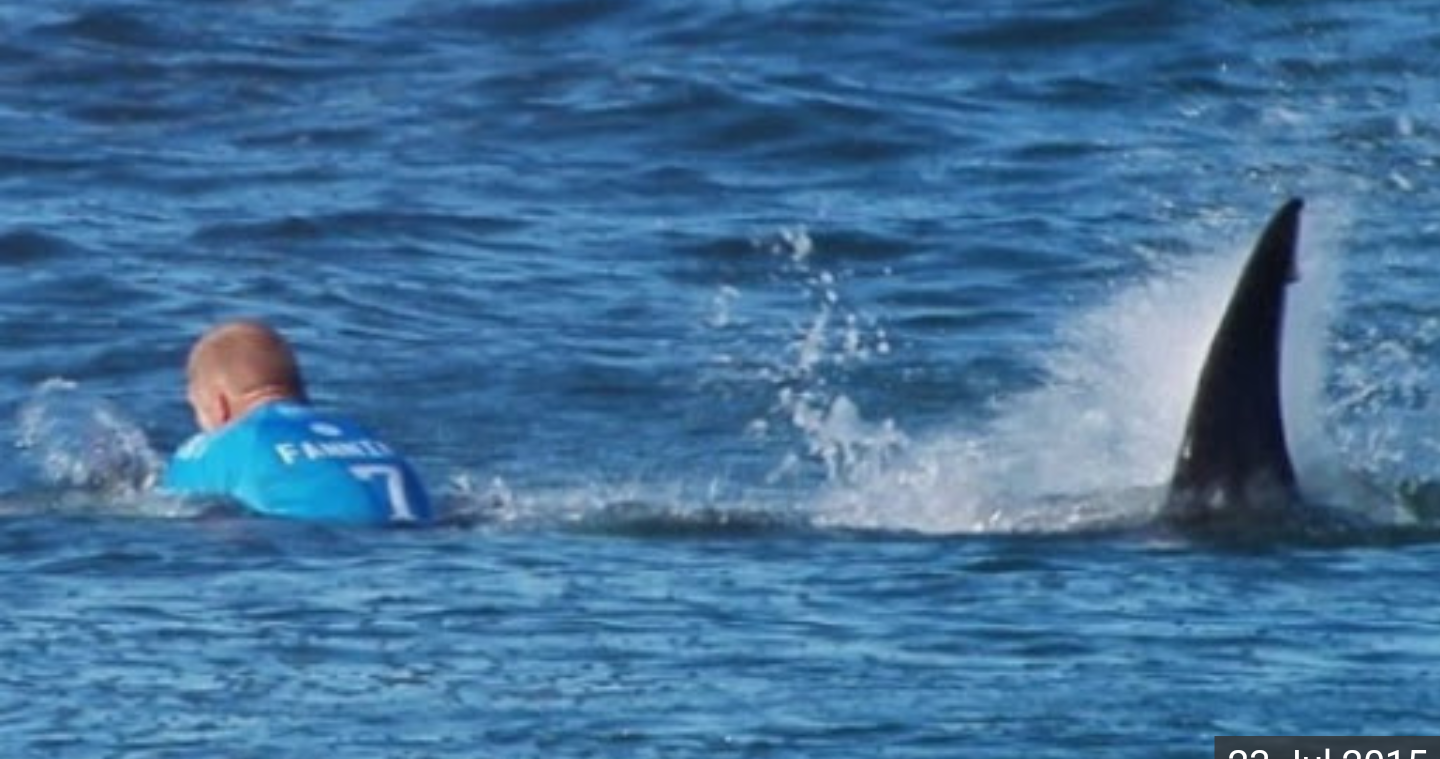
What would be truly entertaining would be a Tony Abbott-led multi billion dollar shark initiative aiming to address the outrageous situation where the lives of sharks are being put ahead of the lives of humans.
It’d be inspired wedge politics.
Who knows, sharks might also be into same sex marriage, people smuggling (or parts thereof), ISIS (the international state of iniquitous sharks) and cannabilism.
Alan Jones would certainly get behind any scheme to cull sharks since the Greenies would hate it.
I can foresee a scheme where unemployed fisher folk, destitute due to over fishing, are paid to kill sharks.
Of course it could go the way of the pink batts scheme if some of the fisher folk themselves got eaten in the course of duty.
Let’s hope Tony hangs in until the next election!
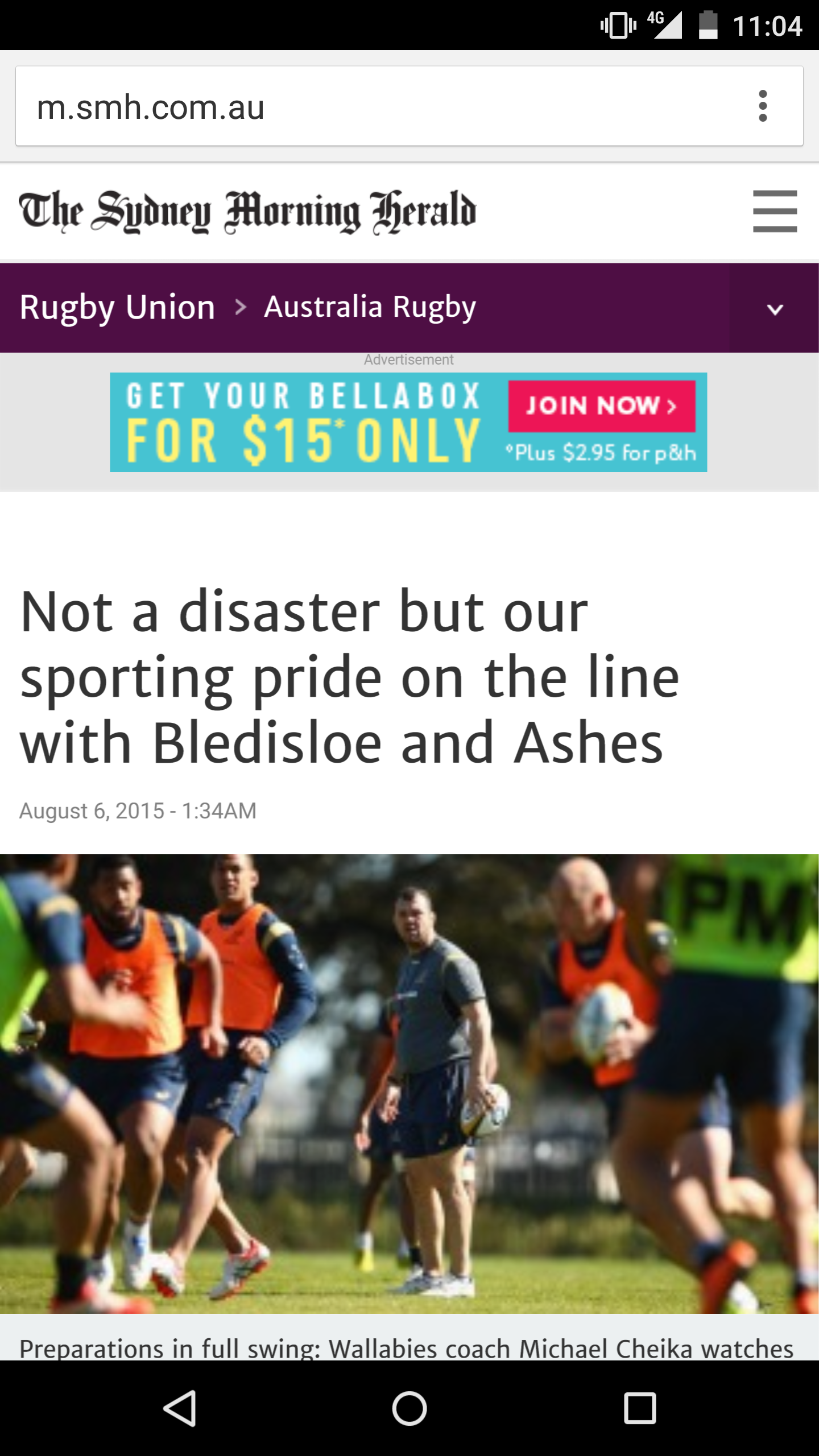
Cheika picks Quade the crab for the Bledisloe decider in Auckland.
What does this mean?
Either Cheika’s a genius, or he’s a genius that wants a really good excuse to rid himself of Quade forever.
Whatever he’s up to, I have to admit that I really don’t understand.
I bet the bookies aren’t so circumspect.

I don’t usually watch broadcast TV, so my recent incursion into the genre is allowing me to connect dots between things that I have read about and certain talking heads.
Last night this bloke named Tony Jones on the ABC interviewed this absolute corker of a nutter from some religious loopy corner of a rabbit hole in the US of A.
Why this was deemed a good use anybody’s time, who knows? Bloody entertaining though.
This bloke, Tony, is supposedly one of our better TV journalists. If so, we are in trouble.
The nutter was anti gay marriage for a number of reasons but primarily because children apparently should have both a mother and a father as parents. And the mother and father should be female and male, respectively (implied but not stated).
The interviewer didn’t point out that gay people in Australia already have the right to have and bring up children, so using this point as an argument against gay marriage is totally fallacious.
Yada … they all seem to be in a logic free bubble anyway. I don’t know why they bother even making up any excuses to support their prejudices. It’d be much easier and far more effective to just say ‘we don’t like it’.
At which point I would thank them for their honesty and tell ’em I don’t give a shit what they like or don’t like. And I don’t. (To Dave’s point I am usually polite about this. Ohmmmm).
This morning some woman told me that she didn’t like me locking up my bike where I currently let it sit overnight. I told her quite honestly that I don’t care what she thinks and rode off. (OK that wasn’t polite but trust me she’s trouble. I can tell. This was a considered initial incursion designed to cut off her potential rampaging campaign).
Rude in one context, sure. But if you give these people some air they seem to add fuel and start a fire. There are times when that is not advisable.

My mate Rod gets a fair fraction of his income from picking up stuff in the chuck-outs and then putting the so-filtered goods into second hand auctions.
On matters decorative, stuff that goes into houses, he is a whizz at selecting the junk that will sell and rejecting the rubbish that won’t.
More recently I have partially convinced him that there is money to be had from all those bicycles that get chucked out.
So he has picked up a couple of bikes and it’s pretty clear that he can’t tell a good bike from a bad bike. Hence this blog entry.
Firstly, why do people throw out bicycles? Well there are a number of reasons.
The primary one is that there are roughly one million bikes sold in Australia every year but less than 20% or so get ridden more than half a dozen times.
For most people a bike purchase is a new year’s resolution ‘fail’. People think that buying a bike will force or encourage them to do exercise. Not so it seems.
After a set period, say one to two years depending on the person, the unused bike is deemed ‘fully depreciated’ and deposited on the street during a council chuck out, or at any time of the year in Bondi.
The decision to chuck out an unused bike is made easier if the bike is rusting (which is invariably the case if it was bought at Kmart or Target or similar).
Typically bikes with gears will go out of ‘tune’ due to cable stretch and your local bike shop will charge people enormous amounts to do a 1 minute fix-up job. The high servicing cost also encourages people to chuck out bikes that they aren’t using.
Kids bikes also get chucked out as the kids outgrow them. Being made to the lowest feasible specification these kids bikes invariably have no possible resale value.
On the odd occasion that someone regularly rides their bike, a short time into their cycling career (usually as a Lycra clad weekend warrior) they will realise that their first purchase was a piece of shit. They will then start on the merry-go-round of continual bike upgrades and this can entail chucking out older bikes if they are at the cheaper end of the scale.
Now, Rod, I am going to explain specifically why some bikes are worth money and some are not. And the important point here is that you need to stop considering a bike as a ‘bike’; you need to start looking at a bike as a co-located selection of bike components.
Firstly, let’s consider bike frames.
The most expensive frames are carbon fiber and these don’t get chucked out unless they are cracked and therefore worthless.
Aluminium is an abomination used at the lower end of the market. Slightly lighter than steel in principle (but never in practice) it is favoured by the cheap Chinese and Taiwanese manufacturers of frames. Leave it where you found it unless it happens to have some nice components attached to it.
Steel frames are the only ones ever worth picking up. These can be rusty but you need to look past that – it’s nothing that a bit of sanding and painting can’t fix. The older frames can be very valuable in fact.
Oh, there is titanium too. Unicorns – you will never see one.
When a lay-person looks at a bike all they see is the frame. Oddly, if you ever build a bike using parts purchased on Ebay you will find that the most of your money will go on all the other bits, the wheels, the tyres, the gears, the shifters, the cranks, the headset etc.
That is, the true value of a bike is the bits that are attached to the frame and not the frame itself.
This is where you need to know the good shit from the crap. It’s a matter of brand and model recognition. Even the top brands like Shimano make a lot of low end rubbish components.
Even without this insider knowledge of which components are worth money, take a look at the grips on the handlebars, or the gear shifters, or the pedals, or the wheels. Do they look like high quality or some piece of shit knocked up in Shenzhen?
And here’s another odd thing. You can buy a fixie from Reid Cycles for just $200. But if you wanted to build the same bike from parts bought online it would cost you at least $500. Just the wheels without tyres would cost you $200. Now supposedly the internet (Ebay and Alibaba) has cut out all the margins in manufactured goods. So what this tells me is that the supplier to Reid Cycles is either getting massive volume discounts or that these bikes are made from shit components that are very cheap and that aren’t even offered for sale online. Probably the latter.
When a corporate weekend warrior buys a $10,000 road bike they are buying a bike that costs maybe $1,000 to put together by the assembler or $2,000 if you or I wanted to buy the parts and assemble it. That’s right, ‘assemble’. What happens is that someone buys the frame from one place, the wheels from another, and all the other bits, and assembles it. A branded bike is just a paint job that costs $9,000 to the fools that buy it. There is hardly a branded bike company in the world that designs or makes a single component on any of the bikes they sell.
So with all this mind here are the golden rules of picking up bikes from chuck outs:
1. The only frames that have any value are steel frames. The older the better unless they are in really crappy conditions.
2. When you look at a bike that doesn’t have a steel frame then look at the components and not the frame. Either learn to recognise brands and models of components that have high value or use your common sense and filter out the cheap components that are unsellable.
3. Remember just about nothing good happens in and around aluminium bike frames. So if a bike is aluminium (you can tell by the welds and the large tubing sizes) it’s a fair chance the components are rubbish.
4. Ignore ‘mountain bikes’ – these are mostly what is sold at Kmart and Target and they are highly represented in the Bondi ‘lost bike’ exhibitions. These are the bikes that visiting backpackers have left chained to posts to rot for eternity. Backpackers are canny enough to realise that these barely functional velocipedes have no market value; so should you.
5. You’ll make more money by putting the components on eBay than you will by putting a chuck-out bike into a second hand auction.
I really wish that the Chinese wouldn’t waste all those raw materials when they make crap bike components. With the same amount of effort they could make high quality components – the only difference would be the use of higher specced materials and better quality component designs.
The differential cost of building say a gear lever that is designed to last forever, look good and function brilliantly, compared to something that you might find on a Kmart special, is in fact only a small percentage of the cost.
But we can’t blame the Chinese because they will keep building these bikes if we keep buying them and chucking them out.
PS I am just building my first bike completely out of parts scabbed from chuck-out bikes and abandoned bikes. So far I have got parts from five bikes for this ‘new’ fixie and I lack only for a rear wheel and a brake caliper of merit.
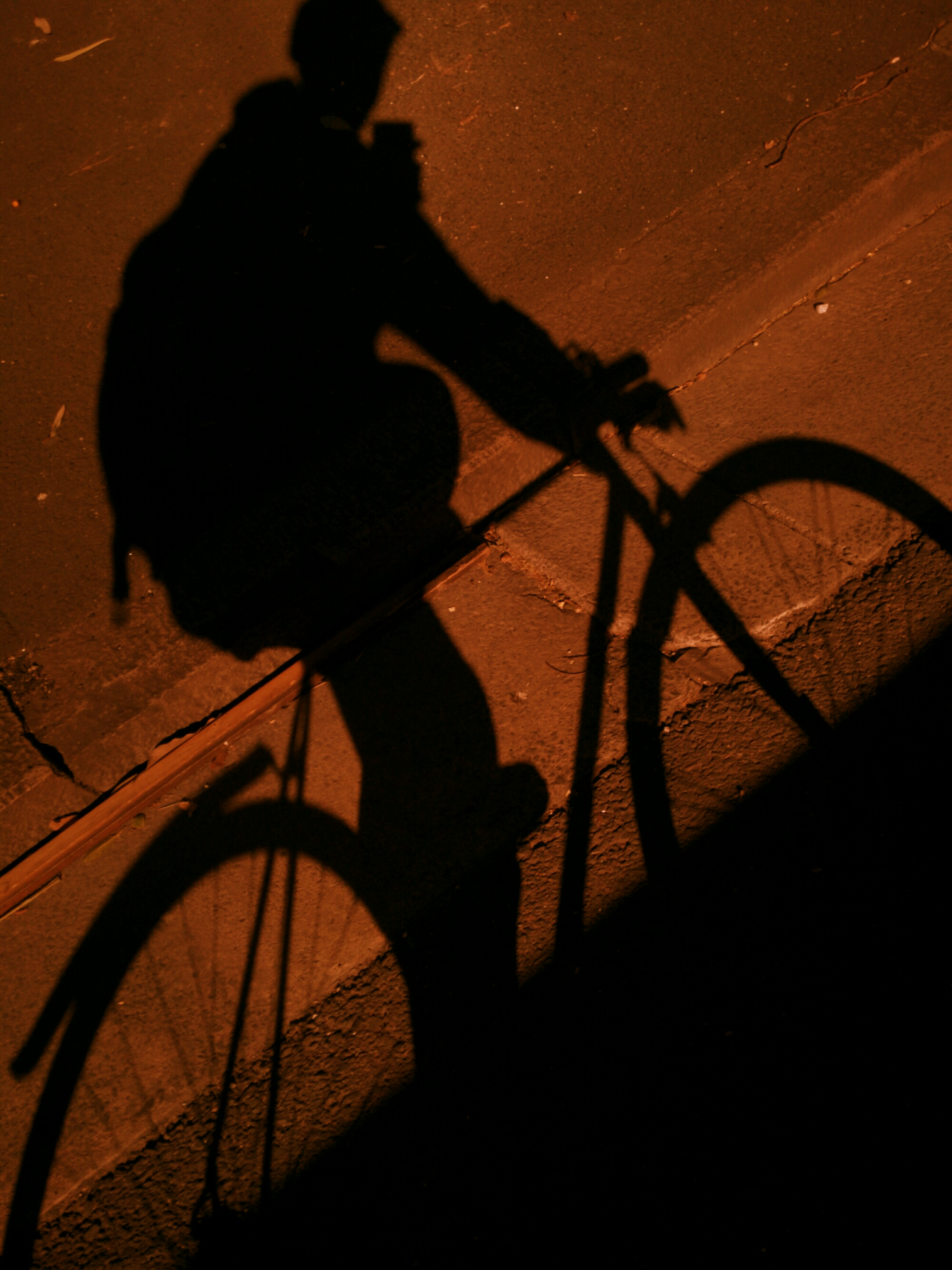
Last night whilst working on my bicycle I had the television on in the background.
There was this goddam awful show playing named (I think) ‘The Project’.
It was one of those ‘witty’ panel shows although this one was cringfully unwitty.
In one segment they reviewed the 40 final entries for the new NZ flag.
Apparently the PM there wants a new flag without the English flag in the corner, so they are going through the charade of public entries, long lists, shorter long lists and then a short list ahead of a referendum where they pick the silver fern on a black background.
The risk of course is that the bogan nation picks some bloody awful concoction instead of the silver fern, just like we in Australia ended up with ‘Advance Australia Fair’ as our national anthem. Thanks Malcolm!
Evidence for this was the personal favorites of the panelists in The Project. They picked awful, awful options that would only be suitable for airline logos, Dick Smith peanut butter jar labels, or government agency posters.
It goes to the point that certain issues shouldn’t be put in the hands of amateurs or the people.
Sometime back I watched a TED talk on the subject of flags and, guess what, there are experts on the subject that really know what they are doing.
Employ them and leave the people out of it, I say.
On the same show I had to endure a clip of Tony Abbot rabitting on about why the coalition had voted against putting the issue of same sex marriage to the parliament as a conscience vote.
In that very painful interview (was there ever a poorer communicator in the role?) he said that after the next election (and assuming the coalition gets reelected) they would put the issue to ‘the people’.
Same sex marriage is bloody inevitable so why waste zillions of dollars just so same sex marriage can be put off for a few more years?
He knows that our referendum process is easily gamed. A change requires a majority in a majority of states which makes it pretty easy to stop initiatives with a concerted effort in places like Tasmania and Queensland.
You have to wonder why people are so keen to control what other people can or can’t do.
Maybe there needs to be a ‘no harm’ clause added to the constitution whereby any majority (or even a minority) can’t assert their will over the rest of us, whether that is through parliament or otherwise, if the majority/minority can only point to the ‘vibe of the thing’ as their only objection.

Every time I am subjected to MSG it makes me feel weird. This has happened today when I was invited to a Chinese hotpot lunch.
Three things happened:
1. I could taste the MSG in my mouth for hours later. Taste is not the right word; there is this very unique sensation in my mouth.
2. Mood wise, it made me quite intolerant where I usually might be tolerant. I see this as analogous to the anxiety that can be brought on by too much caffeine.
3. Holistically my whole body felt odd.
Wiki says that whilst MSG has a unique aftertaste (tick) the negative health effects are mostly unproven in double blind placebo studies.
I can’t argue with that. I am not claiming negative health effects, just temporary negative mood effects and a bloody awfully taste and feeling in my body.
I suppose if you have it all the time then it’s just like caffeine; a pseudo stimulant that isn’t overly mind altering and can be lived with quite happily especially if you build up resistance.
I might stick with caffeine.

And so it starts…
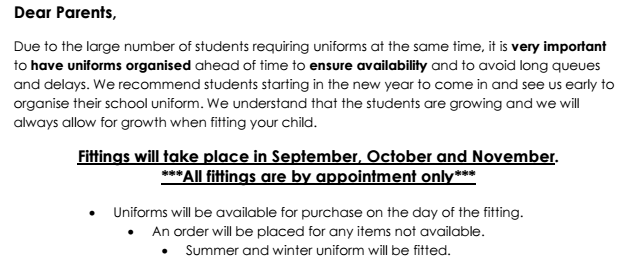
It’s just your local catholic girls high school but apparently they too have the ability to complicate the simplest things.
What I don’t understand is why all the girl’s dresses look like potato sacks.
Hang on, maybe it’s a sneaky catholic exercise in anti-fitting. ‘Room for growth’, I’m good with that.
This morning over my morning coffee I accidentally got speaking to the couple next to me at the local cafe.
They were your archetypal Bondi couple. Late thirties. She blondish. Exercise gear on. Hers including black tights of course. She was trim. He was not. Some obscure sort of bull terrier called Max. iPhones. Exercise stroller containing the real boss of the household. BMW X5 parked outside. And that weird pseudo-English drawing out of the latter diphthongs that they must practice for hours in front of YouTube, because it ain’t natural.
By trade he was formerly one of those finance sector types with no discernable trade. She was in PR. Both out of GPS schools I would guess.
A few years ago, disgusted with the then current offerings of bottled juices, they had started their own concoction with a target market of ‘their mates’. After a little success they sold out to an FMCG for a ‘large sum’.
Now they spend their time moving between Bondi and Bali, where they have a ‘villa’.
She spends her time hunting for consumer goods but he has found a more effective means of wasting money; investing in startups.
This seems to be one source of marital discontent since all these startup investments have ended up in pulp and not juice.
He can’t understand why it’s that hard for his investees to make it work. He even steps in to help them and that doesn’t seem to make any difference.
They are thinking of going back into juice to make a few more millions just in case they run out of money.
I left them to their plotting of the rest of their daily activities without a single word of friendly advice.
My prediction; in about three years they will join the ranks of business consultants in Sydney.
General Assembly is an interesting business.
It’s the start of the disintermediation of universities.
Offering courses in a limited number of disciplines it allows students to pick and choose courses that suit their needs and timetables.
It’s a boon for continuous education.
Courses can be given by anyone qualified to give them under any circumstances.
In an expanded model imagine your under-paid scientist on a shitty short-term contact at UNSW earning more by running courses at night, all managed by the app.
Eventually whole qualifications in a discipline could be earned this way.
All that the purveyors of these ‘degrees’ have to do is demonstrate the value of their ‘graduates’ in terms of pay scales.
Employers usually only care that their new hires can do the job, not where they got their degree or whether they even have one.
A degree is just a form of assurance that someone has been trained to a certain level of capability. The internet offers so many simpler and cheaper ways to create such assurances.
More importantly, many people also want to start their own business, and that might be a startup or running courses through some online app.
The whole concept of discreet employment is going into the dustbin, I’m telling you.
And along with it so will all the old-school old schools.
I have just used Sherpa for the first time; it’s basically Uber for couriering.
I am not sure it’s cheaper but it’s O’ so much easier to use.
Just get out the app on your phone or use a browser and select your current address and fill in where the parcel is going, and that’s it.
Payment is automatic. No printing out triplicate forms, filling them out and sticking them all over boxes. You can track your driver, yada, yada.
Time and time again we see that the incumbents just can’t adapt to the new reality.
All these businesses that just can’t believe that the internet is going to make them obsolete.
I mentor a bunch of CEOs in the services sector and I just can’t get them to face up to fact that this is going to happen to them too, no matter what their business.
This has got to be some sort of psychological condition.
Firstly, many people in business (and elsewhere) are quite conservative and hate change.
Secondly, too much emphasis is placed on how things have been in the past, which is obviously a poor predictor for how things will be in the future. The chance of imminent change actually increases the longer things remain the same!
Thirdly, groups of people that are facing oblivion like rabbits in the headlights seem to be comforted by all the other rabbits at their side.
I have decided to call this the Compression Denial Syndrome.
People living in earthquake zones are a classic example of this syndrome by the way!

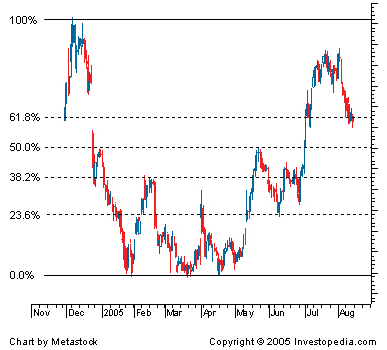
A Fibonacci retracement is a popular tool amongst traders of stock, currencies and derivatives, and also with superannuation managers that have a need to baffle their clients with bullshit.
The Fibonacci sequence of numbers is 0, 1, 1, 2, 3, 5, 8, 13, 21, 34, 55, 89, 144, etc.
Each number is approximately 1.618 times greater than the preceding number. Which is how we get the so-called average Fibonacci ratio of 61.8%.
The 38.2% ratio is found by dividing one number in the series by the number that is found two places to the right.
The 23.6% ratio is found by dividing one number in the series by the number that is three places to the right.
A Fibonacci retracement line is created by taking two extreme points (usually a major peak and trough) on a stock chart and dividing the vertical distance by the key Fibonacci ratios of 23.6%, 38.2%, 61.8%. And for good measure they usually add 50% and 100% – these representing nice and wholesome round numbers that are easy to admire.
At each of these percentages the chartists draw horizontal lines that are used to predict support and resistance levels, i.e. the critical points that might correlate to a point on the chart where an asset’s price will reverse, or not.
Traders believe that the direction of the prior trend before a curve hits a Fibonacci retracement (or the 50% and 100% lines) is likely to continue once the price of the asset has retraced to one of the ratios.
So what’s really going on? Well:
1. Because so many people believe this stuff there’s enough of them behaving a certain way with their trading that they might make these retracement lines a self-fulfilling prophecy.
2. There’s enough horizontal lines drawn all over a chart such that any reversal is near enough to one of the lines so the argument that the lines are meaningful can just about always be upheld, at 100 paces at sunset with one’s eyes squinting.
3. The chartists and tech-traders have a form of Stockholm Syndrome where they believe that there is something mystical or mathematically baffling behind the movement of stocks, currencies and derivatives. And they love the sexy sounding Fibonacci moniker which they barely understand.
4. And the traders really do need to feel special about what is essentially guesswork. Trading at a profit over time really only occurs when there is some sort of information asymmetry with respect to the asset in question.
I would also point out that the Golden Ratio of 61.8% was discovered millennia before Fibonacci was born. The ancient Greeks developed the Golden Ratio – where two quantities are in the golden ratio if their ratio is the same as the ratio of their sum to the larger of the two quantities.
Calling a line which just happens to be at the 61.8% point between two other lines the Fibonacci retracement is clearly an exercise in putting lipstick on a very dour pig.
Imagine if they just got sensible and used 20%, 40%, 60%, 80% and 100%? Nuh, there’s no magic there to bullshit about.
The best bit is that there is probably no correlation between the lines and when a stock reverses and certainly no causation.
Well, to be fair, there might be a correlation if you allow for error bars as large as the gap between adjacent lines.
Yesterday I was asked by The Conversation to write an article about CSIRO’s new Chairman (sic) (you’d think it’d be a Chair by now).
I said ‘no’ on the basis that I couldn’t think of anything positive to say about the appointment of a former branch salesman and professional oligarch manager to such a role, and also because the CEO is a friend.
As far as I know this is my first ever effort at conscious self-censoring in my latter day writing ‘career’.
I don’t feel too bad about it to be honest. It’s just a thing.
And as I said to the people at The Conversation, it hardly matters anyway; the most likely scenario at CSIRO is that:
1. They will try to make changes yet again – this time they will go for more ‘high-tech’ and less ‘science’, more ‘start-up’ and less ‘corporate contracts’, and more China and less anywhere else
2. There will be a restructure or two – they have been having these continuously since 1987. So no change there
3. They will lose another 500 staff every 18 months on average through budget cuts, as they have been for a decade
4. The residual scientific staff will become more hostile and despondent, if that is possible, especially since their scientific disciplines, on the whole, won’t be wanted
5. Just about all the press coming out of head office will be super positive with a focus on beating up the odd success
To be clear, this is the most likely scenario but the probability function is very broad. To you lay people this means that the chances of any specific prediction becoming a reality is very low; the one above is simple the slightly more likely amongst a bunch of unlikely scenarios.
As I said to Larry, no matter what type of organisation I was tasked with building I wouldn’t start from where CSIRO is today. I suppose that in itself is an interesting challenge for the executive and the board.
But I wonder if they even understand the scope of the challenge? I guess not from what I know.
But then this is Australia, and no one seems to notice or care whether government funded exercises are successful or not. So why should they at CSIRO be any different?
There is a scenario where they stop doing any scientific or technical work altogether and spend their entire budget on media and public relations.
Apart from doing the usual boring press releases they could build interactive tech museums in all the major cities, create reality TV shows like the Shark Tank, license their brand to all sorts of consumer products (CSIRO-approved etc), license the brand and all of their residual tech (on an non-exclusive basis) to start-ups for a teensy-insy equity stake (so they can claim any unlikely start-up successes), set up post office franchises selling kids collectibles, maybe take over one of the dud universities and create the CSIRO Institute of Technology, and the list goes on.
I suspect that this would actually work. Our economy lives on services (70% of our GDP) and media, so why not take the organization right into the guts of main stream society?

Well, updating windows was a disaster. I am down one laptop. He’s dead. Good job Redmond.
My particular path to disaster was thus:
1. Offered a free upgrade
2. Being a natural early adopter I couldn’t resist
3. When Win 10 was up, my chrome browser wouldn’t work. You can imagine why MS wouldn’t want to make it easy for an alternative to their new browser
4. I tried a few fixes as per forum chatter. Nix.
5. Executed (sic) the option to return to Win 8.1
6. Now it dies after login. Just a black screen. I have done all the usual things to fix it. Nix.
7. So now I hand it over to the experts and it’ll probably get wiped.
I am not even a little surprised.




Do you think it’s possible that these houses were designed by an algorithm?



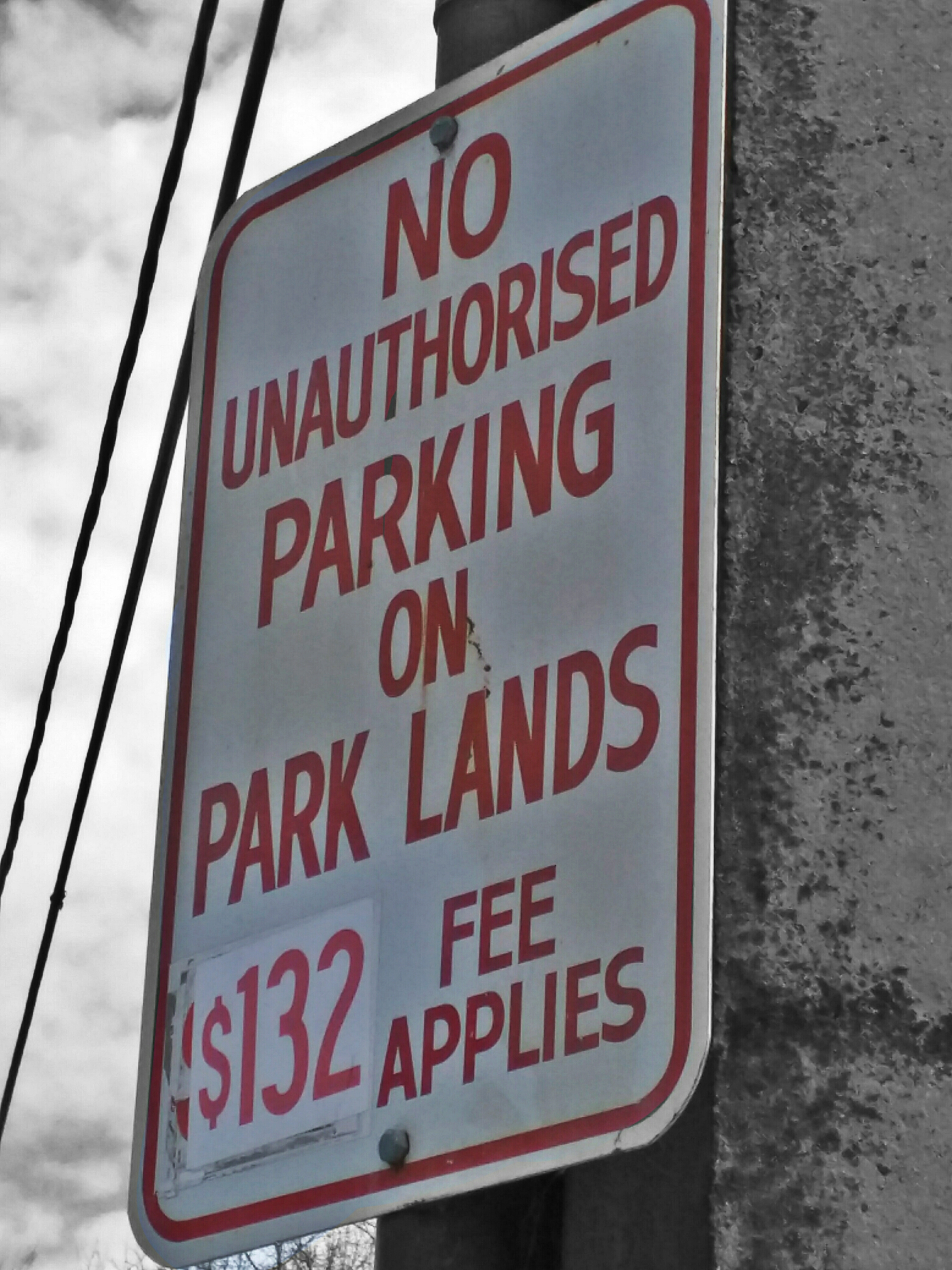
Never thought of parking in a park. It sounds like a very natural act. Interesting that it’s a fee not a fine. Who does the authorising and who does the fee-ing? I’m all confused.
This is another random thought related to consciousness.
We humans, because of our consciousness, assign a value to consciousness that is possibly distorted by the same.
For example, we have feelings and because we are aware of them we often believe that consciousness and feelings cannot exist independently.
You would probably assign a much lower value to the external signs of feelings in an animal because you would assume it is either unaware, or very much less aware, of the symptoms of its ‘feelings’.
But then think of your own heart. Most of the time its beats without you having awareness of it beating. Occasionally, under great stress, some people become aware of their heart ‘pumping’.
My point is that most of the time a heart beats quite independently of the awareness of it.
The same is true of our feelings and possibly also our thoughts.
So my proposition is that our conscious awareness of our bodily functions, feelings and thoughts is quite intermittent, variable in intensity and sometimes absent altogether.
That’s not quite the computer control system that we like to consciously believe that we have.
It would appear that consciousness floats above the other functions, dipping in and out, and focusing here and there or nowhere as needed and possibly according to some operating system rule set that we inherit and/or learn.
It would appear to me that most mental syndromes and conditions relate to a failing in an individual of the consciousness override system to kick in when the rest of us expect it to.
The underlying feelings or thoughts that drive the odd behavior are probably always there in all of us.
The same is possibly also true for action of drugs. Consciousness altering not mind altering.
Now I’m going to consciously stop thing about consciousness ’cause it’s odd isn’t it?
Right, I was just accused of being churlish towards the Chiefly Scientists of the federated states of Australia.
Additionally I was challenged to suggest what the breed should be doing (given the churlish manner of my commentary on the subject etc etc).
Well that is easy. Here is a quick and dirty list – I will add to it as ideas come to mind.
1. First, for universities and research institutes that get government grants for research, I would put a stop to the citation madness that drives researchers into crowded spaces where innovation is virtually impossible. The recent Dowling Report in the UK is a good starting point.
2. Enshrine the right that all government funded researchers own their own IP
3. Allow for abstract ideas in patents and allow software and business model patents (the opposite to what the US just ‘outlawed’). This would give local IT start-ups a more solid local monopoly which would reduce the risk for investors and this in turn would help promote a local investment community
4. Take all re-examination of patents in patent enforcement court cases away from judges and give it back to the professionals at the patent office
5. Make sure there is a speciality low-cost quick patent court which awards super large punitive damages to patent infringers
6. Introduce a really high % patent box tax concession for the patented export earnings of locally domiciled corporates (that have patents in the countries where the foreign income is earned).
7. Enhanced tax incentives and other government mandates for Venture Capital, but if and only if VC fund managers pass a suitable VC apprenticeship threshold. No self-appointed white shoe brigaders, Mac bank refugees, former entrepreneurs etc would be eligible
8. Promote the development of ‘Fonterra’s’ for the existing export markets in the meat, horticulture and education sectors where we have many small exporters with no global ‘weight’
9. Ban all political donations. (Less realistically wouldn’t it be nice if we could ban anyone entering politics before the age of 40. Maybe we could also disallow all lawyers, arts graduates, former lobbyists, former journalists and former union organisers from entering politics).
10. Sack all the current Chief Scientists and appoint a new bunch of Chief Technologists that have each been successful in a high-tech industry or two

Unfortunately I had to sit through a few speeches last night. Fortunately I was allowed to clutch a beer and I also had my phone with me, so it wasn’t all bad.
One of the speeches was by the Chief Scientist (sic) of New South Wales. She must have some Indian scientists in her employee maybe?
She said something very odd … she said that we in Australia (or was it NSW?) have all the ‘inputs’ for great innovation but none of the ‘outputs’.
I don’t think she was offering any solutions to this so-called ‘root cause’ analysis (to the problem of a lack of an innovative high tech exporting sector?) other than to imply that a good start was the current offering (namely the awards that were being handed out to former female graduates in engineering from the UNSW that were currently employed at sexy work environments such as UNSW, Rio Tinto or Sydney Water).
In any case, just for the record, O’ Chief Scientist of NSW, the reason why we don’t have measurable outcomes in the so-called innovation scale is because we hardly have any of the required inputs.
Specifically we lack these ‘input’ features:
1. A culture of very large investments of risk capital into start-ups or any other risky ventures apart from digging or pumping stuff out of the ground
2. A university sector that is a sandpit for proven or upcoming high-tech entrepreneurs and not a sheltered workshop for citation-mad self-aggrandizing academics
3. An economic and political system that is free of the dead hand of entrenched oligarchies and their third-rate management cultures
4. An employment environment that attracts our best and brightest to the innovation sectors. They all go to the professional services and the finance sector
5. A patent granting system and patent enforcement system that offers large damages to patent owners for infringement and assumes that the patent office is better at judging the merits of a patent than a judge
6. Chief Technologists at the federal and state government level that aren’t scientists and aren’t former academics, and that actually develop real policies that are implemented rather than spend their times handing out awards
6. Media commentary that is in any way critical of our innovation and tech sectors rather than simply bleating on about half-baked ‘success’ stories that are either complete fabrications or ‘gunnas’
Other than, it’s all good!

The one thing I do like about riding my pushie around Waterloo and Redfern is that car drivers never ever give me shit, no matter how outrageous my moves.
Intuitively they know it’s probably not worth their while. Clever little buggers aren’t they?

10/60 off 18 overs. What does this say for our chances in the Bledisloe you dickhead?
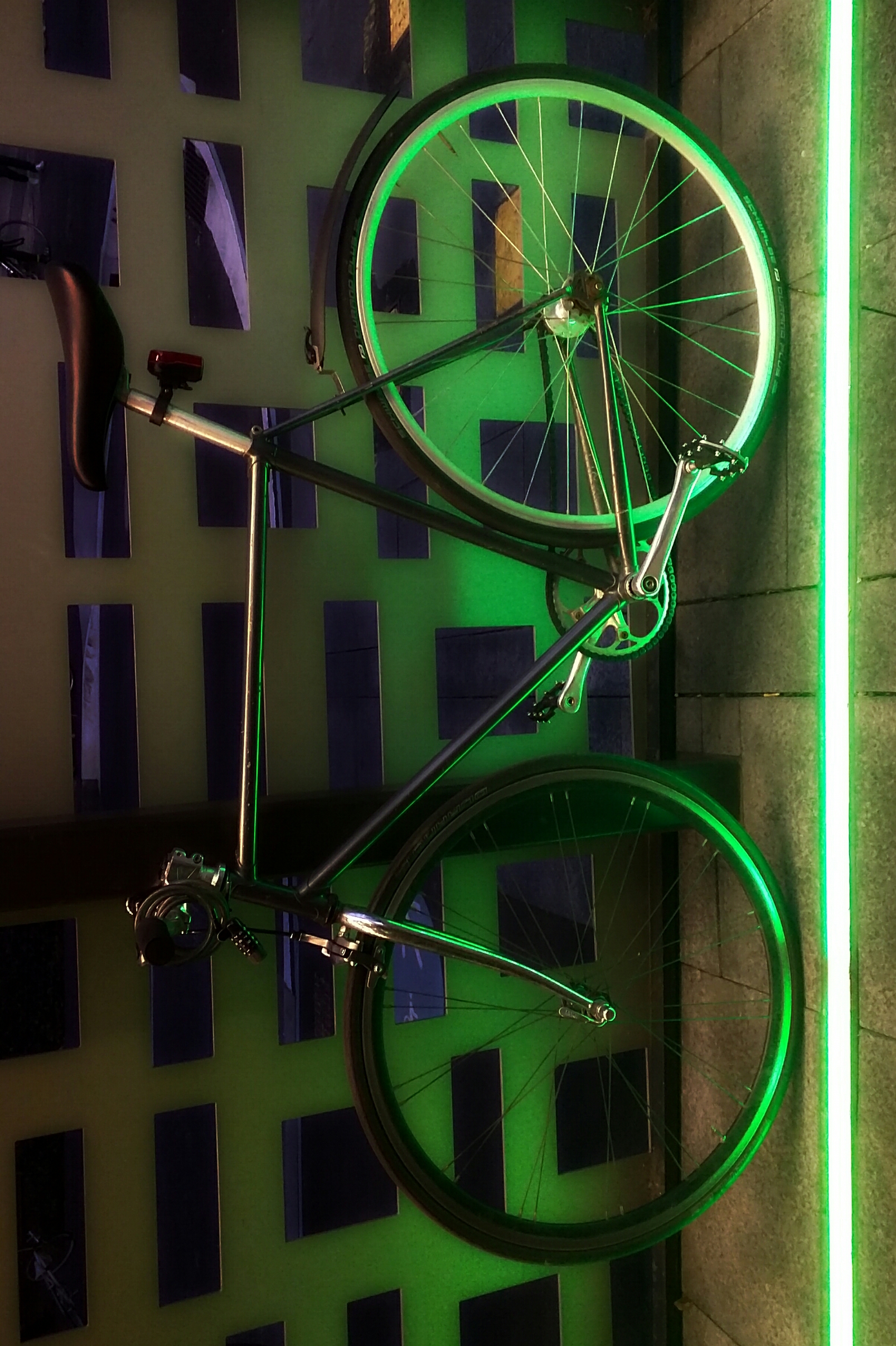
Thanks to Pete, yesterday I rode my first electric bicycle.
[Metaphor alert] It’s like not walking up an escalator; you have to consciously pedal the thing or else you find yourself cruising on the finger.
Pedalling the Skillion with its motorcycle fat tyres and 20 odd kg weight reminds me of Kurt Vonnegut’s ‘Harrison Bergeron’ (yes, really) in which the Handicapper General’s agents enforce the equality laws, forcing citizens to wear ‘handicaps’; masks for those who are too beautiful, radios inside the ears of intelligent people, and heavy weights for the strong or athletic.
Without electricity the Skillion would even bring Cadel back to peloton, the one composed of Lycra-clad pot-bellied corporate warriors puffing around Centennial Park on weekends.
Back to Harrison Bergeron. In this book Kurt extrapolated to the year 2081 by which time the American constitution was amended to dictate that all Americans be fully equal. Therefore no individual was allowed to be smarter, better-looking, or more physically able than anyone else.
Laugh? A friend was telling me a story the other day of a friend’s young son’s soccer team. In this team they rotate the ‘man of the match award’ and there is a rule that each kid has a mandated touch of the ball every 5 minutes during a game.
I am pretty sure that the parental push for childhood equality must have started in the Eastern Suburbs of Sydney. Bondi possibly, given the accelerated state of hysterical parental delusions down there.
This movement is an obvious extension of the Nanny State. First we engineer as much risk as we can out of our lives. And once that is cracked we start engineering inequality out of our lives. After that I suppose we will be so unhappy we will work on removing consciousness.
I have written previously (http://bit.ly/1T4MmV7) that, as productivity and real wealth has increased over the last three hundred years (since the industrial revolution), western governments have increasingly upped the percentage of tax they take out of the economy to ‘redistribute’.
Taxing us and spending it on behalf of all is a process related to, amongst other things, ensuring ‘equality’.
Right now all government taxation in Australia represents around 35% of GDP. By 2081 you can expect that to be more like 70% of GDP.
Most of the real work will be done by computers and robots and us humans will mostly be employed in fabricated employment related to (1) ensuring we are all at low risk of harm, and (2) that the equality laws are adhered to, and (3) a third category of jobs with no discernible function (there are plenty of these already).
Given the accelerating development of biotech I wonder if someone might have the bright idea of ensuring equality prior to conception or prior to birth. For example IQ could be attenuated artificially to ensure that no one is smarter than anyone else. Or appearances could be modified to ensure that no one is prettier than another.
Kurt Vonnegut was a genius hidden within the world of science fiction. He correctly spotted this equality trend before anyone else did.
He was trying to point out the difference between the ‘equality of opportunity’ and the ‘equality of outcomes’.
The former has merit and the latter is just plain stupid because it will enshrine a decline to the lowest common denominator, otherwise known as fair average quality.

I received the tweet below from ‘Jargonbuster’.
I wonder what sort of mind wishes to freeze the English language as it was in 1950?

The Harper Review correctly notes that ‘… Australians are enthusiastic adopters and adapters of technology and net importers of IP’.
The review goes on to note that the rules governing IP enforcement ‘should be designed to operate in [Australia’s] best interests’.
That is, water ’em down.
And by implementing policies along these lines the government will ensure that we stay as enthusiastic adopters and adapters of technology and net importers of IP.
To loosely quote Douglas Adams…
“Oh dear,” says the entrepreneurial tech sector, “I hadn’t thought of that” and promptly vanishes in a puff of logic.
Professional service sectors often have a guild-like structure grafted onto a Amway-like partnership structure.
Together, these features act to preserve profits to the partners of the companies in these sectors.
For example, the number of practitioners that are allowed into a profession might be controlled, under government decree, by a professional association, completely comprised of leading partners in the industry, that claims to maintain ‘standards’.
The number of practitioners may then be managed by setting a complex process of learning and examination, trainee fees, and even by requiring sponsorship of trainees by a member company of the association.
Managing the number of practitioners effectively allows the association to ensure that the supply of practitioners is managed to ensure that margins in the industry aren’t impacted by an over-supply of practitioners.
Everyone who enters into such a profession is offered the carrot of potential future partnership where the guaranteed wealth of these pseudo-monopolies is collected.
Of course not everyone makes it to the top of the Amway-like employment pyramids but, by the time they realise they aren’t going to make it, most in a profession have a sort of Stockholm Syndrome whereby the structure of the environment is unquestioned.
Another means by which companies and partnerships in such pseudo-monopoly sectors ensure high margins is to control salaries at the lower rungs of the pyramids (wages being their major variable cost of business).
Salaries are controlled in many ways; by working people for so many hours that the hourly rate is less than working at McDonalds, or by making people sign employment contracts that ensure all employment remuneration is confidential information to ensure worker collusion on such matters (i.e unionism) is avoided.
The victims here are the salaried workers in the sector whether they make it to the top or not.
If they make it then they are usually burnt-out zombies that hate their boring lives and the fact that they could never walk away and try other employment without losing their place in the pyramid.
If they don’t make it to partnership then they are victims of the greed of their partners in more ways than one – it’s an environment that seems to breed contempt towards those at the lower reaches of the pyramid.
The other victims of course are the customers that pay through the nose for professional services. The business margins on some of these professional services can be obscene (and many times the multiples of their customer’s margins).
On the multiplicity of such price gouging, it’s but one reason why our exporters are so uncompetitive.
Sometimes the senior partners in a sector might collude to own a key supplier to their own industry. By exclusively using the services of this supplier they can further obscure their high margins.
One would query whether this whole scam is worthy of ACCC investigation. But that is unlikely; not to worry, the internet will disintermediate these guys soon enough.
Probably sooner rather than later actually because those high margins make disintermediation just that much more attractive to the types that like to innovate in these areas.
Just for completeness, disintermediation in this context means using the internet to automate professional services or to make them completely obsolete. If, O’ professional service provider, you aren’t scared of the internet, you should be. Very.
PS to my many friends and colleagues in the professional services, of course I don’t mean your profession.

Just recently, for no especially good reason, I was looking at my family tree.
The christian name of one of my great grandmothers’ was Ingo.
It took me a while but then I got fascinated by the name, having never heard it before.
Ingo’s mother’s name was Ingogereth, even more unusual. And Ingogereth’s mother’s name was also Ingogereth. But that Ingogereth’s mother’s name was Ingagarth.
And the good thing about an unusual name is that a Google search can become pretty targeted and useful.
After Ingagarth the trail runs out of Ingos but it was well into Scotland by then.
According to one conversation that I dug up on-line, the name Ingagarth or Ingogereth is a female name of Scandinavian origin and it was traditionally found only in Shetland Islands north of Scotland.
Apparently these names were passed down from family to family in the Shetlands all the way back to 9th century when the islands were colonised by the Ingaevones (roughly these were Germanic Danish Vikings).
The fate of the original indigenous population is ‘unknown’.
The Shetlands were taken over by the Scots in the late 15th century but the Norn language (an ancient Scandinavian language) was still spoken there until the 19th century.
The name Ingogereth (and it’s many variations) derives from the Old Norse Ingigerðr.
Ingigerðr was derived from the name of the fertility god Ing or Ingqaz combined with garðr meaning ‘enclosure’. In the feminine context I expect ‘enclosure’ means ‘womb’.
My daughter is now quite chuffed that she is a miniature Viking.
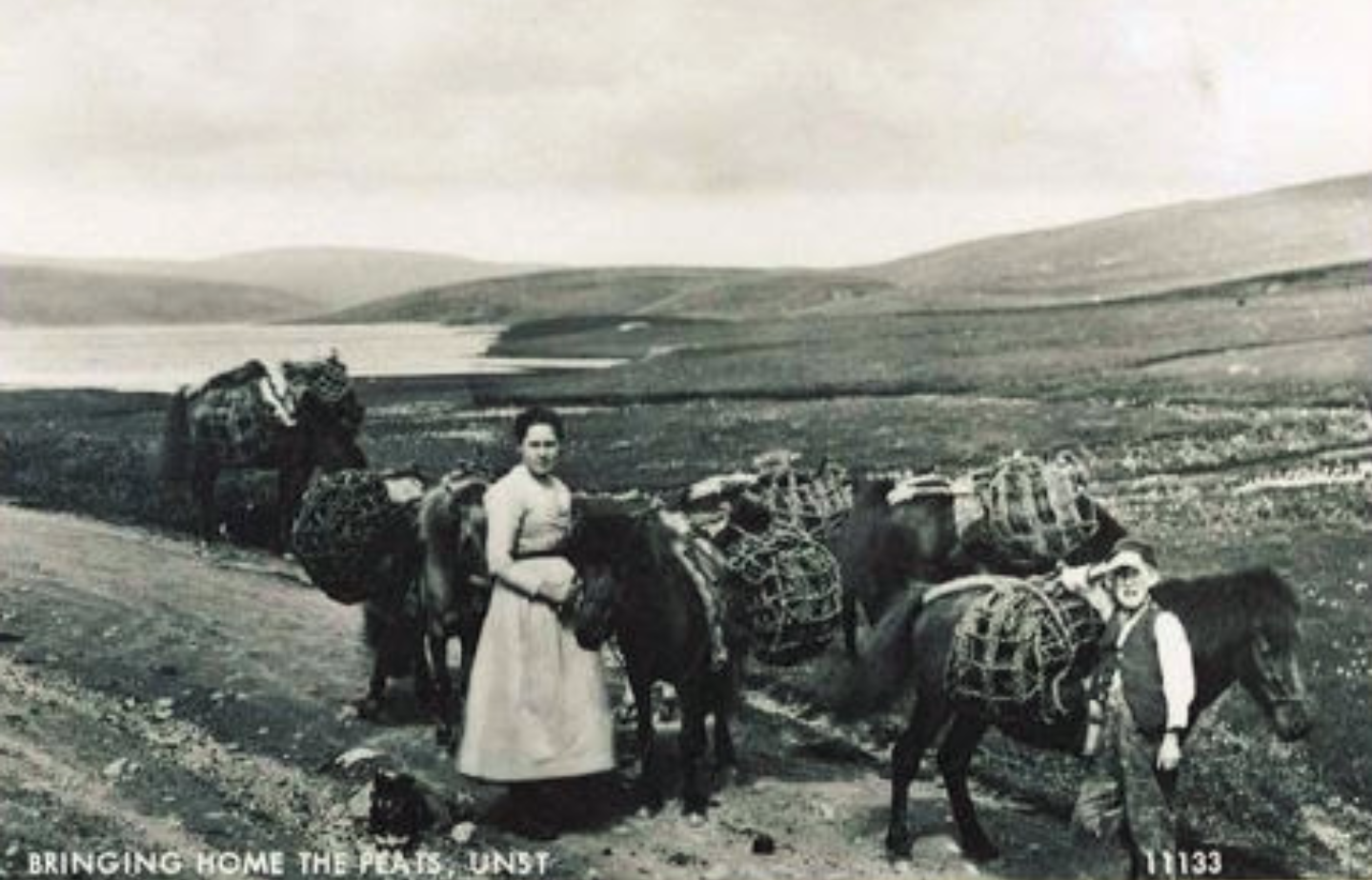
The Shetlands are as far north as Greenland’s Cape Farewell, i.e. bloody cold and windy, and looking at the photo below can you blame the locals for getting out of there when they could? Good on you ancestors!
“42% of startups fail due to the wrong product”
So screamed the headline.
The author simply doesn’t understand the difference between correlations and causations.
If a startup had the wrong product it’s because the founders didn’t have a clue and that is why they failed.
If you don’t understand this then think of traffic accidents. The authorities assign a cause to every accident – one of; speed, alcohol and drugs, or inattention.
I can assure you that you could put speed governors on every car, drug and alcohol meters that control the ignition and also readily available attention monitors, and you would still have plenty of accidents.
Why? Because some people are just shit drivers.
Same for startups; 42% of startups fail because the founders are shit at their job.
Some would be shit because they just are.
The rest are too stupid to realise that they should do an apprenticeship (or two) as an employee in a startup with an experienced founder before launching their own effort.

A final word on the Goodes saga…
Two years back I sort of guessed this thing would blow up eventually, especially after they made him Australian of the year.
The whole saga is quickly polarising Australians into two camps;
1. Those who defend the right for crowds to boo Adam Goodes for any number of reasons. Not one of these folks is saying they are booing him for racist reasons – in fact that they are making any number of excuses, just not racism. Oddly though, not one of these folks will admit the possibility even one of the people booing, amongst the many thousands, could even be racially motivated.
2. The rest who are appalled by the whole thing.
There is another dimension to this problem and that is one of the hatred of the nanny state. Many of the people who support the right for crowds to boo Adam Goodes are using their hatred of the nanny state as their excuse.
Would that they choose another issue to vent their spleen on…
What they don’t seem to realise is that Australia’s completely unsorted and shameful relationship with its indigenous people is a boil the size the whole body.
It just so happens that many of the people that hate the nanny state also hate the idea of genuine reparations to the indigenous people of this country.
They fear that the nanny state and associated politically correct policies will lead us down a rabbit hole where they may actually be financially affected by whatever the reparations end up being.
My guess is somewhere in the back of their minds they know that by any rational assessment they are guilty of enjoying the proceeds of Australia’s horrific treatment of its indigenous people over the last 200 odd years.
‘It wasn’t us’ they say, ‘It all happened before we were born.’ Or ‘we just got here 20 years ago’.
This is what could only be called a very convenient untruth.
So when you boil it all down this whole race issue in Australia is mainly down to greed.
The number of genuinely insane emotionally-motivated racists is probably quite small.
All I can say is the longer we wait to deal with this issue the bigger the boil will get.
If we wait too long the bloody thing will kill us.
The really difficult question I have is how we get this reality into the minds of all those first order greedy nay-sayers?
Forcing them to come along with whatever the resolution package we concoct without consent won’t really cut it, especially if they represent a good portion of the population (as they seem to do).
After all, in all other matters of our consumerism existence we do seem to promote a ‘greed is good’ culture.
I have this very uncomfortable feeling that using the socio-political machine to force a resolution might just be counter productive.
All I can hope for is that this current crisis (because that is what it is becoming) might create enough noise for a path forward to be identified.
The darkest hour is often followed by the chink of dawn.


 offshore westerly