Ever wondered why Facebook doesn’t have a ‘dislike’ button?
It’s a self affirmation society, that’s why.
If I posted this on Facebook I would probably get a whole bunch of likes.


Ever wondered why Facebook doesn’t have a ‘dislike’ button?
It’s a self affirmation society, that’s why.
If I posted this on Facebook I would probably get a whole bunch of likes.
Ahhhh, the email of month just came in on the last day…
“Hello, I have a patent, he is a Chinese, I want to sell it, you help me?”
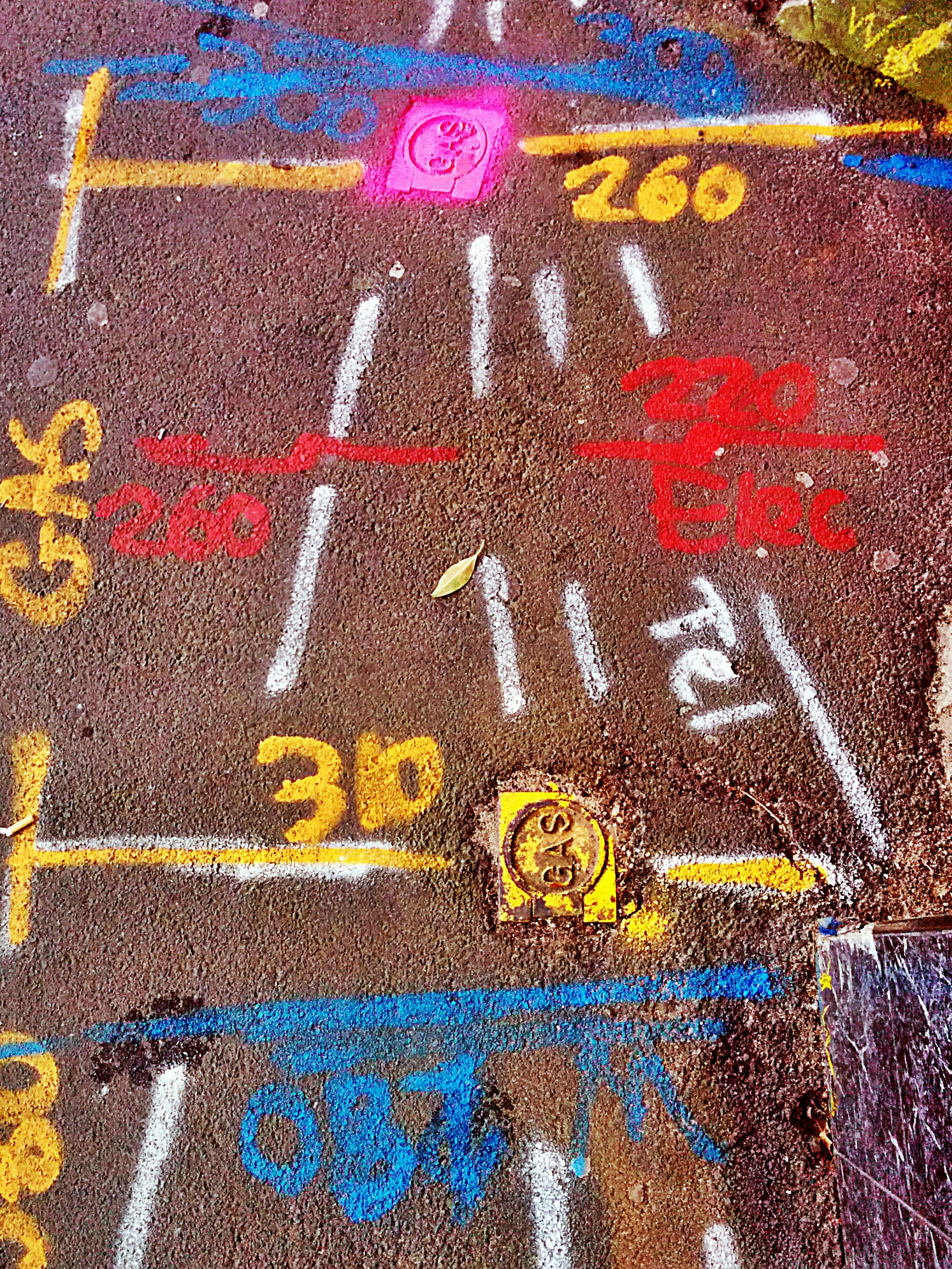
Every day on my cycling commute I have a section of path which is co-shared with one Sydney’s best-known running paths.
Over the last 6 months I have noticed something very strange; the female running/jogging/walking population on the path have almost universally migrated to black three-quarter tights, away from a motley collection of short, tights, skirts, you name it.
The two things that puzzle me are:
1. How did they all decide, in such a short period, to adopt the same uniform?, and
2. How did over half of them get conned into this given that it’s not doing them any favours at all?

Have you ever wondered why there are so many articles on the web that begin with
“Seven things you need to know…”
“Ten things that…”
? (query can you put a question mark there just like that?)
Well research has found that people love this sort of bite-sized content. Concise and easy to digest, plus people know what they are in for before they start reading. It’s got to be better than getting interested in a paper only to find that the bastard is over 20 pages long.
Indeed this sort of ‘list content’ is close to ‘evergreen content’ – that is, it can stay up on a site and keep getting readers because it doesn’t get ‘old’ very quickly. It’s information not news. Also it can happily get re-published or re-blogged many times over; even if people have read it before they will forget they have done so.
I think we need an ‘Evergreen Coefficient’ for content. Ranging between 0 and 1 where a tweet has an evergreen coefficient of 0 and the bible has an evergreen coefficient of 1. Hopefully some smart dudes will figure out some algorithms to predict the evergreen coefficient of any new body of work and this will help authors pick their niche and get paid.

A journalist I know asked me about Elon Musk’s patent ‘strategy’. He wanted a call on the subject but I gave him an email instead and it is below.
“Hiya Brad
I will save you a phone call. Here is my summary
Elon Musk didn’t ‘give away’ any patents. What he said was very legally crafted, namely ‘Tesla will not initiate patent lawsuits against anyone who, in good faith, wants to use our technology.’
How this works is:
1. He did not define ‘good faith’ – it could mean a company must pay Tesla a reasonable license fee or else. Or it could mean not sue Tesla and give them a free cross-license. or many other things.
2. This statement is not a legal pledge – there is no such thing. That is anyone infringing a Tesla patent could NOT use this statement to reduce their risks of patent enforcement by Tesla against them. That is Tesla, the company, retains the right to enforce its patents. Imagine Musk leaves for example – the next CEO will just say ‘that guy…’
As to why he would do it:
1. Tesla is probably infringing thousands of patents from other automakers without paying any license fees. Because of Tesla’s low sales volumes and potential poor publicity none of them have sued Tesla yet. This will give them another reason not to. Nice move
2. There is a fair bit of ‘patent troll’ activity emerging in the auto space and Tesla is fairly exposed to this as a small company without too many legal and financial resources. Musk’s patent play might be seeking the public goodwill in this regard but it won’t make any difference to the trolls. If Tesla’s cars infringe a patent then they should pay a license fee or settle (end of story).
3. I feel that Tesla Motors is a daft company anyway. Car technology is over 100 years old. It is one of the most complex and expensive areas of technology to get into that one could imagine. Doing a start-up in this space and trying to get the company to scale is Quixotic on a grand scale…my guess is that they just cannot get volumes and profitability to where they need to be in order to get scale and thus get costs under control. So they either stay as a low volume exotic niche player whereupon the industry, when it sees fit, will just roll over them. Or they try and promote an ‘open-source’ play where competitors get ‘free’ access.The big guys aren’t going to fall for this – they will just take their time and do it right, their way. However there may be little car companies in say China who pick up the opportunity – who knows if Musk can get a handful of niche companies using his technology then he may be able to get his supply chain up to volume and down the cost-curve.
4. Which brings me to batteries. The batteries cost way too much. The only way to solve this problem is to build the battery Gigafactory that Musk is pitching to investors. This gets production to scale and brings the costs of batteries down. The trouble here is that Musk probably can’t build a viable business plan on even the most optimistic version of growth in Tesla’s sales. So he has needed to pull a rabbit out of the hat and say there will emerge another dozen or so manufacturers of similar cars due to his ‘open source’ plan and all them will buy batteries from the Gigafactory.
Where this ends nobody knows. Tesla’s survival seems quite improbable and my guess is that it will get picked up by one of the larger automakers at some point probably at a medium loss to its initial investors, if they haven’t already bailed. Musk may be planning to sell Tesla motors but hang onto the battery business if he can get it financed. The battery business is a much better business – the key component that one can focus on and corner the world market rather than the horribly complex business of building a whole car in a terribly competitive environment – it takes at least $1b to develop a new car model – you need a lot of sales to justify this.
So in summary I think the play here for Musk is to get the battery adopted as the ‘standard’ for all electric cars so he can milk that. I think the guys that run the large auto companies are some of the smartest people on the planet and they will only let this happen if there is no opportunity for someone to gouge that opportunity, i.e. Musk has no chance to do this.
Another aspect of all this that I found interesting is the emergence of the ‘anti-patent’ types – I read the blog on Tesla’s website after he made his announcement. It was mostly supportive and rabidly so.
1. There were some that were simply anti-establishment and also hate fiat currency, gun control, all government controls, etc – these guys would hate anything.
2. Then there were all the ‘open source’ techies that have this belief that patents block innovation. This attitude could only emerge amongst software engineers where there is virtually no requirement for R&D. They have never had to struggle to get funding to do the R&D so they don’t understand the ROI offered by patents that allows their R&D to get funded. Their views are like those of selfish children who don’t like being told ‘no’ – they want to be able to write any code regardless of third party patent rights.
3. Then I suppose there were bunch of people that read magazines on the web that do not have a clue what patents are and on balance and without any insight whatsoever have decided we would be better off without them. Simply deluded and ignorant.
What this did point out to me is that there are no ‘lobby groups’ for the patent industry trying to take control of the uninformed and mostly misinformed public discourse on the subject. Which is why Musk can get away with his banalities.
cheers
Ian”


Hitherto unknown fragment of information:
The smell of curry is incredibly off-putting whilst pushing weights.
Thinking about it I can’t ever recall seeing a gym in India.

Home alone
Imagining ghosts
Alone

If you can’t disprove it then it’s most likely untrue.


The most oxymoronic example of optimism that I have ever seen is a person that uses her anger and contempt in an attempt to get another person to change their perspective.

Sometimes when I’m driving, if I have the right light and the right angle, I get just a glimpse right up the exhaust pipe of the car in front, of a metallic sheen that suggests the entrance to the muffler. Lucky days.


What a conversation…
‘Do you believe in god?’
‘I have no idea. There isn’t enough data to make any definitive conclusion’
‘But what do you believe?’
‘That it’s not an important enough question to warrant a belief’
‘That’s pretty arrogant you know’
‘Really? You’re the one out on the street accosting strangers with your beliefs’
What I actually believe is that this bloke is a fuckwit.

It would appear to me that inflation cannot be sustained unless there is a federal bank somewhere in the background creating money, probably to buy foreign reserves as a hedge or as a means to impact currency exchange rates, to increase economic activity, or even just paying off dividends on government bonds.
A quick glance on-line reveals a whole cadre of commentators bemoaning the fact that our federal banks are ripping us off by printing money simply because the ensuing inflation means we cannot keep our dollars under the bed for retirement. Inflation forces us to engage with the economy, to invest our excess money; at the very least to place what excess we have of it in the local bank. I suspect it could be a lot worse; someone might rob the stash under the bed.
It is said that fiat money has to exist in ever increasing levels as economies grow otherwise there will be shortage of ‘liquidity’. However, I wonder what liquidity really means in the era of electronic money? Deflation, where goods cost less than before, doesn’t seem so bad so long as the reduced profits also have more purchasing power. I suspect that there is no real risk that lending will cease if there is mild deflation other than the risk of borrowers not having the means of repaying if the period of deflation is accompanied by depressed consumption. If so the lack of lending isn’t really a result of a liquidity crisis (shortage of fiat money), it is due to a poor economic outlook leading to a reduced capacity for repayments. Giving the banks cheap money to lend doesn’t seem to solve this problem; one of our previous Labor governments instead gave it away free cash (they didn’t print it but they could have) in the form of goods and services to consumers.
However if there is a serious shortage of currency then the unit of ‘money’ may become an asset, like Bitcoin has been. The trouble with this is that the value of assets are susceptible to price bubbles and speculation. And if you think inflation is a problem then losing out on a speculative effort on your local currency would be much worse.
Thinking about this further it would appear that the reason we have inflation is to drive productivity and consumption. It is probably the most effective means to drive individuals and companies to both consume and invest because our earnings or debts have the highest crystallised value when we first earn them. Thereafter we had better use them or suffer the consequences.
In fact it hasn’t been discussed much but I wonder how much the industrial revolution in England was successful because the bankers over there latched onto money supply and also caught onto the idea of low levels of constrained positive inflation as the key driver for a consuming, investing and high-growth society? In fact I bet if one plotted greenhouse gas build up with fiat currency growth there would be some very nice correlations dating back to 1700. That is a slightly over-supplied fiat currency drives consumption which consumes fossil fuels which increase greenhouse gases.
One almost inevitable side effect of a complex multi-nation system of countries with different currencies and open currency trading is that the system will be oscillate into periods of ‘instability’. Well, we see them as ‘unstable’ periods because it’s either very easy to invest to make or lose money. Anyone that has ever played around with complex mathematical modelling environments (a.k.a. kinetics) will know that systems often either settle down to a single steady-state, or they have oscillating and sometimes even semi-random behaviour between a number of steady-states.
The tendency towards the latter in our global financial system is helped by key inputs from humans, very few of whom are guaranteed to understand the systems they are using. This includes, I suspect, some of central bankers who are cargo-culters, i.e. playing their role according to some barely understood set of inherited ‘operating rules’ which apply in most but not all situations. The input by the truly uncaring and greedy business and political types certainly doesn’t help. But, hey, the system is self-correcting so it doesn’t really matter that much.
But here is the real problem. The idea of reducing our consumption of fossil fuels and diminishing resources is a real challenge with our current monetary systems which were designed to encourage consumption. The idea of a replacement trading system with different motivating impacts on our behaviour is a lovely thought but things will have to get pretty serious before such a thing occurs.
One alternative is to revert to bartering. Another is to use a finite resource as a trading proxy, e.g. gold or a bit-coin (which is linked to the high energy consumption used to create it). Whatever we do, the answer to our problems is probably not going back to pre-industrial days; well not without utter mayhem because a good fraction of the population would have to go in this scenario. In order to go forward peacefully we need a system that encourages productivity gains (a.k.a. technology) but only in areas where consumption of resources is either reduced (from current levels) or converted from consumption to ‘fair use’ (borrowed for use and not irrevocably consumed).
This needs much more thought.

Lie, liar, lying … bloody deceptive grammar. Probably invented to confuse invading Germans.

This is a quote from the introduction to a well cited psychology paper.
“The need, in borderline cases, of an increased focus on formation of the psychic apparatus rather than on the issues of desire, points to the very process of formation of thought. The thought inquires itself through someone who asks the question and enables its own constitution. Unlike the desire that, in principle, cannot be accomplished, the formation of mental apparatus through the presence of the other must be achieved. One can say that questioning and specially answering becomes the subject, as it provides him with contours and territoriality. This is something that is engendered in a constant attempt to completion: to think, as to desire, is constantly becoming.”
It’s like some weird sort of pseudo symbolic/linguistic logic.
The controversial bit was where the author wrote ‘one could say..’. Or not, as his academic nemesis would say.
I feel that these muppets have over-fitted their models out past the edge of the known universe without even noticing. Madness!
Maybe only the mad get interested in it in the first place.

The idea that the only truths are those with efficacy must be most true in therapy.
It doesn’t matter if the therapy is Freudian psychology, Witch Doctory, AcuEnergetics, Grandma’s Advice or Cognitive behavioural therapy, as long as it works for you then what was said in there must be true and also impossible to prove false.
People drag themselves off to therapy because they (or someone else) has identified a problem and success (for the patient) is the complete or partial removal of that problem.
However one person’s problem is another’s opportunity (generally the therapist’s). The treatment of the problem can result in changes in behaviour or, and this is much easier, a change in how one views the ‘problem’.
Most people that go into therapy are pretty marginal in their need for treatment – the true nutters that need complete re-engineering are rare. Most people, in reality, just need a yarn with an older, wiser, trusted and independent mentor that can gently point out how their lives can be a lot easier with a few tweaks to how things are perceived and to certain behaviours.

If withholding the truth is akin to lying then we are all liars simply because there is not enough time in the day to tell all the truths.

Is there a relationship between truth and injustice?
My gut feeling is that if there ever is it’s a correlation at best and rarely causal.
This is because the perpetrators of injustice get to define the dominating untruths.
And the victims of injustice get to do the same.
Truth is the first victim of war.
The moral to this story is that outrage at injustice is a lifestyle choice unless you happen to be the victim of it.

The old saying from Keats is that ‘truth is beauty, beauty truth’. I have come to the conclusion that this is untrue despite its beautiful symmetry.
Truth is efficacy. New ideas and knowledge that become truths do so because they give someone (s) an unfair advantage in achieving their goals, be they fame, fortune or freedom from persecution.
That is, truths are constructs just like all human thoughts. They simply provide useful shortcuts that enhance human ‘productivity’.
They can do this directly or indirectly, where a combination of obscure truths say in maths, provide mechanisms for useful engineering or economics.
Useless truths disappear. An example is that given by Kevin Rudd who said that the GFC was caused by greed. Correct but useless; greed always exists but GFCs don’t. Therefore Kevin was not expressing a useful truth.
Whence and therefore untruths do not matter. They may linger a while but because they provide no benefit they will ultimately die.
The moral to this story is that outrage at untruths (hypocrisy) is senseless unless they are the temporary cause of your lack of fame, fortune or whatever else turns you on.

I read somewhere that union participation in Australia is down from 40% in the 1990’s to 20% today. The slide is continuing.
This slide is due to a ‘skilling up’ of the work force together with a perception of unions as old-school thugs and successful media campaigns against unions by all sorts of business-related organisations.
Skilled people in the services industries, that represents 68% of our economy, have the choice of changing jobs if they are unsatisfied with their current conditions.
And yet I cannot help thinking that the absence of collective bargaining will eventually lead to even further disparities in wealth distribution, especially if there is a period of very high unemployment. Business owners simply do not have the strength of character not to take advantage of such a situation.
So what to do??
I personally believe that unions are too one dimensional – their only tool of action is to promote stop work activities. That is just so old school.
A better course of action would be to target the company’s products and services via internet media campaigns. For example:
1. A company is treating its employees badly – either financially or in other terms
2. The staff association (renamed from union) verifies this and funds an internet program, possibly via GetUp, to boycott the company’s products and services
3. The whole purpose of the campaign is to promote the replacement of the board and senior management by hurting the share price of the company – eventually the shareholders will lose confidence in the business leaders and replace them
4. Even the threat of such action will ensure that business leaders act more responsibly
Business has historically sought to make stop work activities illegal. I would love to see them trying to make an internet product boycott campaign illegal. In fact any such laws would be technically impossible to enforce. And if someone doesn’t buy a product there is no act to detect and enforce.
This is devilishly clever. I hope no one reads it.

My nephew and I were chewing the fat about his plans to enter the building development game. This got us onto various building practices that are cost- and labour-saving but have been successfully blocked by the unions.
I suggested that if unemployment is the issue then Australia would be better off if we purposefully depreciated our currency via the usual method of ‘printing’ money (in reality it is just created in a computer somewhere, hopefully with good security).
My nephew asked me what they do with the money they create. I said that as far as I know they can either lend it to the banks, put in their own accounts and use it to pay for major infrastructure programs, or, more likely just pay the government bond dividends with it (i.e repay government debt with fictional money).
The price for devaluing the currency is inflation, although this doesn’t always occur if it is done carefully. But in Australia inflation leads to high interest rates which leads to political pain for the presiding party due to mortgage rates increasing.
Hence we live with a over-inflated currency that makes our exports less competitive and therefore of lower total value and also that cheapens imports, which can be viewed as exporting jobs.
This all got me wondering whether there is a means to devalue a currency without printing money. Of course there is – it’s called government mandated fixed exchange rates. It’s hard to imagine us stuffing the economy back into this little box.
To cut a long story short I am therefore currently reading “The Evil Princes of Martin Place” by Chris Leithner. This guy is very insightful but driven by a sense of injustice that is some sort of motherlode.
The whole thing smells very much of a first world problem…rather than bat on about the injustices and the power and wealth disparities in the first world he would be better placed to worry about how our current systems are going to react to the imminent end of key resources. Do our financial systems have enough flexibility to respond or will we need the whole system completely re-engineered?


I find it hilarious that I have one blog entry that attracts hundreds of views every month.
It’s for my fix of my broken Toshiba laptop battery clasps, using cable ties.
Oh the mundane world that we live in.

Who, when they are planning a murder, goes ‘yeah I will go the cross bow but I’d better take the axe as a plan B’?
Never heard of guns or knives?

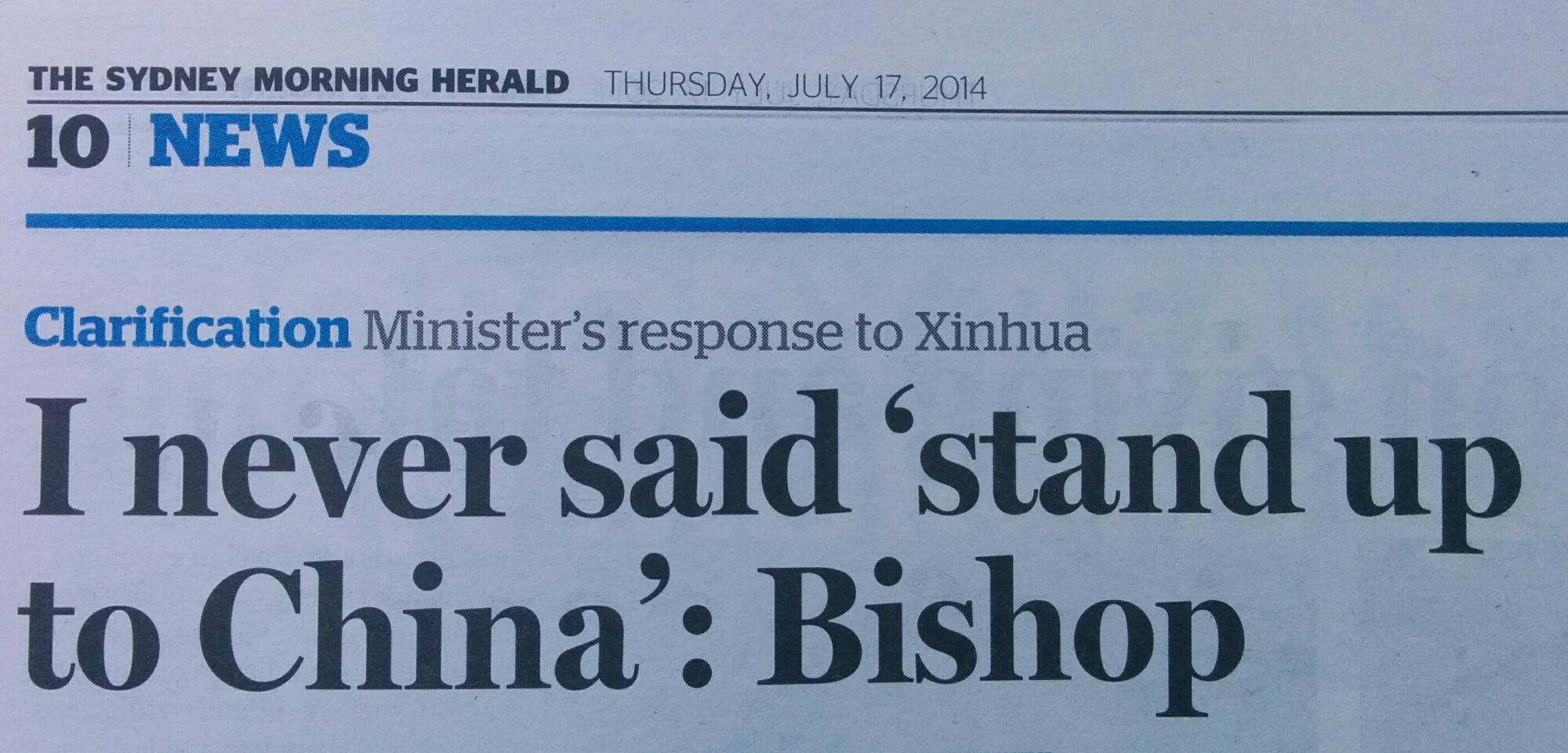
This one has a certain Chinese je ne sais quoi.

One guy has apparently written an algorithm that has generated 8.5 per cent of all the content on Wikipedia.
This is a form of automated aggregation which relies on original authorship by others.
However the Internet of Things also provides for the fully automated generation of content, e.g. quakebot (check it out).
Within ten years, trust me on this, over 50% of written content on the web will not rely on any human intervention.
Turing would be pleased when we the undiscerning do not notice.

It’s not ethical if it doesn’t get past the ethics committee….
Isn’t that the most fucked up definition of ‘ethical’ you’ve ever heard?

Today I imparted wisdom
For free
And in spades
The only thing thing I can think of
Is that I didn’t get the privilege
But then the recipients were smart enough to ask
When I was not
And yet
And perversely
The only reason I have the wisdom
To impart is that I learned it
The hard way
The yards

Arguing with a pig is a bit like whistling to a pussy. After a few hours you may realize that you like it.

Because a point isn’t referenced it doesn’t mean that the point is not true.
This is the left brain equivalent to asking; if a bear shits in the woods without a voyeur in place, did it happen?
Why do we pick on bears anyway? Most of our toilets have doors.


Peace is
Sydney winter
Sunny spot
Out of the wind
Double shot macchiato
Watching the world go by

My young nephew was bemoaning the fact the more he wants things the more the universe seems to deny him his wants.
Some of his wants are quite improbable so that accounts for these.
Others require hard work to achieve and the fatalistic approach that he has is self fulfilling.

This whole shelf at Bunnings is dedicated to killing ants.
I had no idea that people hate ants so much.

Unusual table companion this morning.

Here is why all truth is subjective…
No matter what the truth, there will be some people that don’t believe it.
If it is possible for some people to disbelieve a truth then, by corollary, the rest must believe it.
All beliefs are subjective (by definition).
Therefore so are all truths.
Geez that was tiring…I feel sorry for left brain types that tie themselves up in logical knots over this sort of stuff.

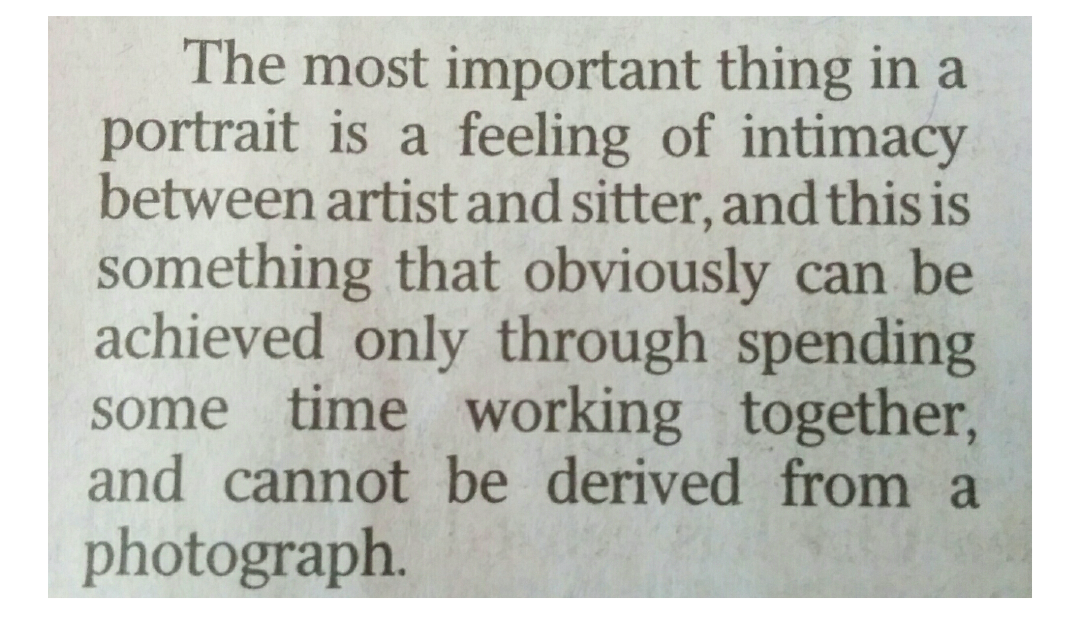
And finally on the subject of photographic portraits…


The smarter you are the more assumptions you may have to explain.
Or not.
Life is, after all, choc full of boxes.

I absolutely believe that there are people that believe in absolute truths.

For the life of me I cannot imagine what the endorsements on LinkedIn are meant to achieve.


Insanity requires that you systematically confront other people with your behavior.
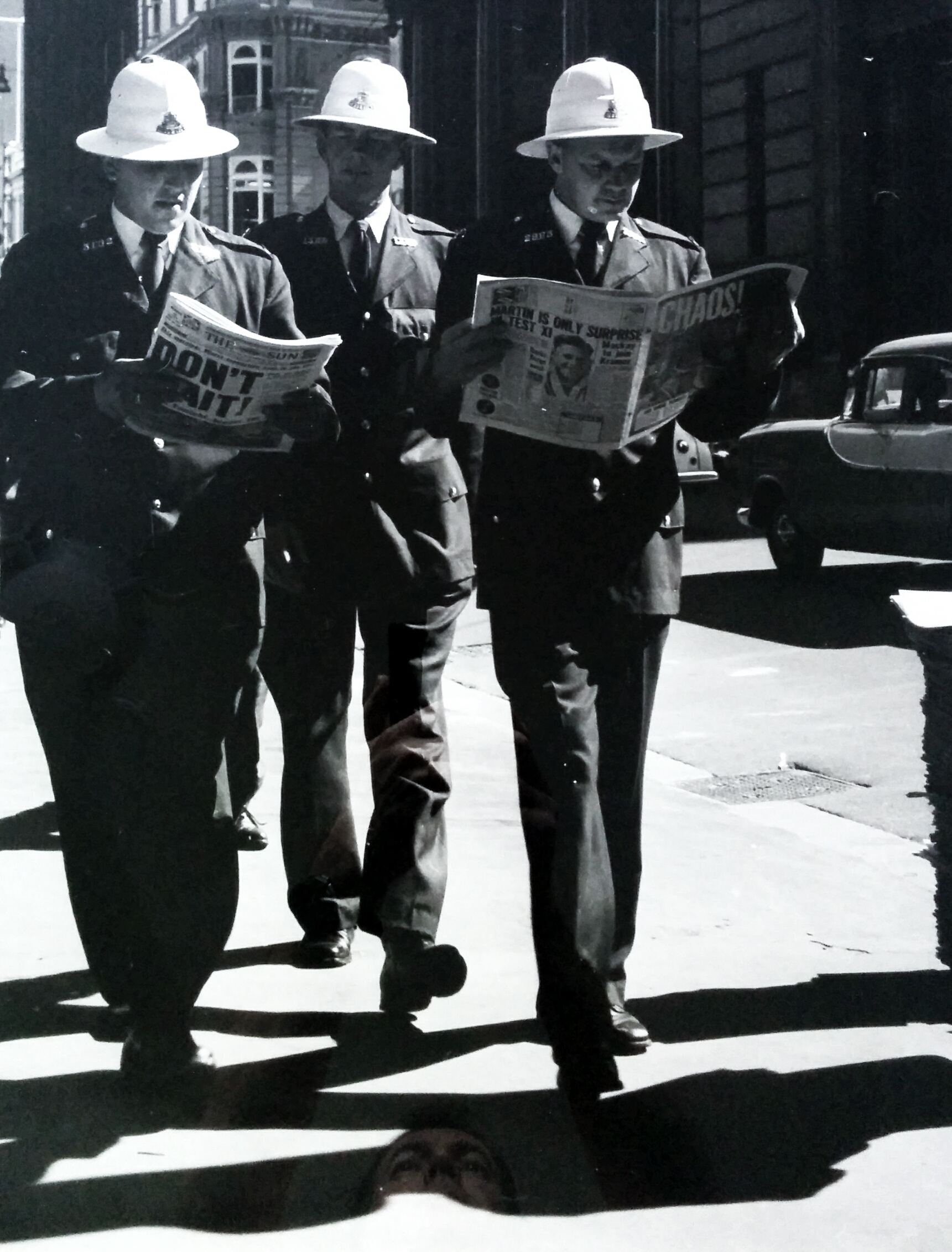
The seven stages of grief are supposedly;
– Shock or Disbelief
– Denial
– Anger
– Bargaining
– Guilt
– Depression
– Acceptance and Hope
And yet I know many people whose pride trumps their anger. Process stop.
And others that go straight to anger and do not pass go. Process stop.
Others that get stuck in depression. Process stop.
The seven stages of grief are an ideal that is rarely observed. This should be explained to people in grief.

It’s an odd word, refugee.
When you think about how it’s pronounced it should be refugeee.
But I guess there’s no precedent in English for three e’s.
In the instance of the boat people, if they are labeled refugees, does that make us refugors?
Or just respondents?

What I meant was ‘geographically or emotionally?’
What I said was ‘physically or mentally?’
A tonne of difference eh?
Or is that a ton?
Or an ounce?


Sydney’s new transport card is a wonder to behold…I just got this very unprovoked email.
They don’t want my money for some reason? Isn’t financial gain on unused deposits the modern version of the goose’s golden egg?

Antisenescence is my new word for the day.
As in, these people, them out there, are driving as if they have all the time in the world.

“bucket list” – a recent noxious weed of a term that arrived from the USA.
I’ll stop here.

Family legend has it that this bottle of port, which I received on my 30th birthday, is worth a Bolivian goldmine.
And thus it cannot be opened since it represents my plan B for retirement.
Google says it’s worth about $100.
I had not the heart to break the bubble in a bottle. Gotta love those family legends.
And who knows, maybe dad has hidden the title deeds to a sheep station in there.



I was challenged yesterday as to what the next big hardware technology could be – the BIG disintermediation.
Light bulbs are done. Cars are done. Post is done. Phone is done. etc.
Pondering it overnight I have decided that the most common item that is almost ubiquitous is the water tap.
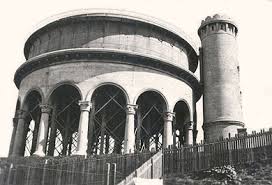
Fed by gravity from local reservoirs on stilts or on top of hills, this technology hasn’t changed in yonks.
A lot of energy is used to pump that water up into those tanks.
For a start maybe there is a way to store excess solar energy in the water system by pumping the water up in the day and generating energy at night, especially if there is excess water capacity.
But also maybe there could be some new technology that can be used to update the point of use experience. I will ponder further.
There is also the sewerage system which works in reverse to water; waste flows to reservoirs at low point from where it is pumped out along pipes to treatment facilities. There is nothing to stop it being used to store excess solar energy along the way by pumping it up to elevated reservoirs for later release at night time for energy generation.
A lot of people dream of being off-grid as individuals but it may be more realistic to be off-grid as local communities, at least for electricity if not for water and waste water treatment. If this happens there is a lot of capital invested into electricity distribution networks that is going to be written off.
If we were all immortal would we mourn more or less the accidental death of a loved one?

Hippies don’t age well do they?
It’s a testament to advertising in the negative.
Which negative? You choose.

Some content has a half-life of one day.
For example, yesterday’s news article about water running down the middle of the aisle a Qantas plane; read once and it is unlikely to be ever revived anywhere for any purpose.
Other content has a half-life of a few thousand years.
An example is the bible; a set of letters massaged into a book over a period of 1500 years. The bible isn’t exactly a page-turner but it just keeps on giving. Eventually it will run out of puff or we will.
Indeed there are all sorts of content, with a half-life of between a minute (say a tweet) and a few thousand years, where the half-life is determined by how many people hear or read the content at some time period after when it was first constructed.
Noting that the concept of half-life is usually (but not always) that for exponential decay, I asked myself whether exponential decay universally fits the decline in use of all content. I suspect so. Initially there is a peak in viewing or reading driven by many factors, but which often looks exponential. After the peak there is a drop off in use, which can be very slow or quite rapid but in most cases might be described by a sum of exponentials.
However the bible is an interesting example – because the worlds’ population has risen, the number of readers may actually continue to rise over time (Google threw up no studies on this surprisingly!). But this increase in the world’s population can easily be accounted for by not using gross numbers of viewers or listeners but by instead using a percentage of the world’s population.
Therefore the half-life of content is defined as when the percentage of the population accessing the content has dropped to half of its historical peak value.
Does a soufflé rise twice? Not often … the same is true for content. By the time it has hit its half-life (as defined by the proportion of the population consuming it) my guess is that 999 times out of 1000 it’s on its way out.
If one were to measure the half-lives of various types of content then I imagine there are only 6 or so general categories of content:
1. Those that have a half-life less than an hour, e.g. a tweet
2. Those that have a half-life of around a day, e.g. the news story
3. Those that have a half-life of around a week, e.g. last week’s footy match replay
4. Those that have a half-life of around a month, e.g. a HBO episode downloaded via Bit Torrent
5. Those that have a half-life of around a year, e.g. a good e-book
6. ‘Pseudo’ evergreen content; examples are the bible, instruction manuals for life, on-line calculators, etc. I say ‘pseudo’ because all things eventually end.
I suspect that it would be pretty easy to pigeon-hole all content into one of these 6 categories at the point of construction.
There would be some exceptions of course, some content that surprisingly lives longer than expected and in the process attracts more consumers than expected.
The value of content is obviously related to how many people consume it and this can only be enhanced (or worse case unaffected by) a longer half-life.
It surprises me that people who invest their time and money into the creation of internet content construct anything other than high-quality evergreen content.
Unless of course the short-half life content is a loss-leader for longer half-life content or simply developed in order to finance the ego.

This is a quote from our prime minister (last night):
“I guess our country owes its existence to a form of foreign investment by the British government in the then unsettled or, um, scarcely-settled, Great South Land”
This is either a reflection of calculated antagonism or just plain old fashion block-headedness.
Seriously how does one manage to get all of foreign investment, British sovereignty of Australia, and terra nullius into one semi-illiterate inflammatory sentence?
There’s genius in there, of a sort.
The tabloid media will just blithely ignore these remarks – no one was in the forest when the bear took a crap.
The stressed white debt-rich salaried masses will, if they hear it, peg it near the bottom of the list of things to worry about (probably on par as to what to do with that old 28 inch LCD TV sitting in the garage).
There will be some internet chatter amongst the converted that will reinforce all their hard-earned and well-nurtured prejudices.
Dear Queen, can you just quit as a head of state? One simple email would do it. That would fuck the whole thing up and just think of the entertainment when everyone realises that we have no process to replace you? Watching Australia attempt an emergency fix on it’s spaghetti-junction constitution would be more fun than you have had for decades. Especially with Tony attempting to rort the opportunity on behalf of all of those who believe in 1950 and servants.

Bryan Ferry’s ‘This is Tomorrow’ is playing very unexpectedly on my digital radio.
What a song.
Possibly some good memories. I am sure of it but I can’t remember them.
Geez.

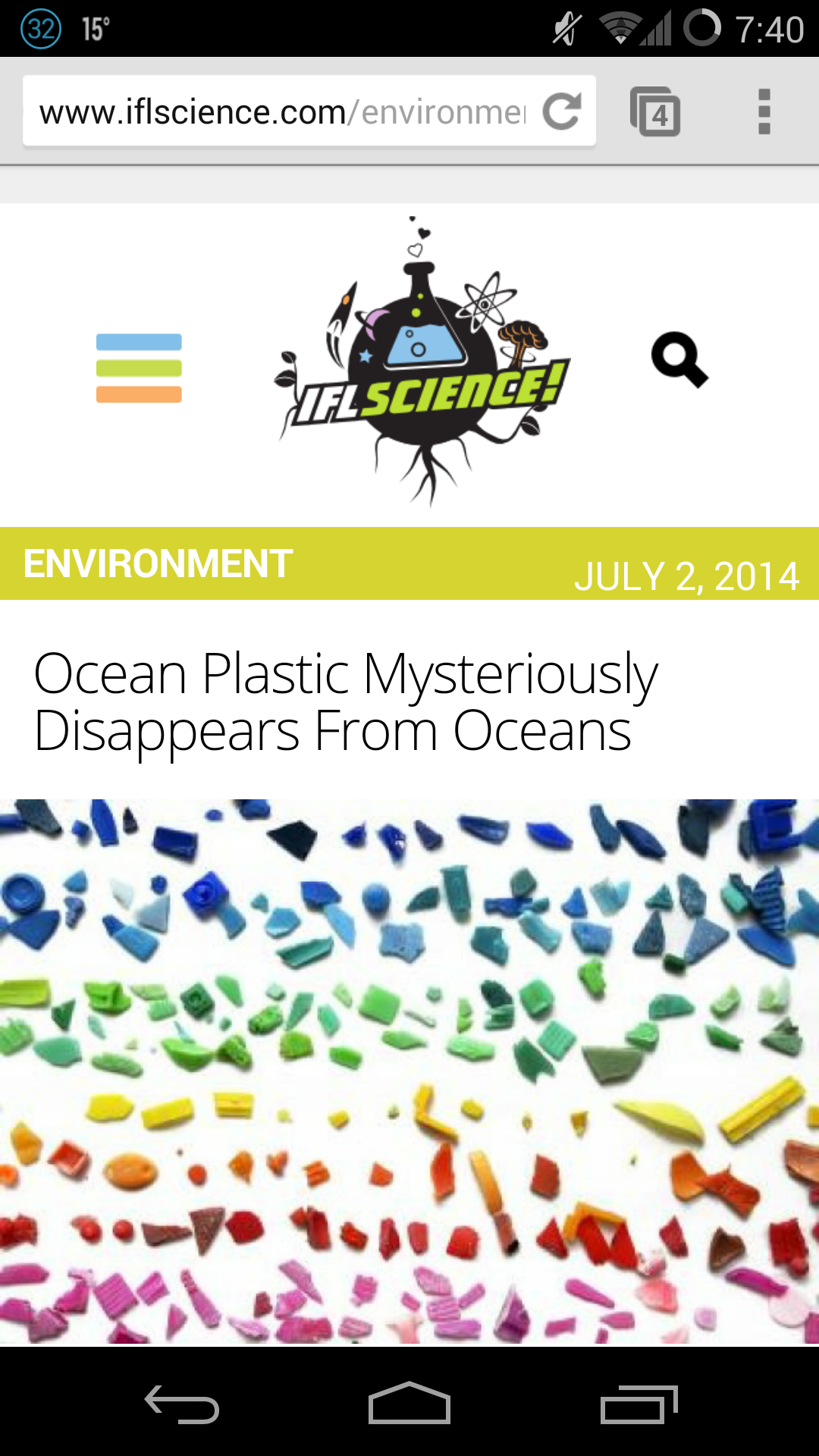
“Ocean Plastic Mysteriously Disappears From Oceans”
Screams the headline….
Buried in the article it says “marine animals can mistake the plastic for food. The plastic cannot be digested”
Really they know this how? Somebody has systematically fed micro bits of every type of common plastic to every one of the millions of species of marine animals?
Fuckwits
Lunch was sushi, sashimi and lots of hot chips.
Lola followed up with a two scoop cone.
She ran out of storage space and had to forgo the chocolate chip hemisphere and cone.
Every since she had been suffering a weird form of buyer’s remorse…let’s call it chucker’s remorse.
My guess it will haunt her into old age.




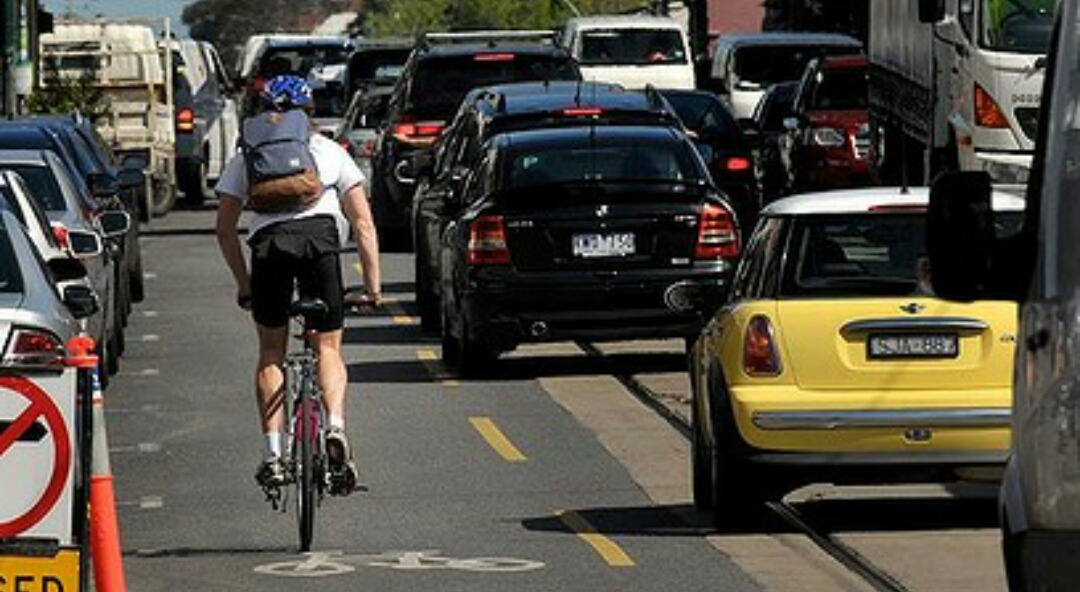
Watching various councils retro-fit cycle paths into my city is like watching a geriatric cat attempting to cover its shit.

How do you explain to a moron that innovation is a practice not a system?
Thinking twice, maybe it could be a system if the goal is to extract money off morons.
More of a racket really.

At last count I had 8 devices that connect to the internet.
Four phones, two of which I don’t use.
Two laptops.
One pad.
One home PC.
So let’s say 5 devices that need mobile access to the internet.
Does my Telco give me 5 SIMs under one account?
Yes but if I wanted 4G access on all 5 devices I pay a fixed cost of $20 per month for each device and the cost of the data on top.
So I what I do instead is use my phone as a modem for the other 4 mobile devices.
Which means pushing buttons, first on the phone, and then on the other device. And lots of them – what a rigmarole.
What is really needed is one button on the other device, say a laptop, which automatically turns on (and off) the wireless modem functionality on the phone.
This is another patent spoiler.

If all academic papers move to free e-journals the question arises as to what, if any, degree of peer review should remain.
It’s a vexed issue.
A blog such as this one can introduce any number of genuinely new concepts and yet it has not had the ‘pushback’ that a peer review process engenders.
This pushback is designed to make the work more rigorous, more cognizant of prior efforts, and structured in a standard manner.
This is, at one level, good for the author by making him/her more productive within the structure of academia.
However, in the internet era the good stuff seems to simply ‘float’ to the top and it doesn’t need pre-publication peer review.
The good stuff is subject to a post-publication plebiscite. I suspect this is ‘same-same’ when all is said and done.
And whether it’s a good thing or not I predict that peer review will go the same way as horses did in transport.
Of course there will be a rear-guard action by the academic authorities but they simply will not be able to stop the younger academics publishing outside the peer reviewed e-journal system. And the feedback and love they get here will overwhelm their egos.
In fact it has already started – there are plenty of http references to non-peer review articles in peer reviewed papers. This is the thin edge of the wedge!
When academic papers become sans-peer review let’s hope the sheer quantity overcomes the overall drop in quality.
In the meantime possibly we should ‘fix’ all that is broken about peer review. It’s just so random, opaque & subject to abuse (as a process) that it’s asking to be shot.

 offshore westerly