

Off Truman
Say what?
On the subject of couples I suspect that a good approach to ironing out the bugs is to focus equally on those things that one needs and those that one doesn’t need.
And then merge the ones as best as two can.
Balance is needed in all things love and war, after all.

A professional mentor.

What’s the chances?
On the weekend I had cause for playing with my bike bell, the one long-hidden under my seat.
This caused it to be a little loose in its fixings, which in turn meant that I had to play with it to stop it jangling.
As a result, just yesterday, I imagined a conversation with a copper that had pulled me over for the absence of the same.
And there it was. I willed it into existence.
Today, just outside the QVB I pulled up at the lights (as you do these days) and stopped right next to a motorcycle cop.
He looked me up and down and asked me where my bell was.
I stated that it was under my seat and then reached under my bum to ring it as evidence of my veracity.
He smiled and told me that it has to be on the handlebars. I doubt that is written into the act.
And that was it. No fine. Hardly a warning.
But the long game paid off.

And the best story of the day was an accidental meeting with UTS’s gender diversity leader.
She’s hatching plans to get more women into engineering degrees.
It’s a sector that is already over-subscribed. Everyone uni had the same program targeting the same minority of left handed girls.
They’ll have to start paying women to do engineering degrees. Actually they already are.
I asked her why the program existed and she answered that they wanted to get more women into engineering.
I suggested that when the problem and the solution are the same that there might be an issue.
Confusion.
I asked her whether there was some evidence from overseas that gender balance in engineering provided better economic outcomes for engineering firms.
She knew of no such data and countered that my suggestion was a non-sequitur. The issue is apparently about the vibe of the thing.
Not much I could counter there.
So I suggested an alternative approach; squeeze more men into the degrees that women normally cluster into thus leaving the women with no option but to enter into unfashionable degrees such as engineering.
That was an abhorrent concept.
LOL. And I did.

Tonight I listened to an industry guru talk micro and macro economics in the Australian context.
A key advisor to government, his microeconomics was spot on.
Macro-wise, not so.
By way of example he noted that agriculture was only 3% of Australian GDP and therefore we could adsorb it’s hypothetical loss within 9 months. No matter.
In fact he was all for running the economy on services with tourism as the only export. Greece anyone?
What he didn’t grasp is that the more industries that we lose then the more we have to buy as imports.
The value of imports has to be balanced by exports or else, Greece.
Can you imagine having just one cyclical export industry?
Managing risk well would imply having a few flourishing and world-leading export industries.
Fortunately government advisers don’t matter. Nor does government it seems. They couldn’t support or promote an industry sector if they tried.
Whatever will be, will be.
The scarier aspect of the whole charade was the general level of consensus amongst the self serving CEOs, mostly from the services sector.
From Fukuyuma; “Natural human sociability is built around two phenomena: kin selection and reciprocal altruism. The first is a recurring pattern by which sexually reproducing animals behave altruistically toward one another in proportion to the number of genes they share; that is, they practice nepotism and favor genetic relatives.
Reciprocal altruism involves an exchange of favors or resources between unrelated individuals of the same species, or sometimes between members of different species. Both behaviors are not learned but genetically coded and emerge spontaneously as individuals interact.
Human beings, in other words, are social animals by nature. But their natural sociability takes the specific form of altruism toward family (genetic relatives) and friends (individuals with whom one has exchanged favors).
This default form of human sociability is universal to all cultures and historical periods.
Natural sociability can be overridden by the development of new institutions that provide incentives for other types of behavior (for example, favoring a qualified stranger over a genetic relative), but it constitutes a form of social relationship to which humans always revert when such alternative institutions break down.
Human beings by nature are also norm-creating and norm-following creatures. They create rules for themselves that regulate social interactions and make possible the collective action of groups.
Although these rules can be rationally designed or negotiated, norm-following behavior is usually grounded not in reason but in emotions like pride, guilt, anger, and shame.
Norms are often given an intrinsic value and even worshipped, as in the religious laws of many different societies. Since an institution is nothing more than a rule that persists over time, human beings therefore have a natural tendency to institutionalize their behavior.”
On Girard; “We borrow our desires from others. Far from being autonomous, our desire for a certain object is always provoked by the desire of another person — the model — for this same object. This means that the relationship between the subject and the object is not direct: there is always a triangular relationship of subject, model, and object. Through the object, one is drawn to the model, whom Girard calls the mediator: it is in fact the model who is sought. Girard calls desire ‘metaphysical’ in the measure that, as soon as a desire is something more than a simple need or appetite, ‘all desire is a desire to be’, it is an aspiration, the dream of a fullness attributed to the mediator.”
By me; “Modern society depends on natural sociability being overridden by the development of new institutions that provide incentives for specific types of behavior (for example, favoring a qualified stranger over a genetic relative).
Such behaviour itself requires the existence of unquestioned and almost unnoticed Mimetic desire. In effect, the adoption of the desire to be as others are, draws society together into a single institution, overcoming the disabling forces of kin selection and reciprocal altruism.
Following this line of reasoning, individual societies should be trending towards greater coherence as improved technologies allow the Mimetic message to be hammered home.
Driven by consumption, Mimetic desire can never be fully satisfied. There’s always some other improved model that has more. Modern society is effectively driven by a benevolent Ponzi scheme.”
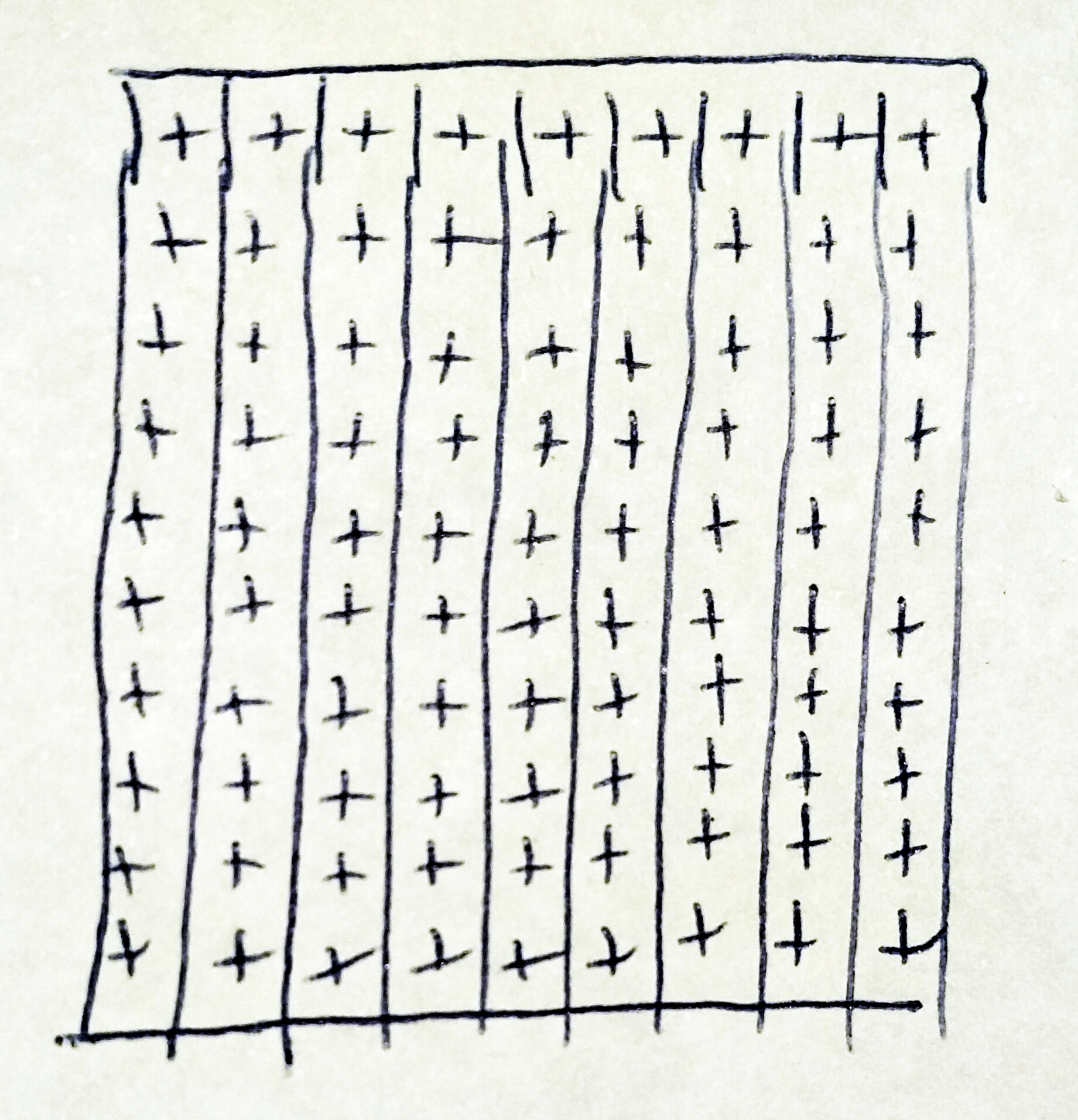
I often care about not caring about caring about things.
But I suspect that this doesn’t mean that I’m left with just caring about things (due to the cancellation of one of the carings and one of the not carings).
Nope, anti-mimeticism comes in two forms:
1. Simpletons that actually care about things. Generally they wear sandals and socks.
2. Deluded souls that are desperately deep into the dissonance. The giveaway is novelty combined with a sense of style.
Is there a problem here? Hey, that’s a nice butterfly…

A casino where, on average, the house loses but yet where they use a negative currency.
The more you win, the more chips you have, and the more you owe the Casino when you leave.
A punter couldn’t game the system because this casino would just have games of chance and none of those dodgy ones which actually include an element of skill.
You’d go in, win big or small, and pay your debt on the way out. The house could never lose because there’s no way to owe a punter any cash.
Statistically and financially speaking this casino would be identical to the current types. Everyone would regress to the mean and lose their bundles.
Except there’s nothing to stop them going infinitely into debt; that’s the genius. No running out of chips.
But I’m telling you, without the pain of losing interspersed with the odd win, your addicted punter might have little interest.
Or, knowing that the pain starts when they leave, maybe they’d go for it.
An interesting experiment indeed.

Thanks to Dave I now know that I have re-invented Girard’s concept of Mimetic desire, three years and my life span after the fact.
“We borrow our desires from others. Far from being autonomous, our desire for a certain object is always provoked by the desire of another person — the model — for this same object. This means that the relationship between the subject and the object is not direct: there is always a triangular relationship of subject, model, and object. Through the object, one is drawn to the model, whom Girard calls the mediator: it is in fact the model who is sought. Girard calls desire ‘metaphysical’ in the measure that, as soon as a desire is something more than a simple need or appetite, ‘all desire is a desire to be’, it is an aspiration, the dream of a fullness attributed to the mediator.”
Which brings me to another query; does it matter who or when?
I may have mentioned this before, but to reiterate in the context of Girard, the adulation of the pioneer is in itself a measure of the Mimetic desire of the pioneer.
In the case of Girard, were it not so, we’d have never known.
I’m not implying this is a bad, bad thing but I do wonder why, generally speaking, we pioneers prefer not to be viewed as in the grip of Mimetic desire?
Personally I blame religion which cultured the relationship between the self and the god as unique and most valuable. Cue to dissonance, entering stage left from the public vestibule.
Maybe it’s time for a completely new movement that embraces overt Mimetic desire.
Hang on, I think we have one of those. It’s the one behind reality TV and social media.
Which might explain the general slow down in innovation.

Things that needs saving: the planet, the Syrians, the Palestinians, the ABC, old buildings, CSIRO, Australian innovation, fast dogs, slow reptiles, little frogs, the barrier reef, the whales, flatheads, mullets, and even sharks.
Do people really care about these things? I don’t think so.
My close observation would suggest that people mostly care about caring about these things.
And that is something quite different altogether.
The give away is a total absence of objectivity, humour or patience.
Conversely when someone really cares about something, as opposed to just caring about caring about it, they tend to be, for example, quite objective about the subject because that is a required skill for the educatation of others on the matter.

The washing machine, it’s a thing.
My particular front loading number from Germany even includes some electronics driven by bistrophysics. Quite the added bonus.
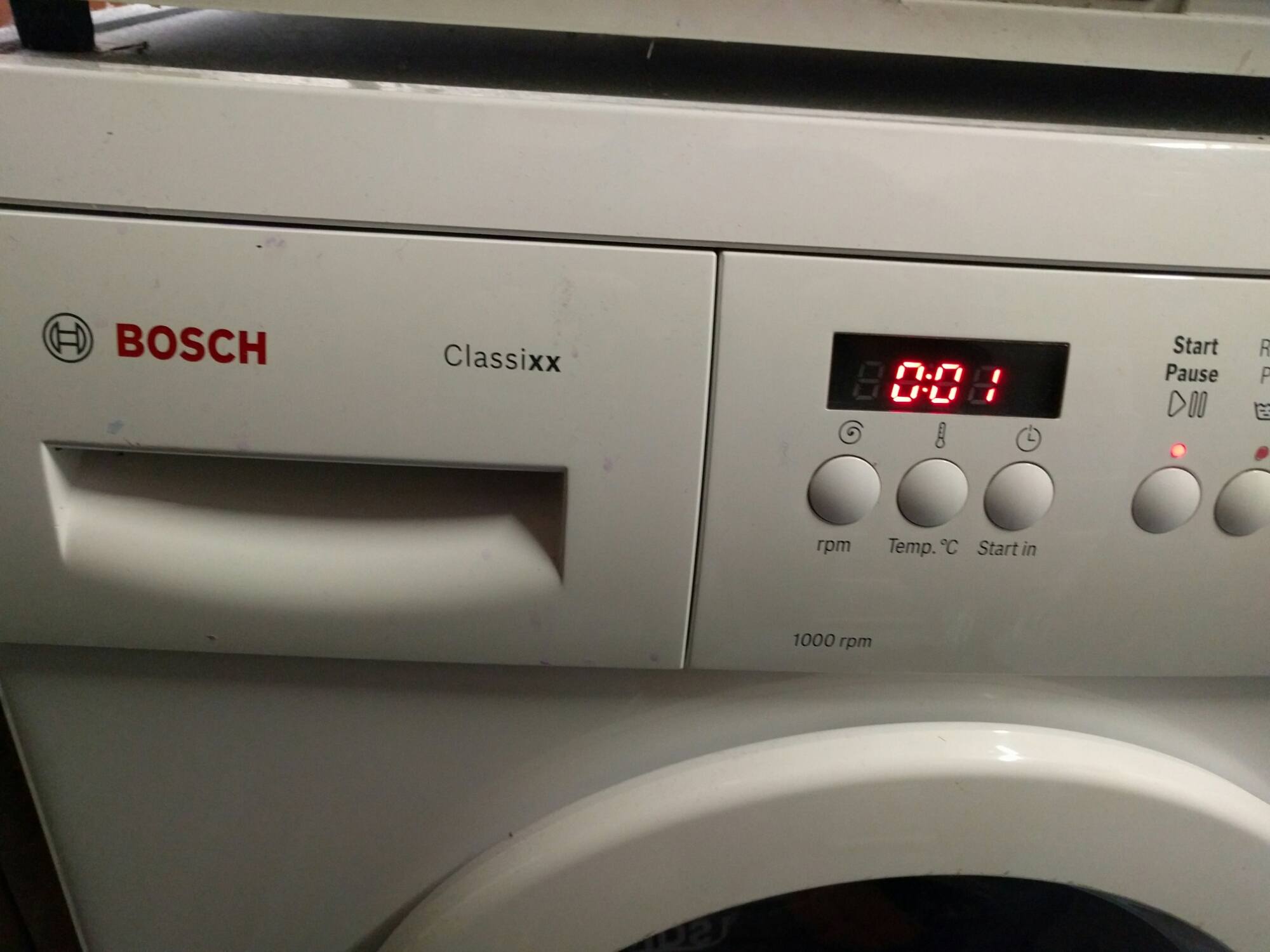
Enter into the standard washing mode and you find yourself at the wrong end of a hot process that endures for 3 hours and 12 minutes.
What, I wonder, takes so long? The clothes don’t appear to be any cleaner than the old top loader that had a 30 minutes cold cycle.
Ignoring that discrepancy, the advertised cycle of 3 hours and 12 minutes might actually take anywhere between 3 hours and 30 minutes and 4 hours and 30 minutes.
This morning the last minute actually took 5 minutes; see image below.
The fuckers are on Jetstar time! And both Bosch and Jetstar are using bistrophysics.
Einstein’s theory of relativity was based on the hypothesis that time was not an absolute, but based on an observer’s movement through space.
This theory is however just a limiting case of the more general laws of bistrophysics that state that time is not an absolute, and the degree of variation from the expected absolute value depends upon the attentiveness of the observer.
Bloody obvious when you think about it!
An albino indigenous artist recently won the “Your Very Good Idea” award and has used the proceeds to lay out a zillion white plastic things (miniature aboriginal shields, apparently) in the shape on an exhibition building that was once in Sydney’s botanic gardens.
The big idea is that the installation represents “loss and destruction”; the building burnt down, taking with it a collection of indigenous artefacts, amongst many other things.
Said art installation cannot be appreciated from ground level; the outline of the old building can only be seen from a helicopter. It’s a temporary installation so it can’t be lost or destroyed. And you’d have to be told what the white shields are.
I’d say it’s more of a visual cryptic crossword puzzle than anything else.
It just goes to show the power of artistic dissonance. It’s just a shame that it’s completely untransferable, except to a few well-meaning mates.

If I’ve said it once, I’ve said it many times; the black magic does not require refrigeration.
Left in a Floridian swamp with the lid missing, the gunk would be good to ingest a decade later.
First formulated in an era before the commoditisation of electrons, it can be ingested only by primates of the australopithycause genus.
It is in fact completely immune to all the usual first-world food degenerating concerns.
Simply stated, it’s better at repelling moths than your grandmother’s naphthalene balls. And there ain’t any moths in the cold white box.

Even the very worst dinner party can help resolve the imponderables. The take home message? Stay home at your peril.

Yesterday I received a draft non-disclosure agreement (NDA) from SolarCity (I can name them because as you will see, it won’t be signed).
This NDA contained a very unusual clause stating that the recipient couldn’t have any of the disclosing party’s confidential information (as incorporated into patents) ever used against the receiving party as part of a patent enforcement by the disclosing party.
This is effectively a free Covenant Not To Sue (CNTS), aptly named in this case.
Which got me to thinking that the VERY best form of marriage pre-nuptial agreement would be a CNTS after separation, with prescribed damages equal to the former couple’s entire combined wealth at the time.
This would force all financial negotiations to a mediated version of common law standards. And it wouldn’t be that divisive to sign before a marriage.

On the subject of professional tinnitus, the persistent buzzwords that confound the ears and minds of the employee classes are these old chestnuts; “innovation” and “creativity”.
On the surface, one might think that these modern attributes represent an essential capability of anyone wanting to get employed, remain employed, or even for those wishing to ascend glass pyramids.
But a close examination of the matter will reveal that success in these endeavours is actually engendered by an ability to appear to expend little effort in creating the impression that no effort is being spared in creating the further impression of a personal mastery of the dark arts of creativity and innovation.
In practise this means; (a) frequently using the words “innovation” and “creativity” in emails, reports and meetings, (b) attending the odd workshop and/or forum on the subjects and thereby becoming a subject matter expert, (c) not sniggering when anyone else uses these terms, and (d) (most importantly) having an up-to-date awareness of the best and most obscure second-order terms related to “innovation” and “creativity”; these are generally trademarked sub-buzzwords such as “guided imagery” and “ideation”.
Ideating backwards to the mercantile genesis, we can blame the Enlightenment and the Industrial Revolution for the situation that we find ourselves in. Let me explain.
The Enlightenment brought us creativity and the Industrial Revolution brought us innovation.
Both movements were based on the then novel idea that the ‘things’ can always be improved upon, a belief that required, inter alia, a disrespect for all things ‘past’, and an apprenticeship in innovation and creativity.
Indeed, the Enlightenment was driven by the desire to free mankind from the shackles of Despots and the Churches; mostly “done” in the West.
The Industrial Revolution hoped to make everyone free from poverty so that a few could get very rich; again, mostly “done” in the West, at least according to the standards of the 1600’s.
So if these movements have been successful, why do we cling to the concepts of innovation and creativity, the vestiges of the key modi operandi of these movements?
If you think about it, it’s quite obvious…
Once the Enlightenment and the Industrial Revolution were successful in the West, we no longer needed a disrespect of the past. Accordingly it was not necessary to throw out the concepts of innovation and creativity just because (a) they were old-school and (b) we didn’t need them any more.
And without the formerly required truth-seeking apprenticeship no one was (or is) required to notice, or care whether any attributions of character (such as innovation or creativity) are real or otherwise.
My guess is that innovation and creativity are on the rotisserie of recycled buzzwords because of nostalgia for a time when things were a little more interesting. If you will, their continued use represents a metaphorical appendix (of the body corporeal type) in a bored and dull mind.

What, I wonder, is the peak decibel difference between a bell and a glockenspiel, both made of the same mass of the same metal, and both struck with the same hammer?
Somewhere there will be a somewhat inward looking fellow who will have the background and interest that would allow him to ponder this puzzle and estimate a credible solution.
But where does this fellow lurk? How do I find him?
Probably not on a private blog, I’m guessing.

Just say, for instance, someone put a gun against my head and said that I had to start a serious IP services business. What would I do?
Firstly, I would bypass copyright, trademark, design – these are being rapidly disintermediated and, to a large extent, the service providers in these areas are just undifferentiated form fillers that will be replaced by technology.
Which leaves patents where, even the most sagacious judge would admit, a keen sense of intellect is needed in order to do a good job as a service provider. It’s a complex business.
Of course I could provide disintermediating services to the service providers in the area. But who wants to be serving a supply chain that lives on hot air? It could just evaporate one day. That would be too uncertain for the likes of me. Plus, as I have learned, it’s best if you like your customers.
Then there are the pirates, picking over the pile of bones in the patent world, looking for nuggets of gold. Chinese diggers and their drunken publican masters; that’s how I see these guys. Patent trolls, brokers, patent banks, patent funds, industry funds etc. They are all just arbitraging fear without no intention of creating demonstrable value for anyone but themselves.
Which would leave me with patent service providers – the patent attorneys themselves – otherwise known as dickheads, nuggets and nerds (DNR).
I have said in the past that only ca. 1% of the owners of patents have a positive IRR on their investment in patents. And only about 10% of this 1% make that positive IRR on purpose. That is, there is about 0.1% of patents that are intended to be value creating and actually are.
Who are these unicorns that own these 0.1% of patents? Well, they fall into three categories only:
As a rule of thumb, these are the only three categories of businesses where the CEO is intimately involved in patent strategy. That is the give-away.
As a service provider, the minute you start dealing with a VP, or worse still, a sub-VP (sometimes down to shit-kicker manager) then you know that your client has absolutely no idea what or why or anything. Then you are down to having boozy lunches with the IP manager as a means for keeping your business going.
So, back to the proverbial gun against my head; my patent services company would ONLY serve the three categories of customers above, companies that have proven they are in the 0.1%, and where the CEO is one of the direct client contacts.
Do these guys have a problem with their existing patent service providers that needs solving? You betcha.
Do they know? Nope, because no one has articulated an alternative.
The problems are as follows:
In my service provider company I would assemble the very best patent attorneys, patent strategists, licensing experts and patent litigators. The back office would include the best analytics people available. The patent attorneys would be free to focus on what they are good at and not be forced to work on the full gamut of activities.
Of course, there wouldn’t be a patent attorney as CEO of my vehicle. They’d be very well payed employees; no more.
I would have teams dedicated to a small number of major clients. They would work from day one to map out an execute the most aggressive value creating patent plan for the clients. Patents would be acquired and patents would be filed. Licenses would be granted and received. The team would work hand in hand with the clients to play cat and mouse chess with the company’s competitors. Litigation cases would be launched to warn the market, for example.
Think of an IP investment banker, working with clients from day one. My guess is that this model would be so profitable that it could be funded under a LP model and that my service provider could then just be an equity partner in the clients.

Woody has reminded me that I must mention the Thermomix.
A person that shall remain nameless has one.
It’s a very, very large and expensive ($2,000 expensive) blender incorporating a heating element and a mass balance.
Upon expression of my incredulity, the thing was defended on the basis of an example, being risotto.
Here is the recipe of choice…
It’s bloody exhausting just thinking about it, and I love tech.
The old way looks like this:
Bring stock to the boil in a saucepan. Reduce heat and hold at a gentle simmer.
Heat the butter and oil in a large, heavy-based saucepan over medium heat. Add the leek and garlic, and cook, stirring often, for 4 minutes or until soft but not coloured. Add the rice and stir over medium heat for 2 minutes or until the grains appear slightly glassy.
Add the wine and cook, stirring, for 2 minutes or until almost absorbed. Add a ladleful (about 125ml/1/2 cup) of the simmering stock and stir constantly with a wooden spoon until completely absorbed. Continue to add the stock, a ladleful at a time, stirring constantly and allowing the liquid to be absorbed before adding the next ladleful, for 25-30 minutes or until rice is tender yet firm to the bite and the risotto is creamy.
Divide the risotto among serving dishes. Top with shaved parmesan and the remaining lemon rind to serve.
I am not sure I see the point of the $2,000.
I couldn’t find a single recipe that was demonstrably less work than the old fashioned way.
Unless you are into baby mush food. Simply shove in all your left overs and cook them to death…

For my own future reference; passing off is a common law action, which protects goodwill and reputation built up by the use of a trade mark or business name of a product or service.
The elements of the passing off action must satisfy:
Some types of passing off include:
Essentially, passing off actions involve situations in which a representation is made in the course of trade, which deceives or causes confusion amongst customers either online or in the real world.

When your average consumer desires the new Subaru Forester does it believe that the Subaru Forester will help it fit right into the middle of the Gaussian distribution of consumers, or does it just believe that everyone else just believes that the Subaru will help them fit right into the middle of the Gaussian distribution of consumers?
Conversely, when your six sigma consumer desires not to buy the new Subaru Forester does it believe that the Subaru Forester will help it fit right into the middle of the Gaussian distribution of consumers, or does it just believe that everyone else just believes that the Subaru will help them fit right into the middle of the Gaussian distribution of consumers?
If you follow this closely you will see that there are two key issues here:
If you let go of beliefs regarding what other people might believe then you are just left with your own beliefs.
And because you have let go of worrying about what other people might believe then you don’t have to worry about, or have any beliefs with respect to what they might believe, with regards to your own choices.
Then you are just left with your own beliefs. But lacking the counter-weight of your own beliefs about other people’s beliefs, these will automatically disappear up the wazoo.
Then you will be free not to buy the Subaru Forester because of the 100 or so very annoying features, royally fucked up by the Japanese R&D team responsible for developing it’s interior and user interfaces.

Cars and houses; they represent a significant personal investment.
Hence the designs of these are generally much closer to the conservative middle of the Guassian than cheaper and more consumable goods because their progenitors cannot afford the risks of low IRRs.
The question is whether the middle of the Guassian is really the middle, or whether everyone just believes everyone else believes it’s the middle.
Popular actionable truth absent hypothesis; also known as a belief. It’s all good until it’s not.

I, for one, would be opening the exit hatch. Bugger the bird. Maybe they’re worried about pterodactyls.
The hatch opens inwards and then you chuck it out, as instructed, at the bird. Makes sense to me!

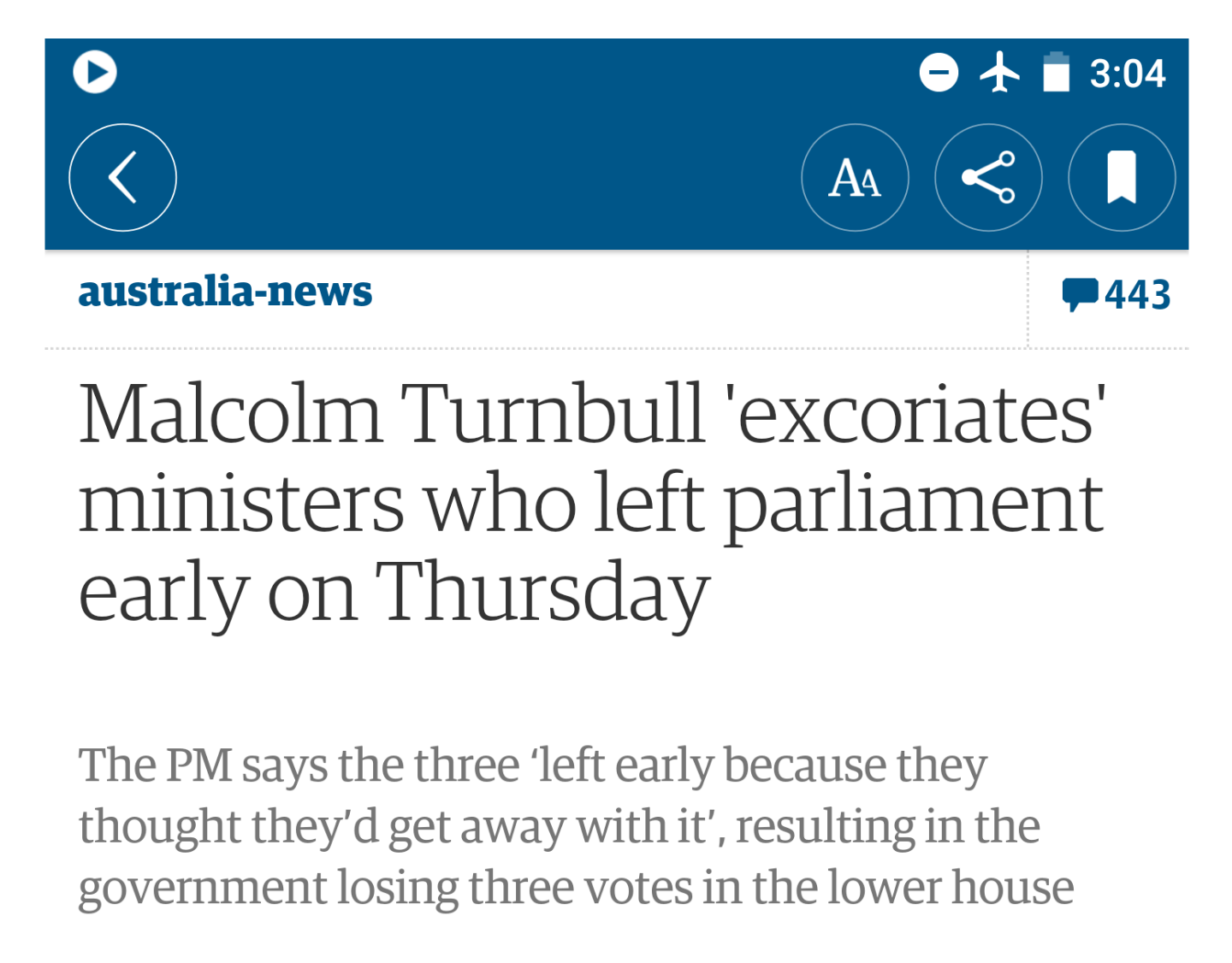
It would appear to me that all those women are actually getting excoriated, not exfoliated.


Sponging off Miss Fisher, headphones disguised as a wrap-around necklace. Loose ends you notice, and kept in place by the loop around the neck. And beads instead of rubber.

But the lowlight was definitely the time when I let off the shooting ball firecracker (Roman candle) through an air vent, at foot level, during a school disco.
Ex, ex, ex excoriation, Ian.
Then there was the time I absent-mindedly set fire to the recently marked (with kerosene) baseball diamond whilst visiting Hunters Hill high for an inter-school match.
Now that was excoriation!

As I recall there were times when I left school early on the assumption that I’d get away with it. Excoriated almost every time…


I’m sick of my headphone cables breaking at the maximum stress point. Take one spring out of a cheap pen and one set of headphones and selectively merge.

“As reported by a Chinese top level official channel to Jesa (the news is not public yet), Shanghai Government will reduce the total surface dedicated to industrial production by 400 km2. This will have a great impact on many enterprises, which will be forced to relocate outside the whole Shanghai municipality territory. Also, industrial parks around the municipality will suffer from this guideline. In the near future, Suzhou zone could likely experience the same decision since a few signal in this regard are already clear.
Companies that will be soon forced to relocate are the ones that:
– Do not comply with the municipality’s environmental production standards;
– Are not profitable after years of activity;
– Are characterized as small-sized businesses.
The decision was taken in order to redevelop and modernize the territory surrounding Shanghai into a sustainable one. Industries working in “smart technologies” as well as the ones supporting the service sectors will be incentivized to establish in the transformed area.
Jesa warns regarding the probability of this guideline to happen since years. Nowadays, the trend in China is to upgrade the coast industrial areas into service oriented hubs. At the same time, heavy production industries are starting to move to the West and inner regions.
In light of these facts, Jesa strongly suggests to refocus the business strategy on time. If a company’s “China Project” has not yet started, it is fundamental to evaluate different solutions in terms of localization. Also, if a company already works in China, it is advisable to consider relocating the branch to provinces nearby Shanghai or even to further areas in the West.”
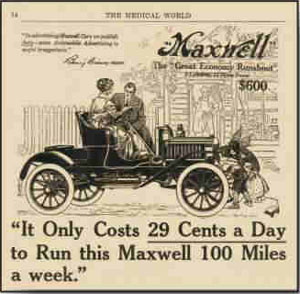
The new finance niche is invoice trading.
Essentially these financiers will give you cash for your company’s unpaid invoices at a discount to their face value.
Next these guys will bundle up their customers into unholy stacks with wide variations of risk and flog derivatives based on these and eventually being down the western economy.

 offshore westerly