Lola on the subject of primary colours…
‘Dad, I know red is supposed to be a primary colour but I reckon you can sort of make by mixing yellow and brown and maybe a little green, or something like that.’
Nice one; questioning orthodoxy already.


Lola on the subject of primary colours…
‘Dad, I know red is supposed to be a primary colour but I reckon you can sort of make by mixing yellow and brown and maybe a little green, or something like that.’
Nice one; questioning orthodoxy already.
So what’s the chances?
I was sitting waiting for the business forum to start and the bloke next to me, noticing that I was reading Patrick Smith’s wonderful piece on the Goodes affair, opined that the booing isn’t racist.
He reeled off half a dozen excuses, the usual ones.
I said that I didn’t believe him and in my eyes these actions are racist.
He said he didn’t care and that it was a free country and he could do and think what he wanted.
I laughed at that one and suggested that we have more laws and regulations per capita than any other country on the planet. Free country my arse.
Then I suggested that even if he truly believed that his opinions weren’t based on racism would he want people thinking that he was racist? Or that he was in the company of racists?
Right there I caught him wobbling in his resolve.
You could see the mental balancing act; his gut feelings of subterranean racism, his righteousness, guilt, fear and shame – these feelings and thoughts were all at war within his skull.
Right at that point I let him off the hook because I didn’t want his brain to explode and leave the indelible stains of shame all over my free volume.
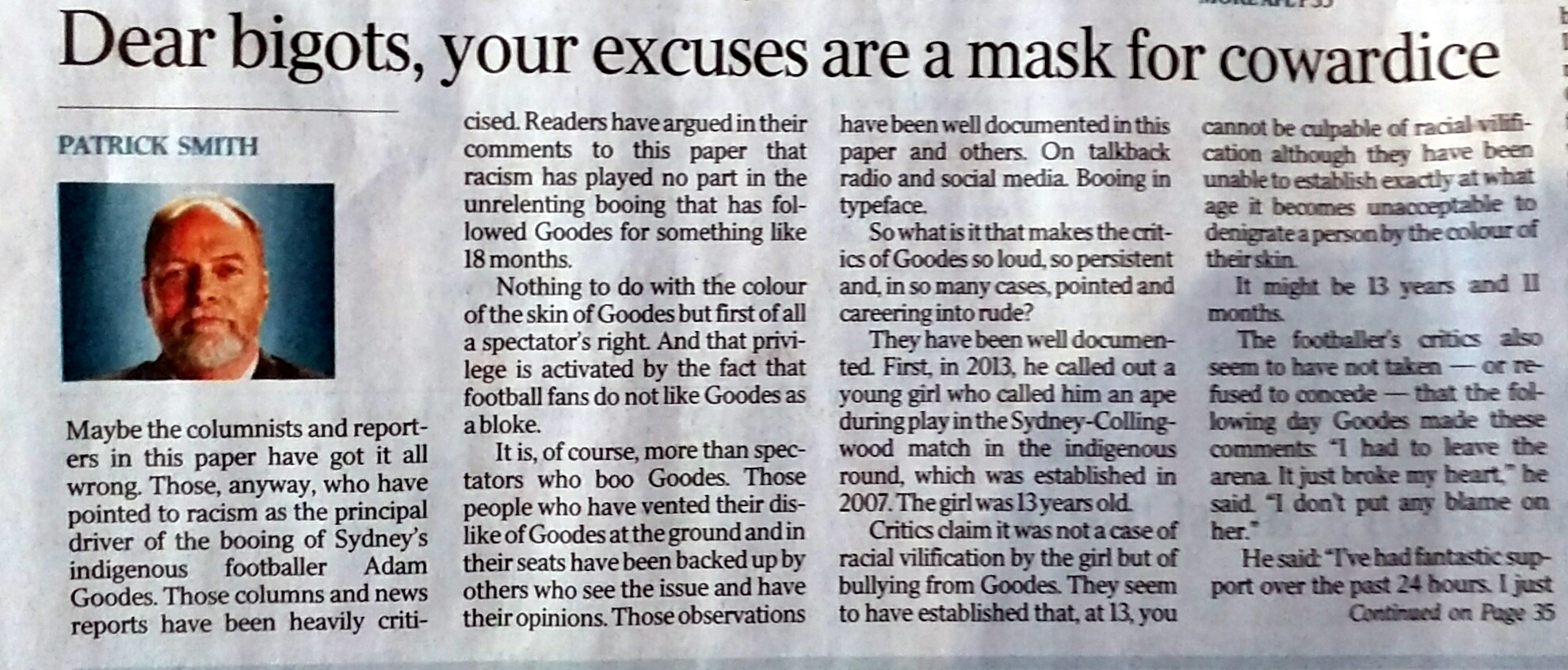
Adam take a bow, you have flushed out all the racists in the country…
My view is that there are three types of people in the racist dimension;
1. Those that are racist in both their limbic and neocortex systems, their feeling and thinking parts of their brains, and don’t deign to hide it.
2. Then there are those that are racist in their feeling limbic brain but override it in their thinking neocortex, most likely because they know it’s socially unacceptable. These are the ones that think booing Adam Goodes is OK and justify it by saying he is too big for his boots, or that he made a little girl cry or whatever.
3. The rest aren’t racist because the limbic feeling party of their brain isn’t so wired.
Adam, by his actions, has flushed out the large fraction of society in the second group.
Boy, do we have an issue do deal with here.
Divisive it is but sometimes that’s a good thing. It’s much better to have the division out in the open so we know what we’re dealing with.
The solution? Death and renewal to be honest. But this will help to make sure that the youngsters are properly schooled.
What a brave man.

Wiki says ‘Consciousness is the state of awareness or the quality, or, of being aware of an external object or something within oneself.’
Philosophers, spiritualists and, more latterly, pseudo-scientists (the clinical type) and scientists have been trying to unravel the mystery of consciousness to little avail.
I recently viewed a ‘banned’ TED video of this character named Graham Hancock who is an advocate of certain consciousness altering drugs.
His view is that we are all better people (in the collective) if we carefully experience certain altered states of consciousness through the use of drugs.
He notes that modern Western society has a serious issue with mind-altering substances because we are fixated on the rational here-and-now and, by implication, control and power structures that rely on people being in this rational here-and-now state.
One of his most interesting statements was a question he posed as to whether the brain was like an electric motor and consciousness was the electricity running around inside of it. In this model, he says, when the brain stops so does the electricity.
The other model that he proposed is that consciousness is like a TV signal that the brain picks up and that even when the brain stops the TV signal may still be out there in the ether.
I hate hypothetical either/or’s because usually real life is a bit messier than that. So I smell a rat.
Which led me to wonder as to how consciousness developed in the first place.
My guess is that as animals (including us humans) started socialising there was an evolutionary benefit to observing and understanding how others in the pack were feeling.
Later on as the human neocortex developed this observation of others may have extended to us elucidating what others in the pack were thinking.
So the initial benefit of consciousness might have not been self-awarenesss but other-awareness, which would be beneficial in any social pack activity.
However, we may have started using our own rational processes to process the incoming other-consciousness data to produce higher order predictive models of others as to their likely behaviour.
My proposition is that other-consciousness developed firstly through being aware of others and eventually this led to a heightened self-consciousness as we started used rational predictions to modify our own behaviours through both feelings and thoughts to even further optimise the outcomes from social behaviour.
This would explain the effect of mind altering drugs and their effect on consciousness. Let me explain;
The key impact of mind altering drugs and even dreaming during sleep is to drag one into the self and in the process to cut off much of the outside world including that data associated with other-consciousness. That is, the other-consciousness associated with the awareness of others is mostly removed during sleep and whilst taking mind-altering drugs, and replaced with memories and internal constructions.
Using classical scientific methodology, a limiting case of this proposition would be a human being that has never had any external stimulus of any sort. I would suggest that self awareness (self-consciousness) would never develop simply because its primary purposes is to process and utilise the ‘other awareness’ data (other-consciousness).
So in this context this is what I can say about various of the usual chestnuts on the subject:
1. Having a holiday from other-consciousness (i.e. dreaming during sleep or drugs or whatever) must be an important part of the program because dreaming is built into our make-up. Running dummy scenarios in our dreams may just be our method to calibrate our models. Running drug altered models may have real benefits by randomly showing us radically alternative solutions that we wouldn’t otherwise arrive at.
2. When we die our ability to pick up the signals of other-consciousness is lost. Logically our ability to process this data (the self-consciousness) would also be lost and indeed it would be also quite redundant without the key data to process. The so-called TV signals of all those still alive might be still floating around and the memory of us may live on in others but I doubt very much that our particular version of the program is floating around in anything but fragments of our impact on others.
3. Noting that everyone on the planet is connected through the so-called six degrees of connectivity and that with 7.5 billion people on the planet we are therefore also connected to just about every molecule on the surface of the earth, it’s not hard to imagine that all of our incoming other-consciousness data incorporates an awareness of the whole thing. When our collective physical existence starts presenting a threat to the ecosystem and some yellow canary people start feeling these emotions, this must ripple through all of our self-consciousnesses to some degree or another. This may make us feel ill and therefore, for those more ‘open’ and inclined to ponder the issues more deeply, a desire to process this other-consciousness data in some dream or drug induced sessions.

Loyalty and justice…
There’s a case for being passionate about these principles but using them as guidance for the daily execution of friends and strangers will drive you nuts.
There are simply more ways to fail these tests than there are conspiracy theories on Facebook.

To what do I owe this dark symmetry?


There are a number of groups that now offering yielding debt based on the Australian government’s R&D tax concession.
My prediction is that this is the beginning of the end for this particular hand out.
Governments usually don’t like underwriting finance schemes unless it’s their idea.
I was wondering what would be an interesting set of countries to visit in an attempt to avoid the usual tourist traps and then the light bulb went off…
The list is already there I just had to look for it in the right place:
The following countries simply have no laws to enable patents to be obtained and/or enforced: Afghanistan; Eritrea; Holy See (Vatican City State); Maldives; Marshall Islands; Micronesia; Myanmar; Palau; South Sudan; and East Timor.
Apart from the Vatican not too many of these places are on the usual tourist agenda.
I’ve been to East Timor and that was great; not too many rules. So there’s my validating data point.

I simply cannot believe they want to raise the rate of GST. It’s just so easy to divide things by ten…
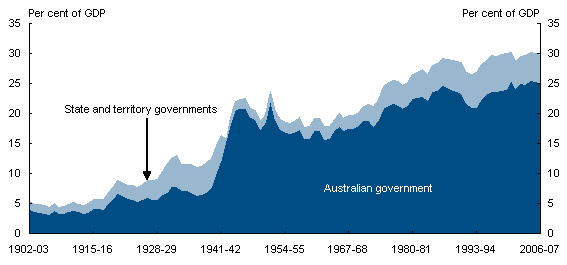
I think we all have to accept that as our economy gets more and more productive that the overall rate of taxation will just keep rising (see plot below) for a whole bunch of reasons but primarily because (a) we don’t really need all that extra wealth, (b) it’s a great means of redistributing wealth, and (c) more tax equals more control and power for those egocentric weirdos that go into politics.
You don’t hear any of them saying let’s just spend less. Or let’s just cap health and educations spending as a % of GDP and work within that budget for the best outcome.
Given that taxes have to rise (forever) me-thinks the best tax to raise would be state property stamp duty. I would make it 20% for residents and as high as 50% for foreign buyers (we may as well fleece them).
Oddly these high figures wouldn’t affect house prices too much. People spend up to their specific budget limit on a property and they don’t care who gets their money, the former owner or the government.
What this means is that house prices in the city are just about completely set by supply & demand, and budget limits. The prices have absolutely nothing to do with any inherent value of the land and very little to do with the true cost of the building.
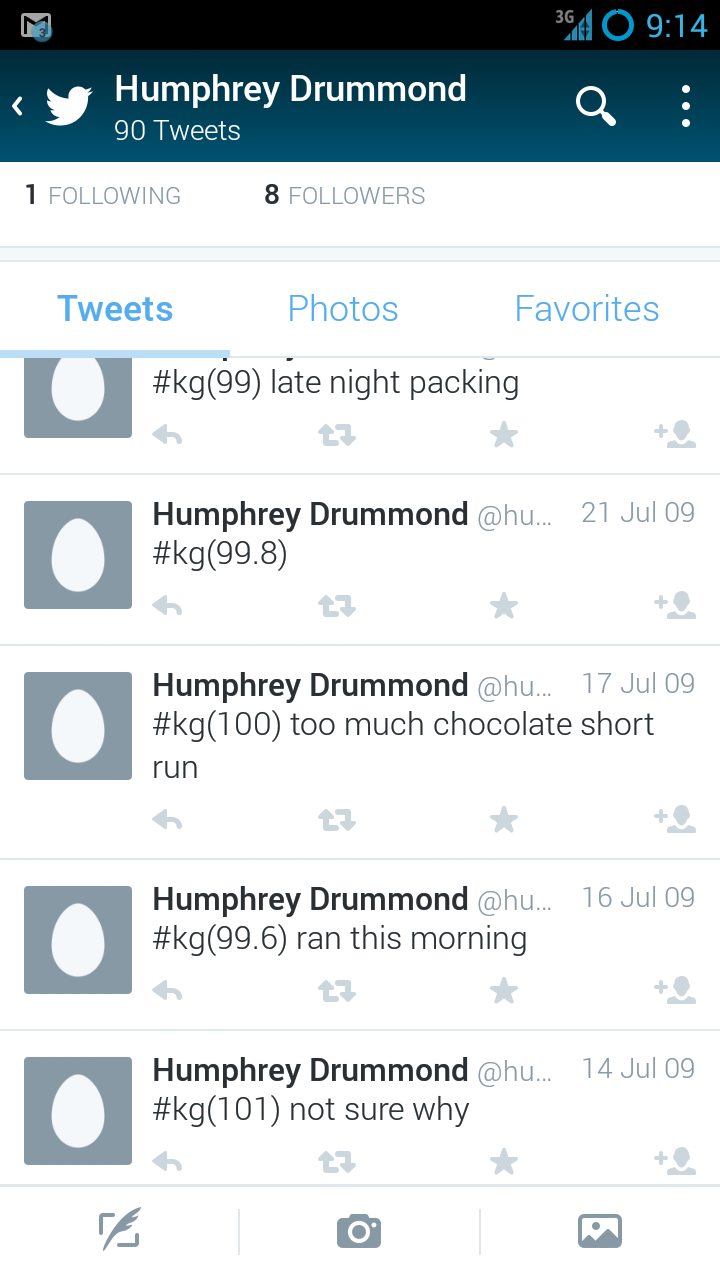
My old mate Humphrey seems to be using Twitter to keep tabs on his weight. Another example of privatising the gains and socialising the losses.
For what it’s worth folks the story of Humpty Dumpty is just an early embodiment of the second law of thermodynamics.

Never drink your own bathwater unless it’s chock-a-block full of Berocca after a big night out.

What do you think? A skywriter fuck-up or a case of frustrated friends?

If you’re searching for a new business concept let me help you out…
70% of Australia’s GDP is in the services sector.
Apart from a few oligarchical ASX top 20 dinosaur corporations the services sector is chock-a-block full of SMEs.
Just about all of them have finally caught onto social media and they know it’s going to be the primary way to interact with their customers and the rest of their supply chains.
They know they have to post content on LinkedIn, Facebook, Twitter, Instagram, WordPress blogs, and others, on an hourly basis or even more frequently.
But what they don’t have is content. And no idea how to create it. Videos, articles, tweets, photos, blogs, reviews, etc. It’s just not their expertise.
Which is where you come in.
No matter what your interests are there’s a business sector whose business is your interest.
It could be cooking, toy trains, gardening, accounting, fashion, science, drones, Lego, truck logistics, whatever.
You simply approach businesses in that sector and offer them a month’s free introductory service.
In that month you create relevant content for them and push it hard on their accounts on all the social media platforms, which you take control of.
Here are some handy tools for this task … http://www.searchenginejournal.com/top-10-tools-for-managing-your-social-media-accounts/
You measure the levels of engagement and show them the great analytics. Where possible you link that engagement directly or indirectly to sales or customer and supplier support.
In month 2 you get the customer on a recurring monthly fee, anywhere between $1k and $100k per month depending on the size of the company and how much work you’re doing for them.
The content? Your ideas mixed with stuff pinched from the web. You’ll become pretty good at morphing this borrowed content so that it looks original. Look out for any genuinely original thoughts in your field and jump on them quickly.
After a while you can start recruiting part time casuals to help.
You can build a whole services business that becomes the domain expert for social media content management in your chosen business sector niche.
Your business can eventually go global.
Eventually you will be able to buy a house in Bellevue Hill.

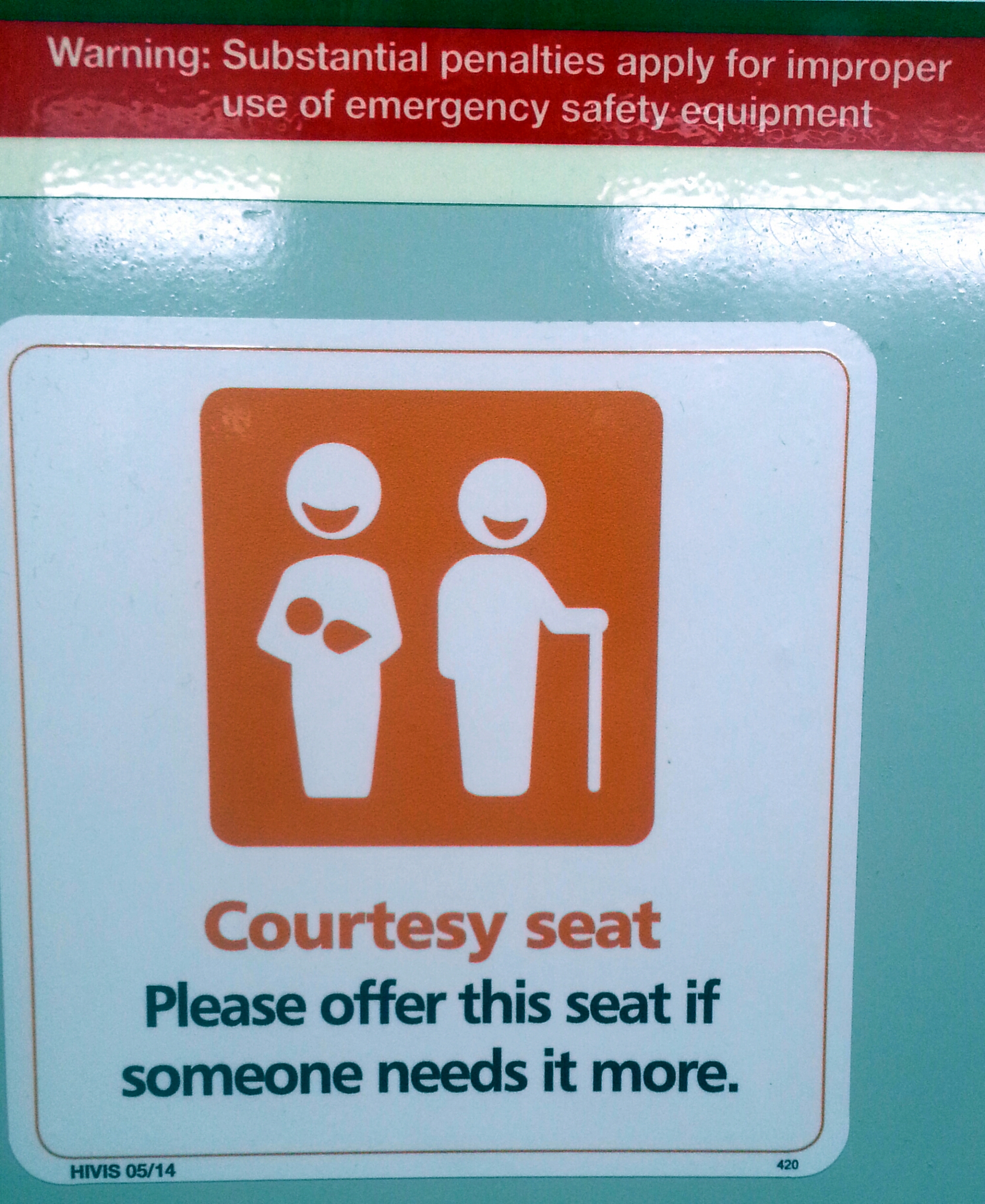
Warning: Substantial penalties apply for improper use of the English language
Well guess what, not only do we get to rate the Uber drivers, they get to rate us.
I just discovered that I have a 4.7 rating of 5.
Which means that I am a very good bloke according to my driver.
Eventually Uber will have enough data to give us all a geniality rating.

Proposition: women are better at multitasking than men.
Firstly, I smell a rat because this proposition has usually been proposed to me by women as a point of superiority.
Secondly, the examples given have smacked of cherry picking the data to provide non-statistical evidence for the proposition.
Thirdly, there are conscious tasks and subconscious tasks and most of us can simultaneously handle one of the former and a number of the latter.
Fourthly, the ability to do so probably depends on training and not gender. Although maybe one of the sexes may be encouraged to train more than the other?
Finally, the best multitasker I have ever known was a male flat mate who could, with wonderful ease, simultaneously read, watch TV, listen to music, eat, think about his PhD thesis, hold down two conversations and scratch various parts of his anatomy.

Three great Australian misnomers…
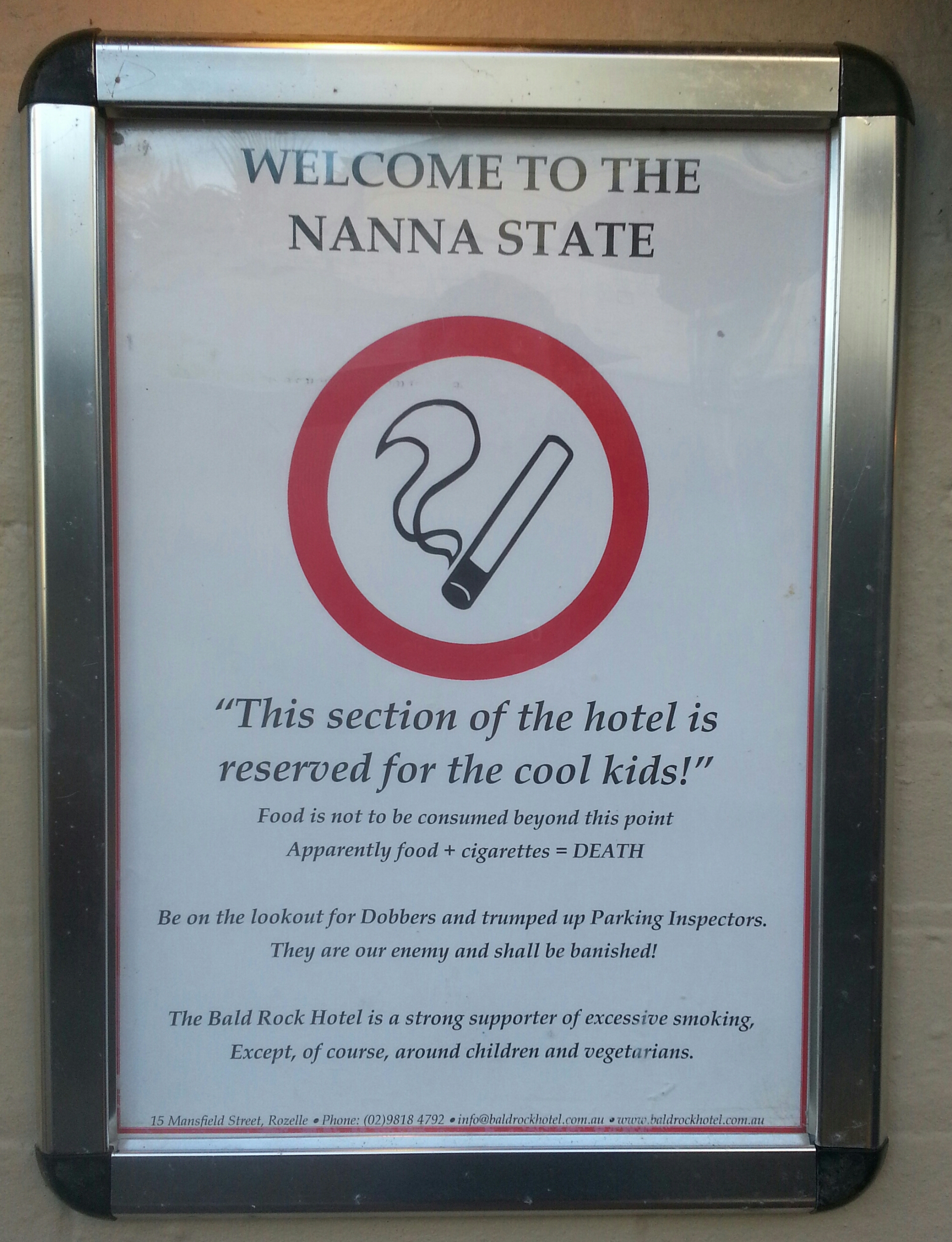
Nanny State (it should be the Mum & Dad State)
Babysitter (it should be Post-Baby Sitter)
Kindergarten (it should be KinderGefängnis)

Twitter just keeps giving….
“Appreciate the time that you have now. As every second passes, you’ll never be that young ever again.”
I question the ‘that’. I would have used ‘as’.
But what do I know? Me and grammar (gic) are like two siblings separated at birth.
The culprit is the state government of NSW, so we may as well call ourselves the grammatically lost generation.
Six English teachers in six years of high school and hardly a tense taught in anger.
I got substantially more grammar in those useless Latin classes.
To be fair though, I am possibly an unreliable witness in matters of amisit grammatica.
Still I can feel a class action coming on. Think of those hundreds of thousands of state school graduates that are simply too embarrassed to Tweet?
Lost earnings could be argued, straight up, because, as we all know, social media is now the number one tool for acquiring customers.
Back to the Tweet in question. What my well-intentioned fellow state school graduate meant to say was:
“Appreciate every second before it passes; you’ll never have it again.”
That’s sort of depressing really.
And, indeed, you could spend a second appreciating a second and never end up doing anything in life.
Nuh, thought about it now, life is best lived with minimal real time reflection and a Hunter S.-like Gestaltian flourish.
“Appreciate time; don’t waste time appreciating every second as it passes.”
You can always contemplate it and write about it when you break a leg.
Yesterday I ducked around the corner on my bicycle to pick up my laundry.
Being all back streets and lanes, this 500m route does not require a helmet IMHO.
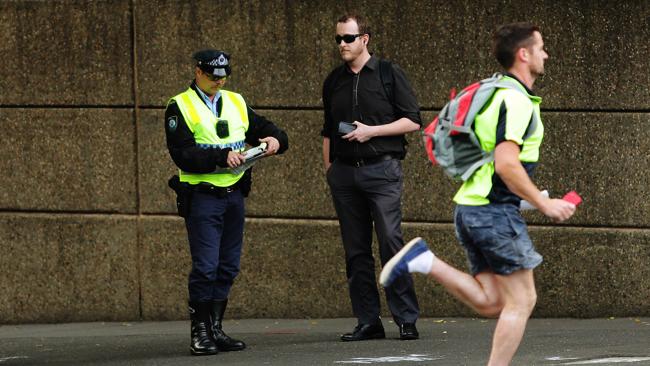
Of course a couple of the local wallopers cruising the back lanes of Waterloo for drug deals and break & entries stopped me, probably to relieve their boredom.
They both got out of their Commodore.
“Do you know why we pulled you over?” says Plod 1.
I feigned complete ignorance. It never pays to pre-justify their prejudices.
“It’s a requirement to wear a helmet at all times whilst cycling …. [Insert short lecture on the near-shark attack like dangers of cycling]”.
I noted the backstreet nature of the short journey to reunite me and my smalls.
They had a mini-confab about the merits of booking me versus giving me a warning.
So I thought I’d push the issue a little.
“These are not the droids you are looking for”, complete with hand movements.
Plod 2 burst out laughing. Said he’d been waiting years for some clown to use that line.
I got off with a non-stern warning.

Yesterday I met my first female misogynist.
I called her on it and suggested that she probably doesn’t hate herself.
We then agreed on a new pseudo definition of a misogynist.
A person who hates, dislikes, mistrusts, or mistreats some women.
After that was agreed I asked how she knows which women to dislike, mistrust or mistreat?
She said “all of them and if on the rare occasion I’m wrong I just apologize. Being the sane ones they naturally accept the apology.”
Was there ever a better definition of an affinity group with a shared prejudice and a fear to know?

Since the industrial revolution, when systematic advances in technology were first used to make labour more efficient at turning raw materials into finished goods (whether that is coal to energy, grass to meat, or iron ore into a car) participating workers have been rewarded with an increasing ability to consume.
In fact, in most Western economies the growth in average wages perfectly tracks the growth in multi-factor productivity.
This makes sense; if the benefits of all that technology weren’t shared around there simply wouldn’t be enough consumers for all those lower cost goods to provide the required economic growth.
It’s a ‘virtuous’ circle; increased demand drives investment in technology-driven cost reductions which drives higher profits which results in higher wages which leads to more consumption, aka increased demand.
In the West, where this pattern has been trundling along for three centuries, we got to the point of universal ‘sustainability’ around 1900. At this time just about all the people were earning enough to sustain themselves in a secure fashion.
Thereafter we simply began to consume in excess of our fundamental needs. Cars, whitegoods, large houses, holidays, electronics; these are all luxury items in one context. We wouldn’t die without any of them.
After 1900 governments also started taxing more heavily. Since the administrative technology existed to universally tax both companies and individuals it has been used with ever-increasing intention.
Slowly and surely the rates of overall taxation have crept up (as per the graph below).
Some say this is a bad thing because the more the government takes, the less individuals and companies have to either consume or invest. But I would note that the removal of that money by governments won’t kill them.
I suspect that the return on investment on all government expenditure is ZERO. That’s right, nought, nix, nothing. That’s how inefficient governments are at what they do.
But remember this would also be the case if this money was left in the hands of consumers. They wouldn’t usually invest the money either; they would consume ‘luxury’ goods; an activity where the sole function is to drive increases in demand.
Another way of looking at all of this taxation is that governments are unwittingly addressing the issue of technological unemployment by creating artificial jobs.
Currently they collect and spend around 30-40% of GDP. This won’t stop there either – as we get further towards 100% automation and artificial intelligence I suspect that only 10-20% of people will be employed in ‘real’ jobs and the rest will rely on the redistribution of wealth via the tax systems in order to participate in the consumption game.
All that the collection of taxation ensures two things; (a) continued growth in consumption, and (b) social peace which would be challenged if a large fraction of the population was living below the sustainability line (which is very different to official poverty lines).
I would note that companies don’t consume, they invest. It makes no sense whatsoever to tax them because companies are the source of all those continuing increases in productivity that drive the whole shebang.
Also companies are a lot more mobile than people and will happily shift their operations to lower taxation domiciles. For this reason alone, company taxation rates are heading to zero. Which makes sense anyway.
I do however believe that that the game will change pretty soon, for a couple of reasons:
Firstly, the ‘industrial revolution’ economic model relies on the assumption that resources are unlimited. Which they are not. As this fact become more apparent the whole model will be severely challenged.
Secondly, after company tax has gone away and as technology allows less and less people to be employed in ‘real’ jobs and more and more in government mandated jobs, there will come a point where the amount of tax one can extract from the ‘real’ workers asymptotes and a government simply won’t have enough tax receipts to distribute the proceeds (indirectly) without allowing for an official two-tiered wealth system.
This problem can be understood by considering the maximum rate that one can be taxed at. Say it’s 90% of income but of only 10% of the population (that are truly productive). A government simply couldn’t tax these people enough to feed the rest of the population unless there was a dual channel taxation and employment system (where some people earned a lot more but were also taxed incredibly highly). Politically and socially difficult, this one.
At this point governments will be helpless to address the genuine wealth disparity issues caused by technological unemployment. This may not be a crisis of relative consumption but one where some people fall below the ‘sustainability’ line. If this happens this will cause serious social unrest – it could prompt the Second Luddite Uprising.
It would appear to me that the timing of these two issues will be coincidental somewhere in the second half of this century.
The solution to the first problem may require a change to our socio-political systems. What I mean by this is that we may have to introduce a consumption tax that favours lower consumption of raw materials but at higher cost and higher levels of intellectual property.
For example, lower sales tax on goods that incorporate advanced technology that provides for long service life.
This will help lower the consumption of raw materials but will not necessarily depress the rate of improvement in technological developments.
My very odd suggestions for the solution to the second problem is twofold:
(1) Rather than let the benefits of the continued technology improvements fall into the hands of a few from which there would not be enough government revenue to peacefully distribute amongst the rest, it may be useful to allows machines and computers to earn income and tax them at 100%. That is, we should not let the profits of increased productivity fall into fewer and fewer hands.
(2) Another way to solve this problem would be to stop taxing companies by profit and to start taxing them by equity. That is, every year some fraction of company equity would end up in government hands as a means of taxation. Then the government purse could directly benefit through dividends.
The next time I get sprung for robbing a 7-Eleven of $5200 I am going to give the money back and claim it was an error of judgement.

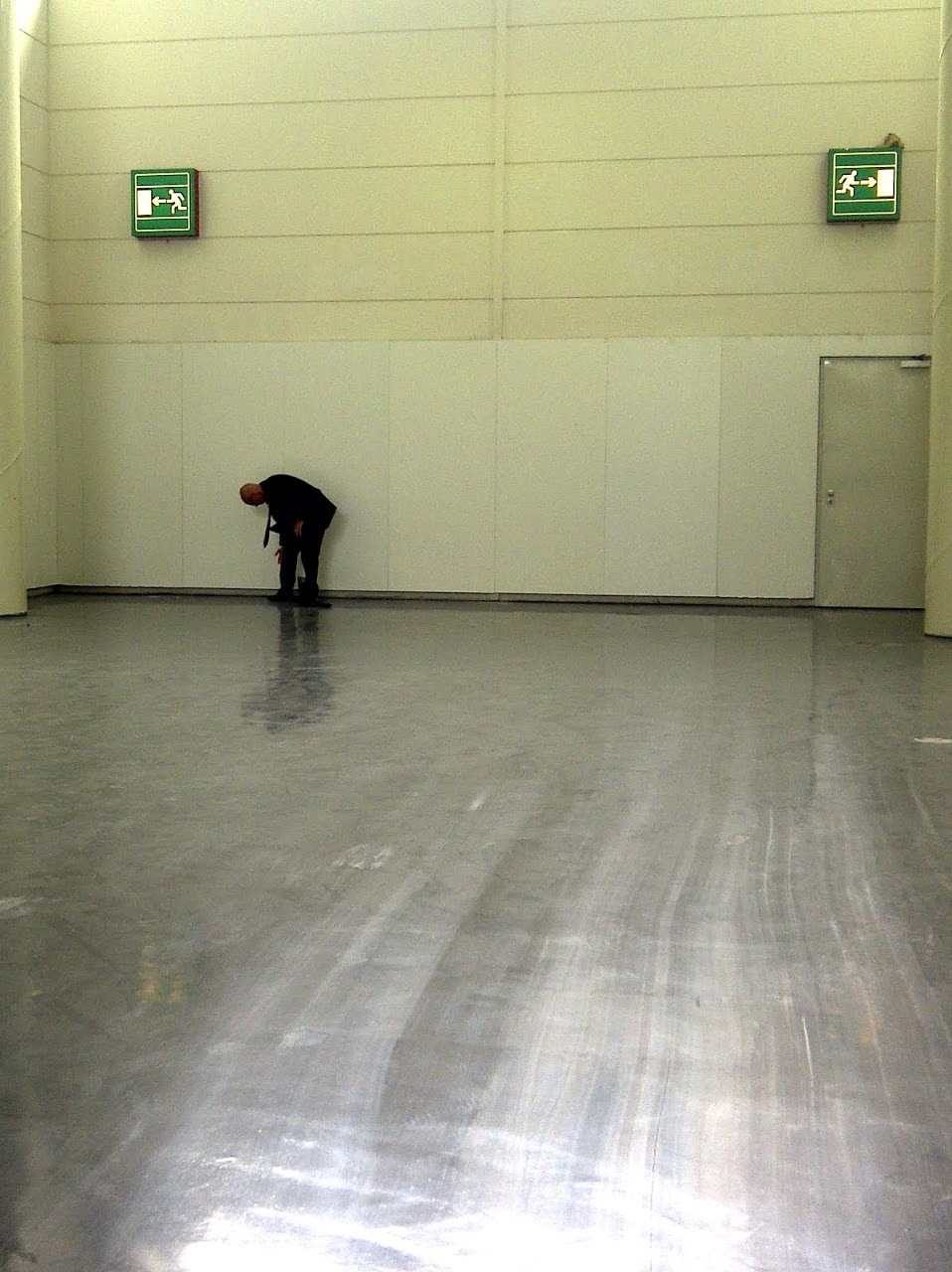
All over Bondi there are abandoned bikes chained to posts.
Probably left by departing backpackers these bikes were rubbish when they were first bought from Kmart.
Months and years later, rusting and warped from drunken attention, they are now unheralded street art.
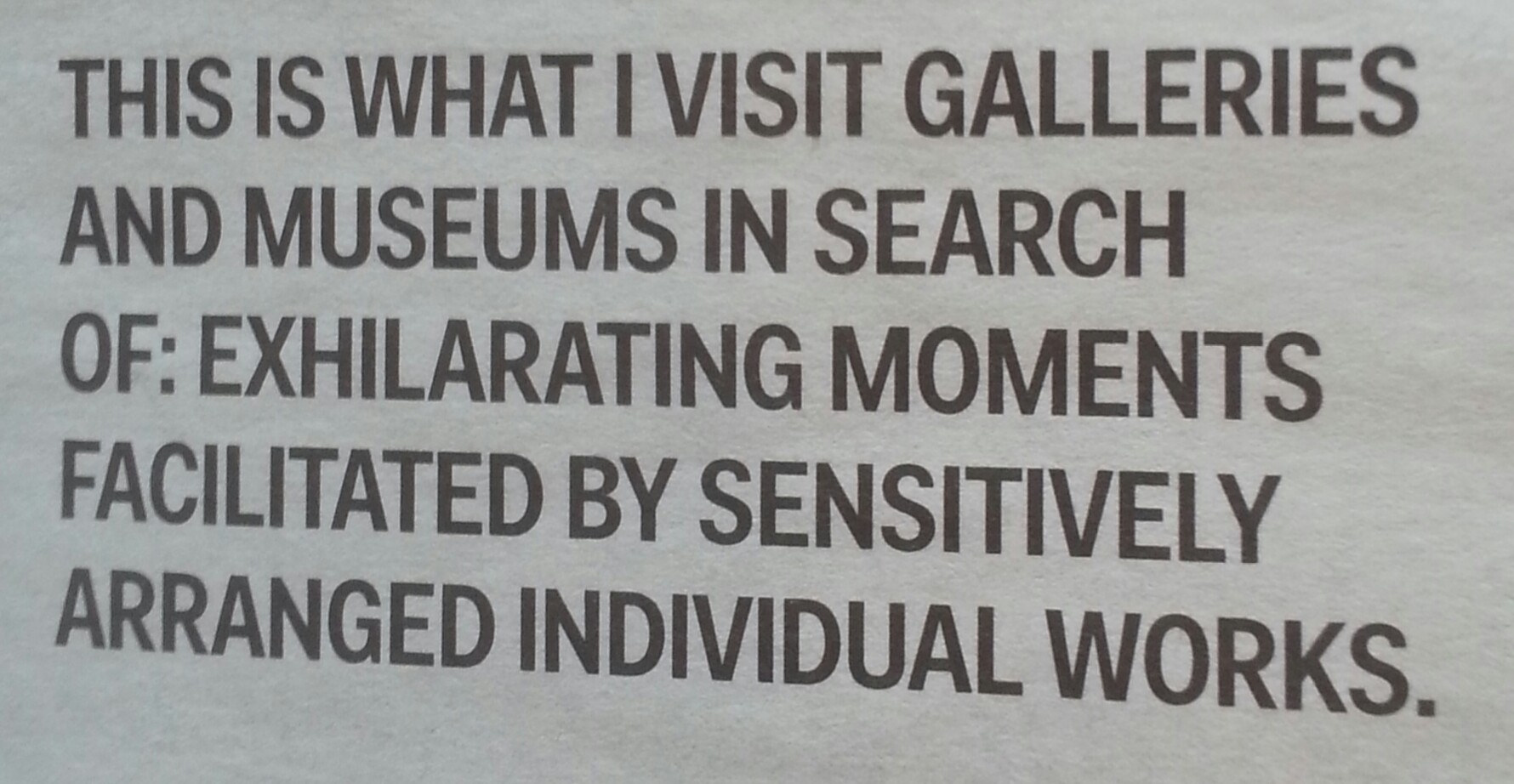
This is what I visit Bondi in search of: exhilarating moments facilitated by sensitively arranged individual works.


Overheard …
[Toddler] “I don’t want to go to the party”
[Grandmother] “Nan wants to go to the party. You can stay outside if you want.”
Overlooking the admirable old-school response, why do people talk to toddlers in the third person?
I suspect it’s a subconscious effort to depersonalise the responses and impress role-values into kids.
In the overhead example Nan is also saying “It’s not just what I want, this is what every (sane) Nan would say.”

The Saturday Rag has any number of well written conspiracy theories.
I have just completed reading one on the subject of the federal government’s agenda to retard the growth of renewable energy.
What the government is actually doing is culling government agencies that supply clean energy research grants, and investment funds and rebates for renewable energy installations.
This is supposedly due to the evil influence of the coal exporters and the coal burning electricity generators.
Maybe true. But I think there’s a couple of other agendas at play such as wedge politics and some required budget cuts. Possibly also spiced with a bit of Luddite denialism.
My personal view is that renewable energies are now so cheap that we don’t really need government involvement and all the associated white collar welfare.
Truly, in the context of global warming and renewable energy, the only government intervention that ever made any sense was the carbon tax.
PS this is a photo of some of those most concerned about global warming having an ice skating session at Bondi at twenty degrees Celsius.

Referring to the somewhat embarrassing confession made by the arts and craft writer in the Saturday Paper (see below), the nuances referred to comprised of a white room, a piano and one little picture on the wall.
It seems to me that every time I accidentally find myself in a modern art museum I discover a white room containing just one big object and one little painting hidden somewhere on the wall.
What ever happened to novelty? I suspect that fine arts degrees now have a course on Sensitive Whiteroom objets dissonance Arrangement.
A.k.a. how to hide the fact that you can’t paint for shit.
Just yesterday I was forced to change my mind on gamification.
Gamification is where an internet service uses any sort of game theory to encourage participation.
Essentially the concepts of ‘play’ and ‘fun’ are used in an internet-based service.
Apparently there are four types of user personalities when it comes to gamification:
Killers: these guys focus on winning something, or rankings and the like.
Socialites: are driven by developing a social network of friends and contacts.
Achievers: have a focus on attaining status and achieving pre-set goals.
Explorers: have a focus on exploring and a drive to discover the unknown.
Actually I think there is a fifth type, the gambler: these guys can’t stop themselves even if they want to.
So, when in the past I have disliked gamification in apps or websites, it has been because it was targeted at a personality type that wasn’t mine.
A lot of older school business types don’t like gamification because it appears to them that they are being gamed, which they are.
Gen Y’s don’t seem to have a problem with this for some reason.
In an entirely unrelated discussion, I was just talking to an expert about how to get businesses to contribute more diligently to their own social media efforts.
The problem is content – the people in these businesses rarely have enough content for daily postings. And they generally can’t create it for shit.
I suggested an app or SaaS which gives them daily reminders to write that content.
Starting with small demands it could build up as they got used to the habit of creating (and posting) content.
And, as to the gamification aspect, I would add individual content creation targets with non-compliance penalties being a community ‘swear jar’ where those people not meeting their goals simply have to put money into a pot, which eventually would go to charity when full to a certain level.
For this style of gamification I think there is a sixth type of user, that of the boomer and Gen X character:
Contributors: users that are willing to pay for non-participation so long as the proceeds go to a good cause and the purpose of the function that has been gamified is not trivial
Ford is currently flogging a new Mustang and after many generations they have finally, once again, designed something that is actually (sort of) nice to look at.
In fact their own marketing material (shown below) has a gap in the design of Mustangs of about, ooooo…, 44 years.
What they are implicitly saying is that none of the Mustangs in the gap years will ever be considered a classic, no matter how long we wait.
This is a loooong period for anyone to propagate crap designs with no internal recognition of that fact at the time.
It would make an interesting case study on the woes of corporate management.
Bad management would believe that cars sell on price and specs, or a great big distribution channel and lots of marketing, whereas they really sell on brand perception and design.
Customers generally have a budget and within that budget they will select the car that they perceive is the most desirable brand and that also has the best design or the least objectionable design.
It’s hard enough to find good designers. But for car makers to get it right the decision making process around design has to be supported by management that understands the importance of great design and can recognise it but not try to run it.
That sort of right brain thinking just doesn’t normally come with the left brain requirements required for climbing the management ladder of a global corporation.

IBM has engineered up a new pilot line for making chips.
The gates are just 7nm wide and 30nm apart.
Which allows them to make processors with 22 billion transistors.
At 7nm this means the gate is about 14 atoms wide.
In silicon this number of atoms just couldn’t carry enough current for the rest of the chip to function properly so they have moved to Silicon Germanium wafers.
For those of us that have done R&D in wafer fabs this is beyond belief. Really!

French authorities are considering new laws that would allow cyclists to run red lights in Paris.
They are considering bike-only traffic signals that would be placed beneath regular signals.
At certain times cyclists would be allowed to ride through intersections while cars are stopped at the red lights.
Why?
They are trying to encourage bike riding in order to get cars off the road and this is is enhanced by quicker bike rides.
Also they have recognised that getting bikes away from cars ahead of the lights turning green actually reduces accidents between bikes and cars.
I can explain this by noting that the risks of collisions between bikes and cars is correlated to the gap in their speeds – the greater the gap the higher chance of collisions.
A slowly accelerating bike and a rapidly accelerating car epitomises accident risk.

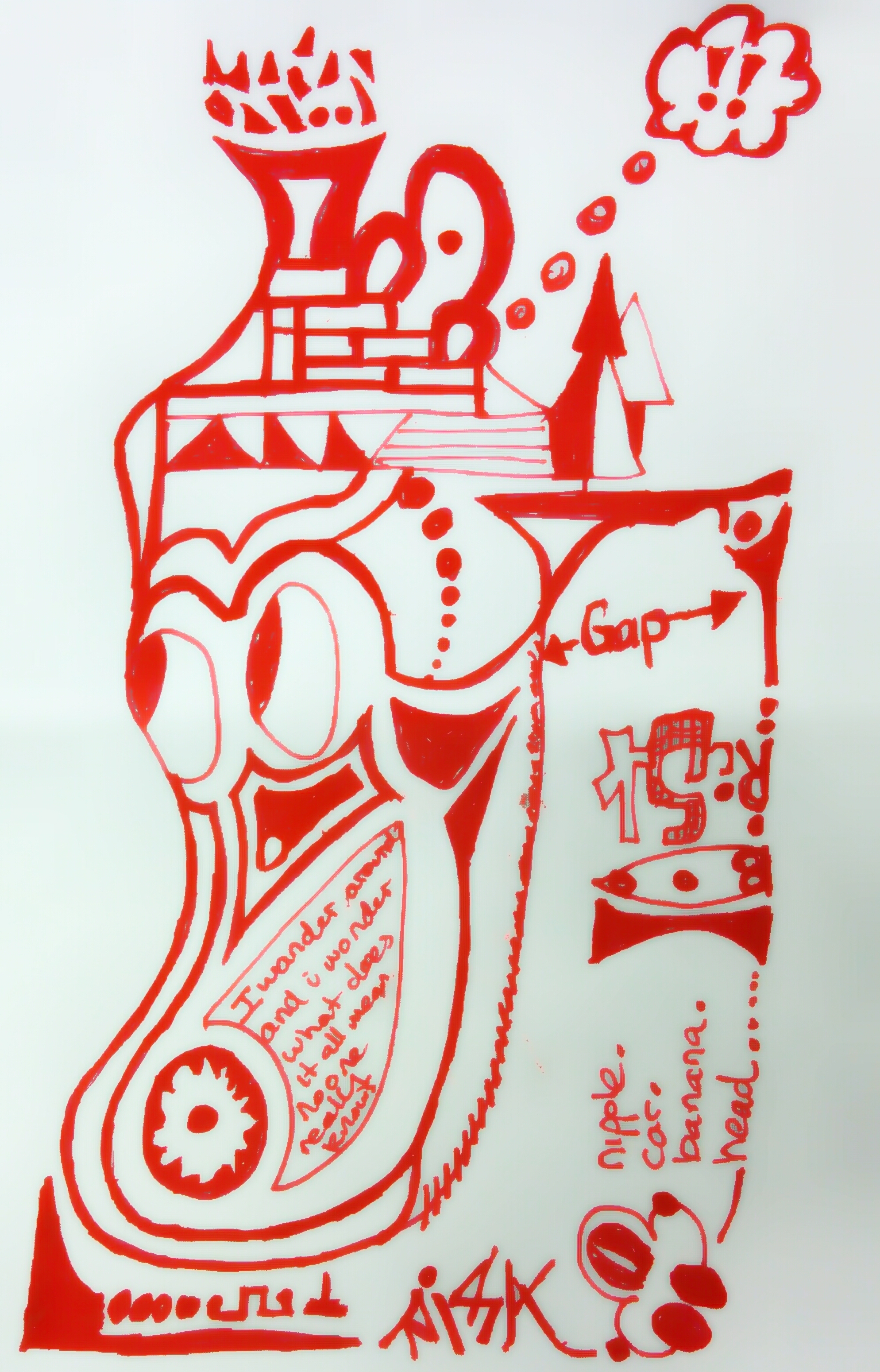
What the artist said “My portrait is an attempt to depict him [Charles Waterstreet] as a giant: part-man, part-mythical creature with hands that appear otherworldly, as though the anatomy of his hands has been designed to grasp unnatural disasters, naturally.”
What I see; a living zombie that has been partially mummified through self-loathing and the dissonance caused by an excessive disconnection between the limbic system and the neocortex.
ps It’s quite irrational to ask an artist to explain their work. The good ones (almost by definition) can’t and any attempt by them to do so just highlights the dysfunctionality between their well-exercised limbic system and their undernourished and disconnected neocortex, aka dissonance.

Who is more self centred, the person that can see everyone’s angle but invariably acts in their own interests or the person that can only see their own point of view despite any proclaimed good intentions they might have towards others?
In order to ponder this conundrum I would first like to point out that there is supposedly three parts to the brain:
The reptilian brain, the oldest of the three, controls the body’s vital functions such as heart rate, breathing, body temperature and balance.
The limbic brain which can record memories of behaviours that produce agreeable and disagreeable experiences. It is responsible for what are called emotions. It is the seat of value judgements, often made unconsciously, that exert such a strong influence on our behaviour.
The neocortex, the seat of rational thinking, is responsible for the development of human language, abstract thought, imagination and consciousness. The neocortex is flexible and has almost infinite learning abilities. The neocortex is also what has enabled human cultures to develop.
When someone is labelled ‘self-centred’ the key is to determine which part of the brain is engaged by the person doing the labelling.
For example, if the pejorative emerges from the limbic brain then you can be pretty sure that the value judgement itself is derived from self-centred emotions. What I am saying is that anyone that emotionally labels another as self-centred (usually with the pejorative) is in fact just labelling themselves (by some weird form of sublimation).
However, if the labelling is derived from the neocortex it bears more consideration. This person has managed to suppress their emotional instincts and has passed the matter up to the slower but more considered neocortex. This doesn’t mean that when they label someone as self-centred that they are right. As in all matters of human nature there is no right or wrong answer – just a point of view.
Consider this; someone that forever makes rational decisions from the neocortex in the interests of other people (and not their own) would be considered a saint (if they did this in good humour) or a martyr (in bad humour). However can you imagine the destruction to the soul over a long period of time?
I believe that our emotional limbic brain is inherently self-centred and that the rational neocortex brain allows us to attenuate this self-centred view in the interests of social cooperation which in turn derives benefits of safety and emotional return.
When I integrate all these thoughts it is clear to me that we need to carefully nurture our self-centred emotional core and consciously keep a database of all the rationally derived excursions away from it.
And then we need to keep a running tally of the net self-centred behaviours just to make sure we aren’t building up an unsustainable debt of negative emotions associated with the continuing execution of rationally derived un-self-centred behaviour. Otherwise we will crack.
Figuratively, I see this situation as follows; for every action in the rational neocortex there is an equal and opposite reaction in the emotional limbic brain. You have to keep the thing in balance and, in order to do so roughly half of your actions must be self-centred, regardless of whether the decision to be so emerges from the rational neocortex or the emotional limbic part of your brain.

Let me explain this photo…
Riding along I see this baby Myna fall vertically out of a tree and, plop, right in front of me, harakiri.
A case of flying before you flap.

If this blog suddenly stops getting new posts then there’s a 50/50 chance that I am a victim of some cycling atrocity.
Which makes me think that there’s an app opportunity such that friends and colleagues can see that you are still alive without actually having to contact you
All there would be in the app is a dashboard that has green or red lights for the chosen people of concern.
A green light would be indicative of normal and continuous smartphone use of the risky individual, who would also have the app.
A red light would indicate that the individual is off-grid or dead.

Why you should read this blog.
This blog answers all the big questions.
Does this blog answer all the big questions?
Why does this blog answer all the big questions?
Why O’ why did I read this blog?
I hate questions in titles.
Do I hate questions in titles?
Does this blog have a question in it’s title?
YES
Finally a definitive answer to a definitive question.
If you’re proffering an opinion then can you please shove the hypothetical up your proverbial
?

Autoportaphobia; the fear of car doors.

I don’t think that I will ever agree with the current crackdown on jaywalking in the CBD.
I can’t imagine that I will ever have any sympathy for the clowns that think this is a good idea.
I doubt that I would ever be able to hide my contempt if I was ever charged with jaywalking.
For mine, the traditional non-enforcement of jaywalking laws in Australia was the definitive differentiator between us and those bible-bashing gun-toting racist idiots across the Pacific.
No matter which arguments they produce, whatever statistics they generate, or how many emotional trauma stories they retell from their back catalogue of their PTS therapy diaries, I am not with the program.
This is simply not an act that exists in the country that I imagined as my own.
I now feel like a displaced person. As though I have woken up from a dream and, although the place looks like home, the all-controlling evil genius has shifted things just enough to make me weirded-out and uncomfortable.
This is the moment when the collective – the department of transport, the police, the swill in parliament, and maybe the whole country – JUMPED THE SHARK.
Sometime back I bought a Google Nexus 6. This is the last one of these Google phones that I will ever buy.
When I broke the screen I discovered that the local phone fixing shop (all of them) couldn’t get the replacement screens.
So I contacted Google. After a bit of fuss and bother they put me onto Motorola. After a bit more fuss and bother they put me in touch with Quantum Service and Logistics Pty Ltd, their local outsourced supplier of customer ‘support’. After a lot more fuss and bother, inclusive of the filling out of duplicate complex web based forms and waiting forever for a courier together with multiple reminders that I was waiting, they now have my phone.
A few day later they send me the email below, which has this little pearler in it;
‘If payment is not received within 90 days of this notice then the device will be disposed of in accordance with the uncollected goods act.’
So I checked the Uncollected Goods Act (who knew we had one?) and in fact they only need to give me 28 days notice before they ‘dispose’ of my phone. What this means is that they can sell it and keep the proceeds without any risk of liabilities.
This is a little cute me-thinks. As the sole source of fixes for this phone they force me to send it to them before they will quote me the job. There is no obvious or published mechanism to get the phone back if I don’t like the quote but they will happily keep the phone if I don’t pay them.
I don’t know about you but this looks like institutionalised extortion to me.


When our major trading partners move closer to implementing their plans for renewable energy (in the interests of global warming, pollution control and energy security) our coal will be just like all that other dirt that we can’t export.
Maybe there is a case for exporting it whilst it still has value.
In the interim if they don’t burn our coal, it will just be someone else’s coal that they consume.

Here’s an interesting little story – http://bit.ly/1LcWoTh
The thesis of this story is that there are a few idiots in Australia and to protect these idiots from themselves, and to protect the rest of us from them, that the nanny state was thus born and propagated.
I beg to differ.
We have in Australia a lot of idiots, the majority me-thinks, that believe that ‘the government’ should fix every problem that arises (as some highly publicised incident on TV or in the papers) by regulating against what is seen as the ‘root cause’.
This is essentially OH&S gone mad in the social-political environment. There is a whole industry of fools beavering away at engineering all risks out of our lives.
And we go along with the program. There is no mechanism to protest against it. Social media protest groups like Getup are after all simply part of the problem. Whine, protest, fix, repeat…
In Shantaram, Gregory David Roberts wrote ‘The politics of fear. I hate politics, and politicians even more. They make a religion of being greedy.’
He was right, those greedy bastards only see upside in shoving regulations even further up our orifices. They aren’t going to fix the problem. I doubt that I will ever see a ‘Scrap the Regulations’ party that garners more than a handful of votes.
Thus we have bike helmets, pub lock-outs, drinking and smoking laws up the wazoo, noise restrictions, 4 meter rules, 50 meter rules, and the list goes on ad infinitum. They are even enforcing jay walking rules now – really!
We have so many rules here that seem to stifle creativity and spontaneity and fun. And unfortunately we can only blame this on the many. The idiots.

‘Far from the madding crowd’ is a story of three little pigs.
The wolf in this story is a woman of independent means in the 1800s who has the luxury, if not the requisite training, of choosing a husband by any motive she wishes.
In this painful social experiment she first chooses Lust, then Security, but then finally settles on the third little pig, Love, whose brick house cannot be blown down.
Presumably the other little pigs, Lust and Security, take shelter under Love’s roof.
Why was this parable required in the late 19th century?
The relentless improvements in productivity that had started in the industrial revolution had by that stage ensured that wealth amongst middle classes had risen sufficiently such that philosophers could start dreaming of using all that inherent security to improve the estate of women.
Not just men.
All that these women needed, those wishing to escaping from the madding crowd of lust and security seekers, was a blueprint.
Written by a bloke of course.
A blueprint which prevails to this day. Time for a rewrite perhaps?
I had a chat to a taxi driver at the weekend about Uber.
He thinks that, as Uber disintermediates the taxi industry, the government should reimburse all those people that have invested hundreds of thousands into taxi plates and stand to lose their money.
I said that any investment includes the acceptance of risk and in the case of the artificially high and increasing value of taxi plates the risk was always a change in government regulations or some technology disruption.
The fact that some buyers didn’t understand this risk doesn’t for me excuse the concept of socialising the losses but keeping the profits private.
But, I said, good luck to them if they can extract some sort of compensation.
I wanted to say to him “The most expensive cabs in the world; smelly old rattly Ford Falcons with lost drivers and Alan Jones playing on the radio. We happily fucked over the music and movie industries because they ripped us off for decades and you expect our support?”

Query; why did we translate the beer garden but leave the kindergarten unmolested?
Somewhere in there I believe is the answer to Cat Stevens’ unsolved conundrum. Ja!

Wiki says that depression “is a feature of some psychiatric syndromes such as major depressive disorder, but it may also be a normal reaction to life events such as bereavement, a symptom of some bodily ailments or a side effect of some drugs and medical treatments.”
Other names for what people commonly associate with depression are ‘sadness’, ‘melancholia’ & ‘the blues’.
Which leads me to Beyond Blue (an Australian mental health charity). These people make a living out of getting money off the government to help people with ‘depression’. So they have to beat it up a little…they say “depression is more than just a low mood – it’s a serious illness”.
Which is it, a normal reaction to life events or a serious illness?
Depression has a purpose and that purpose is complex like all things human.
Some people on their way to serious mental illness are depressed but most people who are depressed at some stage never go onto have a mental illness.
There is no good excuse to start giving people the message that depression is bad and that if you feel depressed then you have a serious mental health problem.
All this does is further depress people and quite unnecessarily.
It’s not like you can apply OH&S rules to human emotions. You can hear the noddy level thinking “hey if we engineer out depression then people will never go on to get mental health issues.”
The complete abandonment of wisdom by those who stand to profit from logical extremism makes me depressed but I am not the one with the mental illness here.
However I am quite optimistic that if enough people read this or have similar thoughts, that the forces of evil will be overcome.

Anyone can be an optimist; dare to be cynical.
Whoops, the happiness epidemic merchants would have us saying that the other way around.
They imply that cynicism is easy. Take the virtuous path they say, the hard road, the one less travelled. That of the optimist.
Well I say, we don’t have dozens of emotions and then say we should only practice one of them, do we?
Hang on, people do say that. Be happy. It’s good to be happy. Ignore those other feelings. Shut ’em down brother.
The happiness epidemic merchants – they are all loopy.
So, to be clear, I can be both cynical and optimistic; sometimes both in the same sentence.
And neither one requires more or less work. Neither one makes life better than the other.
But one without the other; well that’s a lonely elephant on a see-saw.

I postulate that the only thing that sets us aside from other animals is that we ask the question as to what sets us aside from other animals.
If you have never asked the question (what sets us aside from other animals?) then:
1. You are one of them other animals, or
2. You feel like it’s an illogical question, or
3. You think that life’s too short to hope otherwise, or
4. You had a really good chat with a dolphin once and she asked that question

Received through the ether, this video made my day.
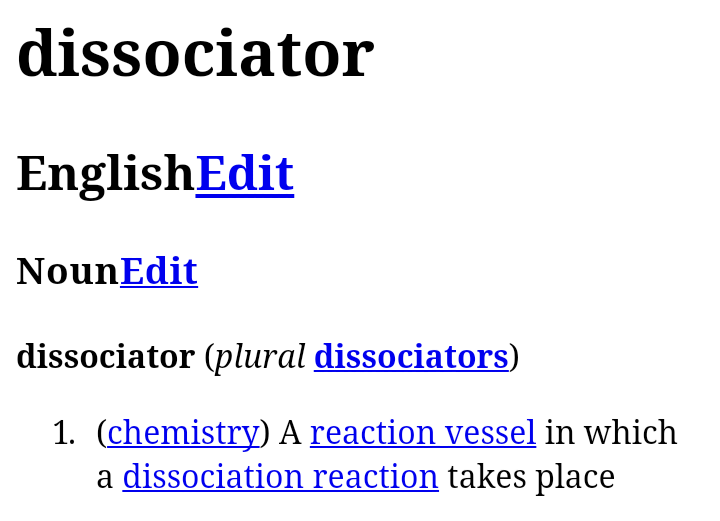
Dad, what’s dissonance?
The distance between two nuances Lola.

So what do we say about the driver that angrily overtakes a cyclist, putting multiple parties at risk (the driver, the cyclist, drivers of other cars coming the over way, and any passengers)?
Only to come to a standstill 20 meters down the road at the very predictable engagement with the next set of red LEDs.
Driver’s Dissonance. It’s why I stopped driving.
Here’s one mystery solved.
A report from Bloomberg’s has informed me that computer systems at banks and credit-card processors would adapt quickly (days) to allow transactions in a new Greek drachma.
However the introduction of paper money would take a longer. Introducing a new currency typically takes at least six months and sometimes as long as two years.
Maybe this is the opportunity for Greece to dispense with banknotes and go all electronic.
This way they could track and tax every single official transaction.
All their social welfare would be paid electronically, in drachmas.
Once someone has wealth in the electronic system of drachmas it would be hard to get it out into the black market running in euros. There simply wouldn’t be any transfer mechanism.
If they did this there would of course be a big black market running in Euro cash. But there would be anyway, in any scenario.
And right there is a brilliant solution to their currency issue. A perfect dual currency situation.
They could of course run spot checks on Greeks for any hidden euro cash. An on the spot penalty of 40% GST should do it.
Just because it came up in conversation the other day I would like to note that the correlation between innovation and intelligence (as measured by iQ) is probably quite linear but with a piss-poor correlation coefficient.
That is a hypothesis and not a fact. Good innovation skill is probably more strongly correlated to an understanding of error bars than it is to intelligence.

Just look at this list that someone has published.
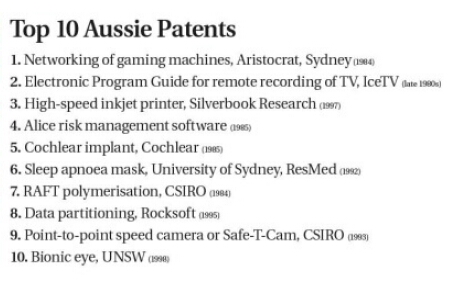
About 8 of these have expired. The inventions in the other 2 haven’t led to product at all (in one instance) or hardly (in the other).
Here is a detailed breakdown of each invention:
10. The bionic eye is not on the market.
9. Safe-T-Cam – 24 sites in Australia does not make a commercial success!
8. Rocksoft – Exit value was A$83m – towards the bottom end of venture exit values (for Silicon Valley). I have no idea what the IRR was for the investors.
7. RAFT – it’s in my field of expertise. This was the first continuous radical polymerisation (CRP) and it was licensed to DuPont. However it also turned out to be one of the most expensive CRP methods and is not a major process.
6. Resmed – tick (market cap $8b)
5. Chochlear – tick (market cap $4.5b)
4. Alice – the original anti-value patent! It’s the one that the US Supreme court used to re-set the threshold for inventiveness for abstract ideas. This one is virtually worth negative infinity and has royally screwed the market for patent assets.
3. Silverbrook – Memjet has had very limited market success especially since that ‘print’ is just about dead. There has been a massive negative IRR to all investors in Silverbrook and Memjet
2. ICE – it looks valuable on paper and the NPEs were probably very interested. Post Alice, it’s valueless
1. Aristocrat – this patent didn’t stop any of their competitors linking together slot machines – just saying…
What does this mean?
Well, firstly citations amongst patents (the basis of the compilation of this list) are a poor indicator of the commercial merit of an invention. Think of this as a bunch of pigeons lovingly cooing at each other whilst in the distance an F/A-18 strike fighter scoots off with loot.
Secondly, if this is the so-called top ten patents (by any measure, no matter how dubious) then it’s pretty obvious that Australians are rubbish at invention. What a lacklustre list. If you need to be convinced please note that Australia has about 8% of the US population. Historically in the US there has been enforceable patents for things such as the cotton gin, the electric motor, the ice machine, telegraph, the phonograph, the light bulb, the computer (electric adding machine), the aeroplane, and even sliced bread. In the drug space, a single Pfizer patent for Lipitor earned that company an estimated $105 billion. I could go on forever but do believe me, the ultimate top ten US list would be worth thousands of time more than 12x (accounting for the population difference) the value of this Australian list of most valuable patents.
Since the authors have included expired patents I wonder why they didn’t include those Aussie classics such as the Hills Hoist, the Victor lawnmower, the combine harvester, Vegemite, the Pavlova (OK, OK, it’s a Kiwi invention), yada…. Some of these inventions must have been the subject of the patent hallucinations of their mad inventors.
What about the spirit level and the water diviner I say?
The article that accompanied the patent list was in the Fin Review. The angle was that old chestnut; Australians are great at invention but crap at commercialisation. [Cue chorus from the white shoe brigade] “Dear Federal Government please give us some money to fix the problem.”
What we should have patented is a method to delude ourselves with respect to our collective inventiveness. This invention has been reduced to practice and is eminently patentable. Commercially, it’s very successful too – a eternal fountain of tax payers funds flowing to the unworthy.
I have a concept in my head (and yours) called the ‘circle of humour’.
This metaphorical circle, irregular in shape and probably spheroidal in reality, encompasses some fraction of my emotions and emotional responses to external stimuli.
Inside the circle of humour we have a ‘clutch’ (an automotive metaphor, no less) whereby our own humour is used to change gears or to buy time, in response to external stimuli and emotional responses to the same.
In essence, the larger our circle of humour, the more of the emotional self that it covers, and the better armed we are against the wilful influence of the outside world.
Humour is in fact the Swiss Army Knife of emotions. Used wisely it can protect you, buy you time and unlock all sorts of situations.
Time spent expanding that circle of humour is time well spent.
Occasionally I can’t help but rubbish the self-serving reports published by industry groups seeking more handouts from government.
Just the other day I satirised an effort put together by some self-appointed start-up ‘industry’ body.
So to be fair and balanced; I have just perused the The Dowling Review of Business-University Research Collaborations, and it’s a cracker.
I don’t agree with all their recommendations but a large fraction is quite sensible.
It’s a shame the report is British eh?
Businesses can’t vote. Their influence is limited to brown paper bags, old school ties and control of a diminishing fraction of the combined broadcast and online media.
Today’s Fin Review is full of commentary bemoaning the ‘business community’s’ view that there is a ‘lack of leadership’ in Canberra.
What this means is that the government of the day is 100% focused on pork-barrelling themselves back into power at the next election and that, it just so happens, this means implementing policies that will ultimately reduce consumer sentiment and consumer spending power.
Root cause analysis … the so-called business community is almost fully exposed to domestic market conditions because, generally speaking, they couldn’t export their way out of a wet paper bag. Even if they wanted to, which they don’t.
Why would they? The government of the day also happens to protect their share of the domestic market with all sorts of hidden import barriers and the weakest anti-oligarchy enforcement this side of Singapore.
I say, be careful what you wish for.
They might reply, it wasn’t us, it was our ancestors that started all this. Just like coalition supporters might claim that it was the English that were despicable towards the aborigines and hence they have no claims to answer to.
I say, if you are a ‘beneficiary’ then, whether you like it or not, the piper will come calling one day.
Proof positive (photo below) that the rump of the unions is disappearing up it’s own arse. My hope is that when this process reaches it’s inevitable singularity that the cartoon-right ex capita, lacking anti-matter, will spontaneously combust.

When polled, three quarters of Australians supported this proposal…

When re-phrased as per below what do you reckon the poll result would be?
“Do you support your citizenship rights being enshrined in the constitution such that no politician can, at will, strip you of your Australian citizenship?”
Ever heard of a historian that can accurately predict the future?
My advice is to also be very wary of their rearward looking hallucinations.

Me in a Tesla. I can’t help but admire this thing. A lot.


To quote Scotty, ‘and I did’.

This is the view or of my dad’s hospital room (below).
Eight stories up, a nice verandah and a garden with a glorious city view.
The room itself is substantially nicer then many hotel rooms that I have inhabited.
The IT and entertainment system is magnificent.
The staff are happy and attentive.
And my dad is an uninsured public patient who didn’t have to wait a day for this magnificent treatment.
I’m not making a point here. I just thought in all fairness I should record this twilight zone oddity before I goldfish it.

You have to wonder if the sheep think that Ugg’s processes are safe.


A newly released plan by StartupAUS (no idea who these guys are) contains eight suggested actions for our federal government designed to ensure that our startup entrepreneurs don’t have to make the “gut wrenching” (sic) decision to take their energy and skills to Silicon Valley…(poor dears)
>> my interpretation added after each proposal
1. Create a national innovation agency
>> hire some mates as bureaucrats and the rest of us can be board members or advisers
2. Increase the number of entrepreneurs
>> by starting a degree in oxymoronic entrepreneurship at your local former TAFE, now Uni
3. Improve the quality and quantity of entrepreneurship education
>> hire some mates as lecturers to point 2 above and the rest of us can be board members or advisers
4. Increase the number of people with ICT skills
>> that will happen anyway
5. Improve access to startup expertise
>> hire some mates as bureaucrats to point 1 above and the rest of us can be board member and advisers
6. Increase availability of early stage capital to startups
>> forget the past failures and give some of our mates 10 year’s worth of management fees and a micro investment fund to piss up against the wall
7. Address legal and regulatory impediments
>> don’t tax capital gains on investments in start-ups and allow all losses to be written off against other income.
8. Increase collaboration and international connectedness
>> hire some mates as bureaucrats and lecturers and the rest of us can be board members and advisers, and give us all a travel budget
>> This effort seems as well informed as Kev’s 2020 future summit. Maybe they had Cate as their Chairperson too? My advice to government is to stay right out of it. You can’t but mess it up no matter how well intentioned you are. And beware the white shoe brigade seeking white collar welfare.

Lola is naturally quite good at maths but hates the discipline because it’s so booooring.
I cut her a metaphor that’s worth repeating…
I said, name a sport, any sport.
She nominated swimming.
I added, how do Olympic swimmers train?
She said, they swim laps.
I said, what else?
She drew a blank.
I suggested the gym, just about all professional sports people spend hours in the gym toning their muscles.
She counters, so what?
I answered, maths is the mind gym. You might never practice maths in the real world just like sportspeople never do gym-offs, but maths is the most efficient means to tone up the brain muscle and that is a good thing no matter what you end up doing.
A great metaphor me-thinks.
She blurted, I don’t care I still don’t like it.
I wrapped it up, I am not here to get your unthinking compliance, rather I am subversively putting thoughts into your skull so that later on they will magically work their design. Next year you will find yourself strangely beavering away in maths classes, knowing it has a purpose.
She had the final word, you want to bet?
I change the subject.
PS I wonder if we adults shouldn’t all do a couple of sessions of maths a week? Maybe down the pub after the gym.
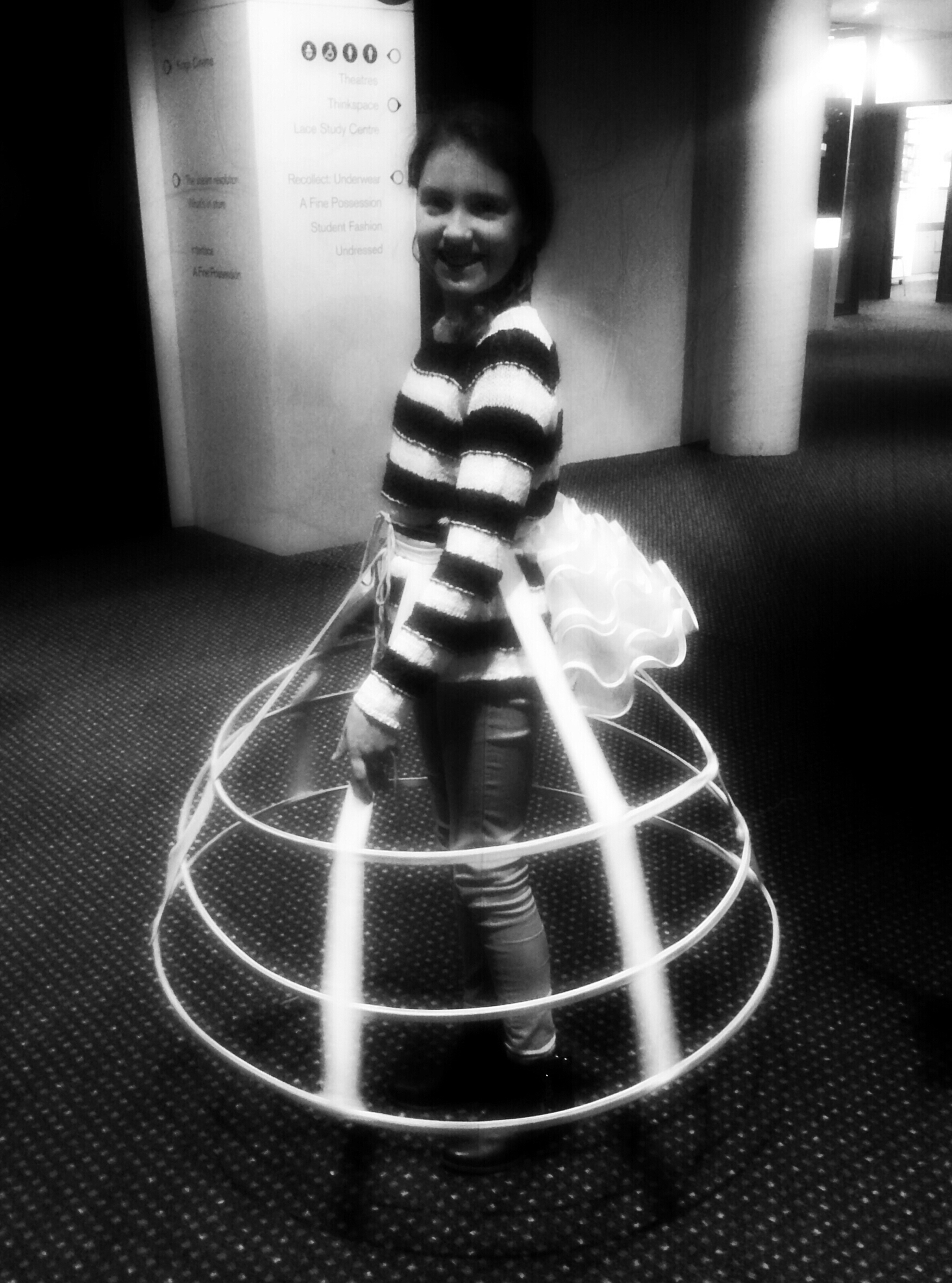

Insights into the mind of a baby fashionista.

As tempting as it is to agree, I do not.
Being challenged is far more important than eating mind sugar.
I have this suspicion that we in the West are entering into the age of Post Enlightenment.
The symptom is that the key habit of the enlightenment, the relentless and continuous incremental improvement in all activities of human endeavor, is dimming.
This habit of continuous improvement requires a ‘disrespect’ for the past.
Breaking the habit down into sub-habits we have (1) the practice of critique which is used to identify issues, (2) knowledge gathering, (3) the proposal of solutions, (4) the implementation of one or more solutions, and (5) repeat ad nauseum.
When this practice first emerged in the late 1600s, critique – the systematic identification of problems within all of what was considered orthodox – was seen as heretical.
Fortunately business leaders in England caught on that it was also quite lucrative in the business of technology. Therefore critique, this branch of objective rational thinking, took off and we got the industrial revolution.
Over three hundred years later we are the beneficiaries of this revolution. Productivity in the manufacturing of goods and services has improved to the point where we in the West are all far better off than the monarchs of the day.
Somewhere along the way we also got marketing. Consumption, driven by all those increases in productivity, had driven straight past the point of natural saturation. Marketing was then born to push even more consumption
The key tenet of successful marketing is fear. The fear of being different, the fear of missing out, and the fear of not being happy or content, of not living up to the model of success.
In fact I have just endured an American kid’s movie called Inside Out. An animated children’s psychological thriller (sic), the key message of this movie is that ‘sadness’ sometimes has a purpose. Really, it has come to this.
The Americans are so far into the ‘happiness’ epidemic that being sad is considered unacceptable. If you are anything other than happy or content then you need help.
And herein lies the threat to the habit of continuous improvement, the key legacy of the Enlightenment.
Those practising the core skill of critique are often labeled as critics, cynics or pessimists, usually with the pejorative emphasised. Thus our kids are learning not to use this important skill.
Already in my life I can see the differences. When I mentally plot the rise of the happiness epidemic against the general practice of critique and continuous improvement, I see an inverse causal relationship.
What to do?
Firstly, maybe nothing. It could be argued that we need productivity to drop in order to save our limited global resources. Maybe not though; we may need new technology to save our arses as we over-populate this planet.
Secondly, we could use intelligent machines to do all the continuous improvement. Then we would be off the hook and can madly chase eternal happiness.
Or maybe, we could just fight back against the happiness epidemic and put critique back on the pedestal where it deserves to be.

Senator Abetz has said Australia should not legalise gay marriage because no Asian country has done so. He also warned that it could lead to polyamory
This is high quality stupidity. We should see more of this bloke.
A declaration of official monogamy from members of a sector of society usually known for sexual plurality can’t be construed as a step towards polyamory.
Polyamory is a specific Western movement and has nothing to do with polygamy. Polyamorists tend to have a primary couple (married or otherwise) and one or more satellite partners in an open long-term relationship.
Because they are wired a certain way, most polyamorists couldn’t give a flying fuck about official marriage certificates.
The only Asian partner we need to concern ourselves with is China. Their government’s official policy on homosexuality is “No approval; no disapproval; no promotion”.
But they will change toward recognition of gay rights awfully quickly. I do a lot of business in China. The Chinese do not hold their dogma very dearly; and will let go of it at the sign of the first dollar or a concerted government or social media campaign.
The rest of Asia will be road kill in the path of China’s progression. You can’t please all the people all the time. So we may as well stay just ahead of China just like the pilot fish that we are.
It’s odd when you think about it. Normally when something is illegal people get prosecuted for unlawful activities, like using drugs.
In the case of gay marriage, since the government(s) control the departments of births, deaths and marriages, the only outcome of illegality is that official gay marriage doesn’t happen.
There’s no illicit official marriages going on, and hence there is money in it – no prosecutions, no legal fees, no penalties, nothing.
Maybe they should just privatise all of the state departments of births, deaths and marriages, and let them compete against each other on a national basis.
Pretty quickly we’d have gay marriage. They would be onto that potential increase in market size in a flash.
They would probably gang up and spend millions in the federal courts arguing on some constitutional grounds.
They might even flaunt federal law and hand out gay marriage licenses, thus forcing the court case through action by the federal attorney general’s office.
We did all note that it was the Supreme Court in the US that made the ruling not the Congress or Senate?
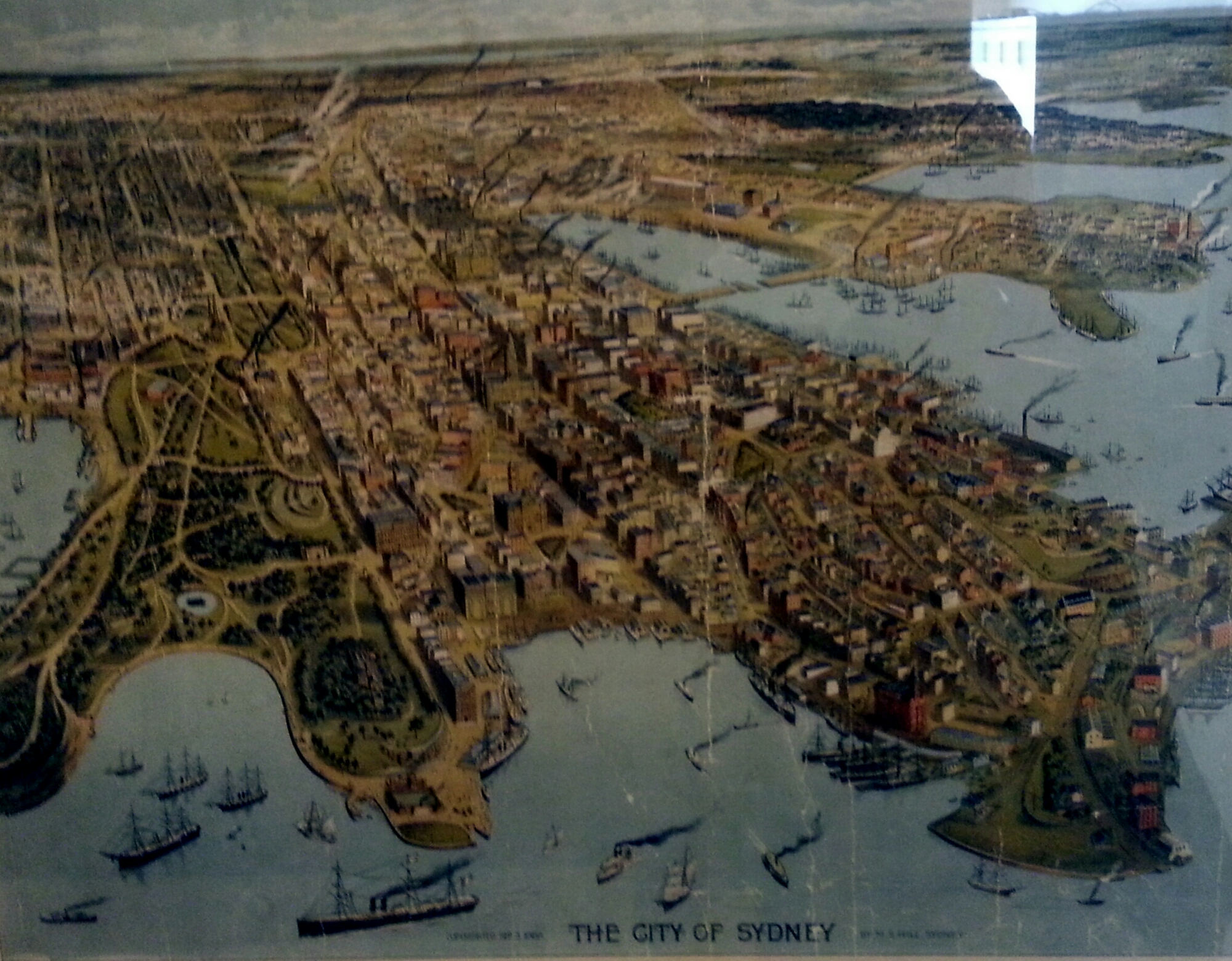
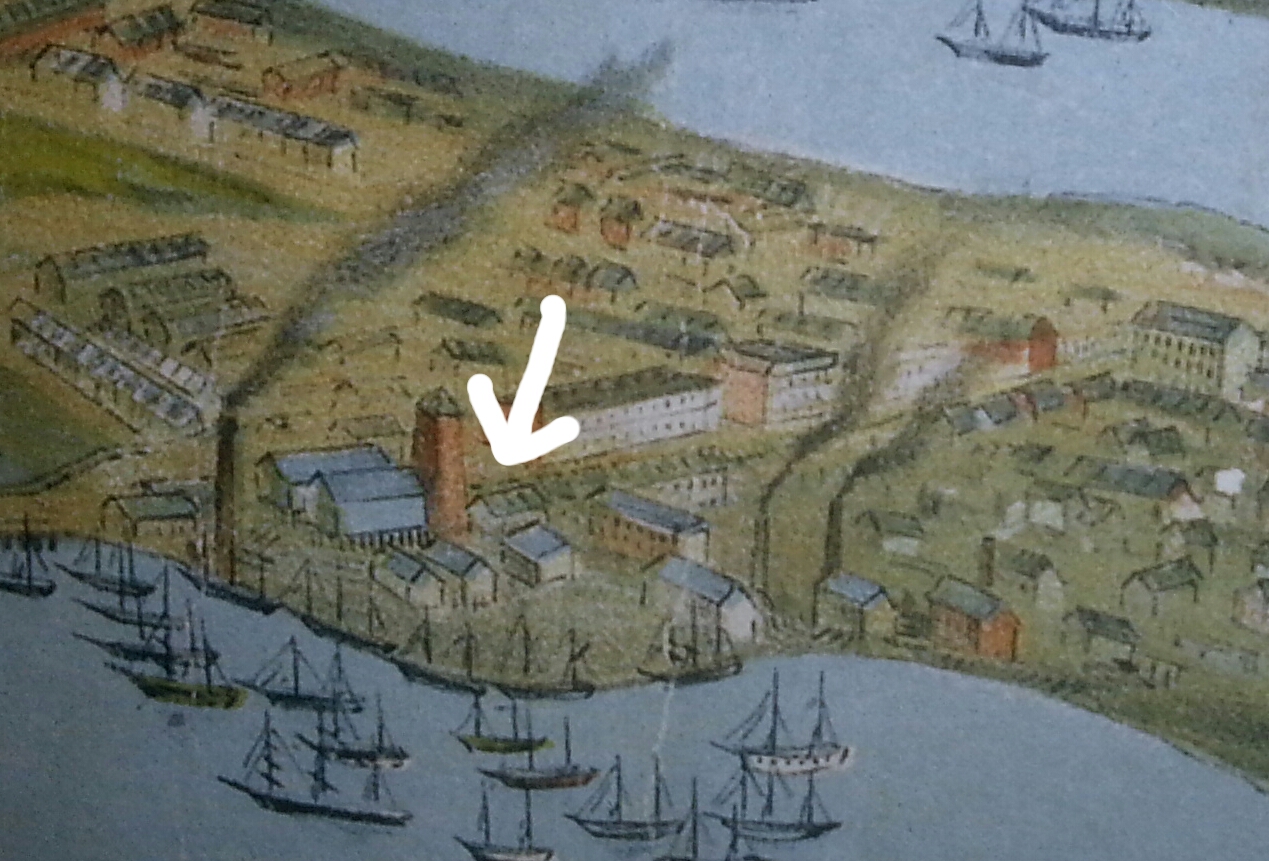
My parents pub when I was growing up, circa 1870s. I am well on the way to 500.
This is how Asians exchange business cards …
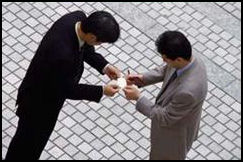
When you do it this way it’s as though you are handling a million dollars worth of fragile valuables.
It’s designed to express a degree of submissiveness by both parties – this I guess is there to demonstrate that, when needed, they will go the extra yard for the other party.
It’s actually so gawky that I have to always suppress a smile when engaged in this little rigmarole.
Often there is a little lame handshake after the card exchange and not a lot of eye contact.
This is how cards are exchanged in the West …

The emphasis is on the firm handshake and solid eye contact – an act of implying trust between equals.
The exchange of the business card is a casual side-affair to the main game.
‘Trust’ is how each party demonstrates their desire to go the extra yard.
In Asia there isn’t much of an effort to create the impression of trust on the first meeting.
That is saved for later, over dinner or some-such.
As much as I like doing business in Asia, this is one area of business where we have it all over the Asians.
That first impression on that first meeting is rarely wrong. So you may as well know what you are dealing with straight up.
One useful habit of a great business leader is this;
When it comes to big decisions, never do anything until you are certain you understand the degree of uncertainty associated with your various choices.
It’s far better to do nothing than to do something just so that there isn’t nothing being done.
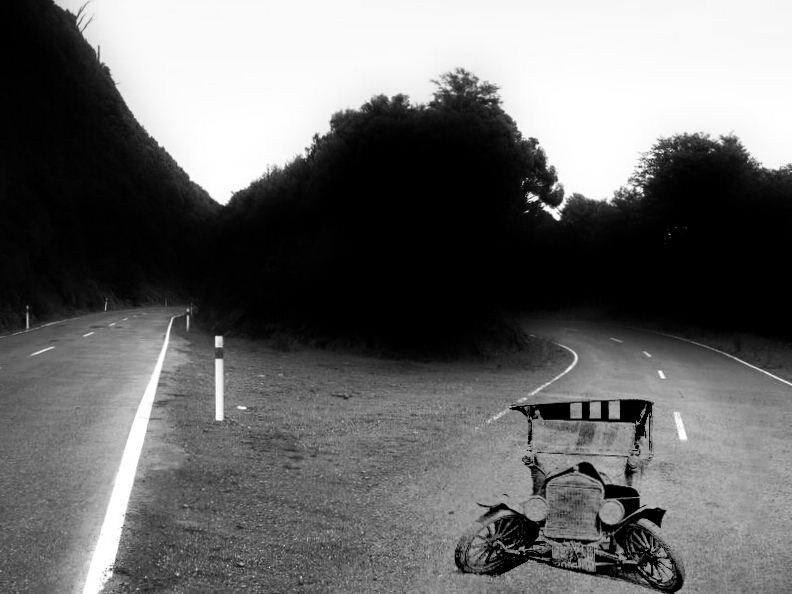
Wordsmithing again … someone once labelled me a cynic and a pessimist, and yet another labelled me as a critic.
Which is true, if any?
For what it’s worth I am a true child of the Enlightenment.
My end point is never pessimism, cynicism nor criticism.
When I identify a problem or an issue it is just the first step in the process of fabricating a solution, and in some cases also executing that solution (of course that is not always possible).
At times a solution has taken me a decade to conceive. That’s an unusually big gap in which the armchair observer could comfortably claim that I am a either pessimist, a cynic or a critic.
More often the gap is days or weeks, but it does sometimes take time because new information is needed.
I truly believe that I can conceive a solution to any problem. This isn’t true of course but that belief makes my efforts more likely to be successful.
What sometimes surprises me is how many people don’t understand the key learning of the Enlightenment; that gains in any area of human endeavour first require the objective identification of a problem, an issue or a dissonance. This may also involve making a judgement.
The next step is the gathering of knowledge, followed by the identification of one or more solutions, then stress testing these solutions prior to executing one or more of them. There is no endpoint – once a solution is found then the next set of problems have to be identified, and on it goes.
The identification of problems is an actual skill that requires just as much training as that required to create solutions. And it has to be continuously practised like any other skill.
It’s a process that has been well described many times over and yet is still not taught in schools as a basic life skill. It should be.
And you will note that in this blog entry I have identified a problem and proposed a solution. I can’t see anything cynical or pessimistic about that.
When I am critical it’s usually born out of frustration that problems are being ignored or because easy solutions are being by-passed, through the combined influences of stupidity and malevolence. However even this type of criticism is usually designed just to snap people out of their hypnotic acceptance of the impotent norm.
Although I have no interest in starting a crusade to get our schools to start teaching the skills of identifying problems, just by writing this blog I hope to influence the thinking of others that may not have placed any such a construct around this issue.
Sometimes it is the accumulation of ideas and opinions that eventually leads to positive change.

I just happened to be sculling through Sydney University and noticed these signs scattered all over the place …
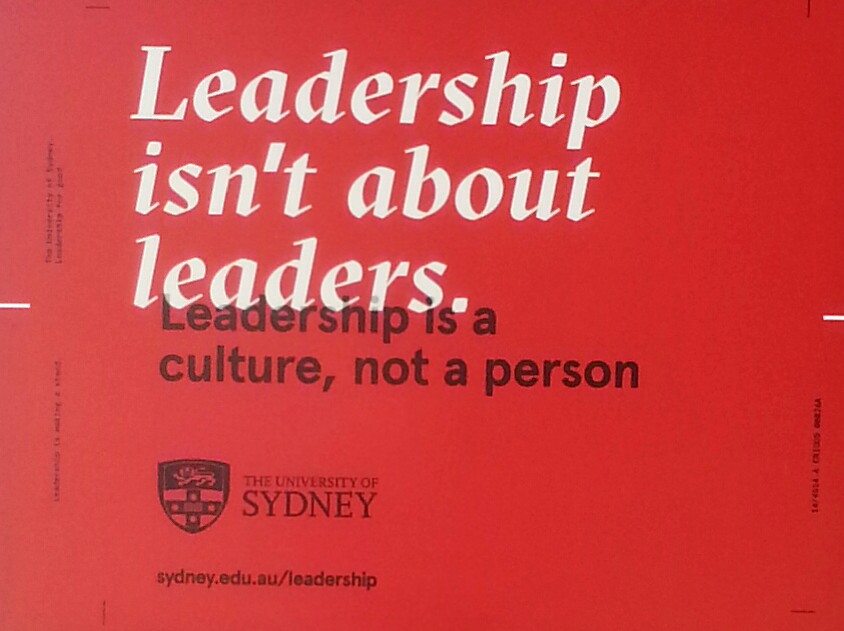
And a leader is a person and not a culture.
I would add that leadership is about disciples; without them, no leaders.
It does beg the question though; with half of Sydney sending their kids to private schools with the intention of creating leaders does that mean we are developing a leadership buddy culture?
One disciple for each leader.
Heinlein had a ‘devil’ theory of sociology:
“You have attributed conditions to villainy that simply result from stupidity.”
I wish I had read that one twenty years ago. I figured it out myself, eventually…

 offshore westerly