For once I suspect the coalition has made the right decision for the right reason. That must be hurting them right now.
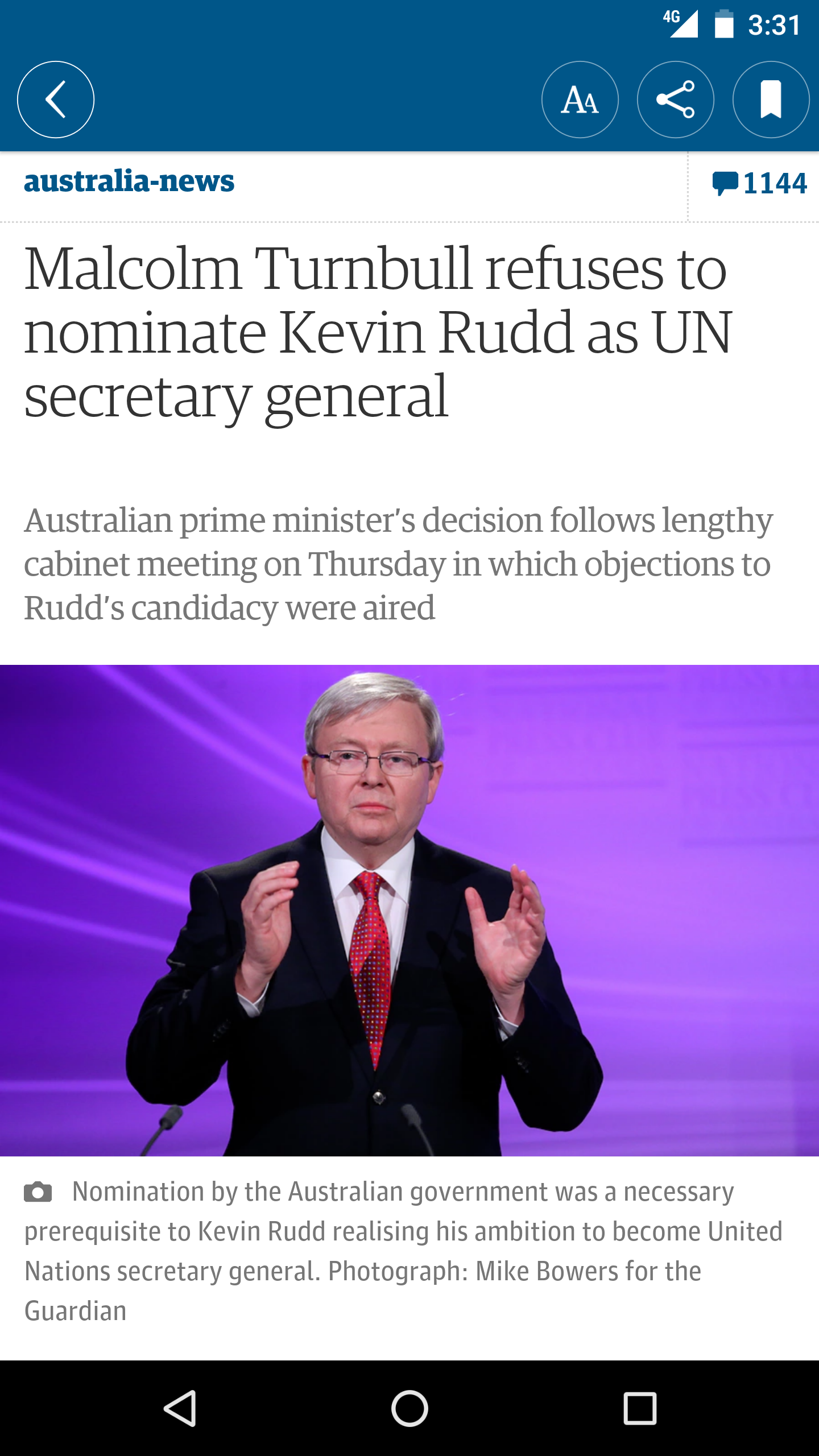

For once I suspect the coalition has made the right decision for the right reason. That must be hurting them right now.
It has been my displeasure to sit around a table listening to a bunch of board level business types rabbit on about programs for gender re-balancing of company boards in the interests of diversity.
Once, and I must have been thoroughly bored at the time, I noted that, in my experience, putting skirts on the white anglo north shore pigs-at-the-trough did absolutely nothing to engender diversity.
Pushing on, I noted that a little diversity along racial and sexual orientation lines might actually create a little genuine board diversity and thus challenge management to step up.
There was a chilly silence, followed by the sound of the mental tapes being wiped, and then the concerned conversation carried on as if nothing had ever been heard.

As long as I have one seriously challenging project on the go, I’m happy.
It genuinely surprises me that many of my fellow citizens feel just the opposite.
Boredom is satiated in other ways. The stress outweighs the benefits. The energy required to think. The fear of failure. The disinterest in the new. The perceptions of others. Not fitting in.
But ultimately, it’s a matter of consumption over creation.
One keeps you alive but the other makes life worth living.

Would I do a Rake?
Take a cartoon-like extreme position just to make my point when talking to a non thinker that just absorbs their opinions from the tabloid media.
You betcha.
Plus it’s damn entertaining. Especially if you’re careful to keep a straight face and cover your deception with both sincerity and cherry picked facts that can be verified by an on-the-spot Google search.

If you ride a bicycle in Sydney on a daily basis, and you aren’t a complete nugget, then statistically speaking you can expect to come off at least once every 18-24 months, usually through some fault of your own making.
Most accidents aren’t reported because they involve the cyclist, his/her bike, an embarrassing slip of attention and minor nuisance injuries.
Which is why, dear reader, helmets are such a good idea. Just last night I missed seeing a skinny ditch between the road and driveway and was very surprised when my front wheel disappeared, sending me right over the bars.
Minor injuries ensued. But it was the head smack on the pavement that got my attention. Had I not been wearing the helmet then I would have been in hospital as we speak, battling head injuries.
I once lived in Holland where these self-inflicted injuries are very rare. The difference is Holland’s extensive and well thought through (and smooth) cycling lane infrastructure.
By comparison we live in cyclo-cross territory, dodging holes, ditches, lumps, cars, pedestrians, cops and many other things. It’s the equivalent to driving your car on goat tracks with random roos jumping out at you.
Just this morning I read another of those articles (http://bit.ly/2aeSgmT) that use a form of pseudo-rational thinking to attack the NSW government’s general anti-bike stance (and associated laws and removal of bike lanes, etc).
These quotes by the head bureaucrat got my attention:
“Our road environment is significantly different. We’re on a pathway to changing the road environment, particularly for commuting on cycles. Our culture of cycling has been different, a different history to those locations that you’re talking about as well.”
“I think the context in other countries is significantly different. If their evidence doesn’t lead to these sorts of public policy changes then that’s terrific. Our evidence has led us to these public policy changes.”
What the government is doing is reducing the number of cycle lanes and doing nothing to making the random accidents (like the one I just had) less frequent. Noting this, they are also enforcing helmet wearing and conformance to road rules to minimise the risks related to cycling.
That seems rational to me. They probably did an ROI on investment into cycling infrastructure and decided it was useless, relative to say an investment into public transport.
And this being the age of entitlement, they couldn’t of course just say this. No, they have to weasel word around the issue, thus enraging the thin-skinned self-serving cycling community.
All up, it’s a quintessential first world problem.

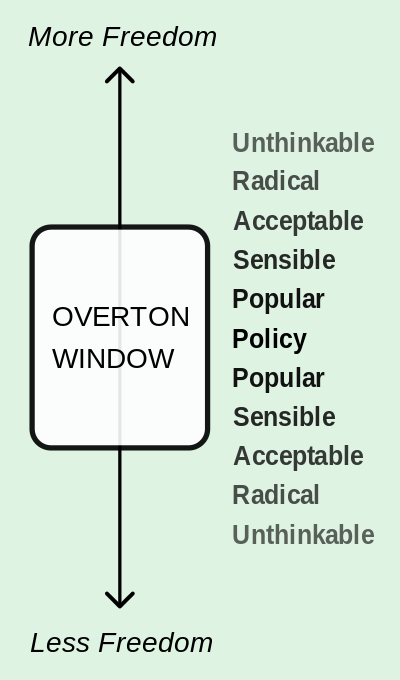
The Overton Window is a hypothesis describing the relationship between common public opinion and the chances of success of any new political policies.
See image below.
By way of example, in 1970 the culling of the greyhound industry because greyhounds were being culled in the interest of pace would have fallen into the unthinkable bracket.
However in 2016 it falls somewhere between the sensible and acceptable bracket.
However, there is something that Overton missed. These brackets represent the median of public opinion.
Also important is the spread around the median. The larger this is, the more careful politicians should be in proposing changes.
The power of motivated vocal minorities has been supercharged with the internet, after all.
So I’d like propose an addition to the Overton Window based on 6 Sigma thinking.
If 0.3% of the population or less of the population lie outside the 6 Sigma distribution in regards to an issue then you’re dealing with a standard Gaussian distribution of opinions on a subject; so knock yourself out and propose the changes to policy that all the fuckwits think they want.
However if polling suggests that more than 0.3% of the population are out past the 6 Sigma lines then do nothing apart from sounding very concerned, proposing the odd committee to look into the issue, and blame the opposition for opposing any changes.
Proposition: on matters humans, if work outcomes actually matter then they can be measured.
Alternatively, on matters human, if work outcomes can be meaningfully measured then they matter (to someone).
If accepted as a proposition, this means that if you’re having troubles measuring work outcomes then the matter doesn’t matter much.
A nice example is the current Innovation push by the federal government.
This minorly expensive program has no meaningful measures such as increases in high tech exports.
The only measures will be the number of individuals and organisations funded, together with the number of marketable activities that they report back to the government.
These will be things such as conferences attended, papers written, meetings attended, etc.
These activities are inputs and not outputs.
So the initial proposition needs to include the concept of meaningful measures that are outputs and not inputs.
The same can be said for tertiary education.
I would argue that the market place is the best measure of educational outcomes.
So the quality of your graduates can be measured by these metrics:
1. Firstly, the fraction of graduates that get a job in their discipline, and
2. Their average starting salaries compared to graduates from other institutions that also get a job in their chosen discipline, and
3. Some metric associated with the rise of these graduates in the industries that hires within the chosen discipline.
For each of the three metrics, I would normalise them to unity (the first is a fraction so that’s easy) and then multiply all three of them.
That’d sort the turkeys from the pigeons. And it’d also stop universities overtraining in dead disciplines.

Does academia matter?
For mine, this question needs to be first addressed before any issue of re-balancing in the sector can be tackled.
On one hand, academics teach our tertiary students and that would seem, on the face of it, a very important task.
And yet, probably two thirds of our tertiary students would be better off learning their trades in apprenticeships rather than universities, if such things still existed.
But still, that leaves the third of occupations and disciplines for which a university degree is the most efficient form of training.
In Australia, about half of the residual third can only find jobs in the discipline of training if they either (1) leave the country, or (2) become academics.
So that leaves one-sixth of the student population as a mission-critical education project.
In this one sixth, who are the educators?
Are they failed or exhausted practitioners? Generally not, they tend to be recycled post-graduates with very little other-world experience.
And even more oddly, their promotion is based upon research outcomes rather than educational performances.
This is based on an old notion of unknown origin that a good researcher will automatically be a good educator.
My own experience would suggest there is a non-correlation on the matter.
So, to the matter of re-balancing in the academic system…
Should we focus on gender re-balancing? Or balancing based on socio-economic status, race, religion, sexual orientation or other?
My suggestion is that in the 5/6th of academic jobs that barely matter, in the interest of fairness, each randomly selected 1/6th of the academic population be sent to the chopping board for re-balancing based on one of gender, socio-economic status, race, religion, and sexual orientation (noting that, mathematically speaking, we can’t re-balance all of them at the same time).
For the 1/6th of academics that do matter a little, how about we just choose them on merit? Whatever the hell that is. I don’t pretend to know but I do know that we can measure the quality of their graduates and then introduce a reward scheme for the educators (e.g. bonuses) based on these measurements.
I also note that, once all the re-balancing is done, as sure as night follows the days there will be a popular movement calling for merit equality, otherwise known as a meritocracy.
This old-world concept will confuse Gen-X’s and Gen-Y’s, tabloid news readers, politicians, real estate agents, soft toys, and any female in the professional services that has also had a baby or two.
We will have to send them all back to university as night students to learn all about this odd Aristotelian conception. It will have to be a complete year of night study because first they will have to learn about logic and rational deduction and a few other things.

It’s odd that we don’t hear ourselves snore.
It’s not as though we turn our hearing off when we go to sleep. We can all be waken up or annoyed by noise, such as someone else snoring.
I think with respect to our own snoring that we must have a feedback loop that (1) takes a signal from the nerves in the throat, and (2) sends that to a processor that sends out a signal that (3) puts a lock-in filter on the amp so that the sound our snoring is greatly depressed, as (4) detected by one of 180 regions of the brain.
So the invention of the day is a microphone attached to these snorer that picks up the noise of snoring and then sends a signal to a micro vibrator attached to the throat of the other person.
Thus enabling peaceful sleeping all around by fooling the victim into believing that the snoring is their own.


I am forever amazed at the fees paid to business consultants.
The distribution around what would be a fair market price is quite large.
There are a few reasons why:
1. Very few consultants use agents to negotiate fees, as should be the case after an in principle agreement is made on the services to be delivered.
2. Similarly, few companies that are hiring consultants refer the deals to purchasing officers.
3. Except for generic services, crowd sourcing -explicit (web) or implicit (tendering) – is mostly absent from purchasing, often reflecting the laziness and self serving desires of those hiring consultants.
4. The price-making job of the consultant is to create the impression that their services are unique and highly value adding. The price-taking client should decide not to believe this primarily because, if true, the consultant would be fully occupied with existing clients and wouldn’t be pitching for business. Such logic rarely applies.
5.Certain company officers, CEOs, directors and GMs for example, should be completely banned from hiring consultants simply because the strict rules that apply to the rest of the company don’t apply here.
Meandering through that discourse, I see a template for consultants on how to pitch and who to pitch to.

As a young person I read way too many books that I should have reserved for when I was more mature.
The classics that fully exposed the frailties of the human condition.
The result was that, in many areas, I am devoid of the vision of classical archetypes. I have never sought miracles in others or myself.
Indeed, all that I hope for in people is a fundamental goodness that magically trumps their natural greed, ego and hypocrisy.
Mostly I am disappointed. And as I age my disappointment is greatly attenuated because I have gathered enough data and I now recognise the probabilities.
If there is one absolute truth in my universe, it’s regression to the mean in all matters homo sapiens.
All of that might sound a little jaundiced but let me assure you, it’s just the opposite.
Firstly I have been mercifully free of the disappointment of never finding an archetype. Or worse still finding one and then being utterly disappointed when reality intruded.
Secondly, my journey towards the mirth of the trailer park has simply been a very enjoyable tour of indecorous data-gathering.
And I’m telling you, it’s a lot easier getting over the outrage at hypocrisy than the eternal loss of the archetype.


It’s the maths that concerns me.
If you commit to gender equality, then once that’s achieved you will be faced with racial equality, sexual orientation equality, religious beliefs equality and so on.
So say you commit to gender equality. Well that’s easy; you’re done at 50:50.
But then if you want to add sexual orientation equality, you’d have to divide one hundred percent by seven (straight men and women, and LGBTI), or alternatively by using whatever each category’s percentage of the population is.
In a couple of the seven you still need to maintain the 50:50 gender mix.
And overall you have to keep the 50:50 gender mix.
Once having achieved that you then have to move onto race and religion, whilst maintaining the gender and sexual orientation ratios.
Without looking too far into it, I suspect that you’d pretty quickly wander into a world of mathematical impossibilities, and you would be forced to abandon the plan.
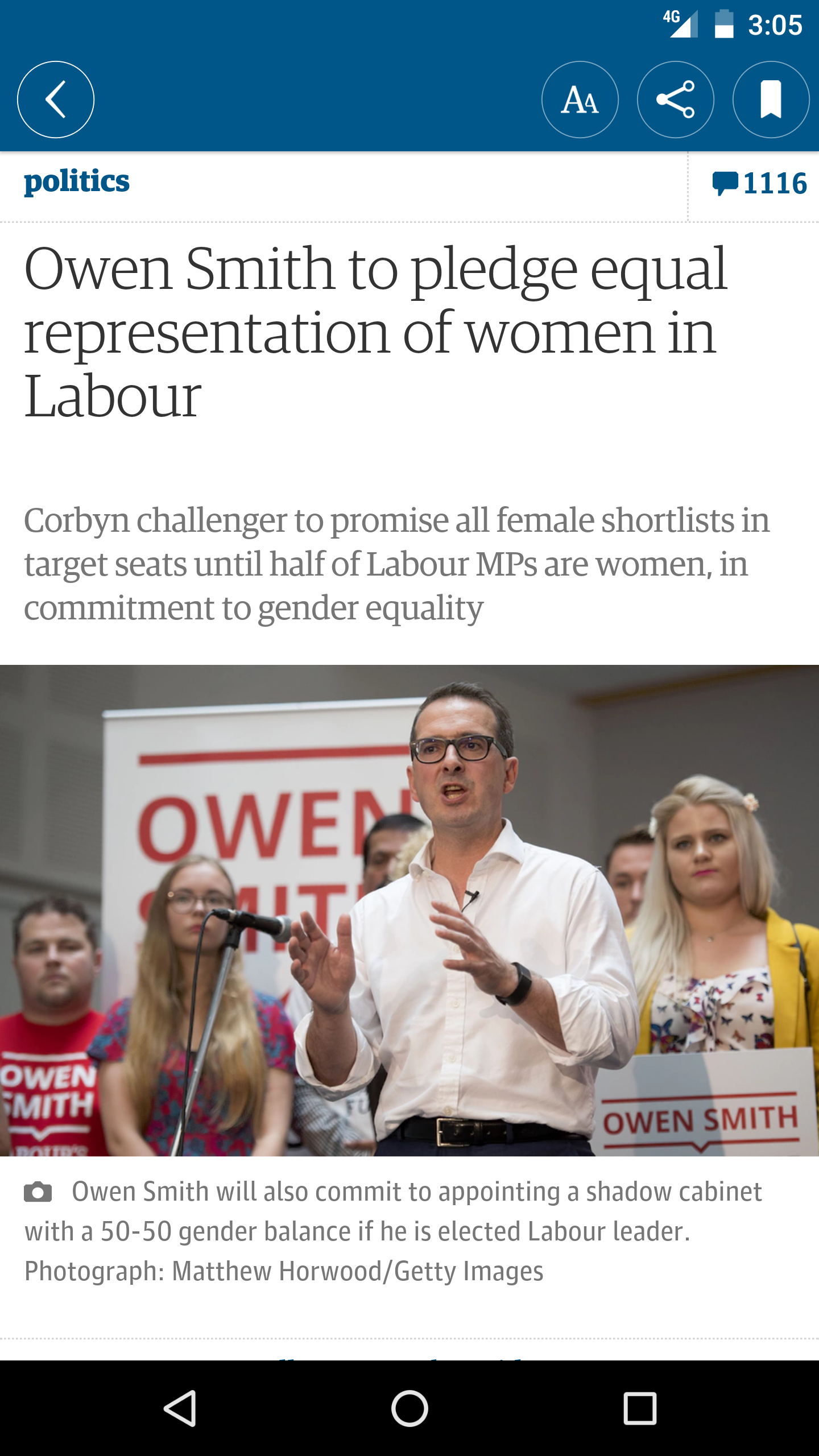
But if you stop at gender equality then you’ll be accused of stating that gender is more important than race, religion, sexual orientation or whether you cycle or not, when it comes to, say, political representation (see below).
Mathematically speaking, the politically correct types that are currently promoting gender equality are morons.
Sticks wrapped in cloth.
How would that work?
Twirl and reciprocate, maybe.
Sort of like making fairy floss.
Just in reverse.

While we’re at the super sizing of the nanny state, how about a Chief Coffee Officer of Australia?
Someone who’s goal would to promote great coffee in Australia, uniformity of coffee terminology (long mac for instance), licencing of baristas, university degrees for baristas, fines and criminal offences for the serving of crap coffee, research centres for the growing and processing of coffee, pointless advertisements for all the above, coercion of the states into all of the above, etc.

I call it a cargo cult. They call it isomorphic mimicry. I like big tits. But not at the expense of a big arse.

We’re all mad. It’s just that some of us can’t sleep it off so well. And so, little by little, the madness aggregates.
To wit, I reckon the best treatment for mental illness is yet-to-be-designed high-quality sleep and dream training.

Third Party Proposition: the process of personal enlightenment involves slowly casting off the effects of ego comparison.
Inferred: pseudo enlightenment involves detaching from other people or your own ideals.
Actually stated: actual enlightenment comes when you no longer make the comparison of yourself (your ego) to other people.
Furthermore: acceptance is the antithesis of the comparison of the self to others, and it’s the mark of the truly enlightened.
Indeed: acceptance is a connection into the self. Opening your ego only to your own heart and deriving what you need internally, not externally.
So imagine this: not detaching from other people or your ideals, whatever they morph into, whilst finding all you need by connecting to yourself and your own heart, and then deriving what you need internally, not externally.
Lexical and logical semantic alert! As ever, its probably just the vibe of the thing, not to be over-thunk.
However and yada, just yesterday it was reported that the newest brain map has boosted the number of known brain regions from 83 up to 180.
One of them just might contain the diode that when fired up by excessive enlightenment training, allows a complete bypass of the emotional responses that usually impair the ability of us humans to be fully aware of what we are doing when we imagine the perceptions of others in response to what we are actually doing.

Imagine that you’re washed up on a tropical island all by yourself.
You could become bored and blame your surroundings, the island.
You could become trapped in a state of Samsara.
But I doubt it.
Because that would require the perceived judgments of other people that simply don’t exist on your island.
Nope. You’d just be bored. Or not.
Proposition; enlightenment is a state of ego comparison.
If true, there’s nothing wrong with that.
It’s just that, as the old saying goes, if you’ve got a sore tooth, do something about it.

Here’s a proposition, based on one data point:
People that have trouble controlling their emotions, or their response to their emotions, are more likely to be conspiracy theorists.
If you violently object to that hypothesis and consider it a conspiracy theory then my proposition is based on two data points.

From my favourite Chinese IP blogger:
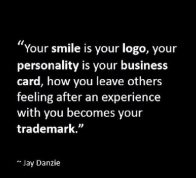
“If there is no any trademarks for a company,which seems like a naked nail,it can not run faster and it may trampled to death anytime. However, if u think everything will be fine and everything will go smooth after u have your trademark,then u are wrong, u should pay attention to care your trademarks and develop it.
The birth ,growth, development of a trademark is full of effort of many people, when the trademark is printed on the products and showed to consumers, the fate begin.s As men and women in love, some timeless, not eternal encyclical, but some broke up. To achieve a lifetime and honored brand, the companies should gain reputation, create their own brands, care their trademarks.”

I just got chatting to the old bloke next to me while waiting for a delayed plane.
It turns out he is yet another conspiracy theorist. Whence comes their addiction?
After softening me up with the usual chestnuts (gold, 9/11, the moon landing) he declared that:
“The Zionists run the world”
“Well they’re doing a pretty shit job then” I rejoindered.
That was not the reply he was looking for. After some contemplation he countered:
“That’s why we have to get rid of them”
“So who are you going to replace them with? Americans, the Arabs, us?”
He hadn’t got that far in his succession planning. So I suggested:
“It’s worth pondering you know. If you’re really unlucky you’ll get rid of the Zionists and be left with some clown like Tony Abbott running the place”
Silence. I’m guessing he thought that Tony wasn’t too bad. So I pushed on:
“The trouble with people like Tony is they are hated by too many people because they themselves hate so many people. This makes them crap world leaders because all the black people, the Asians and the Arabs would be gunning for him. And we’d be the ones that suffer; they’d make us responsible”
Thin blue smoke was escaping from his cogs and sprockets. The eyes, they lost focus and coordination with each other.
And then, the irrational circuit breaker kicked in and he regained resolve.
I never founded out how; boarding was announced.
My guess is that at least half the world’s population is ever unhappy, no matter how easy or hard they have it.
Nothing can ease their fears and hatreds. They can only be contained by legitimate state-enforced threat of force.
It’s exhausting.

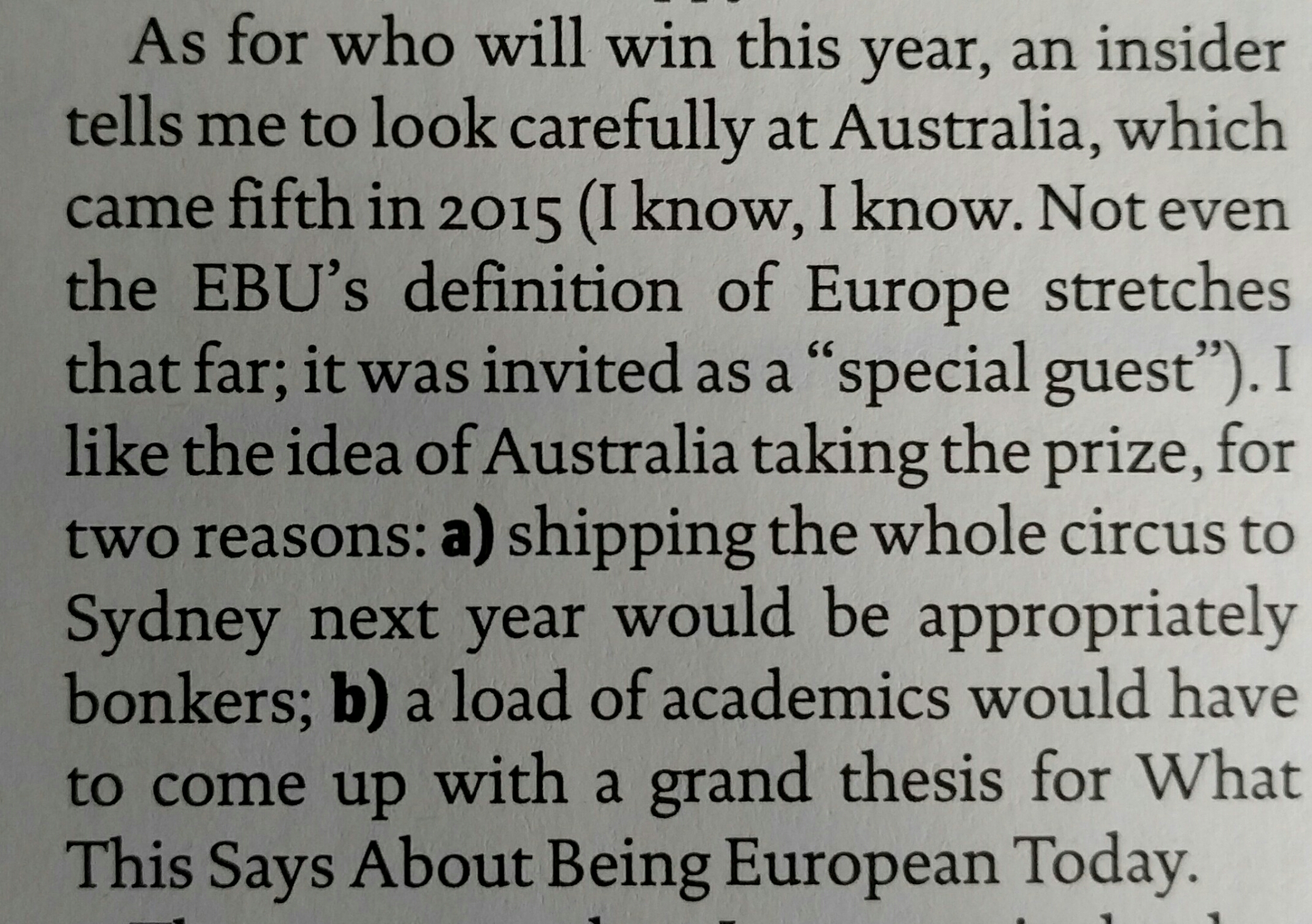
From the May edition of the New Statesperson, on the then upcoming Eurovision Song Contest:
This is something that, upon request, I wrote today for Chemistry in Australia. I somehow wish that I did not, to be truthful…
Commercial innovation in the 21st century is very focused on IT engineering and much less so on science. By way of example, I would suggest that over 90% of Silicon Valley’s investments over the last decade have gone into IT start-ups. At the moment, science is considered very ‘20th century’ in the tech investment world. The reason is that the comparative financial rewards for investments in IT are much higher, and with lower risks. It will take some time before this equation changes – we have a mountain of IT opportunities to work through and it will take decades before science once again becomes a primary focus of tech investment.
The comparative problem with a science outcome as a focus of technology investment is the long time to market and the corresponding heavy capital investment required in the development phase. Investment in technology is measured by internal rate of return, which is ruined by large investments that have long periods before profits are returned. And this problem is even further exacerbated by the fact that IT solutions are returning higher ‘multiples’ – the perceived value of a working IT solution usually has a much higher relative value compared to a working solution based on a science outcome.
Australia’s well-publicised poor performance in innovation has very little do with science and everything to do with our corporate sector being users of IT technologies, and not vendors and exporters of IT technologies. They can afford to be so because of the implicit oligarchical environment in which they operate (e.g. four large banks, two large supermarket chains, etc) to a large degree protects them from foreign competitors. Essentially they have no strong driving force to become global technology vendors because there are easier profits to made serving their protected Australian markets with off-the-shelf technology solutions.
If history is a measure, any solution to an innovation ‘problem’ that has an Australian government at its core is almost certainly going to fail. We have had program after program over the last three decades focused on innovation, knowledge nation, and various other catch-cries. And yet our high tech exports continue to fall as a percentage of our GDP. The reason is that government expenditure, focused on technology innovation usually starts with a misdiagnosis of the ‘problem’ followed by what could only be called a perversion of the process of remedy, i.e. it gets muddied by pork-barrelling and self-serving parties looking for government funding.
Contrary to oft-repeated pronouncements, Australia is not a risk-adverse nation. Indeed in mining exploration and other areas we are more than happy to invest in risky venture because we have been doing so for a century and a half and there is an investor class that fully understands the risks.
What we don’t have is large investment in tech-sector innovation because the return on investment into the tech sector in Australia, which has historically eked out a small existence usually with government support, has traditionally been very negative. This will not change unless our large corporations start becoming global vendors of technology solutions; without this driving force to create a local market for innovation assets, most of our high-value technology ideas (and their progenitors) will continue to disappear overseas and we will be left with the rump that ensures a negative return on investment. In this scenario our investors are not ‘risk adverse’ but ‘loss adverse’, i.e. very sensible indeed.
So do we actually have a problem? The only one that I perceive is that less than 1.5% of our exports can be considered as high tech, and this number is shrinking. We rely heavily on exports of resources and agricultural products, as well as imports of students and tourists. All of these revenue sources are susceptible to profitability and revenue cycles and if they all trend down at the same time we may be in a little strife.
Is there a role for government to fix the ‘problem’? Maybe, but only if the issue is handed over to a modern day Senator John Button; these political characters that can cut through the self-serving noise seem to be few and far between these days. The primary focus of any government-sponsored solution should be incentives, tax and otherwise, that act to get our large corporations into the business of exporting technology solutions to global markets. Short of this focus I can’t see the opportunity for meaningful change.
In terms of other actions, this country badly needs a Chief Technologist. We have a Chief Scientist but this role, absent a large corporate R&D sector, pretty much serves the needs of research institutes and universities. The widely publicised focus on STEM needs to be broken up into IT and SEM; STEM is an unholy grouping that does not recognise that a large fraction of IT innovation occurs in start-ups, SMEs and the corporate sector, and has very little to do with universities (other than training of the graduates that go into this sector). And finally, ‘Innovation and Science Australia’ needs to be supplemented with a body called something like ‘Innovation, Companies and Exports, Australia’.
Finally I would suggest that the success of any investment of public funds into the innovation ‘problem’ needs to measured in the context of high-tech exports. Without a quantitative metric of success it is all too easy for governments to invest in one failed program after another, with little carried-over learning.

I suspect it’s fairly obvious to most of us that an ego needs a counter ego, a.k.a. another person or persons.
These supply the curvy, weirdly distorting carnival mirrors by which we judge ourselves, implicitly through our imaginations or in fact; by which process the ego weighs itself.
Given this, I would say that there are two ways to attenuate the potentially negative (i.e. over stimulated) impact of the ego on whatever it is that you’re trying to achieve.
One, is to pretend that all other people either don’t exist or don’t matter. Or, at the very least, that their judgements don’t matter.
The second approach, the harder one, is to detach yourself from whatever it is you’re trying to achieve in life. This approach just makes you a smaller target for the judgements of others. However it also involves becoming a walking paradox.
In military terms, the two choices are either declaring sovereign neutrality or the adoption of expensive stealth technology to reduce your radar footprint.
These have both worked some of the time.


Poverty in the West is very different to that of over one hundred years ago.
Back then poverty meant a shortage of calories whereas now it is correlated to an excess of cheap calories.
We can thank all those productivity gains in the agricultural, food processing, transport and retail industries for this.
Nowadays, poverty in the West is more a value judgement on time spent poorly by those doing the judging, and also a limited access to non-core (to life) consumption.
Depending on the country, access to life extending medical treatments is also a divider.

I’m pretty sure that the ultimate outcome of the Uber style technology platforms will be a servant class.
Essentially these apps allow the cheap provision of human services, unencumbered by layers of margin-adding middle men.
Affordable servants that, in this post industrial revolution era, aren’t actually needed as units of production.
Not even peripherally, in the information hemisphere that clusters around the industries focused on the aggregation and distribution of capital.
Ostensibly serving a machine rather than their clients, the service providers at least get to keep some semblance of pride.
Nevertheless such a system is open to abuse. It will be so.

Standing in line at Peets Coffee I have just experienced the disorienting impact of Gen Y management thought bubbles. These I have unfortunately experienced in their incipient development.
Imagine this; huddles of people, before or after work, socialising work practices. Generally speaking the first suggestion is the best one. Shit ideas aren’t challenged; that would be rude. And, in the interest of fairness, just about everyone gets to contribute to the pastiche.
One minute I am standing quietly in line (and don’t the hipsters over here love lining up), patiently waiting for my turn to order coffee.
And then, some dude says ‘Sir, can I help you with your beverage’.
I say ‘Not really, I don’t have one yet’.
Complete confusion on the other side. And then;
‘I’m here to accelerate the line’. Not that I had noticed.
‘OK then, I’ll have a double shot macchiato’.
‘Sorry sir, you’ll have to be expedited by Sara’, pointing at the girl on the till.
In fact, Sara never did get to expedite me. Kayt did.
Kayt shouted at the queue in general and specifically at me as the next customer in line for serving;
‘Can I help anyone?’
‘Yes, do you take coffee orders’
‘Excuse me’
‘Coffee order. That’s the deal here right?’
‘Yes, what would you like sir?’
‘I’ll settle for an espresso thanks, double shot’.
I was reluctant to go down the macchiato route by now, knowing in my heart that it would be cause for yet another unwanted conversation.

So I tell this dude locking up his bike about my stolen bike saga.
He tells me that there are three commodities on the streets of San Francisco; ice, sex and bike parts.
In return I tell him that his nice Surly bike could be improved by inverting the 45 degree stem and raising the seat about 8cm.
That’s a fair deal, no?

Holed up in a Dreamliner for 11 hours I was pondering whether we humans stand even a tiny chance of not screwing up the conditions that make our existence on this planet vaguely viable.
The argument against is that, despite our ability to socially coalesce to tackle large issues, that we also spend an awful of lot of time tightening thousands of tiny little bolts that hardly matter, whilst happily ignoring the fact that we forgot to put the head gasket in.
An example; San Francisco. Where I am right now.
On the walk to my hotel I observed a book exchange box on the side of the street. Take one book and leave another, all based on some do-gooder honesty scheme. And it works for some reason.
But just next to it, a pedestrian area, where the tourists at Fisherman’s Wharf eat, which has clearly never, ever been cleaned.
And behind the assortment of street furniture, your usual collection of homeless folk.
They see no reason to steal the free books. Unless there is a book cop that I didn’t see.
And then someone steals my rental bicycle. A piece of crap that you couldn’t give away. Clearly a kleptomaniac without a profit motive.
Circularity was simultaneously broken and illogically complete.
The worst part was me wandering around looking for the thing. One starts doubting one’s sanity. Or sobriety.
Four blocks later, yep, some dickhead has gone to the effort of cracking the D lock.
Back to the book exchange. The concerned bushwalking sandal-wearing white middle class progenitors are putting their efforts into matters that don’t.
I’d call that charitable bypassing. And that is being charitable.
Just another of those pointless bolts being tightened.
And then, just when I needed it most, a marketing person hand me a free mango ice block.
It won’t save the planet but I’d call it evens.
QED.


Honestly, I didn’t make this up…
“Spend a night with Alain de Botton, internationally renowned philosopher (sic), television presenter and author of international best sellers Essays in Love, How Proust Can Change Your Life and Status Anxiety as he discusses his stunning new novel The Course of Love, a philosophical novel about modern relationships.
Twenty-first century depictions of love and marriage are shaped by a set of Romantic myths and misconceptions and with his trademark warmth and wit, Alain de Botton explores the complex landscape of a modern relationship, presenting a realistic case study for marriage and examining what it might mean to love, to be loved – and to stay in love.”
I interpret this as:

The NSW government has just announced that it’s going to close down the state’s greyhound racing industry.
The primary reason being nominated is that about half of the greyhounds that are bred are culled because they aren’t quick enough.
Taking this to its logical conclusion, we are all going to be vegetarians some time very soon.
And don’t think I am joking – this is the thin edge of a very silly wedge.
A more obvious solution would have been to insist that all that dog meat went into cat food, or something like that.
Having said all that, at any dog racing meeting these days the crowd is numbered in the tens. I know, I went to one recently.
The televised racing audience still exists but they are slowly being weaned onto video simulations rather than real racing. This takes all the variance out of the totalisator process and all of the costs – a big boon for the government and, statistically speaking, of no consequence to the punters that regress to the totalisator mean anyway.
And finally, it should be noted that a number of the dog racing stadia are on some very valuable redevelopment sites. Think Wentworth Park in Sydney.
Right there is probably the NSW government’s primary motivation.
One can view just about any decision by the NSW government through the lens of property redevelopment. You just to have look for the connection.

Today I could swear I’m living in the matrix and that the program is slightly corrupted.
It’s freaksville, every way I look. But in a subtle, can’t quite put my finger on it, kind of way.
Fukuyuma described clientalism as a situation where a political party doles out favours to their specific voting supporters, via money or jobs in the administration (by way of example), as an ‘evil’ that haunted Western electoral democracies in the early days.
However there’s no name for a system which has:
1. Compulsory voting
2. Entrenched parties through a preferential voting system
3. 99% of voters only concerned about ‘what’s in it for us’
4. Advanced technology allowing full prediction of voting intentions down to the discrete vote
Essentially every voter is part of the clientalistic system as are any number of non voting lobby groups.
A country determined to disappear up its own orifice, I call that. So, since we can’t call it Clientalism, how about Autism?

It’s no surprise that two political parties that develop policies by estimating their impact on the same voter intentions end up with tied number of seats in an election.
Since this gives the independent seats a great pork barrelling opportunity, the rest of the country will catch on quickly.
My prediction, by the next election in twelve months time, we’ll have a parliament of mostly independents.
Whoever thought local representation at the federal level was a good idea?
Doomed to lead to pork that is.
Even state level representation is a silly idea.
As is representive democracy.
Ditto this blog entry.
Forget I said anything.
Francis Fukuyuma on mercantilism in Habsburg Spain:
“This then led to a rentier rather than an entrepreneurial mentality, in which energy was spent seeking political favor rather than initiating new enterprises that would create wealth.”
Sound familiar?
Entrance through the grog shop.
Somewhere behind all that grog there is a wormhole through to passport control and then Australia.
It’s an obstacle course designed to confuse teetotaler terrorists, I am sure.

Better than much I’ve seen lately…
Lola argues (with my Mum) that one must say;
“When in Roma do what the Romans do”
This in response to my mum instructing her to replace ‘OK’ with ‘d’accord’ whilst in Paris and using the more usual form of the old expression as evidence.
Lola noted the paradox and came straight back at her.
I was tempted to suggest:
“Quando a Roma fare quello che fanno i Romani”
Or something like that.
But then I thought better of it.
The debate had already been going for half an hour.
(p.s. and indeed it raged for days)

On a final note, Lola thought she’d run the makeup app over the poor thing…

It’s been an interesting business playing with the Mona Lisa.
Despite what everyone craps on about, it’s not the inscrutable smile that makes one pay attention, is the fact that part of your brain knows something’s all askew.
After frigging around with it, fixing her up, I’ve decided it’s the composition of the background that does the trick.
Once that’s gone she looks like all the other Rembrandts.
Quel est le bruit?

I suspect people dislike change because it represents some sort of survival threat to the prehistoric parts of our brain.
On the other hand the modern section of our brain craves change to ameliorate boredom and who knows what else.
This Ying and Yang must play out differently in different people giving us the usual Bell curve in the population for preferences for or against change.
Indeed, even for one individual the attractiveness of change may wax and wane over time.
Is it worth fighting one’s natural tendencies against change in this regard?
I think a little, yes.
Primarily because the threats of change sensed by our prehistoric brain have mostly been socialised out of our existence whereas the benefits of change are now hardwired into our economies.

My head of sales in China has assessed our sales process as being too slow. He urges us to be much faster in our responses to customer requests because, and I quote, that if the sales process takes too long (say more than a month in total) there are risks that:
“1. the factory is bankrupt.
2a. the main technical buyer went to another company
2b. the main technical buyer is in jail or fired or changed position.
2c. the new guy who takes this position doesn’t like our tool.
3. the factory has the reduction of the capacity plan and decide to cut the funding.
4. The technical buyer changed his mind.”
How can this work you might ask? With complete lack of apparent logic (nothing in there about the IRR on purchase right?) in their purchasing process how in the world can they ever out-compete us smarties in the West?
It works because all their suppliers are ‘good enough’, except some of the Chinese ones who figure out how to be better when their customers spit the dummy.
The internal chaos within these Chinese manufacturers is just part of the process whereby they keep their costs down.
I sometimes get the feeling that the factories run themselves and the Chinese that wander in and out of them are just there for entertainment value.
And the Chinese would never consider making artisan jeans that cost $5000. Although if they took off they could probably copy them with a $1 cost base.
I’m not sure who’s got the problem here.

 offshore westerly