Even the very worst dinner party can help resolve the imponderables. The take home message? Stay home at your peril.


Even the very worst dinner party can help resolve the imponderables. The take home message? Stay home at your peril.
Yesterday I received a draft non-disclosure agreement (NDA) from SolarCity (I can name them because as you will see, it won’t be signed).
This NDA contained a very unusual clause stating that the recipient couldn’t have any of the disclosing party’s confidential information (as incorporated into patents) ever used against the receiving party as part of a patent enforcement by the disclosing party.
This is effectively a free Covenant Not To Sue (CNTS), aptly named in this case.
Which got me to thinking that the VERY best form of marriage pre-nuptial agreement would be a CNTS after separation, with prescribed damages equal to the former couple’s entire combined wealth at the time.
This would force all financial negotiations to a mediated version of common law standards. And it wouldn’t be that divisive to sign before a marriage.

On the subject of professional tinnitus, the persistent buzzwords that confound the ears and minds of the employee classes are these old chestnuts; “innovation” and “creativity”.
On the surface, one might think that these modern attributes represent an essential capability of anyone wanting to get employed, remain employed, or even for those wishing to ascend glass pyramids.
But a close examination of the matter will reveal that success in these endeavours is actually engendered by an ability to appear to expend little effort in creating the impression that no effort is being spared in creating the further impression of a personal mastery of the dark arts of creativity and innovation.
In practise this means; (a) frequently using the words “innovation” and “creativity” in emails, reports and meetings, (b) attending the odd workshop and/or forum on the subjects and thereby becoming a subject matter expert, (c) not sniggering when anyone else uses these terms, and (d) (most importantly) having an up-to-date awareness of the best and most obscure second-order terms related to “innovation” and “creativity”; these are generally trademarked sub-buzzwords such as “guided imagery” and “ideation”.
Ideating backwards to the mercantile genesis, we can blame the Enlightenment and the Industrial Revolution for the situation that we find ourselves in. Let me explain.
The Enlightenment brought us creativity and the Industrial Revolution brought us innovation.
Both movements were based on the then novel idea that the ‘things’ can always be improved upon, a belief that required, inter alia, a disrespect for all things ‘past’, and an apprenticeship in innovation and creativity.
Indeed, the Enlightenment was driven by the desire to free mankind from the shackles of Despots and the Churches; mostly “done” in the West.
The Industrial Revolution hoped to make everyone free from poverty so that a few could get very rich; again, mostly “done” in the West, at least according to the standards of the 1600’s.
So if these movements have been successful, why do we cling to the concepts of innovation and creativity, the vestiges of the key modi operandi of these movements?
If you think about it, it’s quite obvious…
Once the Enlightenment and the Industrial Revolution were successful in the West, we no longer needed a disrespect of the past. Accordingly it was not necessary to throw out the concepts of innovation and creativity just because (a) they were old-school and (b) we didn’t need them any more.
And without the formerly required truth-seeking apprenticeship no one was (or is) required to notice, or care whether any attributions of character (such as innovation or creativity) are real or otherwise.
My guess is that innovation and creativity are on the rotisserie of recycled buzzwords because of nostalgia for a time when things were a little more interesting. If you will, their continued use represents a metaphorical appendix (of the body corporeal type) in a bored and dull mind.

What, I wonder, is the peak decibel difference between a bell and a glockenspiel, both made of the same mass of the same metal, and both struck with the same hammer?
Somewhere there will be a somewhat inward looking fellow who will have the background and interest that would allow him to ponder this puzzle and estimate a credible solution.
But where does this fellow lurk? How do I find him?
Probably not on a private blog, I’m guessing.

Just say, for instance, someone put a gun against my head and said that I had to start a serious IP services business. What would I do?
Firstly, I would bypass copyright, trademark, design – these are being rapidly disintermediated and, to a large extent, the service providers in these areas are just undifferentiated form fillers that will be replaced by technology.
Which leaves patents where, even the most sagacious judge would admit, a keen sense of intellect is needed in order to do a good job as a service provider. It’s a complex business.
Of course I could provide disintermediating services to the service providers in the area. But who wants to be serving a supply chain that lives on hot air? It could just evaporate one day. That would be too uncertain for the likes of me. Plus, as I have learned, it’s best if you like your customers.
Then there are the pirates, picking over the pile of bones in the patent world, looking for nuggets of gold. Chinese diggers and their drunken publican masters; that’s how I see these guys. Patent trolls, brokers, patent banks, patent funds, industry funds etc. They are all just arbitraging fear without no intention of creating demonstrable value for anyone but themselves.
Which would leave me with patent service providers – the patent attorneys themselves – otherwise known as dickheads, nuggets and nerds (DNR).
I have said in the past that only ca. 1% of the owners of patents have a positive IRR on their investment in patents. And only about 10% of this 1% make that positive IRR on purpose. That is, there is about 0.1% of patents that are intended to be value creating and actually are.
Who are these unicorns that own these 0.1% of patents? Well, they fall into three categories only:
As a rule of thumb, these are the only three categories of businesses where the CEO is intimately involved in patent strategy. That is the give-away.
As a service provider, the minute you start dealing with a VP, or worse still, a sub-VP (sometimes down to shit-kicker manager) then you know that your client has absolutely no idea what or why or anything. Then you are down to having boozy lunches with the IP manager as a means for keeping your business going.
So, back to the proverbial gun against my head; my patent services company would ONLY serve the three categories of customers above, companies that have proven they are in the 0.1%, and where the CEO is one of the direct client contacts.
Do these guys have a problem with their existing patent service providers that needs solving? You betcha.
Do they know? Nope, because no one has articulated an alternative.
The problems are as follows:
In my service provider company I would assemble the very best patent attorneys, patent strategists, licensing experts and patent litigators. The back office would include the best analytics people available. The patent attorneys would be free to focus on what they are good at and not be forced to work on the full gamut of activities.
Of course, there wouldn’t be a patent attorney as CEO of my vehicle. They’d be very well payed employees; no more.
I would have teams dedicated to a small number of major clients. They would work from day one to map out an execute the most aggressive value creating patent plan for the clients. Patents would be acquired and patents would be filed. Licenses would be granted and received. The team would work hand in hand with the clients to play cat and mouse chess with the company’s competitors. Litigation cases would be launched to warn the market, for example.
Think of an IP investment banker, working with clients from day one. My guess is that this model would be so profitable that it could be funded under a LP model and that my service provider could then just be an equity partner in the clients.

Woody has reminded me that I must mention the Thermomix.
A person that shall remain nameless has one.
It’s a very, very large and expensive ($2,000 expensive) blender incorporating a heating element and a mass balance.
Upon expression of my incredulity, the thing was defended on the basis of an example, being risotto.
Here is the recipe of choice…
It’s bloody exhausting just thinking about it, and I love tech.
The old way looks like this:
Bring stock to the boil in a saucepan. Reduce heat and hold at a gentle simmer.
Heat the butter and oil in a large, heavy-based saucepan over medium heat. Add the leek and garlic, and cook, stirring often, for 4 minutes or until soft but not coloured. Add the rice and stir over medium heat for 2 minutes or until the grains appear slightly glassy.
Add the wine and cook, stirring, for 2 minutes or until almost absorbed. Add a ladleful (about 125ml/1/2 cup) of the simmering stock and stir constantly with a wooden spoon until completely absorbed. Continue to add the stock, a ladleful at a time, stirring constantly and allowing the liquid to be absorbed before adding the next ladleful, for 25-30 minutes or until rice is tender yet firm to the bite and the risotto is creamy.
Divide the risotto among serving dishes. Top with shaved parmesan and the remaining lemon rind to serve.
I am not sure I see the point of the $2,000.
I couldn’t find a single recipe that was demonstrably less work than the old fashioned way.
Unless you are into baby mush food. Simply shove in all your left overs and cook them to death…

For my own future reference; passing off is a common law action, which protects goodwill and reputation built up by the use of a trade mark or business name of a product or service.
The elements of the passing off action must satisfy:
Some types of passing off include:
Essentially, passing off actions involve situations in which a representation is made in the course of trade, which deceives or causes confusion amongst customers either online or in the real world.

When your average consumer desires the new Subaru Forester does it believe that the Subaru Forester will help it fit right into the middle of the Gaussian distribution of consumers, or does it just believe that everyone else just believes that the Subaru will help them fit right into the middle of the Gaussian distribution of consumers?
Conversely, when your six sigma consumer desires not to buy the new Subaru Forester does it believe that the Subaru Forester will help it fit right into the middle of the Gaussian distribution of consumers, or does it just believe that everyone else just believes that the Subaru will help them fit right into the middle of the Gaussian distribution of consumers?
If you follow this closely you will see that there are two key issues here:
If you let go of beliefs regarding what other people might believe then you are just left with your own beliefs.
And because you have let go of worrying about what other people might believe then you don’t have to worry about, or have any beliefs with respect to what they might believe, with regards to your own choices.
Then you are just left with your own beliefs. But lacking the counter-weight of your own beliefs about other people’s beliefs, these will automatically disappear up the wazoo.
Then you will be free not to buy the Subaru Forester because of the 100 or so very annoying features, royally fucked up by the Japanese R&D team responsible for developing it’s interior and user interfaces.

Cars and houses; they represent a significant personal investment.
Hence the designs of these are generally much closer to the conservative middle of the Guassian than cheaper and more consumable goods because their progenitors cannot afford the risks of low IRRs.
The question is whether the middle of the Guassian is really the middle, or whether everyone just believes everyone else believes it’s the middle.
Popular actionable truth absent hypothesis; also known as a belief. It’s all good until it’s not.

I, for one, would be opening the exit hatch. Bugger the bird. Maybe they’re worried about pterodactyls.
The hatch opens inwards and then you chuck it out, as instructed, at the bird. Makes sense to me!

It would appear to me that all those women are actually getting excoriated, not exfoliated.


Sponging off Miss Fisher, headphones disguised as a wrap-around necklace. Loose ends you notice, and kept in place by the loop around the neck. And beads instead of rubber.

But the lowlight was definitely the time when I let off the shooting ball firecracker (Roman candle) through an air vent, at foot level, during a school disco.
Ex, ex, ex excoriation, Ian.
Then there was the time I absent-mindedly set fire to the recently marked (with kerosene) baseball diamond whilst visiting Hunters Hill high for an inter-school match.
Now that was excoriation!
As I recall there were times when I left school early on the assumption that I’d get away with it. Excoriated almost every time…
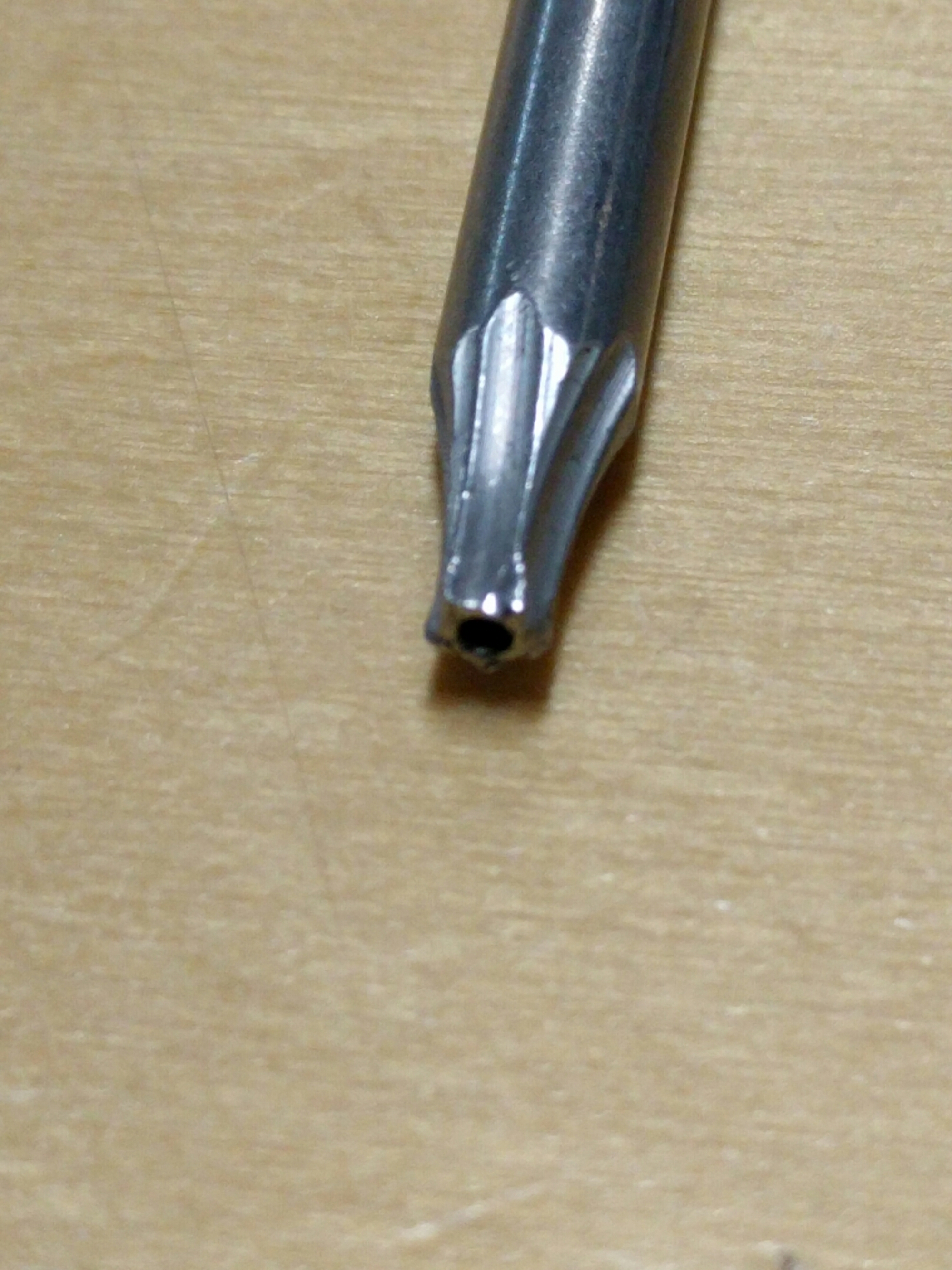
I’m sick of my headphone cables breaking at the maximum stress point. Take one spring out of a cheap pen and one set of headphones and selectively merge.

“As reported by a Chinese top level official channel to Jesa (the news is not public yet), Shanghai Government will reduce the total surface dedicated to industrial production by 400 km2. This will have a great impact on many enterprises, which will be forced to relocate outside the whole Shanghai municipality territory. Also, industrial parks around the municipality will suffer from this guideline. In the near future, Suzhou zone could likely experience the same decision since a few signal in this regard are already clear.
Companies that will be soon forced to relocate are the ones that:
– Do not comply with the municipality’s environmental production standards;
– Are not profitable after years of activity;
– Are characterized as small-sized businesses.
The decision was taken in order to redevelop and modernize the territory surrounding Shanghai into a sustainable one. Industries working in “smart technologies” as well as the ones supporting the service sectors will be incentivized to establish in the transformed area.
Jesa warns regarding the probability of this guideline to happen since years. Nowadays, the trend in China is to upgrade the coast industrial areas into service oriented hubs. At the same time, heavy production industries are starting to move to the West and inner regions.
In light of these facts, Jesa strongly suggests to refocus the business strategy on time. If a company’s “China Project” has not yet started, it is fundamental to evaluate different solutions in terms of localization. Also, if a company already works in China, it is advisable to consider relocating the branch to provinces nearby Shanghai or even to further areas in the West.”
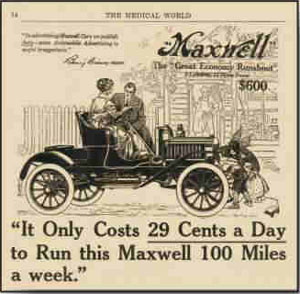
The new finance niche is invoice trading.
Essentially these financiers will give you cash for your company’s unpaid invoices at a discount to their face value.
Next these guys will bundle up their customers into unholy stacks with wide variations of risk and flog derivatives based on these and eventually being down the western economy.

Recent figures from IP Australia show that 70 per cent of local intellectual property protection filings in Australia come from SMEs.
This was then commented upon:
“It’s a sobering indication that start-up companies are failing to get on the front foot early enough to lock down their most valuable asset – their IP. Given the level of innovation in Australia, we would expect to see a higher proportion of IP filings by our innovators in smaller and start-up businesses, rather than the current dominance by established SMEs.”
Geez that confused me until I realised that the author was distinguishing between startups and SMEs in Australia; not something that I do.
For mine, our startups are just unprofitable SMEs.
In any case there’s no inventions in our startups so why would they file patents?
All inventions are innovative, but very few innovations are inventive. Doo dah…
As for trademarks, copyright and registered designs, well the internet has killed them and the internet startups boys are the ones actually doing the killing.



I feel a big short coming on.
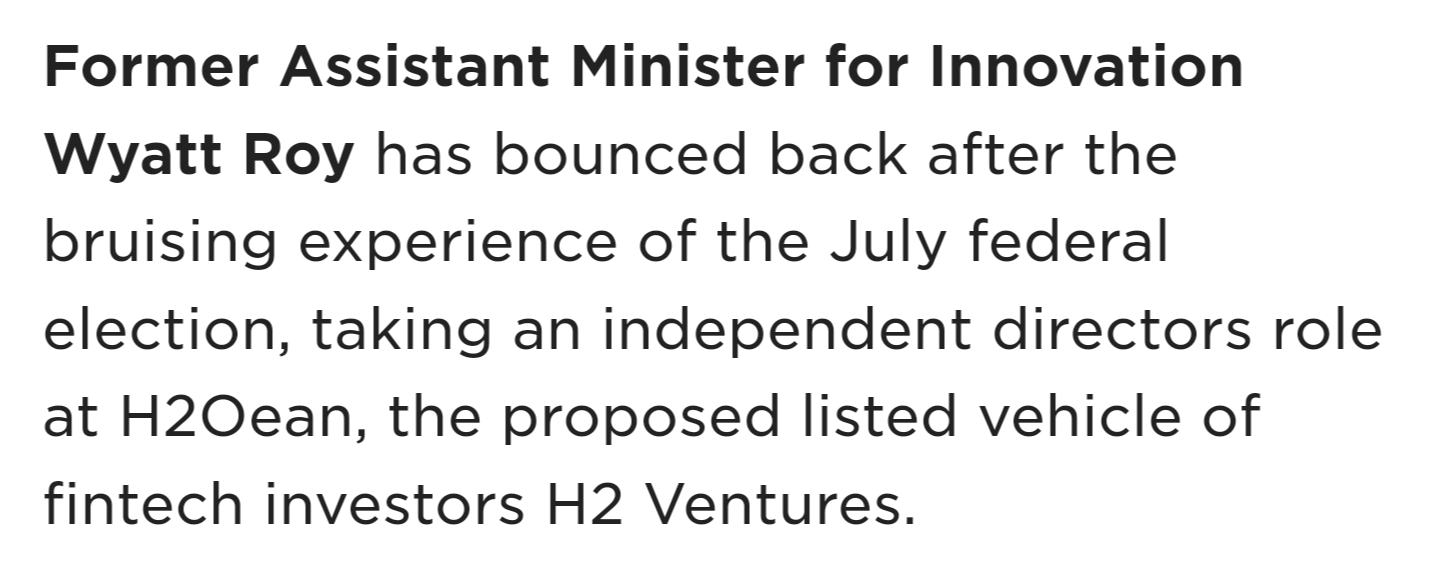
On how the Chinese Jack the Ripper was finally fingered. A quiet fruit store owner, his counter-ego has been in the rape and mutilation game since 1988.

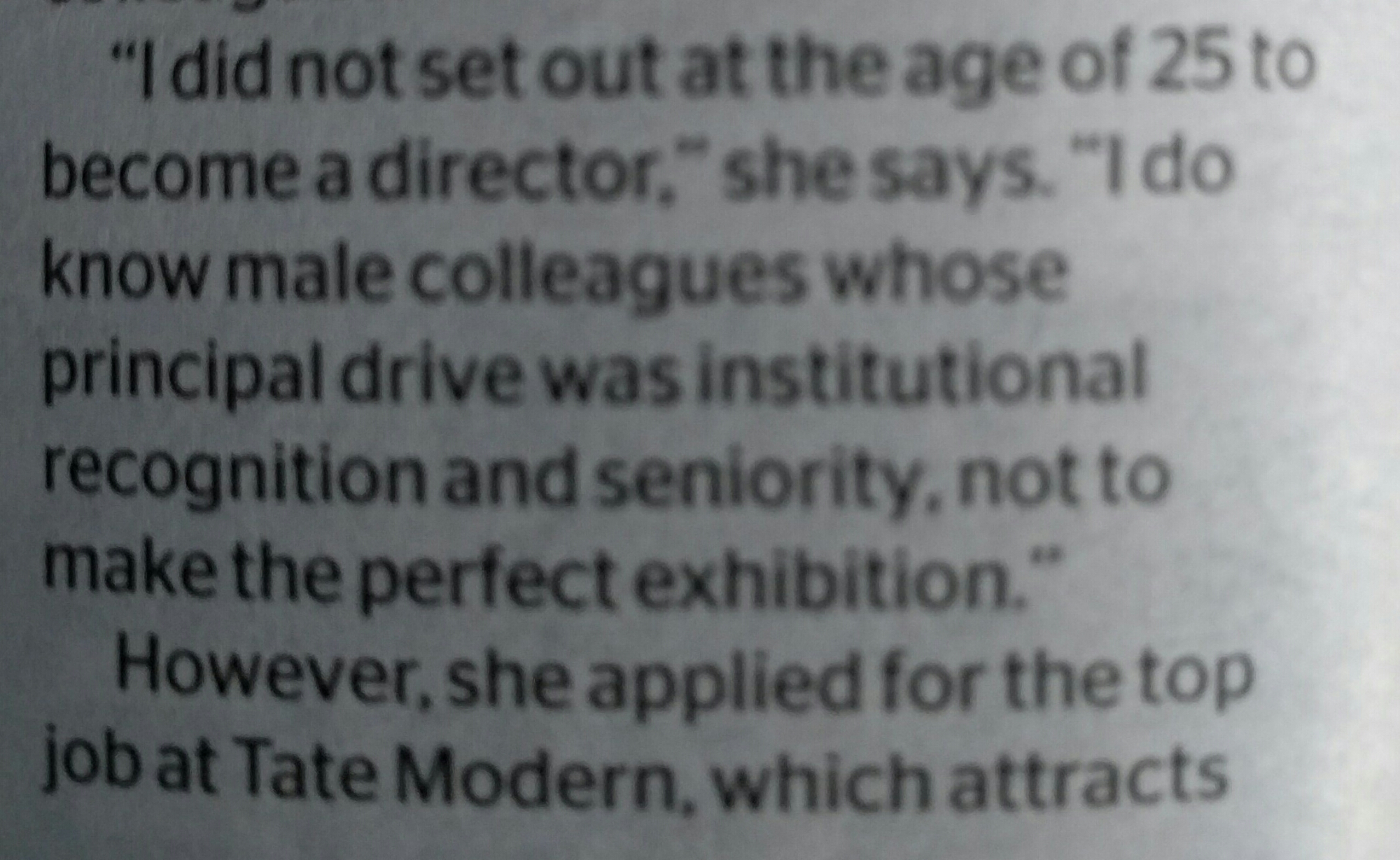
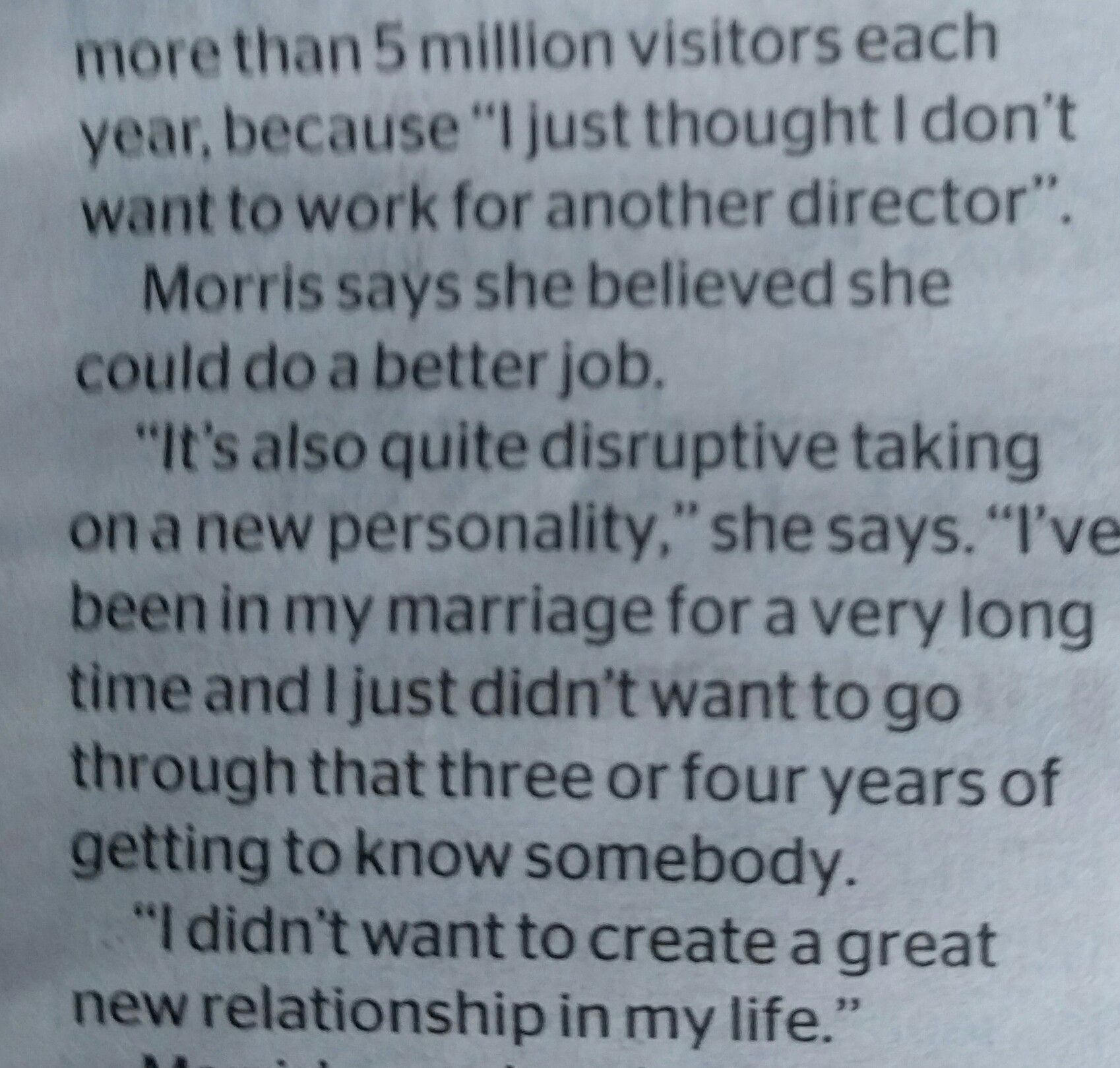
From the head of the Tate Gallery, a woman it would seem, explaining her rise to the top. Basically she was just better at her job than anyone else and couldn’t be arsed working for another wanker.
Well that’s handy. I can see a little insertable device and a Bluetooth app; dial up nipples.
PS not exactly the photo I would have chosen.
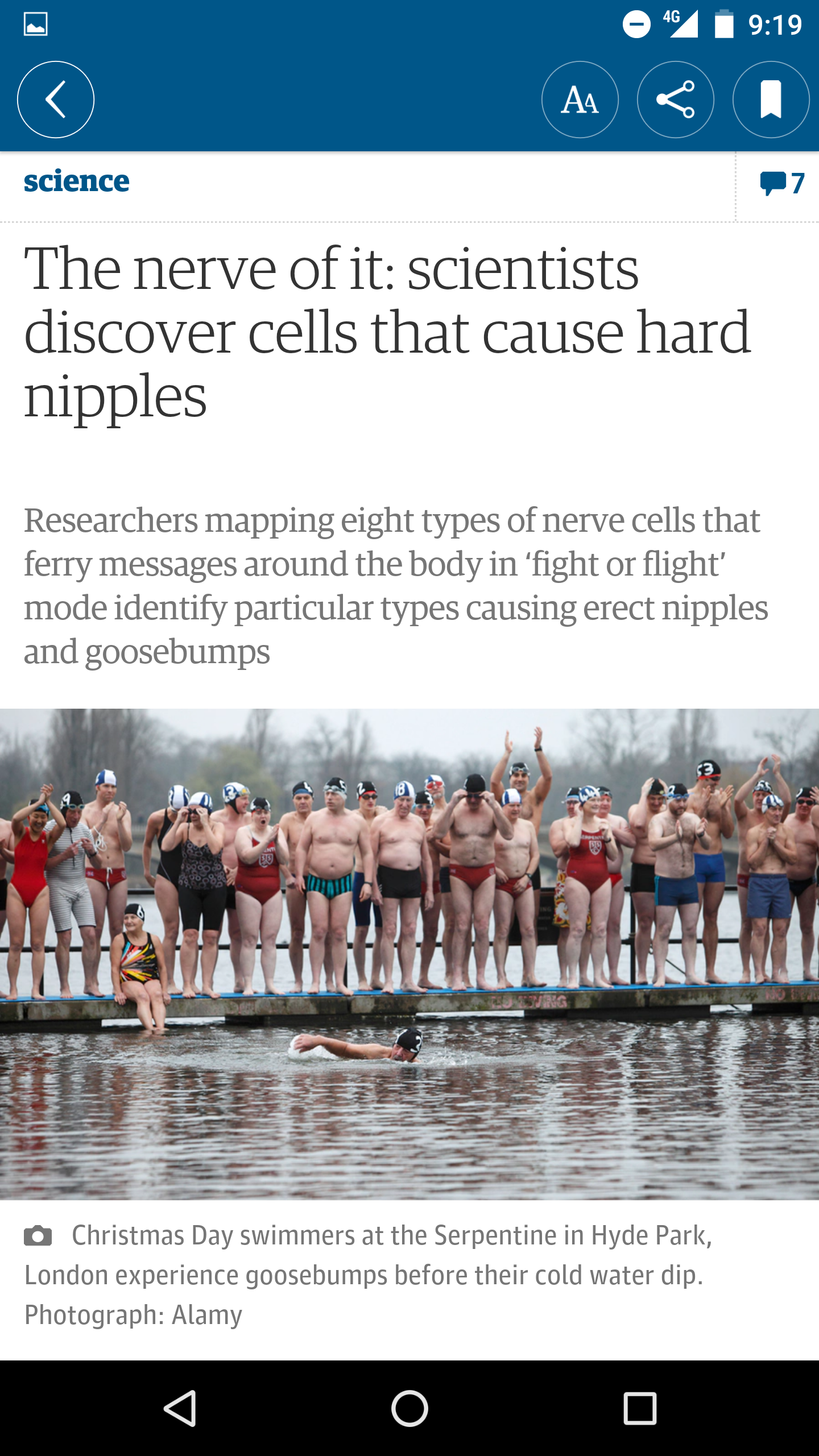
I can see the problem myself. Already there have been times when, absent the right to whack her, I’d like to sue my daughter.

Drinks with Obrien’s mates.
I heard the usual divorce saga; the one about the thief, the liar, and their two lawyers. Or is that three thieves and a liar?
You’d think people would get bored playing out these stereotypes. But no.

Proposition; the more of a cunt that a person has been, the more likely that he/she will focus on his/her legacy as death approaches.

Article 2; a totally incomprehensible rant by two American academics on the Australian government’s so-called innovation policy .
Basic premise; innovation is bad because (a) it has wreaked havoc on all the good old ways of doing things, (b) governments should focus on meat and veg issues liked health and education, (c) it only benefits the few, and (d) although it had brought us productivity gains, it will also bring us Armageddon.
They seemed not to have noticed that the government’s innovation policy is just an advertising campaign and that the innovation is restricted to the new idea of promoting an innovation policy where the innovation is just the promotion itself. Quite innovative!
I wonder if the deluded professors, if so informed, would be outraged by the empty innovation policy? I guess so; their own thesis is happily devoid of logic. But it obviously keeps them fed.

Stuck in flying death machine once again, with nowt to read except the Saturday Paper. On a Sunday.
Article one is a beauty. Ostensibly it’s an obituary on the still living Roger Neave, prompted by his concern for his legacy. Never heard of him before.
It’s an interesting read, both for the historical facts and the semi-delusional interpretations.
Subject matter; the historical rise of neoliberalism in Australia and elsewhere. Greed has trumped all; sensing change in the seventies, the greedy got organised and took over the wheels of government.
Their primary goals were twofold; one, to open up trade and remove protectionism in order to increase overall consumerism, and, two, to create a trickle-up effect by transferring wealth into selective private hands through the public purse and control of policy.
My suspicion is that they don’t mind the idea of an underclass either.
And it worked a treat! But now the party’s over.
Climate change, technology driven unemployment, debt driven growth; these are all fundamental issues that by themselves will screw the current status quo.
But there’s a darker serpent lurking; the motivator of all this is fear-driven greed which has worked to undermine our sense of communal kin-ship.
I’m not saying it can’t be reversed. I’m just not seeing any signs that anyone’s trying to figure out how to do so.

Just the lawyers I was looking for.

I won’t name her, but she’s a certified fruit loop that pretends to be a writer and a journalist.
But there’s no point in writing, absent material worth reading, aka lipsticking the pig.
Today’s example came to me through circumstances unusual in the extreme. Stuck somewhere in the hell that is eastern Melbourne, waiting for my nephew to finish a job, the Weekend Australian is my only saviour from the LCD. Paradox alert…
Thesis; women can’t just wander around cities for meditational or artistic temperament purposes because men look at them all the time, spoiling the Zen. Indeed male partners don’t let them anyway. But she can now because she’s old and ugly and that’s a good thing. True freedom.
As I said, fruit loop. Ignoring the fact that her thesis contradicts itself 10x in one page, she seems not to understand that to be observed one must care. It takes two.

Where there’s a market need the product will follow…
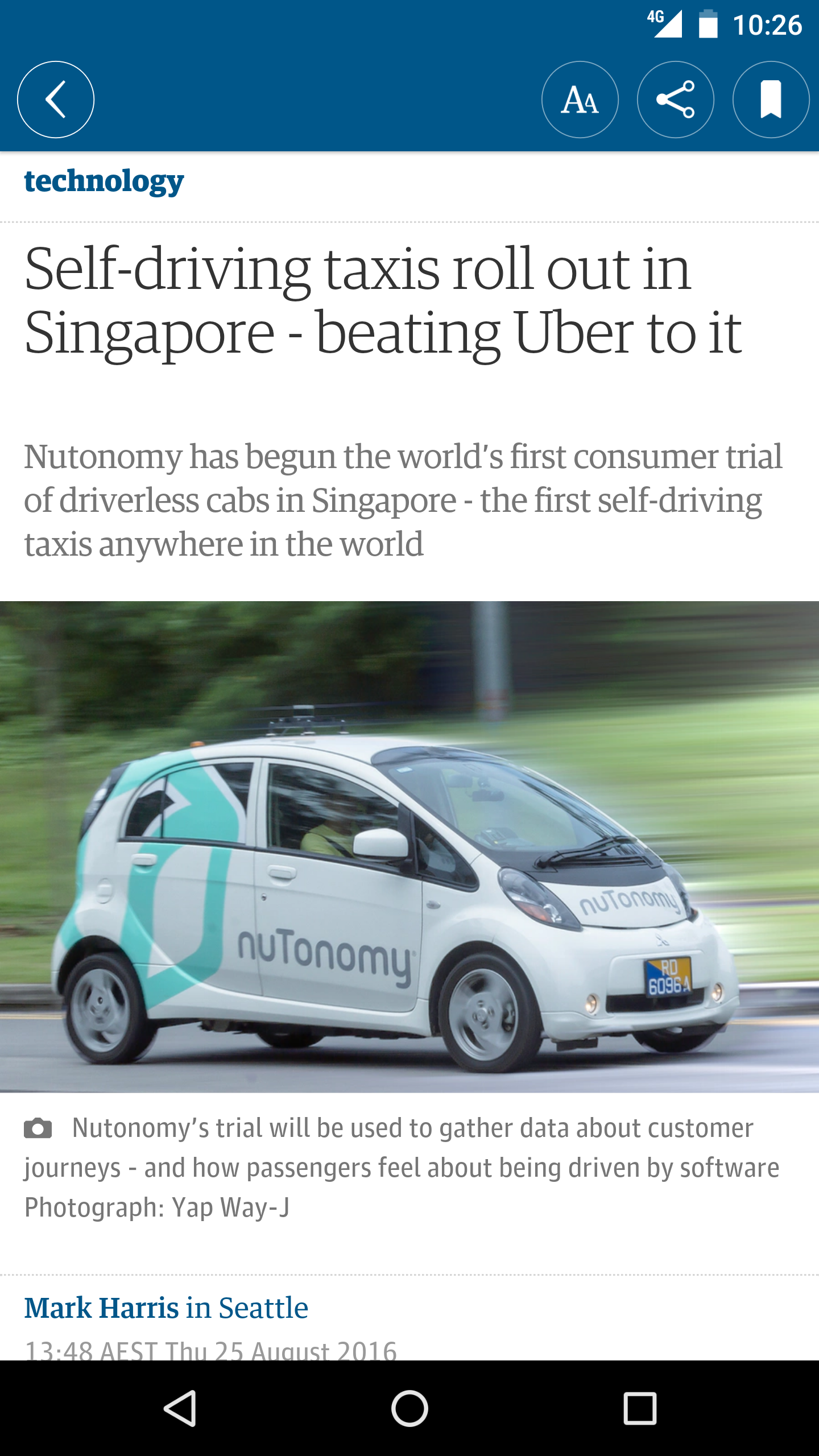
It’s no surprise that the world’s first driverless taxis are in the city with the world’s worst taxi drivers (after Sydney that is).
They don’t drive that badly but the Singapore taxi drivers have no peripheral vision making them incapable of picking up passengers anywhere but the rank.
Technology to the rescue.
The good thing about a blog is that you can write about some thought that is endlessly circling around your head; one that you know is a demon that just confuses and confounds. Once crystallised in writing, the absurdity often become apparent and the demon exorcised.

I am forever amazed at the will power of parents that spend their weekends ferrying the kids around from one sporting event to another. In Sydney traffic, no less. It’s a formula for mental illness.
I met one today, an Uber driver. He works as a chef and Ubers on the side for extra cash. And the weekends are otherwise taken up with the free Ubering of his four kids to swimming, nippers, surfing, soccer, ballet, and a couple of others I can’t recall.
He admitted that he lives in a state of absolute tiredness and boredom on weekends (since only soccer and surfing hold any interest for him).
I queried the motivation behind the free Ubering of the kids.
After a little dialog, and he was a very chatty and nice fellow, we discovered that his supposed motivation was that his father hadn’t spent much time with him as a kid, and he wished that he had.
I countered that my dad hadn’t spent much time with me either and it had never occurred to me to (a) wish that he had, and (b) wreak revenge upon my own child henceforth.
The excuse, the one about his father, seemed a little canned to be honest. Well practised, if you like.
I prefer to believe that he and his wife simply want to keep up with all the other mad parents that measure their worth through association with, and mimicking of the mad parents of their kid’s friends.
I am totally convinced that the whole driving/parent/mortgage belt of Sydney is completely bonkers.
Nice people almost to a fault and yet they seem to hate themselves in a very passive aggressive fashion.
Collectively, it’s as if they are racing towards some clearly defined anti-Buddhist state of communion.
But I don’t think that a single one of them truly believes there is any alternative. I don’t know why they travel overseas if they don’t learn anything from dropping into other cultures.
Maybe it’s all those vaccinations that have done certain parts of their brains in. There has to be an explanation.

Stream of consciousness…
6 beers in. Various constituents.
Sitting in a cafe in Stanley St by myself having a double mac, an Italian biscuit, listening to Mr Bojangles…
The incredible joy of being free and yet voluntarily engaged; it’s as good as it gets.
Love you.

Well I guess they’ll just have to switch to corgis. It’ll be like watching the Paralympics.
I would just like to say I told you so…
I’ve been accused of being fickle with my opinions and even (gasp) holding more than one conflicting position on a subject at one time.
I explained to my adversary that the most efficient way to improve one’s understanding of a subject is to have other people push back against your half-arsed assertions.
The more the merrier; people and opinions.
It seems to work, doesn’t it?

The Voynich Manuscript is a book written in Europe in the early 15th century containing text and images that have yet to be deciphered, despite many efforts.
In fact they can’t even figure out what the subject matter is.
The first section is all about herbs. The second section is astronomical with many nude woman. The third is biological, again with many nude women. The next is cosmological and contains a map or diagram, with nine ‘islands’ or ‘rosettes’ connected by’causeways’ and containing castles, as well as what might be a volcano. The final two sections are about pharmaceuticals and recipes.
My guess; it’s all about medieval Viagra and a little Kama Sutra, written in code so as to avoid condemnation and garroting by the church.
It’s the volcano that clinches it.

Wiki says that altruism is acting out of concern for the welfare of other people. It is derived from the French word autrui, simply meaning “other people”. Some folks have expanded the definition to include greyhounds, carrots and the odd rock.
It was put to me that another way of defining altruism is acting as if the self isn’t the centre of every concern.
In order to consider these two definitions I have reverted to the very useful Venn Diagram approach, despite reproach.
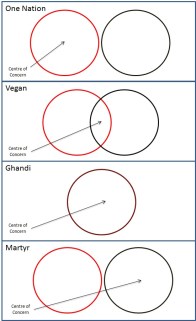
Imagine if you will (well you don’t have to; I have drawn it below) two circles in a Venn Diagram with one circle representing the concern for oneself (red) and the other, the concern for others (black).
Under this vision, Altruism is represented by the area of intersect of both circles.
No altruism; no intersect.
A little altruism and you’re amongst the majority, but with varying levels of overlap.
100% altruism just implies that someone has just as much concern for others as they do for themselves.
Someone that acts solely in the interests of others is a martyr or completely mad; no altruism there.
One Nation below is egoism. The opposite is the Martyr. True altruism is Ghandi where the centre of concern is equally the self and others.
Possibly the least true statement that I’ve ever read.
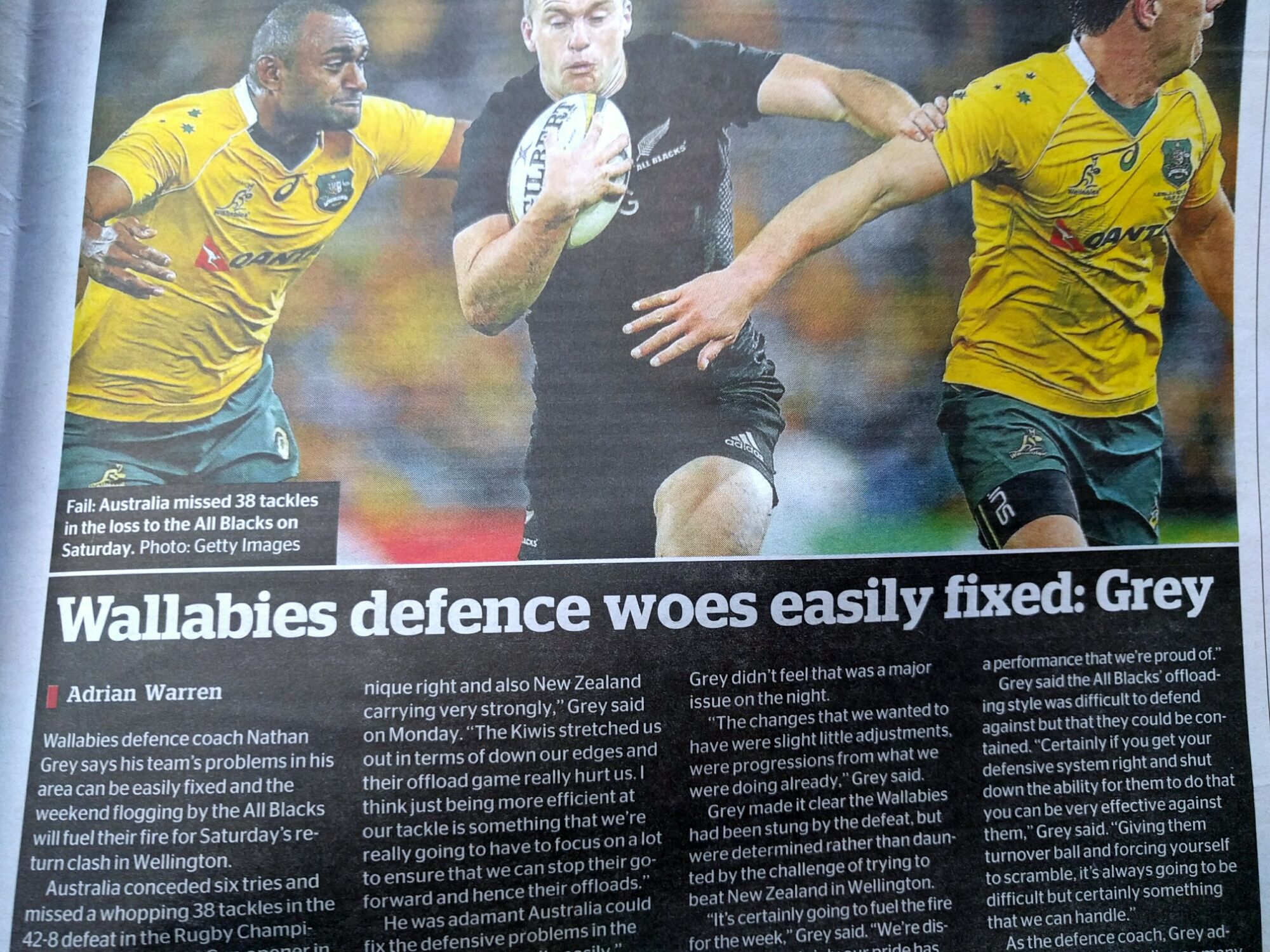
Apart from Australia’s new-found tactic of letting the Kiwis run straight through the middle, for a decade now the All-Blacks have been scoring exactly the same try out wide that relies on the fact that Australia’s backs slide like turtles in defence.
Try and find the subset of your feelings and truths that are shared with those of one other person.
At any moment there will only be a few pixels in the eye of the Venn diagram.
Now try that exercise simultaneously for all 8 billion people.
Possibly the only truth that they will all agree with is that there isn’t any universally shared truths or feelings.
But their feelings on the subject may vary.
So, um, yes; if you’re concerned with the welfare of others then you have a problem.
Having different feelings and truths, their concept of their own welfare will invariably differ to that which is in your head.
Which is why altruism, the concern for the welfare of others, should be treated as a wobbly vibe of the thing, and not some absolute or ideal state of being.
Unless of course the altruism is actually projected at yourself but reflected off the rest of them.
Here all the feelings and thoughts are in the eye of the Venn and welfare works a treat.
However, arguably this is just veiled egoism otherwise known as charity. Self interest is the foundation of morality.
But that’s just my truth and feelings on the matter.

According to the theorists ideal altruism doesn’t exist.
There’s genetic altruism, feelings that lead to favours exchanged between kin, and reciprocal altruism, thoughts that lead to favours exchanged between non-kin, but no ideal altruism.
Laughingly, the development of reciprocal altruism was powered by the artificial concept of expanding who was kin. Think religions and countries and you get the idea.
Ideal altruism is just a stretch target used by those attempting to increase the reach of reciprocal altruism, the basis of modern society.
Ever heard of Zeno’s Paradox? You can get closer but there ain’t ever no cigar.
There’s no way the peoples of this planet will ever consider everyone else as kin. Unless of course we get attacked by some nasty aliens.

A woman has been banned from attending AFL matches for life because she threw a banana at an aboriginal player.
The ban is for the racial implications of her effort.
Her dad says she was just frustrated because her team was losing.
I’ve never seen anyone take a banana to the footy so this excuse seems lame; there’s a good chance it was pre-meditated.
Even if not, why would anyone think it’s ok to throw anything at a player?
Ban her. And charge her for attempted grevious bodily harm. Then make her take part in some academic study on fuckwitidness, anger and racism.
It’d be fascinating to see what’s flipping around her brain, and why.
PS this was a Port Adelaide fanatic, watching her team lose, quite predictably, to Adelaide. The Goodes incident was by a Collingwood fan.
Query; is there something wrong with people that associate with footy teams with magpies as their animal mascot?
It’s a mystery that sort of makes sense but I don’t know why.

I got to say this…
For productivity reasons I have just switched to Inbox by Google and, hence, away from Gmail.
This move requires the abandonment of ‘tasks’ and the adoption of ‘reminders’. Which is a good thing in many ways.
It is also the first step away from an email-centric work practice. Just the other day I was being lectured on the power of ‘zero email’ only to discover that email is well on it’s way to being just another way to receive messages.
In essence, once they are done (and in Google’s weird way, they will do it over some time), there will be a message/action-reminder centre with a coarse sense of time (days) which is the Inbox, a calendar showing actions-reminders with a highly resolved time frame, and eventually they will also need a ‘Project’ view (it will develop out of Keep) which allows the user to aggregate actions as part of larger projects, again with a coarse sense of time.
Messages will all be treated the same, no matter where they come from – email, SMS, any messenger app, or carrier pigeons.
Reminders-actions are created directly from a message or as added to either the Calendar or yet-to-be-created Project view; these reminders will show in all three views.
Back to the present; just figuring out how to get the Chrome version of Google Calendar to display ‘reminders’ took me half an hour of research, trawling through forums.
And fuck me, wasn’t the switcheroo button buried in the least obvious place known to mankind….
Those software engineering millennials, I wouldn’t let them anywhere near a UI.

Circumstances variably labelled as a puncture, unexpected rain and some good advice, resulted in me taking my bike on a train for the first time ever.
Between Central and Redfern the old biddy opposite me snarled;
“Are you allowed to bring those on a train?”
“Dunno luv, whadyareckon?’
Silence. Gaze averted; suddenly she found the rail map very interesting.
It just goes to show there’s no upside in proffering unsolicited opinions, even if they’re posed as questions.

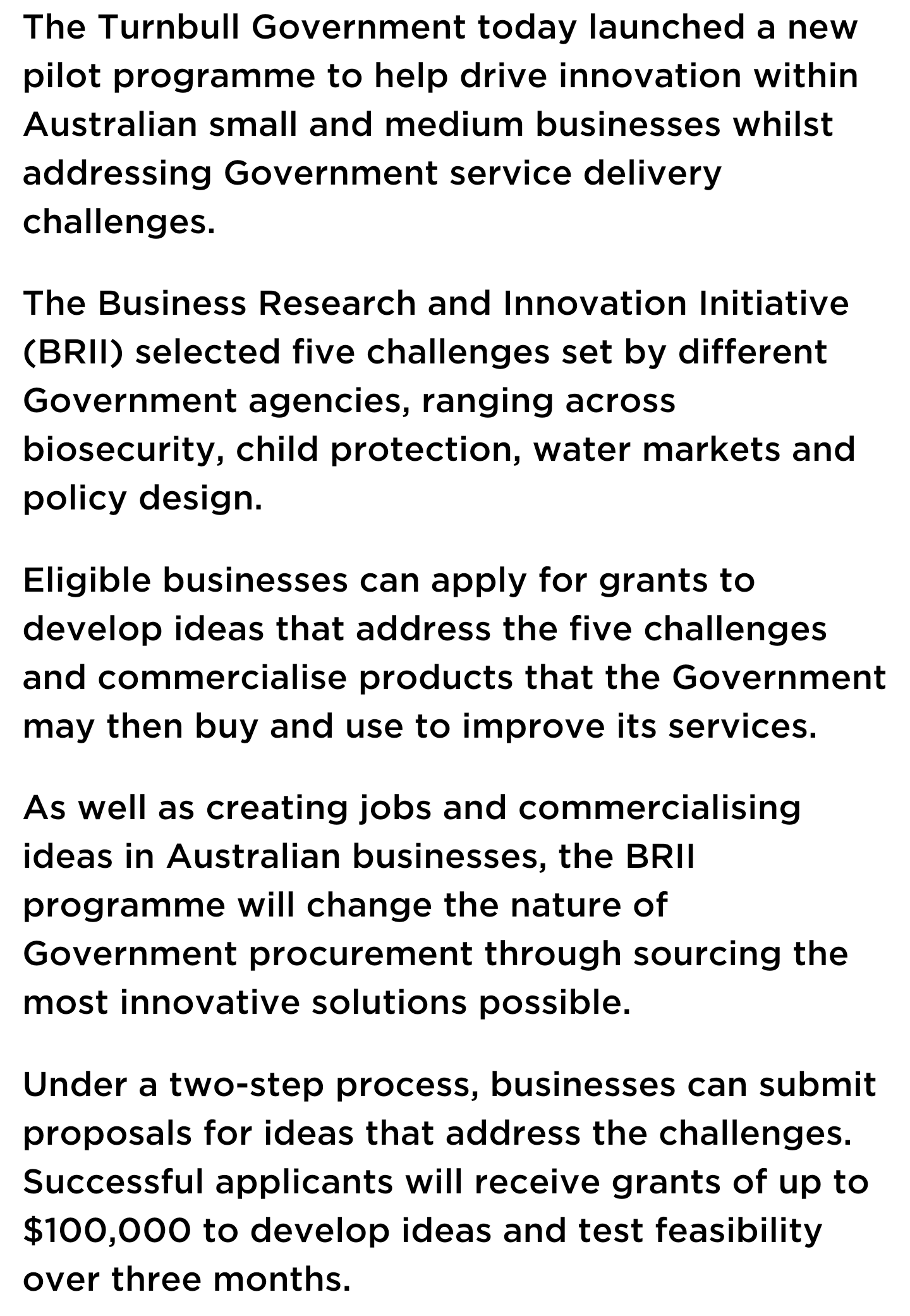
Our gub’ment, of the feral variety, has put up some BHAG grants for SMEs to tackle five major issues, selected after late-beer interrogation of senators of the National Party and One Nation flavours.
Why five? Well it’s the current magic number in Cnbra. I think the pollsters have decided that ten is too hard for your average Australian to get its head around. I suspect the right hand is used to count the fingers on the left and is thus unavailable for adding to the total.
To the glorious challenges themselves;
On-the-spot technology for measuring pyrethroid surface residue. This means they want to measure pesticide residues on crops without lab assistants, i.e. put more scientist out of work. The obvious solution is to train all those recently unemployed greyhounds to do a lick test. The challenge is to have the fuckers out and about without their muzzles.
Tracking the effect and value of information products. Quite obscure this one. I suspect it’s a plea for someone to solve the Census problem. That is, how to collect all the information they ever wanted on the subject of the discrete us’s without us knowing or minding. And the answer, of course, is to buy it off Google and Facebook.
Digitally enabled community engagement in policy and programme design. A reality TV show set in the Australian Parliament where the viewers get to vote the morons out of the house, one by one. When there’s a single productive winner, we get to fill the house up again with an election. And do it all over again, ad nauseum.
Improve transparency and reliability of water market information. Farmers know how to surreptitiously use pumps so there’s a big gap between how much water there’s supposed to be in our rivers and dams and what’s actually in them. There isn’t actually a solution to this problem but, hey, they never said the information had to be accurate, just transparent and reliable, so they may as well just publish the reliably shit info that they already have in an app.
Sharing information nationally to ensure child safety. The easiest of the lot; we just put prisoner tracking devices on all priests and private school teachers, and publish the data on a website and in an app, in real time. Sort of the like the rain radar site, only the contour maps are the real-time and local risks of your kids getting molested.
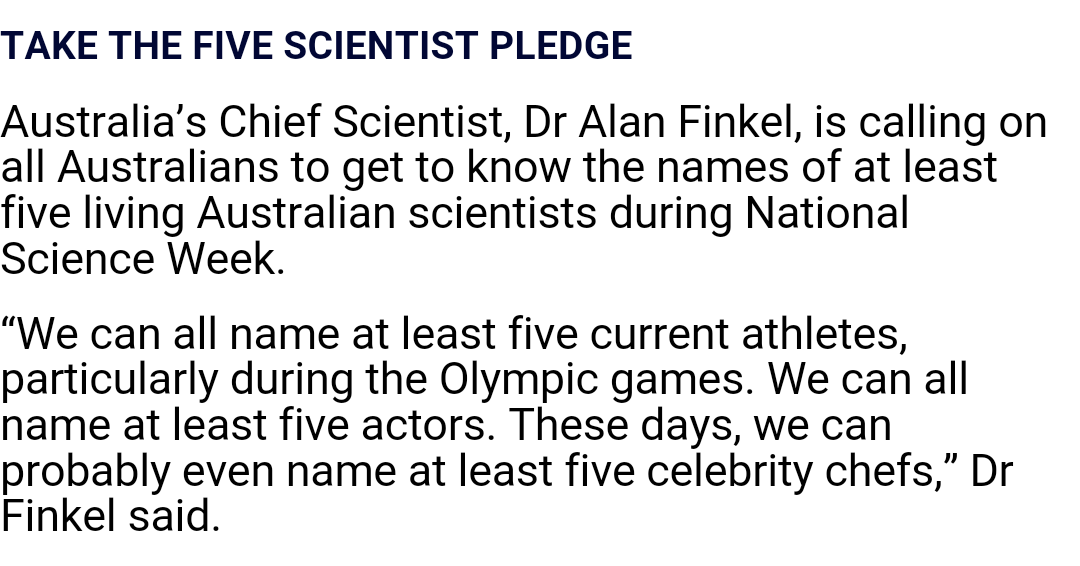
And the answer is ‘Fred’.
As reported previously, I made an ill-advised attempt to dial into the Olympics broadcast only to be defeated by the feathers disguising the absent meat.
The primary culprit was the endless advertising of banal products targeted at a denominator so low, no body knows.
One such alliterated effort was by the NAB, insinuating their ‘backing’ of a start-up that was developing a bicycle light.
Coincidentally I have such a project underway; 4 engineering students from the UTS are currently beavering away at a spec which can be found buried in this blog.
I can assure you that, if successful, the NAB and it’s compatriots would not give any subsequent company a single cent of risk capital unless personal guarantees were given that would completely cover all subsequent losses.
Fools on both sides the equations, right there. The startup for risking fully owned assets on a speculative business. And the bank for exposing themselves to accusations of rape and pillage.
Investments in risk requires deep knowledge, apprenticeship and experience, something that our banks probably never had.
Promoting their capability in the space to an audience that hardly cares, and that hates them with a passion, for no possible gain just beggars belief.
I can only sigh.
As per below, it can be seen that the NAB simply provided banking services to the company. Of course, if they’d gone with the CBA, Westpac or ANZ for their banking services, they’d have have been totally fooked.
As an aside, I happen to know the bike light company’s CEO. They weren’t exactly a start-up. They were a well established industrial design contracting firm that after 25 years of ripping off the dreamers finally worked up the courage to do their own product, Knog.
Their products have some good points but brightness is not one of them, nor security. It’s an odd niche that buys their products, probably the same one that watches all those NAB ads and buys expensive pushies, only to leave them to rot in the garage.

Resulting from cooperation with the exception to the CNN rule, as it applies to patent attorneys, I’ve decided to rewrite it such that all the ‘fails’ fall into the DNR rule; dickheads, nuggets and retards.

Here’s an example, below…
CSUN are offering to dump solar modules below cost price in markets that don’t have rules against the Chinese government underwriting their solar investments.

One very odd finding in Sydney’s Chinatown.
A KMT building, not only dating from 1921, but still going!
Why on earth did the KMT set up a building in Sydney just a year after their reformation and well before they got funding from the Soviets?


I’d hate to be in the public service these days. Well I always would have, but that’s beside the point of this narrative.
They, the bureaucrats, have been nastily sandwiched between rampant control by politicians and the fast-moving technology era.
Rabbits in the headlights with no wherewithal to flee or fight. It’s an adrenaline free zone sans muscle tone.
And for that we’re all paying the price. And will continue to do so.
A strong state needs the adminstration to be an opposing power to the politicians and the legal profession. It’s the trilogy that we lack.
Eventually it will bite us in the bum, probably in the upcoming economic downturn when our resources parachute will fail to open
One novel solution; we nationalise all those corporate oligarchies, then in each sector aggregate them into single bureaucracies, and put them in charge.
The only thing that would change is the distribution of the profits. Oh, and they’ll tell our fuckwit politicians where to get off.
Only joking…
A more practical solution is not to nationalise but to corporatise the whole bureaucracy.
The eternal problem, the one that the Royal Commission into banks will face, is how to get corporates to serve all of society rather than just those that can afford their shares.

Of late I’ve seen a marked increase in emails from Chinese manufacturers looking for B2B customers.
They’re all using industry specific email addresses, so it’s not outright spam.
But it’s a sure sign that they’re running out of customers for all that excess capacity of commodity products.
The world’s cheapest finance scheme is running out of investors, us.
The adjustment is not going to be pretty.
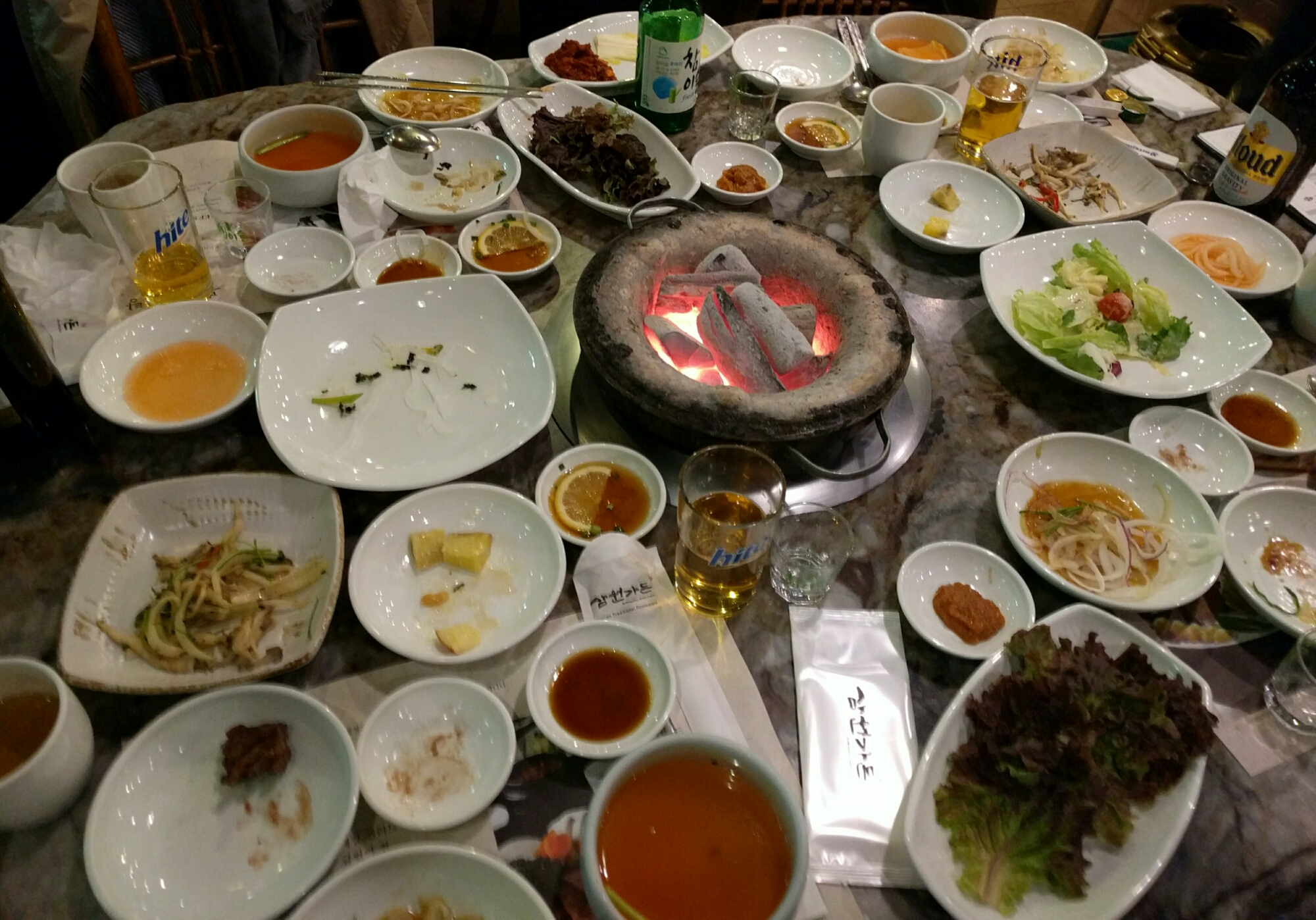
(The photo’s Korean just to confuse you. They’re not doing much better in fact. That’s the trouble when you remove systems, namely business exposure to P&L, that quickly correct faults in business strategies).
Have you tuned into the Olympics on channel 7?
In decreasing order of airtime you will see and hear advertisements, background stories, studio commentary, field commentary and, finally, actual Olympic events.
Which makes me wonder why Channel 7 spent so much money acquiring the rights in the first place?
They could do all of the same, sans the events, and I’m guessing no one would notice.
It’s sort of like anti-reality TV. They spend all their time analysing, discussing and backgrounding something which is real, without actually showing the real thing.
Whereas in genuine Reality TV they do the same but there’s nothing real that they don’t have to show. And, perversely, they do show a fair bit of it anyway.
It’s all quite confusing.
Why do people tune in to view something that they hardly see and which they think they care for, when they obviously don’t?
I can only assume that their presumed interest is due to all that advertising which ironically is the very instrument that prevents them from seeing it.
Somewhere behind all this is the addictive ‘loser’ mentality that is drummed into folks by advertising.
It’s the misleading and deceptive conduct of advertising that first creates a deep feeling of unworthiness which can be temporarily relieved by one form of consumption or another.
I call this the loser mentality because:
(1) Studies have shown that, when exposed to gambling systems with no inherent losses (no ‘house’ fees), gamblers lose interest because the regressive mean results in them having no long-term losses, and therefore,
(2) It’s the pain of losing that is so addictive to gamblers, and people in general when this hypothesis is expanded to other activities.
My view is that a sense of reality is just one of the collateral losses caused by the exploitation of the loser mentality.

You seriously have to think that the people at Qantas are morons. Or they think that we are.
For a flight between Brisbane and Sydney they claim that I can pay them $1.04 to be carbon neutral.
Say there are 200 people on the flight, that’s $208.
In Australia I am guessing you could plant a couple of trees with that, by the time you factor in land costs, labour, materials, licenses, OH&S, accounting services, legal costs, carbon consultants, certification, etc etc.
Those two trees, over their expected life, are supposedly going to capture enough carbon dioxide to offset that emitted by your one and a half hour flight.
That is, you create the carbon dioxide now and in two hundred year’s time the trees have captured it all back. That is, until they die and release it all back into the atmosphere.
The missing bit of logic here is that we need emissions to drop right now, in the next ten years.
They should be planting enough trees to capture all that carbon dioxide back in this calendar year. Then the offset cost would be around $200 per passenger.
That is, the cost of the fare; don’t fly in fact!
My guess is that Qantas’s customers wouldn’t want to know this; they would prefer to feel as though they are doing the right thing but then to pay the minimum cost to do so.
And right there is the issue we face. Even the concerned folk, the one’s that want to preserve the conditions on this planet that make our existence viable, would prefer that someone else is inconvenienced by the effort to do so.

Is mathematics a science?
I asked myself that question since various self-serving academic types are promoting STEM education, implying that science and maths are divisible.
And yet mathematics departments are almost always nestled in the local science faculties.
Historically, scienctists have used maths as a tool by which to help model the natural world. Any theory, enshrined in maths and accepted as true, was ultimately expected to be shown by new data to be false, or a limiting case of a more general theory.
And mathematicians in the past were intent on increasing the number of ways in which equations could be used to explain puzzles that could formulated in a numerical format, thereby expanding the number of weapons in the mathematical toolbox.
But of late, many scientists have turned to invention, using maths as an engineer would; not to test models but to help instruct efficient work output.
Mathematicians themselves have largely become applied, variably using maths. But rarely for expanding their field in a conceptual fashion.
I would therefore conclude that, on average, the modern scientist, mathematician and engineer differ only in their intent, but not their practice.
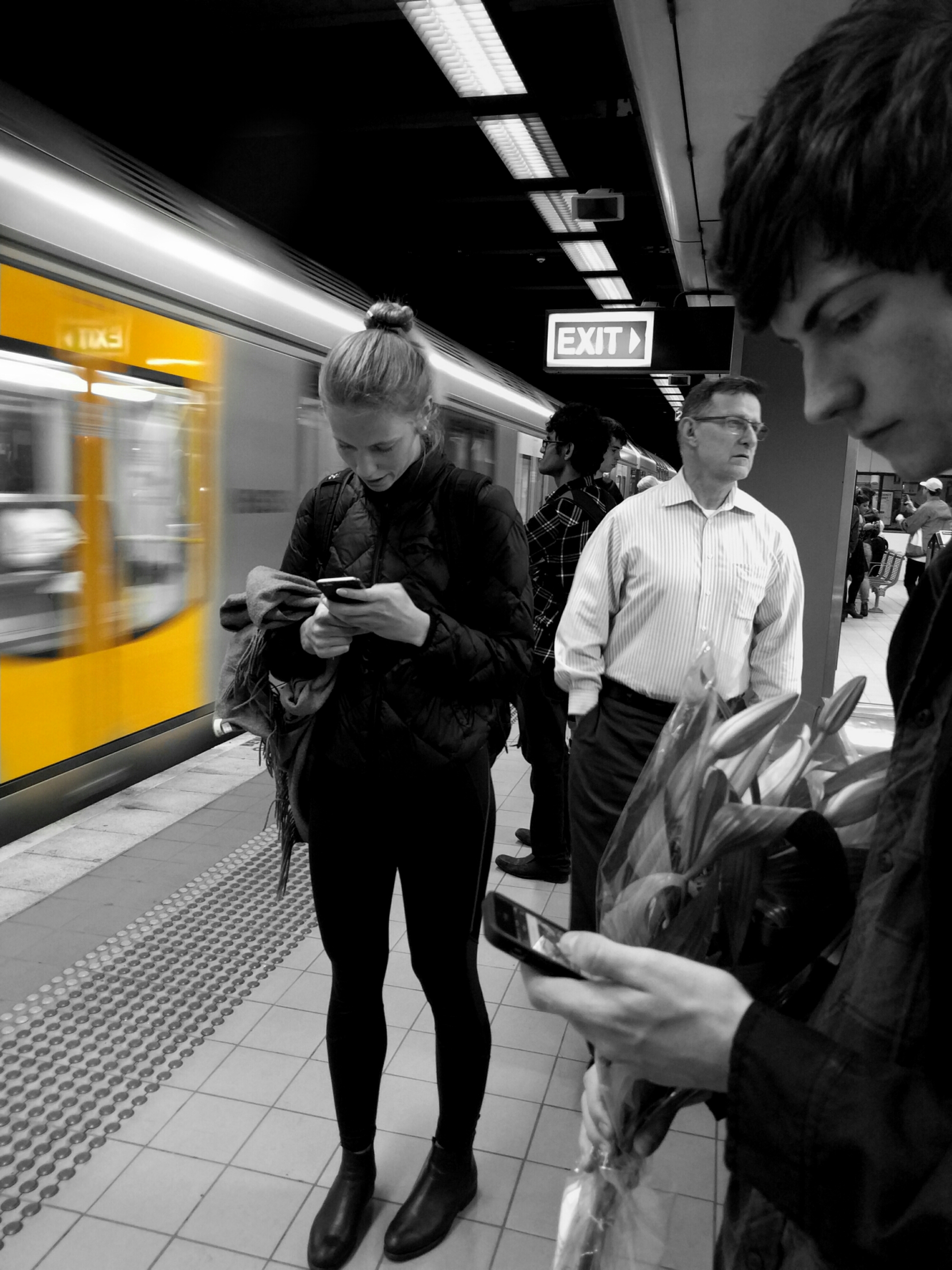
Uber oughta take a leaf out of the book of Pokémon Go.
Some augmented reality to highlight the Uber car as it arrives…

The Turing Test is a test for intelligence in a computer, requiring that a human being should be unable to distinguish the machine from another human being by using the replies to questions put to both.
But consider this, what do you call a human being that fails the Turing Test?
The Anti-Turing Test is a test for intelligence in a human being, requiring that another human being should be unable to distinguish the human being from a machine by using the replies to questions put to both.
We’ve all met one or two people that would fail this test, right?
As I’ve said before, being human isn’t just about being intelligent.
You have to add the concepts of sentience and consciousness. But the ‘fails’ would pass these tests too.
What they lack is:
(1) Perception as to how others perceive them, which means they are crap at gathering data, and
(2) An inability to deviate from what appears to be a completely logical approach to considering a matter.
Which is a double whammy when you think about it. Solving problems solely in a logical fashion, based on a limited data set; now that’s a formula for disaster.
Indeed, back in the sabre tooth tiger days, this lot never even got to breed. It’s only latterly that they’ve begin to multiply.
Human intelligence is based on an innate awareness that the data set is just about always flawed.
Decisions and solutions are usually derived from precedents using our as-yet barely understood bio-organic database.
And I suspect that logic is just used as a checksum.

I haven’t read up on this but I’m suspecting that running your mammals at a constant temperature allows for more efficient chemistry.
Most chemical reactions are hugely impacted by temperature, in terms of efficiency. Arrhenius and all that.
So those reptiles must be all over the place with respect to their chemicals. In order to deal with this they must be simple and robust creatures.
Just like your old air cooled motorbike.
We mammals, on the other hand, have the equivalent of a liquid cooled engine running at a constant temperature, allowing for far more complicated and efficient chemistry.
Complexity in the chemistry allows for sophistication of function.
You’d never see a reptile blogging, f’rinstance.

A new messaging app idea; one with a minimum of 800 words per message. I will call it ‘Lttr’. The kids will think it’s weirdly cool until they have to write the 800 word letters. Who knows, the world might be ready for pondered missives.
“Dear fuckwit
Lorem ipsum dolor sit amet, vix ex fabulas pertinax, eum elit dicant electram et. Adhuc constituto contentiones eam te, sint maiestatis ea sed, suas constituam has cu. At graecis eloquentiam disputationi vix. Pri an agam animal aliquam, ferri mutat qui ea. Ea mei eirmod saperet nostrum, summo sanctus vim at. Duo cu nonumes perfecto.
Postea commodo corpora te eam, eu elit latine sed. Civibus eleifend expetendis pri et, in virtute minimum est, usu accusata disputationi ut. Eam tation propriae signiferumque no, ei principes gubergren vel. Id simul utamur sea, vim expetenda constituam ex, no mel inani dictas. Semper accusata corrumpit et quo, vidit possim legimus nam in. Pertinax assueverit et pro, an duo legere fabellas definitionem.
Nulla philosophia ius ea. Ne usu evertitur adolescens. Offendit referrentur no vel, modus explicari similique et eam. Et vim nostro conceptam. Vitae dolores iudicabit mel cu. No qui veri lorem, ut qui mandamus persecuti accommodare, erant erroribus in duo. Nam suscipit interesset ea, ne pro nostro imperdiet quaerendum, in animal imperdiet per.
Duo id ludus eloquentiam ullamcorper, ex graeco vulputate constituam mel. Habeo viderer definitionem est id. Qui falli homero indoctum ex, cu ferri apeirian erroribus eum, mel quidam deterruisset an. Eu vis copiosae facilisis sententiae, id eum legere nusquam. Ullamcorper philosophia ad sit. Et essent docendi omittam eum, consul tritani quo no.
Eum vidit molestie cu, te cibo legere causae his, audiam dissentiunt his cu. Elitr homero scribentur eos ei, vidit cetero instructior has eu, ea vel habemus insolens suavitate. Mei eu vide deseruisse. Mei ut viris noluisse, sit ex graecis suavitate hendrerit.
In summary, you’re a cunt!
Yours truly”

Is there is another food product like it?
Lucky Dip, that’s a better description.
Yes I’m talking about the avocado.
I’d say there’s a 1/3 chance it’s got overripe black bits in it.
Another 1/3 chance it’s an avocado shaped brick that rots after you put it back in the fridge, all humpty dumpty like, to soften.
Maybe I’m being generous with the thirds; when I get an unblemished and just-ripe specimen I get all thankful to the vegetable gods.
At the local supermarket there’s even a sign that says ‘please don’t squeeze them’. How then are we to filter the over-soft and the blocks?
I’m pretty sure that people don’t want a tube of green stuff that may or may not contain traces of avocados, nuts, dairy products, emulsifiers, preservatives and reconstituted greyhounds.
Surely an opportunity for the technically minded?

Quote from the former ISP co-owner that appointed Wyatt Earp as the Minister of Innovation, mate;
“I want to assure Australians that the unequivocal advice we have received from IBM, from the ABS, from the Australian Signal Directorate, is that their Australian census data is safe, it has not been compromised,”
Well I feel very comforted that IBM, the Australian Bureau of Statistics, and the other lot are looking after our data. Top team, and all that.
As I’ve said before there’s absolutely no way in the world to keep your data private in the modern era.
The only thing to do is to create so much false data that none of it can be used against you in a legal context.
To wit, I’ve lost an opportunity to complete the consensus form with complete trash, as a future insurance policy.
But then, as Joseph Heller predicted, said data would be assumed to be true, no matter how absurd.
Damned if you do.
Anthropomorphism: the attribution of human characteristics or behaviour to a god, animal, or object.
Personally I think the dogs are a victim of anthropomorphism.
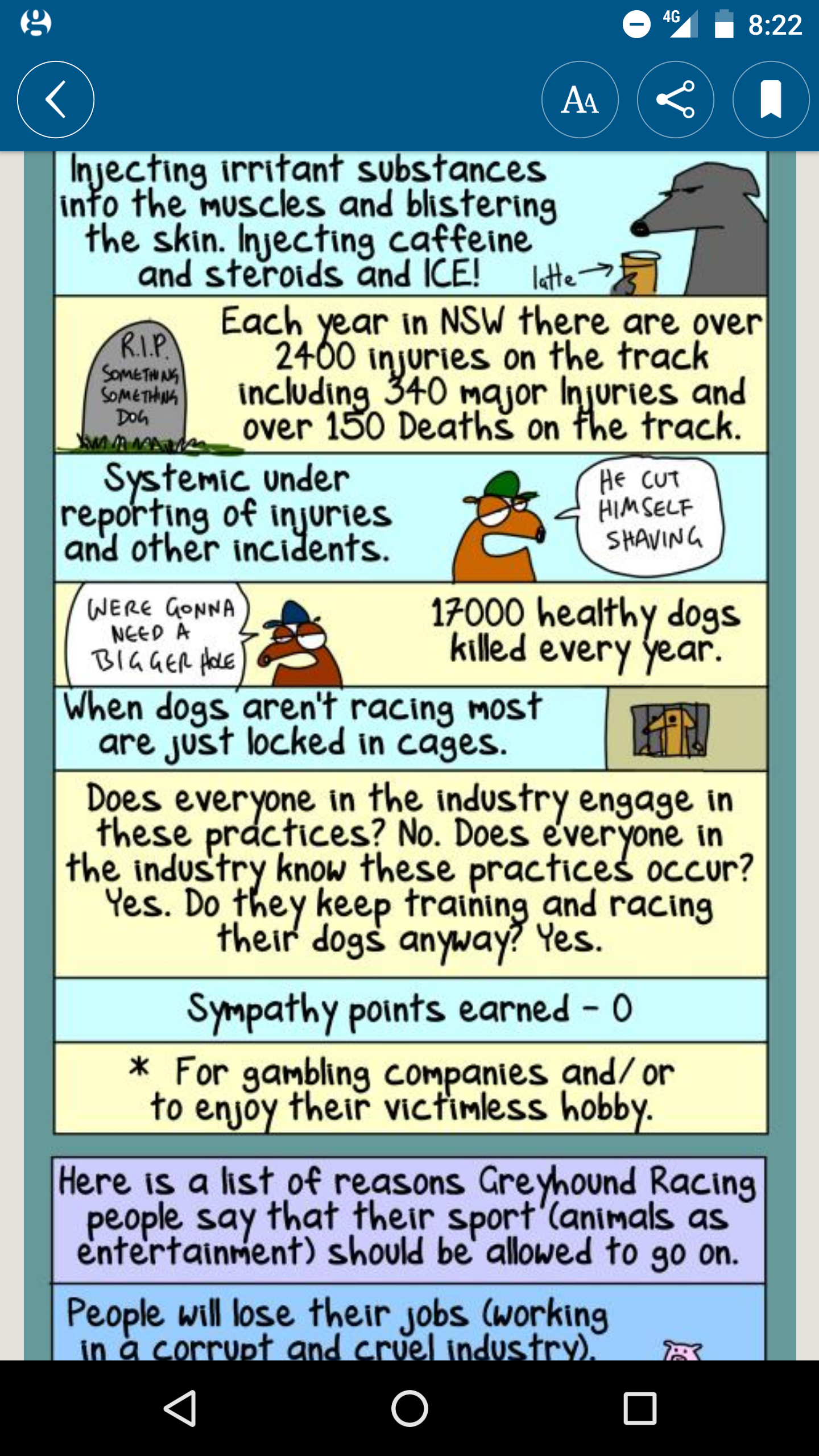
The dogs in question being the 17,000 racing greyhounds per year in NSW that will never see the light of day now that there is no incentive to breed them.
It all started with the industrial revolution.
People left the farms and headed to the cities. Increasingly they became insulated from the processes whereby their meat was killed and chopped up. It was all so yucky.
Let’s call it Carnivore Dissonance.
Step 2 was Bugs Bunny and his ilk. Cartoons led the anthropomorphic attribution of human qualities to animals in particular.
The final nail in the coffin was ever increasing social ethics which gave us the nanny state.
Killing people is bad, for any reason.
Dogs are people now.
It’ll be hot dogs next, even though we all know there’s no meat in them.
The bike’s at home because I flew in this morning.
5km; that’s all I had to travel, for an after work meeting.
40 minutes to walk it.
Public transport wasn’t an option due to the circumferential nature of the traverse.
Uber it was.
45 minutes of Sydney traffic … I should have walked.
At least I had plenty of time to explain to my driver why I don’t drive in this city.
On one hand he understood me and on the other he did not.
Let’s call it a dissonance based on a financial incentive that irrationally depends upon people not wanting to drive, and then getting driven and subject to the same conditions they are avoiding.

Not what one usually expects to be blocking one’s way.

See below – maybe this is an opportunity for Fitbit? A smart watch that measures key vital signs, sends these to an app on your phone and then decides when you’re in the consenting zone. That’d take the uncertainty out of the situation!
My guess is that Clemetine only relents to consent, reluctantly, and then with regrets.
While I’m on the subject I did not consent or even relent to fill out a census form last night. To be honest I completely forgot and in any case I had decided that I’d rather pay a fine than do the work for a lazy government department that would have been better placed to get the data off Facebook, Google and the ATO.
got one of those instant gas hot water heaters for the shower that has 1 degree increments for temperature adjustment.
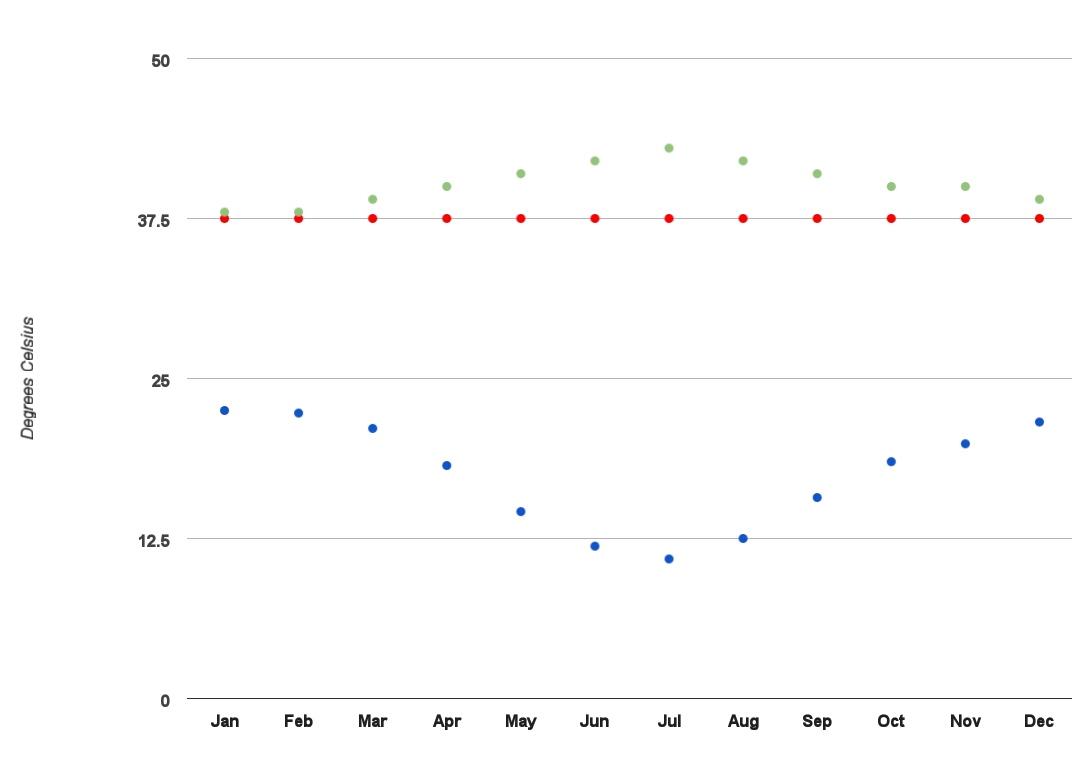
For no good reason I have plotted how I adjust the water temperature with respect to the seasonal changes in air temperature (the Sydney monthly average at 9am).
In the plot below the blue dots show the air temperature, the red dots my blood temperature, and the green ones the shower setting.
I’m still struggling to see why this is interesting. But it is.
A little googling later; it’s reasonable to suggest that the water delivered at the shower head is 1 degree colder than on the dial.
Also, over the 6 foot drop (yeah, yeah I’m mixing units) the water temperature will cool by about 4 degrees or so by the time it hits your feet, depending on so many factors that they aren’t worth noting.
Assuming the head and shoulders are near the centre of your temperature perception, let’s say the water delivered is 2 – 2.5 degrees colder than the that shown on the shower dial.
Surprisingly, the shower is used as a cooling device for a good fraction of the year!
I guess this makes sense; our bodies are adapted to maintain temperature with air that is usually cooler than our blood temperature. Therefore, so should the water be.
The required temperature gap between the water and the body is less than the temperature gap between the air and our body because there is much more efficient heat transfer between and liquid and a solid, as compared to a gas and a solid.
It’s all consistent.
All of this since it’s easier to maintain body temperature at a value which is at the higher end of the regularly experienced air temperatures because the body’s internal heating systems are very good. They work by various exothermic chemical reactions going on in the organs.
However the body’s cooling relies entirely on heat transfer at the skin surface; a much more problematic proposition.
In total, it’s much easier using a temperature on the high end of the atmospheric values if, say, one were going to design such a human system and insist it had a stable temperature.
A final note – an invention of the day. A shower unit which automatically adjusts the temperature as per the plot below. Minor adjustments could be made on a daily basis and an initial calibration could occur to allow for differences in piping, roses and personal preferences. The plot could be used to automatically adjust the temperature and could be created according to the local climate, or, better still, the temperature adjustment unit could even just measure the current temperature and humidity, and adjust the temperature accordingly. This could even change during a shower as the room saturates with hot, humid water vapour and heats up.
That’s actually a good invention!

A wiccan of cunts.
A pokemon of nerds.
A detritus of nuggets.

I just got picked up by an Uber that was a Ford (spit) Falcon.
The driver tells me that it’s the only car banned by Uber. His was registered into the Uber system before the ban.
Uber wants distance itself from taxis in respect to the allergic reaction that people have to Falcons.
His problem is that, between the factory gas, the low purchase price and the cheap parts, that Falcons are by far the cheapest car to run as an Uber or a taxi. And hence also as a private car.
His current one which has a year to run before it hits it’s age limit cost him $5k. A reflection of the complete undesirability of the beast.
So he’s going to go and bat against the Uber machine so he can run another one. They are still making them but he plans on buying a used one.
Reluctant note to Uber drivers that are inattentive to car fashion; maybe the gas powered Falcon is an interesting, if uninspiring option.
But of course, the issue with the Uber ban has to be dealt with first.

Metaphysics is an old-school branch of philosophy that chews on the big issues that can’t really be solved, thereby allowing debates to rage for centuries.
Abstract concepts such as being, knowing, identity, time and space; these keep some academics metaphysically enthralled for their whole lives. Or so they claim.
What has metaphysics got to do with physics, you may ask?
Well, according to Wiki, meta is a prefix that is used to (a) indicate a (b) concept which is an (c) abstraction from (d) another concept, used to (e) complete or (f) add to the (g) latter concept.
BTW I added the indices there just to highlight how fucked up that definition is. It’s a sort of circle that manages to disappear right in front of your eyes, just as you are contemplating it.
And still no light is shed on what metaphysics has to with physics; the domain of equations, things and, more latterly, non-things; practised by people that have trouble communicating and selecting clothes.
I’d say that this is a case of trademark infringement hiding behind a facade of a linguistic mash-up that wouldn’t even get past first base were the practitioners of the same willing to stop and contemplate their very own augmentation.
Worth noting is that, from time to time, the odd physicist, that has run out of mathematical juices, metamorphoses into a metaphysicist.(that’s two metas in one sentence!)
Think of that bloke in a wheel chair with very bad teeth, or that other one that is valiantly trying to squeeze god into textbooks, or even that old bloke way back, with the bleached medusa of a hairstyle who peaked at the age of 7 or thereabouts.
Right there, I suspect, is where the term metaphysics originated.
Try this out; a metaphysicist is a dishonestly retired physicist that has checked out and is now publicly pondering life, the universe and everything and, by their very means of communications, they imply that their random musings are an abstraction from their former discipline of physics, and therefore useful for placing all that physics into a useful context for all those non-physicists and physicists alike.
Once these guys started attracting attention I suspect that others started doing the same without first doing the physics. A much simpler approach that avoided all those wasted years of physics, and they did a better job.
Not that anyone noticed or cared.

I meet my fair share of dickheads in daily life and I always mentally place them into one of three buckets – Cunts, Nerds & Nuggets.
CNN.
T’were I ever, for whatever inexplicable twist of fate, be compelled to start a patent attorney firm I’d call it CNN IP because it’s damned hard to find one that doesn’t fall into one of the three buckets.
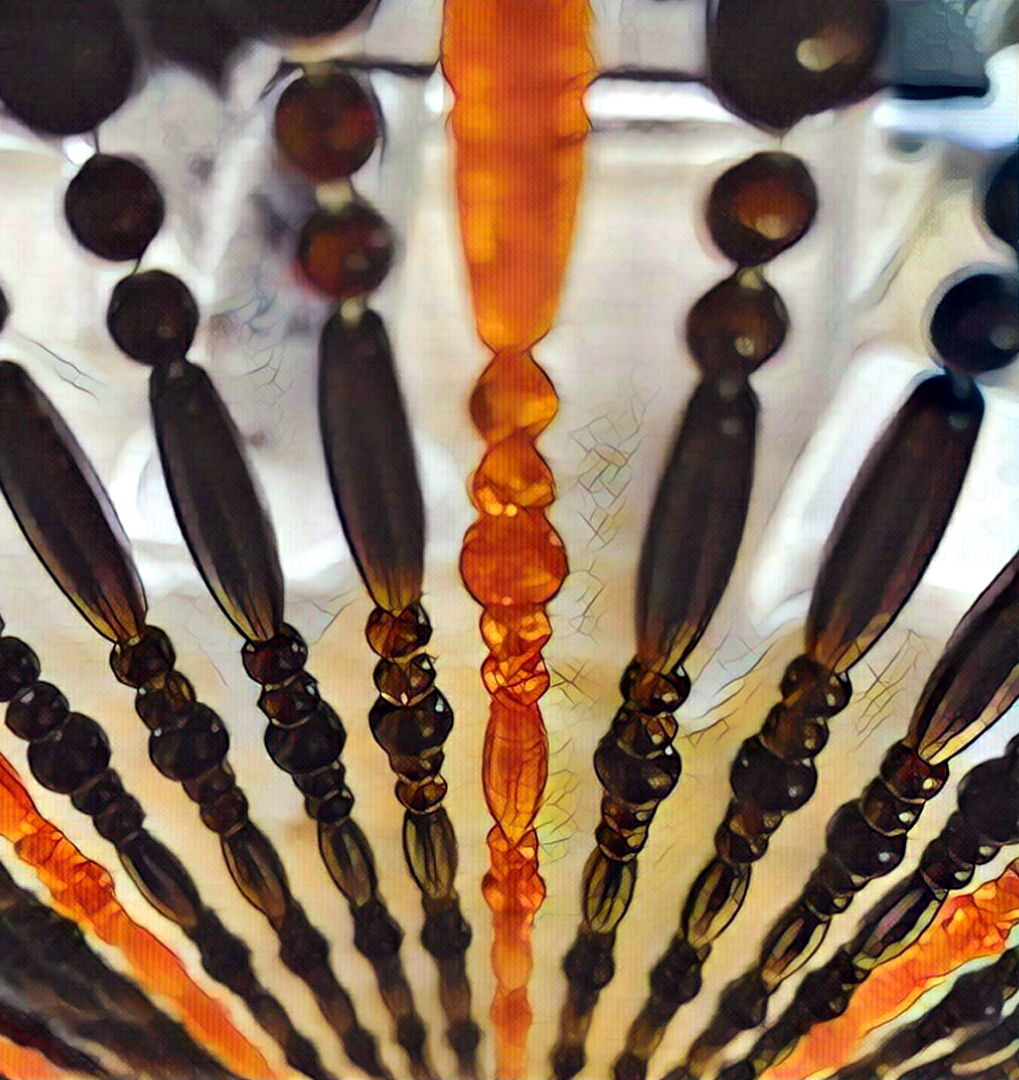
Clearly a Chinese post-grad on a string of shoes.
I just had one of those conversations with an individual that is all for the ban on greyhound racing.
The main argument proposed was that 17,000 dogs are killed by the industry for one reason or the other, every year!
I suggested that if the industry had been banned then those 17,000 dogs would never have existed. And won’t in the future.
Thin grey smoke, cogs a-clunking, spatial dissonance of the eyes; it appears that you can’t mix metaphysics and the dog lover.
Hands free unicyclist in a Devo helmet shares the road with an alien trapped in a BBQ.

In Paris a few weeks ago I had arranged to hire a convertible (an Alfa Romeo in fact) for the day.
The idea was to ensure that my daughter, at the age of 13, had ridden through Paris in a sports car with the warm wind in her hair.
An unnecessary and paradoxical inoculation against future alienation from the self, derived from the slavery of consumerism and poverty of the heart.
Then she caught the cold from which I had just recovered, and I had to cancel the booking. She spent the day in bed.
The next day we had to fly back to Australia, so that was that.
Yet another example of well-meaning social engineering going up the wazoo.
If there is a moral to the story, it is this:
They have to live their own lives, for better or worse. Any attempts to engineer specific outcomes are battles against social entropy. All you can really do is equip them with the precursors to wisdom.


The image of Hilary Clinton below has been covered up by the artist after the local Melbourne council deemed it not in keeping with their “stance on gender equity”.
The full statement: “We believe that this mural is offensive because of the depiction of a near-naked woman, not on the basis of disrespect to Hillary Clinton, and it is not in keeping with our stance on gender equity.”
An interesting proposition this one, given that they undoubtedly have bikini clad models on billboards, just up the street.
Taken at face value the implication is that gender equity can’t really exist and can only be approximated by a complete cover up.
All power to the artist for his obviously pre-meditated 1-2 punch.

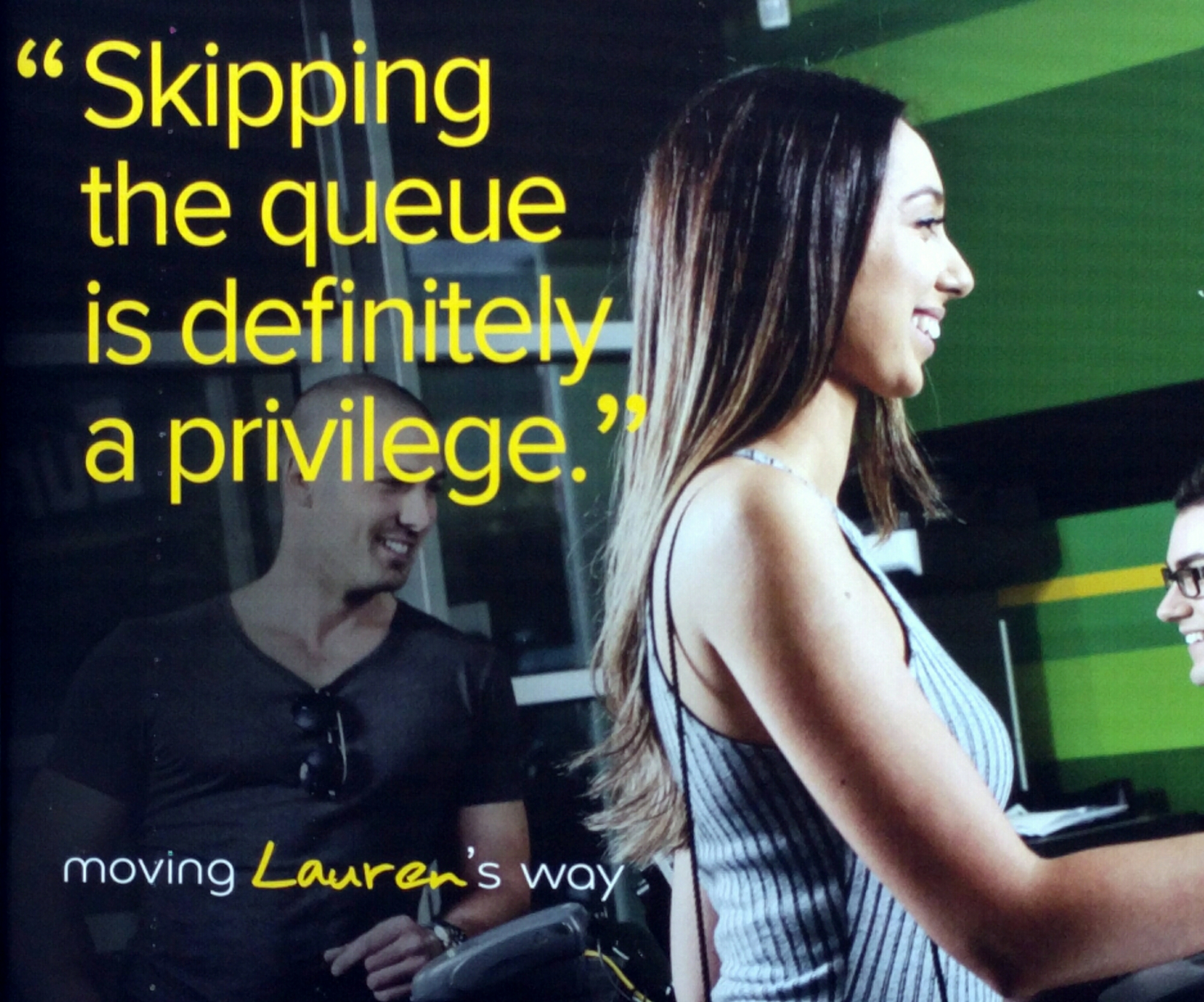
Contrary to popular opinion, queue-jumping is a popular Australian pastime.
And it’s quite acceptable so long as payment is made to an organisation that feels that it has sufficient franchise to advertise the fact.
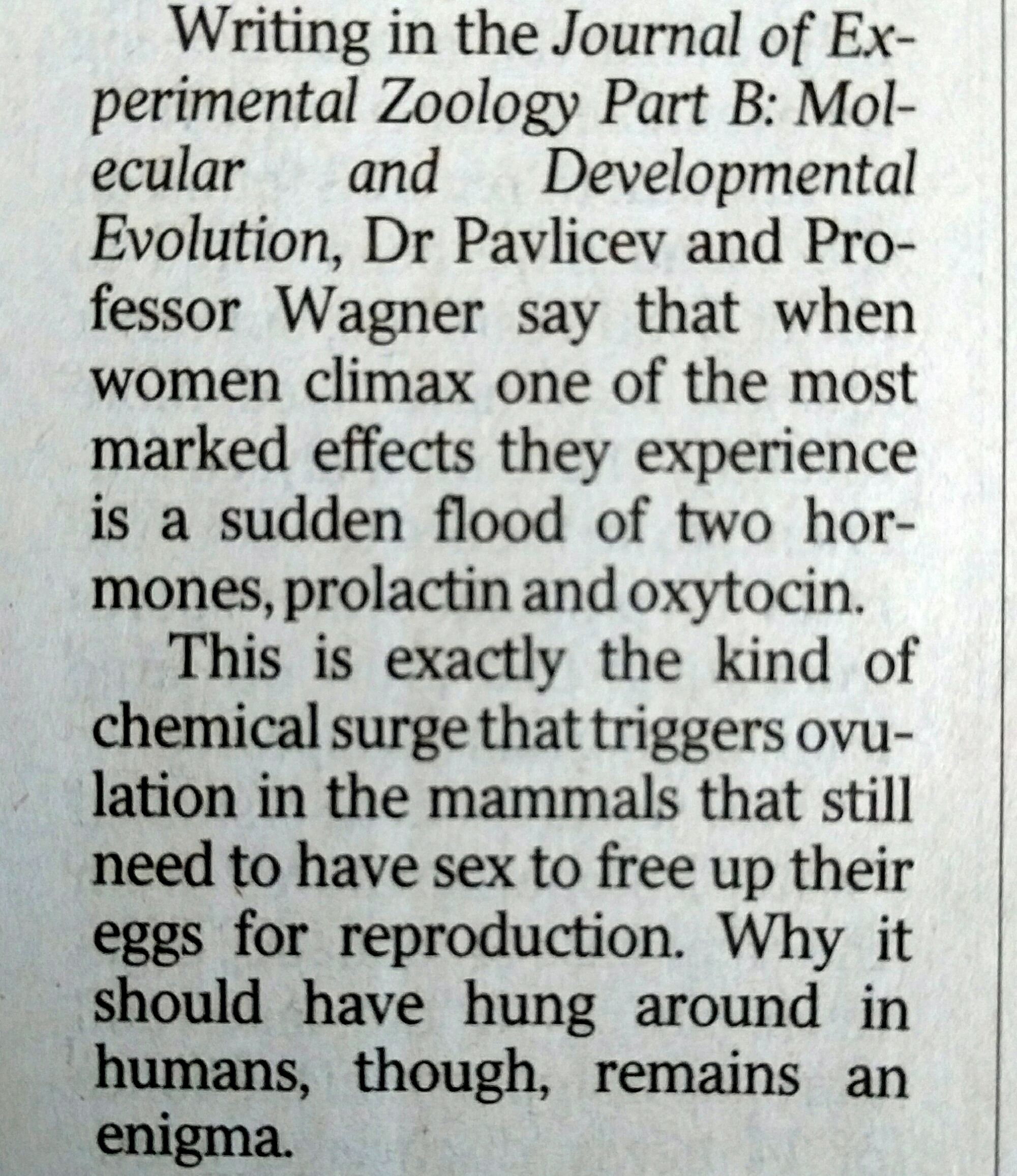
Pills containing prolactin and oxytocin maybe? And maybe a whiff of cocaine, guarana and some cayenne pepper, for good measure.
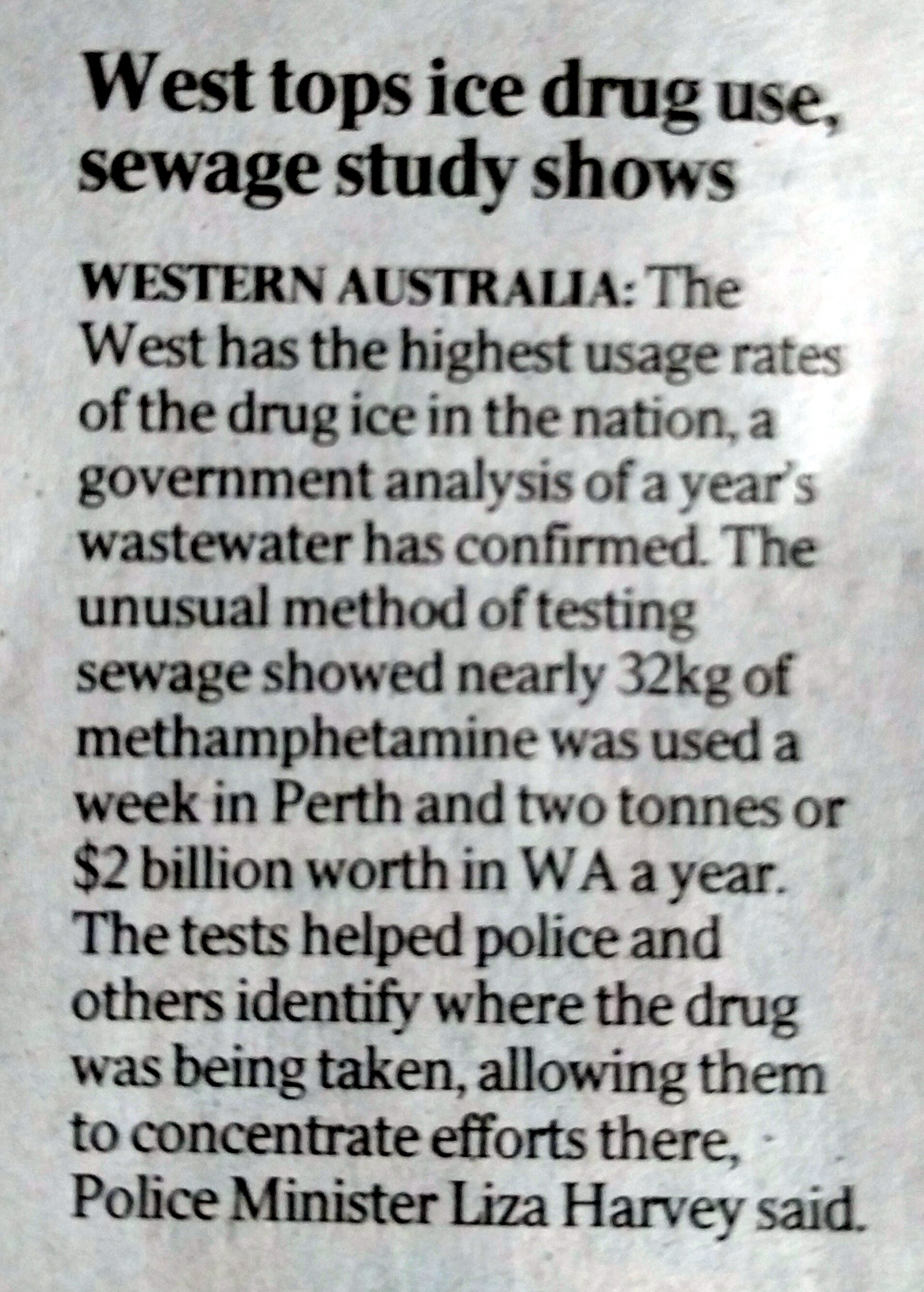
Now this is innovative. I suppose there’s not much point in the dealers asking their customers to piss on trees instead.
Reading Fred, exhibiting below, might lead one to conclude that writers are less complex beings than is obvious.
But then, the more one ponders the dangling proposition juxtaposed with the alien reference, the less obvious anything becomes.
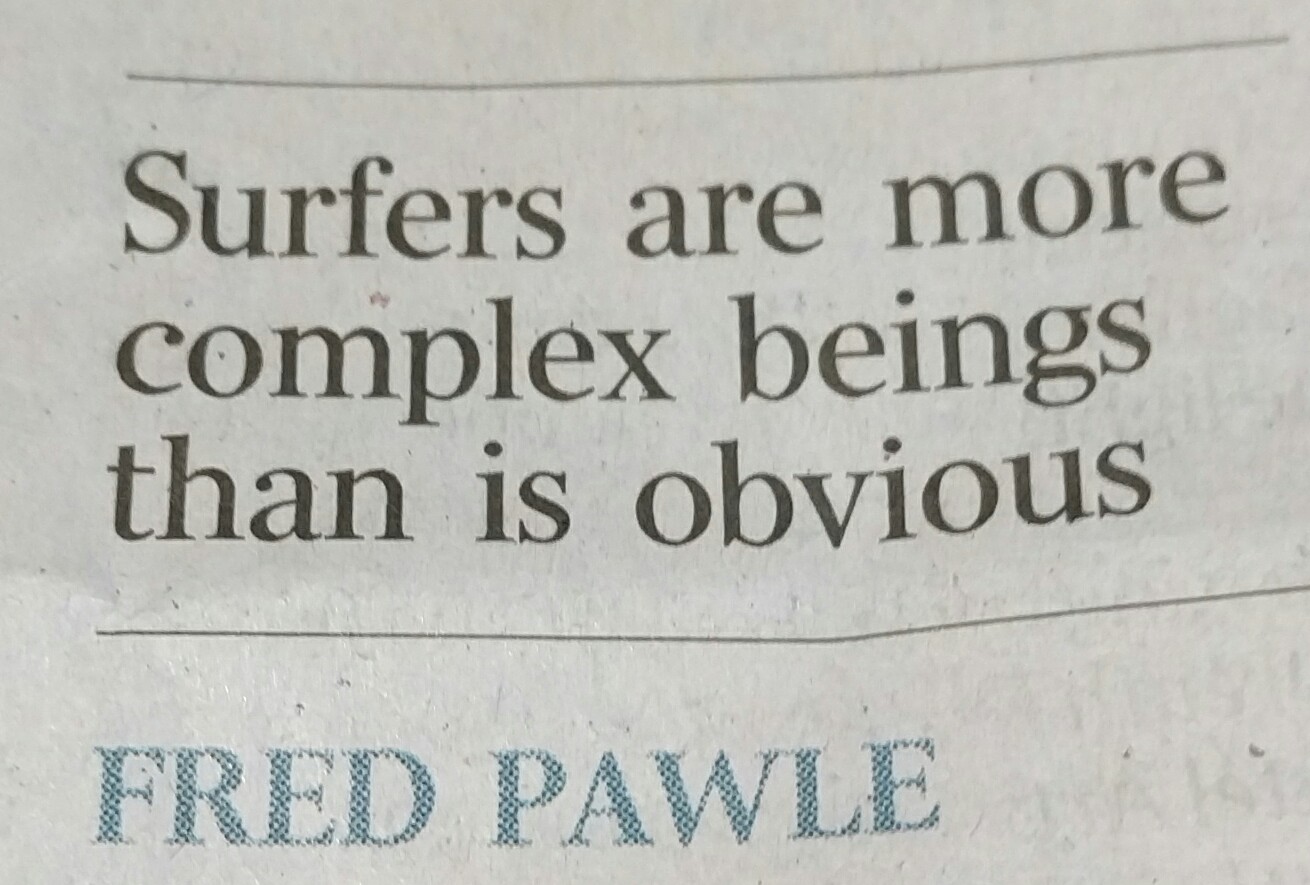
Using virtual reality to train people with respect to sexual habits; it’s missing the point.
What we need is augmented reality to make every home encounter a different one!

From a Linked-in blog entry:
“At 35 years old, Dr Marjorie Aunos was known internationally as a leading practitioner-researcher and advocate for parents with intellectual disabilities. Soon after, her car slipped on ice, leaving the mother a paraplegic. She talks about her experience of moving from being an “outsider” to an “insider” as a disability practitioner-researcher at a special Sydney Ideas lecture.”
All I take out of that is ‘don’t live in cold climates’. Oh, and that Sydney Uni’s social marketing folks can’t string a simple sentence together, nor can they construct a rational construct.

The New-Ager’s often talk about ‘archetypes’, as in the ‘female archetype’, or even more obscurely, the ‘divine feminine’.
What they mean by an archetype is usually derived from Jungian psychology and generally treated in a positive way.
If it makes you (my sane readers) want to throw up then it’s an example of the positive, such as “10 Female Archetypes and Leaders to Inspire You.”
However, of late, I have seen and heard a few references to unhappiness associated with the promotion of archetypes.
For example, men searching for their female archetypes are dooooomed to fail. She doesn’t exist mate, and apparently near enough isn’t good enough. You’ll be miserable so let her go. And such forth.
Upon reflection I think Jung might have got this all slightly askew, and the well meaning morons that followed after him certainly did.
When someone is chasing an archetype, whether that is a man, a woman, a politician, a dog turd, or whatever, what they are really seeking (most of the time) is:
I can see at least half a dozen ways to stick a spoke in that wheel and thereby easily disengaging from the injurious habits of chasing 19 archetypes.
However, pondering further, maybe we should carry these moon missions around with us, just so we can toss them overboard when we really need to; for when we are really in trouble.
‘She was a sinking vessel, with no freight in her to throw overboard and lighten ship withal.’

See headline below.
The trade minister of Australia, or the minister for trade as he prefers to be called, says: ‘I understand that a number of people feel alienated by globalisation.’
Not so mate.
There are a bunch of people that are pissed off that other people have more houses, cars and TVs than they do.
But it’d be quite accurate to say that not one of these people feels alienated. At best they feel that there are aliens amongst them.
Globalisation is also not a term they generally use. Nor do they have a proxy for it. Indeed, in a round about way, they blame all their woes on the gub’ment of the day.
I suspect the artful minister is craftily positing that ‘I understand that a number of people feel pissed off by by the aliens amongst us that are from other parts of the globe.’
It’s the trade in people that the C-grade gluttons misdiagnose as the root cause of their delinquency.
Noting the absence of functioning diodes between the rabble, there isn’t a politician in the country that feels compelled to correct them.
It’s so much easier and more fun to direct tax receipts away from them and towards more rewarding pigs.
I don’t think it’s the goods and services themselves that all these people (the A thru C grader gluttons) desire.
No, it’s the relative quantity of these compared to other people; this is what really matters.
The eternal mystery for me is why anyone bothers at all. It’s just looks so exhausting.
And completely bonkers…
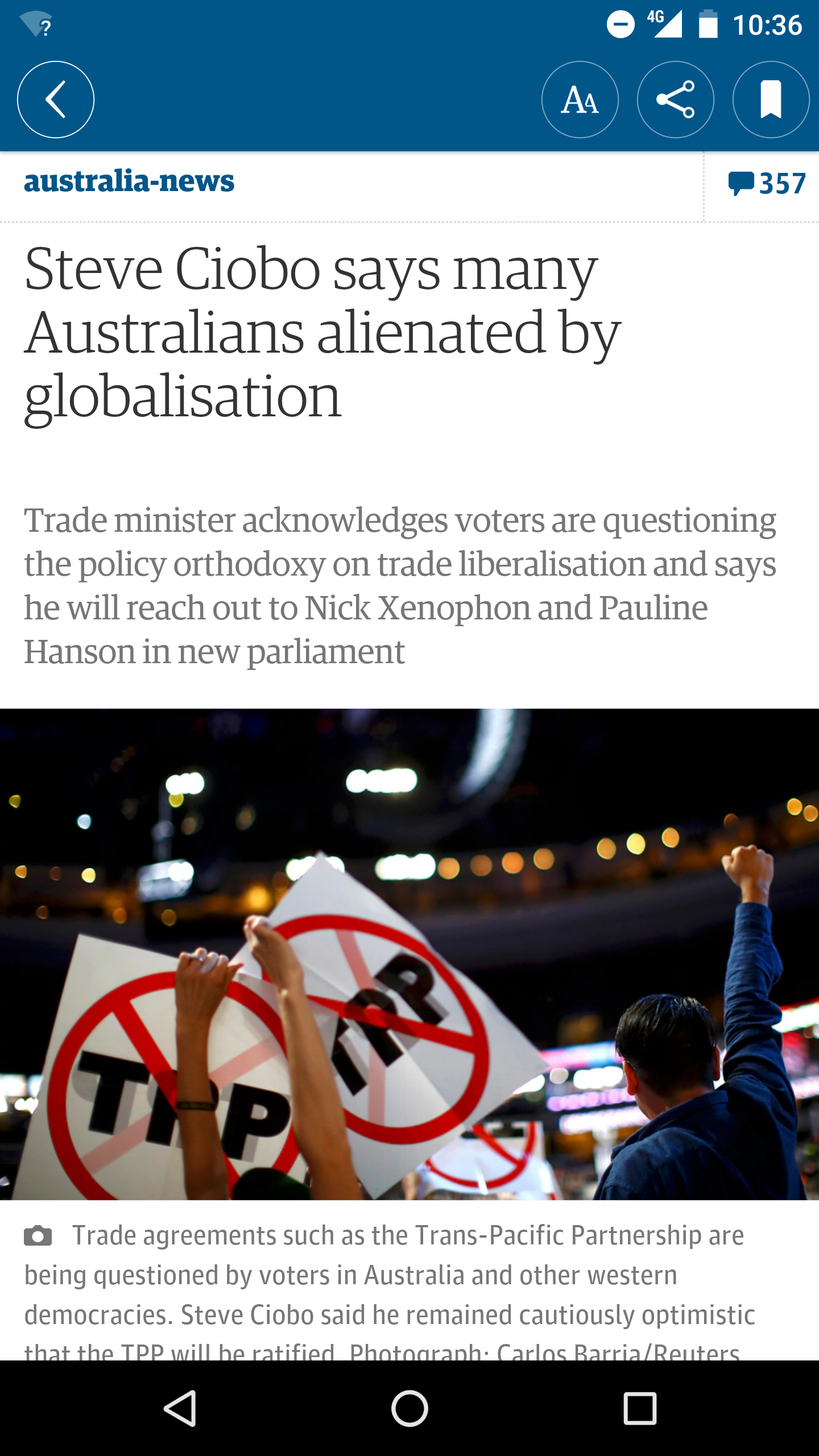
For once I suspect the coalition has made the right decision for the right reason. That must be hurting them right now.
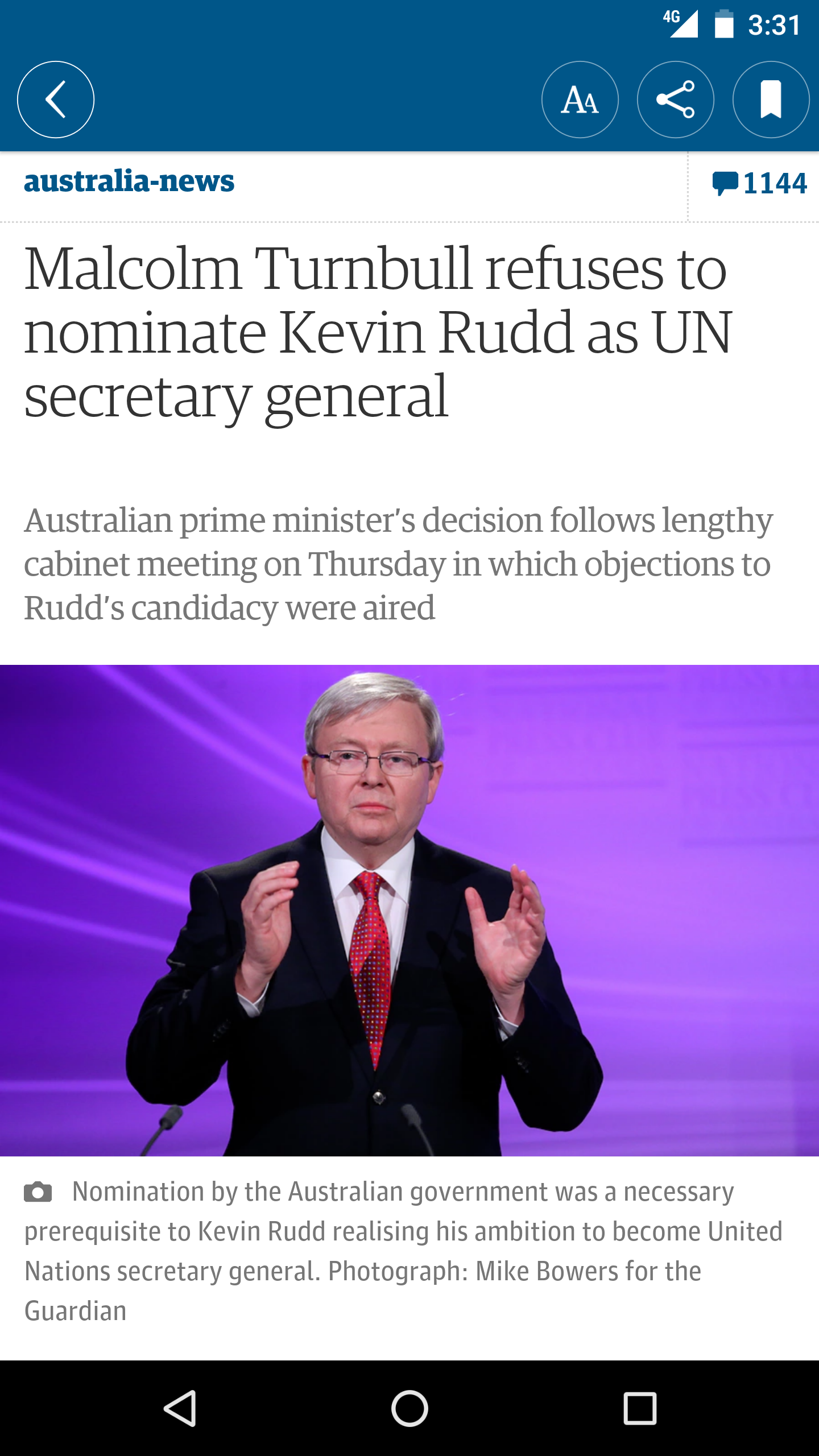
It has been my displeasure to sit around a table listening to a bunch of board level business types rabbit on about programs for gender re-balancing of company boards in the interests of diversity.
Once, and I must have been thoroughly bored at the time, I noted that, in my experience, putting skirts on the white anglo north shore pigs-at-the-trough did absolutely nothing to engender diversity.
Pushing on, I noted that a little diversity along racial and sexual orientation lines might actually create a little genuine board diversity and thus challenge management to step up.
There was a chilly silence, followed by the sound of the mental tapes being wiped, and then the concerned conversation carried on as if nothing had ever been heard.

As long as I have one seriously challenging project on the go, I’m happy.
It genuinely surprises me that many of my fellow citizens feel just the opposite.
Boredom is satiated in other ways. The stress outweighs the benefits. The energy required to think. The fear of failure. The disinterest in the new. The perceptions of others. Not fitting in.
But ultimately, it’s a matter of consumption over creation.
One keeps you alive but the other makes life worth living.

Would I do a Rake?
Take a cartoon-like extreme position just to make my point when talking to a non thinker that just absorbs their opinions from the tabloid media.
You betcha.
Plus it’s damn entertaining. Especially if you’re careful to keep a straight face and cover your deception with both sincerity and cherry picked facts that can be verified by an on-the-spot Google search.

If you ride a bicycle in Sydney on a daily basis, and you aren’t a complete nugget, then statistically speaking you can expect to come off at least once every 18-24 months, usually through some fault of your own making.
Most accidents aren’t reported because they involve the cyclist, his/her bike, an embarrassing slip of attention and minor nuisance injuries.
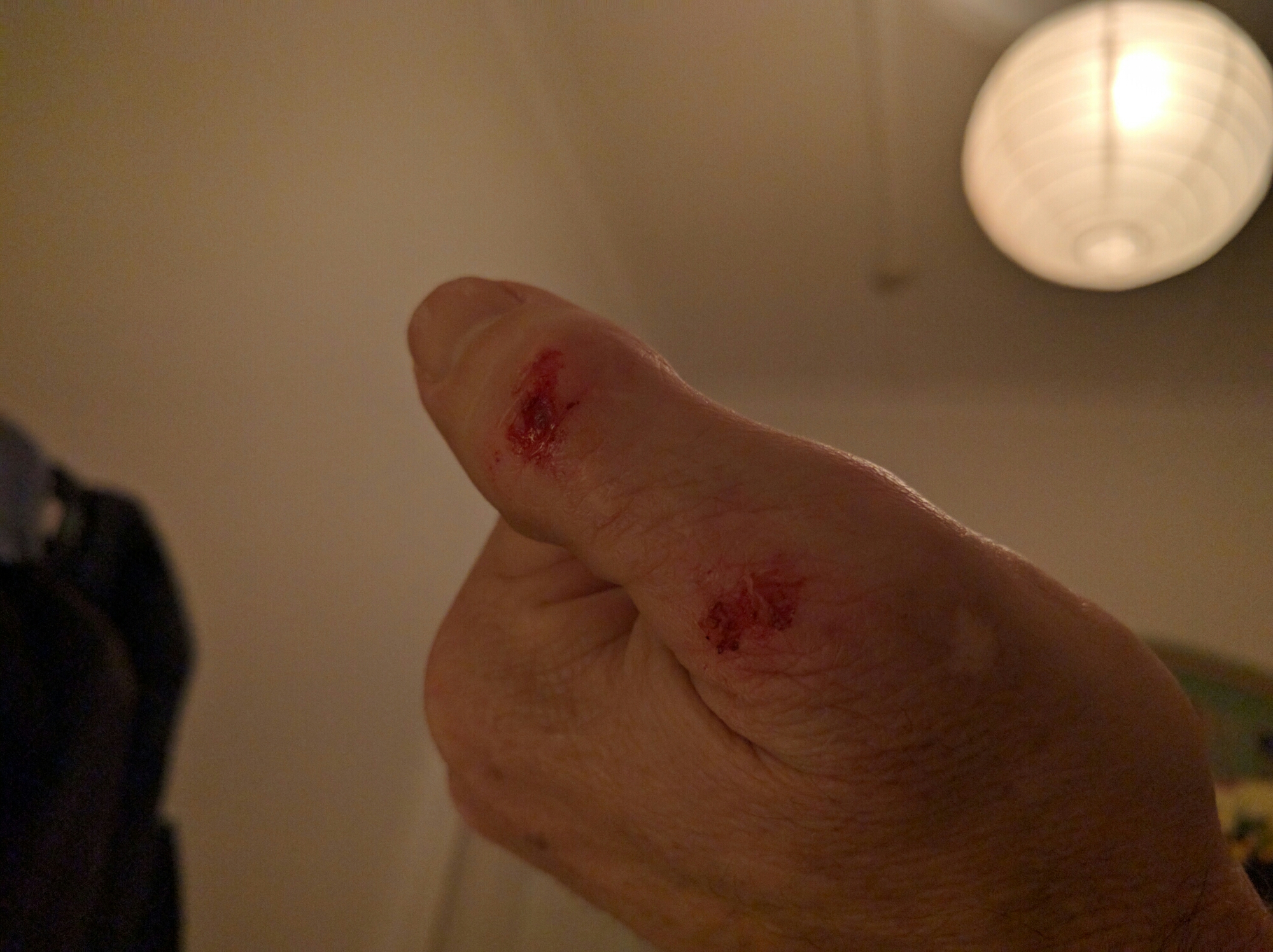
Which is why, dear reader, helmets are such a good idea. Just last night I missed seeing a skinny ditch between the road and driveway and was very surprised when my front wheel disappeared, sending me right over the bars.
Minor injuries ensued. But it was the head smack on the pavement that got my attention. Had I not been wearing the helmet then I would have been in hospital as we speak, battling head injuries.
I once lived in Holland where these self-inflicted injuries are very rare. The difference is Holland’s extensive and well thought through (and smooth) cycling lane infrastructure.
By comparison we live in cyclo-cross territory, dodging holes, ditches, lumps, cars, pedestrians, cops and many other things. It’s the equivalent to driving your car on goat tracks with random roos jumping out at you.
Just this morning I read another of those articles (http://bit.ly/2aeSgmT) that use a form of pseudo-rational thinking to attack the NSW government’s general anti-bike stance (and associated laws and removal of bike lanes, etc).
These quotes by the head bureaucrat got my attention:
“Our road environment is significantly different. We’re on a pathway to changing the road environment, particularly for commuting on cycles. Our culture of cycling has been different, a different history to those locations that you’re talking about as well.”
“I think the context in other countries is significantly different. If their evidence doesn’t lead to these sorts of public policy changes then that’s terrific. Our evidence has led us to these public policy changes.”
What the government is doing is reducing the number of cycle lanes and doing nothing to making the random accidents (like the one I just had) less frequent. Noting this, they are also enforcing helmet wearing and conformance to road rules to minimise the risks related to cycling.
That seems rational to me. They probably did an ROI on investment into cycling infrastructure and decided it was useless, relative to say an investment into public transport.
And this being the age of entitlement, they couldn’t of course just say this. No, they have to weasel word around the issue, thus enraging the thin-skinned self-serving cycling community.
All up, it’s a quintessential first world problem.
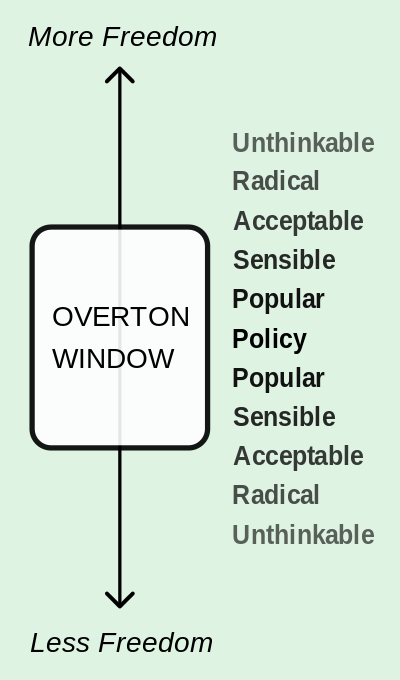
The Overton Window is a hypothesis describing the relationship between common public opinion and the chances of success of any new political policies.
See image below.
By way of example, in 1970 the culling of the greyhound industry because greyhounds were being culled in the interest of pace would have fallen into the unthinkable bracket.
However in 2016 it falls somewhere between the sensible and acceptable bracket.
However, there is something that Overton missed. These brackets represent the median of public opinion.
Also important is the spread around the median. The larger this is, the more careful politicians should be in proposing changes.
The power of motivated vocal minorities has been supercharged with the internet, after all.
So I’d like propose an addition to the Overton Window based on 6 Sigma thinking.
If 0.3% of the population or less of the population lie outside the 6 Sigma distribution in regards to an issue then you’re dealing with a standard Gaussian distribution of opinions on a subject; so knock yourself out and propose the changes to policy that all the fuckwits think they want.
However if polling suggests that more than 0.3% of the population are out past the 6 Sigma lines then do nothing apart from sounding very concerned, proposing the odd committee to look into the issue, and blame the opposition for opposing any changes.
Proposition: on matters humans, if work outcomes actually matter then they can be measured.
Alternatively, on matters human, if work outcomes can be meaningfully measured then they matter (to someone).
If accepted as a proposition, this means that if you’re having troubles measuring work outcomes then the matter doesn’t matter much.
A nice example is the current Innovation push by the federal government.
This minorly expensive program has no meaningful measures such as increases in high tech exports.
The only measures will be the number of individuals and organisations funded, together with the number of marketable activities that they report back to the government.
These will be things such as conferences attended, papers written, meetings attended, etc.
These activities are inputs and not outputs.
So the initial proposition needs to include the concept of meaningful measures that are outputs and not inputs.
The same can be said for tertiary education.
I would argue that the market place is the best measure of educational outcomes.
So the quality of your graduates can be measured by these metrics:
1. Firstly, the fraction of graduates that get a job in their discipline, and
2. Their average starting salaries compared to graduates from other institutions that also get a job in their chosen discipline, and
3. Some metric associated with the rise of these graduates in the industries that hires within the chosen discipline.
For each of the three metrics, I would normalise them to unity (the first is a fraction so that’s easy) and then multiply all three of them.
That’d sort the turkeys from the pigeons. And it’d also stop universities overtraining in dead disciplines.

Does academia matter?
For mine, this question needs to be first addressed before any issue of re-balancing in the sector can be tackled.
On one hand, academics teach our tertiary students and that would seem, on the face of it, a very important task.
And yet, probably two thirds of our tertiary students would be better off learning their trades in apprenticeships rather than universities, if such things still existed.
But still, that leaves the third of occupations and disciplines for which a university degree is the most efficient form of training.
In Australia, about half of the residual third can only find jobs in the discipline of training if they either (1) leave the country, or (2) become academics.
So that leaves one-sixth of the student population as a mission-critical education project.
In this one sixth, who are the educators?
Are they failed or exhausted practitioners? Generally not, they tend to be recycled post-graduates with very little other-world experience.
And even more oddly, their promotion is based upon research outcomes rather than educational performances.
This is based on an old notion of unknown origin that a good researcher will automatically be a good educator.
My own experience would suggest there is a non-correlation on the matter.
So, to the matter of re-balancing in the academic system…
Should we focus on gender re-balancing? Or balancing based on socio-economic status, race, religion, sexual orientation or other?
My suggestion is that in the 5/6th of academic jobs that barely matter, in the interest of fairness, each randomly selected 1/6th of the academic population be sent to the chopping board for re-balancing based on one of gender, socio-economic status, race, religion, and sexual orientation (noting that, mathematically speaking, we can’t re-balance all of them at the same time).
For the 1/6th of academics that do matter a little, how about we just choose them on merit? Whatever the hell that is. I don’t pretend to know but I do know that we can measure the quality of their graduates and then introduce a reward scheme for the educators (e.g. bonuses) based on these measurements.
I also note that, once all the re-balancing is done, as sure as night follows the days there will be a popular movement calling for merit equality, otherwise known as a meritocracy.
This old-world concept will confuse Gen-X’s and Gen-Y’s, tabloid news readers, politicians, real estate agents, soft toys, and any female in the professional services that has also had a baby or two.
We will have to send them all back to university as night students to learn all about this odd Aristotelian conception. It will have to be a complete year of night study because first they will have to learn about logic and rational deduction and a few other things.

It’s odd that we don’t hear ourselves snore.
It’s not as though we turn our hearing off when we go to sleep. We can all be waken up or annoyed by noise, such as someone else snoring.
I think with respect to our own snoring that we must have a feedback loop that (1) takes a signal from the nerves in the throat, and (2) sends that to a processor that sends out a signal that (3) puts a lock-in filter on the amp so that the sound our snoring is greatly depressed, as (4) detected by one of 180 regions of the brain.
So the invention of the day is a microphone attached to these snorer that picks up the noise of snoring and then sends a signal to a micro vibrator attached to the throat of the other person.
Thus enabling peaceful sleeping all around by fooling the victim into believing that the snoring is their own.


I am forever amazed at the fees paid to business consultants.
The distribution around what would be a fair market price is quite large.
There are a few reasons why:
1. Very few consultants use agents to negotiate fees, as should be the case after an in principle agreement is made on the services to be delivered.
2. Similarly, few companies that are hiring consultants refer the deals to purchasing officers.
3. Except for generic services, crowd sourcing -explicit (web) or implicit (tendering) – is mostly absent from purchasing, often reflecting the laziness and self serving desires of those hiring consultants.
4. The price-making job of the consultant is to create the impression that their services are unique and highly value adding. The price-taking client should decide not to believe this primarily because, if true, the consultant would be fully occupied with existing clients and wouldn’t be pitching for business. Such logic rarely applies.
5.Certain company officers, CEOs, directors and GMs for example, should be completely banned from hiring consultants simply because the strict rules that apply to the rest of the company don’t apply here.
Meandering through that discourse, I see a template for consultants on how to pitch and who to pitch to.
 offshore westerly