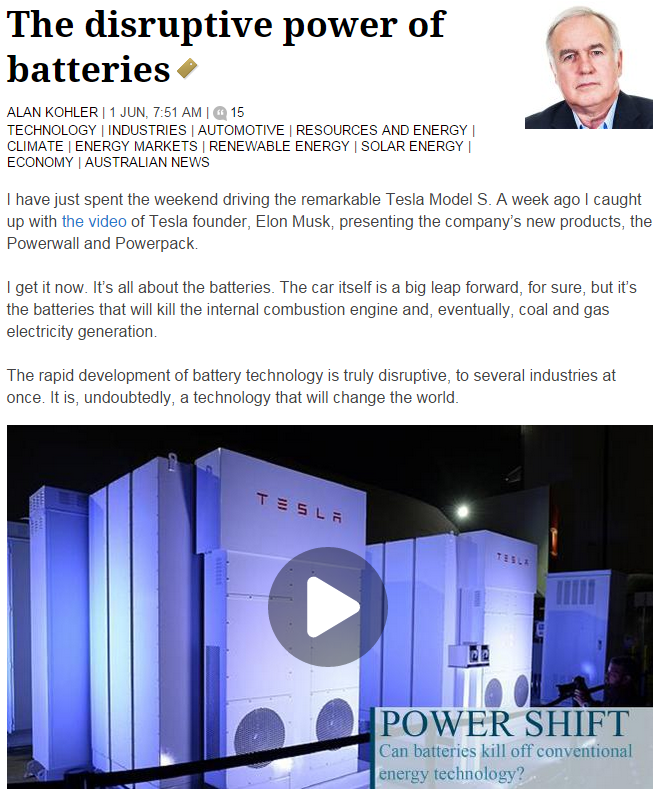
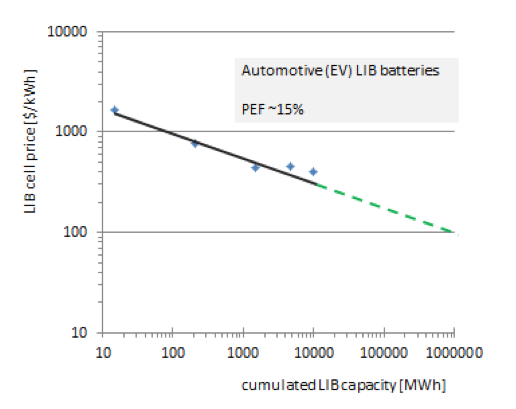
Taking a screenshot on the Nexus 6 involves depressing the two external buttons simultaneously. It’s hard because they are on the same side of the phone. Even if you get the timing just right, and you have to or else it ignores you, it doesn’t work half the time. It needs a rethink and an update.
Spreadsheet addition
One other thing that I am very proud of is that, despite arriving in this world with congenital melancholia, I have through sheer willpower and application mostly attenuated this tendency.
It’s not all bad, melancholia. Think of it as time enough to think and feel. It’s the low level chronic blues that comes with it that is worth avoiding.
Passata
All over the western world governments are starting to introduce food safety bills.
One aspect of these bills is the control of seed stock and the mandatory use of purchased seeds as opposed to seeds from heirloom seed banks or self generated seeds.
I am guessing that the arguments for this would be for safety (seeds engineered to resist the latest upcoming catastrophe), agricultural productivity (seeds engineered to produce enough food to keep us all alive), terrorism (to prevent terrorists introducing food borne terror), and the enablement of sufficient agribusiness profitability allowing investment into R&D to ensure all these benefits are maintained.
Two predictions; we will be buying heirloom tomatoes on the black market and Italy will leave the EU.
Pockets
Paddington Bear thought that pockets were great sandwich compartments.
Segue alert; sandwiches to smartphones. Same format, different material science.
If these smartphones get any bigger men’s clothes are going to have to designed around them.
Lacking handbags, what we need is front facing pockets that are easily accessible and protects the phone from being sat on in a back pocket, big enough for the phone, not too low on the legs so the headphones reach the ears, and not too wide so the phone doesn’t annoyingly fall sidewise in the pocket.
My current shorts have exactly such pockets that are perfect for this Nexus 6, which is no sylph I can tell you.
Imagine every pair of shorts and jeans and trousers having such pockets? Fashionistas are going to suffer.
The alternative is a slap-on pocket you can transfer to everything you wear, except budgie smugglers. I will leave the attachment and detachment mechanism to the prodigally excitable tech heads.
Shady
Yesterday I had a discussion with one of my sales guy in china over under-the-table payments.
This is where the customer pays a supplier $500k for a tool but where the supplier also give $100k to the manager at the customer who makes the decision, usually in a brown paper bag.
In total the supplier nets $400k.
Since this is illegal for an Australian company anyone so inclined would usually need an intermediary agent that would makes the actual sale and do all the shady shit. Even so, I don’t like the sound of it all.
I said how about we just sell the tool to them for $400k and the company can give the manager a $100k bonus for selecting such a good tool.
Let’s call this an over-the-table deal.
The customer’s benefit is that for the same gross price they actually get the best tool, not the one with the biggest under-the-table payment.
I was told that this suggestion was “illogical and illegal”.
Go figure.
Truth is, these under-the-table payments are shared with superiors and underlings. It’s a whole Amway-ish pyramid of side payments that stretches all way to the top. Let’s hope they never fix it; god help us if the Chinese ever root out this cause of their institutionalized mediocrity.
Airco
Circularity of teeth
I used to think that it didn’t matter so much what you thought or felt, but that your actions were what counted most.
I rationalised that all actions can be broken down into units that are binary choices – you either do something or you do not.
This was a sort of restatement of ‘it’s what you do that counts’.
I have come to realise that this life-view supposes that the physical world between me and other people is the ‘real’ world.
However, if I am honest, the inside of my head and body feels just as real. And maybe, by extension, it is so for others.
And in this case everyone’s feelings and thoughts may be just as important as their actions.
Feelings and thoughts aren’t as visible to other people as your actions.
They can be disguised and hidden on purpose.
And in this we can cause ourselves much pain and also much pleasure.
Logically, based on these thoughts, I should now draw a conclusion and suggest an action, but I don’t feel like it.
Six pack (content warning)
Random thoughts
Twice in the past two weeks I have listened to very nice people explain to me how a perpetual motion machine might work.
One was variably a yacht or a plane, where a surface coating not only reduced frictional drag but also magically provided thrust.
The other was a drone that captured the energy of rotation by adding alternators to the drive-shafts, hence generating the energy to motivate the thing.
Now I don’t see it as my job to explain the first and second beliefs of thermodynamics to every lay person with a dream.
I mean, I would if they actually started building one. But if it’s just beer talk, what’s the harm?
Coincidentally a nice young ‘inventor’ contacted me yesterday and he wants my help to commercialise his invention.
He has developed an algorithm, he says, that sees order in what has always been considered by everyone else to be random.
He is claiming to be able to use this to make predictions. I have offered to him the Forex market as a test bed, although knowing that this isn’t entirely random. But hey.
It got me wondering, what law of maths or physics states that there is no way to make predictions from studying randomness?
Nuh, it’s just a definition. If we can’t find anyway to make prediction from studying numbers then they must be random, for now.
Rather usefully, mathematical theory restates it thus; randomness implies that there must be an infinite expansion of information for randomness to exist.
You see, there are no fundamental laws of mathematics, just a bunch of circular collective beliefs. It’s no way to spend your life me thinks.
Truth and lies
Truths and lies, these are antonyms are they not? Not according to the dictionaries.
Truth is the antonym of lie, but lie is not the antonym of truth.
Whence cometh this unexpected asymmetry?
A perusal of Wikipedia reveals that this cesspit of crowdsourced information reveals no truths but it does weed out lies.
That is, it is an encyclopedia of widely shared beliefs, as opposed to individual beliefs.
Individual beliefs are not necessarily lies but they have a higher chance of being so than collective beliefs, by the very definition indeed.
The only real truth out there is that sometimes people tell absolute lies that they don’t believe in at all.
Now Google
Note to self
Fairness & Freedom
There is a new app out called ‘Gender Avenger Tally app’.
It lets users create gender-focused pie charts (on anything) that they can share on Twitter and Facebook.
Like how many women are in federal parliament, or how many female toilets are in the pub, or how many of the wombats at the zoo are girls (my daughter once asked me this), etc.
The point of the app is to share the outrage at the unfairness of gender imbalances in order to drive the movements for changes that address these unfairnesses.
What we also need is an accompanying app that creates pie charts that highlight the prevalence of proposed legislative solutions to issues labelled as unfair, whether these are gender-based, racially-based or otherwise.
It is possible that the price of fairness will be our freedom. It could be a case of ‘careful what you wish for’ or more succinctly, ‘be careful how you try to fix those issues that outrage you so much’.
Which green?
Opposition to the Baird government’s electricity privatisation plans has galvanised a preference deal between Labor and the Greens in the lead-up to the NSW state election.
“The Greens have taken the same view as Labor that privatising the electricity network is a bad deal for NSW, so we’re happy to enter into a preference agreement with them.”
You would think that privatising the electricity network would naturally lead to higher electricity prices which would then act to reduce electricity consumption and thus reduce green house gas emissions, all of which looks pretty green to me.
Or is that an entirely different shade of green do you think?
Patent Options
Options are derivative contracts that give the holder the right, but not the obligation, to buy or sell the underlying instrument at a specified price on or before a specified future date.
A patent is a contract that gives the holder the right, but not the obligation, to sue a competitor for patent infringement for implied or real financial gain. However, in a subsequent court case the patent rights may be re-examined and the holder of the patent has no guarantee that their patent rights will be upheld.
In essence a patent is a ‘naked’ option that allows a party to enforce a specifically-defined state-granted monopoly. There is no offsetting position in an underlying security and there is no protection against unfavourable court proceedings; just the option.
The cost (premium) of acquiring a patent right can be accurately calculated and depends on many choices made by the applicant.
The implied or real financial gain from patent enforcement (which itself can be actual or virtual, simply due to the existence of the patent) depends on many factors such as jurisdiction, legal budget, the scope of product revenues, willingness of the parties to settle, and many other factors.
The likelihood that a patent right will be upheld in a court proceeding is also dependent on many factors such as the jurisdiction, type of invention, the prior art, the quality of the original patent office examination, the determination of the opponent, and many other factors.
These are just notes to self … I am working on a patent pricing model.
Note to Lola
Donkey above the line
On my cycle to work, and ahead of an upcoming state election, there are billboards plastered everywhere for the Australia Cyclist Party.
Tempting as it is to ‘Vote 1’ above the line for this mob so that we, the down trodden warriors of the asphalt have a democratic voice, I suspect some due diligence is required.
Many of the single purpose ‘protest’ parties seem to be fronts with the express purpose of funnelling preferences along to some shady candidate that does get voted into the dregs of the cross benches of the senate (or legislative council in the confusing case of the NSW state parliament).
Whereas the original protest party candidates are usually young and enthusiastic, the character that gets the seat is usually an old bloke in a bad suit with a square head and a countenance more suited to being chair of the local rotary club or a standards body, a COMET advisor, or a local councillor. You know the type.
And why would the old bloke do this? Money is the main reason. A seat in the parliament, especially one with a senate in the balance opens up all sorts of financial opportunities.
I read somewhere about this bloke who organises all this. He sets up all the protest parties, arranges their preference flows, and then must take a cut in the profits with the old bloke. Sounds like corruption right? Not if it’s within the law.
As I say to my Chinese customers, the only difference between corruption in Australia and China is that here in Australia we have figured out how to be corrupt within the law. They could learn a lot from us, the Chinese. I am sure they will – they are quick students of self interest, that is for sure.
You would think that the major parties would gang up and fix the protest party preference flow issue by getting rid of ‘above the line’ voting, where the recipient of the vote – the protest party – gets to decide where the voting preferences flow. But the major parties are the ones that introduced the ‘above the line’ voting in the first place. It’s also in their interests.
Sometimes I wonder if our duopolistic power-mad leaders even want control of the senate. Maybe they are happy to have a good reason to do fuck-all since this then allows them to focus on the main game of pork barrelling and reliving their uni review wars. Pork barrelling becomes much easier when there is some dickhead protest senator to blame for it.
When it comes to electoral reform I am not asking for the removal of preferential voting or the abandonment of compulsory voting; that would be too much.
All I ask is that they put in a formal donkey vote box on the voting form so that my genuine protest vote is counted and reported. There is absolutely nothing informal about my voting intentions.
Patently Derivative
A patent is a contract between a party and the government.
The primary purpose of the contract is for the government to grant to the other party an option to prosecute a third party for infringement of a claimed crown or state monopoly as defined in the contract.
In other words, our governments are selling derivatives on crown or state monopolies.
And in my opinion the cost of acquisition of these derivatives is generally well overpriced given the uncertainties around the scope and legitimacy of the implied crown or state monopolies within these option contracts.
If I get a chance I might apply a bit of formal derivative pricing to the subject.
TBD for world champions
Beer run
A2
I was being pressured to buy A2 milk. WTF? A little research later I find that…
There’s at least two types of beta casein in milk, the result of a genetic mutation about 10,000 years ago. Western herds are predominately the A1 type.
Our enzymes that chomp the beta casein produce different chemical products in our guts for the A1 and A2 varieties. Some companies have been promoting their A2 milk based on the negative health risks of A1 milk.
Responding to public interest in the marketing of A2 milk the European Food Safety Authority (EFSA) reviewed the scientific literature and published a review on the subject in 2009.
The EFSA found no relationship between chronic diseases and drinking milk with the A1 protein.
The EFSA study emphasized the dangers of drawing conclusions from correlations identified in epidemiological studies (i.e. correlations versus causations) and the dangers of not reviewing all the evidence at hand (i.e ‘cherry picking data’).
None of this stops the Australian a2 milk company claiming or implying all sorts of health benefits over A1 milk. Although they are smart enough to add this disclaimer:
“The a2 Milk Company™ has made reasonable efforts to ensure that the content and the representation of the scientific literature in the Health Professionals’ pages are accurate and not misleading. By presenting the scientific literature as reviews and/or as hyperlinks to scientific publications, The a2 Milk Company™ does NOT make any representation as to the health benefits of A2 dairy foods compared with non-A2 dairy foods. The website is provided ’on face value’ and The a2 Milk Company™ disclaims any and all liability for any third party’s personal interpretation of the scientific information and hyperlinks to any scientific publications in the Health Professionals’ pages. Material in this website should NOT be construed as endorsing any health claim for A2 dairy products…”
I might stick to Pauls.
Dogs v Eels
Because it was old Fred’s 94th birthday I watched a game of rugby league with him. His idea.
I haven’t watched a regular season game for quite some time. Hasn’t the game changed?
With the ten meter rule and ultra quick play the ball, it felt like a violent game of touch.
Invariably the first three tackles were dummy half runs. 30 meters gained.
Each tackle had about 4 defenders involved. 400kg on 100kg; they are just asking to rack up injuries. Of which there were many.
The fourth and fifth tackles usually involved the attacking team unleashing a set move involving passing behind decoy shepherd runners. These moves had nothing to do with what the defense were doing at the time.
The forwards, when taking the ball up on the fourth and fifth tackles, looked they were auditioning for the lead role in the upcoming movie on the life of Artie Beetson. Every time, they attempted the off-load. And about half the time they lost the ball. It would be even more often if defenders weren’t so heavily penalised for stripping the pill. But really, the way these guys hold the ball so loosely in tackles, they deserve to be stripped.
They seem to have stopped bombing the ball on the sixth; they kick for the line, presumably because they enjoy a scrum so much.
The aerial drone shot of the scrum was beyond laughable.They were hardly touching each other; it was like a bunch of blokes standing uncomfortably close to each other while the half back tossed the ball to his backs.
Most of the tries were the result of the outside defending backs getting out of defensive position and then being confused as to who they should tackle. That much hasn’t changed in the game since I was a kid.
And the art of converting a try seemed to have been lost on this particular night.
Every single try went to the video ref to check for off-the-ball infringements because of all those shepherd decoy runs. Another few minutes wasted. If these passes behind decoy runners need slow motion video examination for legitimacy after every try then surely they need to be banned from general play?
As a spectacle this game between Canterbury-Bankstown and Parramatta had the appeal of watching a dog and an eel flap around in the shallows of a lake trying to figure out how to fight each other.
HP
Clock spring
I really wish those fuckers down there at IKEA would get their part quantities right.
There’s nothing worse than finishing a three hour job only to find one part left over.
After another ten minutes of frantic checking; yes, they gave me one extra.
It sort of reminds me of the time, as a kid, when I surreptitiously pulled the family clock apart.
After I put it back together there was one spring left over.
The clock still seemed to work so I stashed the spring and said nothing.
Greeky
Confucius on the Internet
IKEA again
I can’t choose which better foreshadows an eternal hell, Peter’s of Kensington or IKEA of Ρόδος.
Upon further reflection, IKEA wins since Peter’s is usually followed by a piss up (otherwise known as a wedding) whereas a trip to IKEA results in the maddening assembly of some complex collection of chipboard atrocities.
House your enemy
In Australia we have incredible wealth.
Decades of improving productivity combined with a continent’s worth of resources has meant that wealth as measured by assets per person has just continued to increase.
A large fraction of that wealth has been sunk into real estate.
Quite bizarrely we have mostly chosen to live in a handful of cities, and this has led to incredibly high real estate costs driven by a permanent under-supply of housing.
That money that is sunk into real estate, where does it go?
There are buyers and sellers and then there are also service providers such as real estate agents and builders.
The latter group get to make their own contribution to the market by sinking their own wealth back into real estate; they know no better.
In the main there is very little free cash flow coming out of the real estate market.
Sometimes someone might cash out and spend that cash on lifestyle choices or business, but this is rare. Generally reinvestment into the same market is the norm.
So the winners are the financiers, the banks, that borrow cheaply overseas and lend that to us for real estate purchases at nice margins.
The local beneficiaries of their success are their employees and shareholders who, guess what, invest much of their wealth into the same real estate market.
If the country had a balance sheet there would be this real estate line item just sucking up all the cash flow and continuing to appreciate as an asset. Zeros building up in holding accounts – that’s all we get for our efforts.
One of the issues is that the supply-limited real estate market is there on ‘purpose’; it is good for the banks, builders and agents – an unholy interest group that can influence local and state governments to maintain the supply side issues in order to maximise their profits and minimise their efforts.
We would need city-wide governments, free of state governments, to fix this supply side issue in our existing cities.
Even if we had city-governments the problem would continue to exist; the population pressures we are going to face in the future would out-race even the best planning within these cities.
What we really need is new cities. We need to take cities such as Newcastle, Coffs Harbour and even Nowra and actively turn them into business centers with populations of more than 1 million people.
The more free cash in an economy, not tied up in real estate, the likelier it is that there will be risk capital available for investment into the development of new export industries.
And superannuation is not really free cash – because of certain tax benefits it naturally avoids certain higher risk activities.
But, in any case, the idea that we let people take super out early and invest in real estate, as Joe Hockey proposed this week, is simply retarded. It would make things just that much worse than they already are.
If real estate prices ever drop across the board we are going to have a real issue of our own making. But it’s probably the correction we need to have.
Balmoral lifestyles
And there I was, sipping a beer with Larry at the Bathers Pavilion, contemplating the murmur emanating from the surrounding mass of segregated white-bread politeness.
I thought to myself “what we can’t do is endlessly subsidize lifestyle choices if those lifestyle choices are not conducive to the kind of full participation in Australian society that everyone should have.”
Megamouth shark washes up in Philippines and is only the 60th we’ve ever seen.
Damn interesting stuff
On the morning of the 28th of January in Barangay Marigondon, Philippines, local residents discovered a mysterious shark washed up on their coastline caught in fishing nets. After contacting local authorities, it was confirmed to be the ever elusive megamouth shark, Megachasma pelagios. This is, by my records, only the 60th confirmed documentation of this enigmatic shark. Whilst detailed information on this species is still lacking, some biological information is known about this shark: check out my 12 brain fondling facts here.
But what have we learnt about this shark since its last sighting back in July of 2014.
[EDIT]: The original upload of the photo was by Rosalina Sariola of Marine Wildlife Watch of the Philippines (as credited under the photo and hyperlinked). Please see their Facebook page for more videos and photos of the event. All other pictures used are credited to the photographer and also hyperlinked to…
View original post 619 more words
AGL
It’s odd isn’t it that our utility service providers don’t understand that we don’t pay bills on time because we simply can’t be arsed.
Their current payment systems are weird. Check out that reference number below! There’s enough digits in there to label every atom on the planet.
What we need is a ‘utilities app’ where you can add all your utility services, get bill payment notifications, check account details make payments, get invoices and the like, and do it all on your phone.
Most Livable My Arse
Listening to the radio yesterday I finally got an answer to the puzzle of why Sydney and Melbourne rank so highly on those ‘most livable city’ lists.
These lists are actually compiled by international HR firms and relate to the costs of relocating corporate expats to different countries.
The list of most livable cities is inversely proportional to the cost of enticing corporate types to a city. The easier it is to entice an expat to a city, the lower the cost of doing so, and hence the ‘more livable’ tag.
Given the salaries and packages that expats receive these lists should not be construed to infer any general sense of ‘livability’ of a city.
Services
What we need for jobs in the service sector is a index from -1 and 1 for wealth generation.
A rating of zero would mean that the job has no wealth generation function.
A rating of minus one would indicate that the job actually is some wealth-destroying government mandated cost to business.
A rating of one would mean the service sector job has a direct and measurable export wealth generating function.
And of course there would be a broad distribution of all the jobs in the Australian services sector between -1 and 1.
Wouldn’t it be interesting to see that distribution?
Jealousy – a reader’s digest
Janet Hardy wrote a very interesting chapter on jealousy in one of her books (that was just yesterday brought to my attention).
Here is a quick summary of the whole chapter in words and a picture.
The ‘best’ way to do deal with the natural emotion of jealousy is to practice detachment (from the fear of loss), dialogue (over arguing), and to practice the practice of dealing with jealousy in this way (over not practicing).
Like anything other human skill there are means and ways to achieve anything, but these take practice.
By ‘best’ the author implied that the ability to not control a loved one through jealous behaviour gives better outcomes for everyone involved. With the usual unfortunate statistical outliers and all that.
In a relationship, the alternative is to practice ‘fortified monogamy’ (my term). Janet thinks this is just too hard to sustain and not that good for the development of a soul. And not very interesting either, she reckons.
Optical focus
Kauffman
The Kauffman Foundation has published a fantastic report on US Venture Capital – see http://bit.ly/18yQrA5
Over a 20 year period, starting in the early 90’s, only four of thirty venture capital funds with committed capital of more than $400 million delivered returns better than those available from a publicly traded small cap common stock index.
The irony is of course that without the value-destroying venture capital sector the returns available in the traded small cap would be much lower because there would be far fewer companies in this sector, and much less development capital.
The LPs losses are the the US economy’s gain. If I were them I would be looking for some serious tax breaks for this collective act of economic charity.
Concentrated madness
Byron at midnight
Probiotic nuts
New product idea no. 3632.
Recently some academics have shown that 80% of kids with nut allergies could be cured of their affliction by a month of feeding them a bucket load of probiotics and traces of nuts.
This works because the gut is the engine room of immunity and this has been comprised of late by excessive use of antibiotics, over cleanliness, excessive numbers of caesarian births, and in some cases also extended periods of breast feeding.
The probiotics address the bug imbalances and the trace amounts of nuts is presumably required to ensure the bugs learn to deal with the allergens therein.
My thinking is that if a kid has allergies then rather than trying to figure out what the allergy is (which never seems to work anyway) we should put on them on a month-long probiotic diet and feed then traces of all the usual allergens.
Who cares which one it was after the fact?
The nips are getting bigger
Most of the productivity gains in the last 200 years have been driven by technologies that have made products and services, delivered to people, just that much cheaper (in real terms) per unit.
Much of the technology in question has also enabled the introduction of entirely new products and services.
In terms that economists use, such as forecasting long term economic growth of Australia, a key input is future gains in productivity. What they actually use as a prediction of gains in productivity for the next 40 years is the mean % number for the last 40 years. Which means that they have no idea.
What they really want to forecast is the gains in wealth per person, which is correlated to how little of our time is required to survive (say, to earn food and pay for a roof over our heads) and how much we can afford to consume in the fraction of non-sleeping time not required for survival.
As an aside, clearly the big opportunity for the productivity freaks is to develop means to consume while we are asleep. Automated consumption. If a trees falls in the forest and no one sees it, did it happen?
My concern is that the economists are not seeing the bigger picture. In light of global warming and diminishing resources we have to figure how to consume less by becoming more virtual in our consumption, i.e. we have to enter into the Matrix.
What a paradox. Productivity may continue to improve but consumption may start to decline forever. There goes the fundamentals of our current global economies and god help us.
Due to increasing concentration of the capital for investment into technologies, much of the new emerging technologies that will drive increases in productivity will be owned by fewer and fewer groups of people. Most of them will not be in Australia and it is likely that the introduction of these technologies will not enrich many Australians.
Already we are stretching the rubber band of wealth distribution in Australia – 68% of GDP is in the services sector. Much of that is government mandated and actually works against the productivity of our tiny export sectors in resources and agriculture by adding costs that are not seen by foreign competition in these sectors.
I predict that Australia will have a wealth distribution inflection point where the wealth from our genuine wealth generating sectors will get trapped either within a small group of Australians or exported to the overseas owners of the high productivity technologies.
The wealth distributed to and circulated within the services sector will come under increasing pressure and unemployment in this sector will spiral out of control.
Compounding this problem will be the aging population that are not willing or not able to participate in the wealth generating sectors, so, if forced to work, will put even more pressure on the over-subscribed services sector.
The only responsible action from our government will be serious increases of taxes on our resources sector. Such action has just been dumped but it will be back on the table. This will only work if foreign resources, not encumbered with such taxes, don’t out-compete our exports in the global markets.
Even if this eventuates it means that government will become even more central to our lives.
I think it’s about time we invest seriously in developing a technology sector before it’s too late. Otherwise it’s not going to be pretty.
The only other solution would be to put up the walls around Club Oz and go all Amish.
Every word has a meaning
Earwax
“Earwax, also known by the medical term cerumen, is a yellowish waxy substance secreted in the ear canal of humans and other mammals. It protects the skin of the human ear canal, assists in cleaning and lubrication, and also provides some protection from bacteria, fungi, insects and water.”
Who said evolution always find the best solution? If it does, for mine, this is evidence that we are but a failed experiment.
Digital SLRs
You have to feel for the vendors of digital cameras.
The smartphone industry has gouged their market and they are living in a shrinking market; the very worst place to be in the corporate world.
They might counter that the premium DSLR end can’t be touched because of the need for proper optics that just can’t fit into the smartphone format.
This may be true but I wouldn’t underestimate the R&D dollars being invested into smartphone sensor technology and processing software in attempts to ameliorate these issues.
In any case, a shrinking market often requires a re-think of the business model.
No one wants to be the last seller of buggy whips do they?
Today their primary business model for the vendors of DSLRs is capital equipment sales, the cameras themselves.
Then there is all this other income from accessories which they share with any number of third party companies.
They don’t own their channels – they use any number of parallel distribution channels and they can’t control the message that their end customers receive.
My suggestion to them of an alternative business model is this:
1. Sell a camera body with basic specs at cost, or even give it away
2. But sign people up to a web-based subscription service that is required to use the camera. Recurring revenue is the key.
3. Offer proprietary software upgrades and aggressively block third party accessories through patents and registered design features.
4. Include a web based ‘iTunes’ style environment for purchasing of all sorts of things such as accessories, upgrades, apps, extra features. Allow third parties to use this platform but only after being vetted and then also with a significant clipping of the ticket.
5. Offer hardware upgrades through the store – they could even make all the hardware components replaceable within the body so that users could slowly upgrade the camera with better sensors, more memory and the like.
6. Through the web subscription service offer and control third party services such as printing, photo sharing, competitions, curated photo sites, etc – all of these exist already, but the idea would be to force them into a iTunes like model where quality in controlled and revenue is licensed.
In fact, if I was to advise Nikon and Canon, I would say to them team up to do this and freeze everyone else out into the cold.
Game over.
Occupational Power Structures & Sexual Harassment
On the subject of sexual harassment and abuse I was asked to clarify when is verbal harassment just verbal. I am not sure it’s the right question; let me explain.
This is a quote from the SHM today on the subject of Sydney surgeons and their private school ways:
“..surgeons routinely told her she was a “dumb bitch”, and that women were “f—ing useless” and men should be hired instead…On one occasion, a consultant surgeon told her to “get some knee pads and learn to suck c–k”, which was laughed off by colleagues who were present…She said that a senior colleague inappropriately touched her on several occasions and that she was ostracised after she rebuked him.”
(odd that in the 21st century that the herald can’t print ‘fucking’ and ‘cock’, don’t you think? Part of the problem maybe?)
Reading between the lines, the blokes in these type of professions can get away with this behaviour (for now) because they control the actual power structure within these professions, which are self-contained pyramids controlled by old blokes with bad attitudes. Many of the well-paid trades, medicine and law come to mind, have such self-governing structures – partnerships, societies and regulatory bodies – that bequeath status and position.
The key indicator is how many real decisions get made on the golf course or at the club.
This is very different to the corporate world where actual performance eventually catches up with even the most well-connected misogynistic areshole. And also where corporate embarrassment through the wrong sort of publicity can hurt sales, especially in the B2C corporations. It’s not perfect, and certainly not as good in the B2B world, but its getting better all the time, with feedback loops to root out issues.
Fundamentally, the corporate senior mangers are more focused on their greed than preserving some old world structure. It’s one unexpected upside of excessive senior management remuneration in the corporate world.
The solution we currently have for sexual harassment within the opaque pyramid professions is a complaint structure that backfires on the victim, whether that harassment is verbal or physical.
In fact, if it is just verbal then the complaint is seen as trivial and caused by the victim’s lack of tolerance or humor.
But then the attacks may ramp up slowly and the victim becomes the proverbial frog in boiling water, slowly being tested for tolerance without complaint.
So in many ways these verbal attacks are just as dangerous as physical attacks, simply because they can foreshadow them.
In other cases the attacks remain verbal. Their function is to keep the women down at the bottom of the opaque pyramid otherwise the fear is that too many will get to the top and they will change the pyramid structure. They only want one or two well-behaved women, who have passed the ‘test’, at the top-end of pyramid – they need these for appearance’s sake.
And ‘change’ is what these bastards fear most. You can tell this by the type of professions they go into; where there is little change, where you can learn everything, where there is no unexpected risks, and where you can be safe that you will retire with money in your bank account so long as you played the game as it should be.
The best solution to solving sexual harassment in these old-school professions is to bust open their power structures. Destroy their partnerships, societies and self-managed regulatory authorities. Expose them to extreme organisational change.
My root cause analysis says ‘occupational power structures’. Destroy these and we may be a long way towards solving the problem of sexual harassment in these professions.
Clarity
Old Man Surgeon
A female vascular surgeon in Sydney made the mistake of saying that sexism is so rife among surgeons in Australia that young women in the field should probably just accept unwanted sexual advances because coming forward could ruin their careers.
By ‘accepting’ unwanted sexual advances she meant; sucking it up, not complaining to some authority, and probably telling the bloke to get stuffed, with some cutting humour.

This practical advice has outraged the politically correct types, especially those that earn a living off campaigning for ‘equal rights’. I can feel their pain. Actually ‘equal rights’ is a misnomer – what they are campaigning for is legal intervention into every goddamned corner of our lives just to ensure there is not one whit of unfairness left.
For some women, early in their careers, they have not the emotional armour to survive such sexual advances. For them the path of complaint and official processes makes sense. Often though, if they knew what this entails they wouldn’t enter into the process. But it does have a side benefit of toughening them up, eventually.
On the other hand, the surgeon’s advice is meant for those who just want to get on with their careers and who have no desire to becomes martyrs to a cause. These are the women that are born with the emotional armour required to deflect sexual advancement from old blokes.
Neither party in this dispute is right or wrong; it’s horses for courses. It’s just a shame that neither party can accept this. The campaigners against unfairness are most to blame. They are the victims in this story; they have little humour, little emotional armour, and as a result they generally wish to force their position down everyone’s throats whether we want it or not.
More the shame that the missing person in this missive, the old bloke surgeon, is so emotionally undeveloped as a human being that he feels the need to energize his sense of self worth by exercising power in sexual advances, careless and uncaring of the impact upon another soul. A life wasted right there, old man surgeon.
End Note; if the unwanted sexual harassment tips over into the physical then the old bloke needs to be outed. It’s a different situation entirely to sexual advances of the verbal category, and this needs to be made clear in any debate on the subject.
Jealousy and Envy
Jealousy and envy are sisters. One relates to the potential loss of things you are attached to, and the other relates to a desire for things that someone else has.
Robert Heinlein rather unkindly said that “A competent and self confident person is incapable of jealousy in anything. Jealousy is invariably a symptom of neurotic insecurity.”
That sentence rings truer when ‘jealousy’ is replaced with ‘envy’.
I can imagine a person who is well adjusted, fearing the loss of a dearly loved partner, experiencing jealousy as a natural human emotion.
The symptoms of neurotic insecurity are related to how one reacts to the emotion of jealousy. Does it control you, or do you control it? Do you own it, or blame someone else?
I don’t believe in not having emotions. If Robert was right, the only way to be free of neurotic insecurities would be to be attached to nothing except yourself. The trailer park solution.
And just for the record, one of the clearest symptoms of neurotic insecurities is someone who purposefully, whether consciously or otherwise, works to make someone else envious or jealous.
Neurotic insecurities are like a disease that can only be lived with if the pain is transferred to others. And this is only possible if the other person is also neurotically insecure.
In order to address these issues, envy is the easier to target first. Self confidence earned through achievement and understanding can help attenuate all feelings related to envy.
Jealousy is much harder. Owning the feelings of jealousy and not using them against others requires self confidence and great control.
But jealousy cannot be completely removed unless love is also excised. That is, I don’t think there is a magic bullet for removing jealousy without practicing detachment. Detachment is like an adult emotional dummy spit. Sorry Siddhartha, but you were off the mark.
The harder but more rewarding road is accepting jealousy as a price for love. And then not fearing it and not hiding from it. True ‘detachment’ is accepting what you have now, but also being prepared to lose it in the future.
It sounds unfair and irrational, doesn’t it? Sort of like emotional quantum theory.* It’s one of those things that we can’t imagine but just have to accept as true. And once having done so, a few unexpected pieces will fall into place.
* – I was asked to explain this more thoroughly. I thought, what’s the point of wisdom that isn’t obscure? After all, the obscurity is there to force the grasshoppers to think about it rather than to read and forget.
Oh well, to be clear; if in fact you do have anything in a relationship that is worth being jealous about, solving that problem through jealous behavior will likely put your relationship into a state of irreparable dysfunction as a result of the underlying emotional and functional dishonesty that will inevitably follow.
You are better off either walking or sucking it up. But in each case you have to make it clear as to why you are doing what you are doing, and also what you are feeling. The point is that you can feel jealous without expressing the learned and destructive jealous behavior. This approach has the added benefit of not blowing up the 99% of situations where the jealous behaviour is mostly unjustified; much of what people get jealous about is unworthy of the fear of loss.
If you walk then don’t look back – this can’t be a threat. If you stay and the issue goes away then your emotional honesty will allow the relationship to recover properly so long as it is reciprocated.
Underlying this principle is the concept that the quality of a relationship is destroyed by unshared thoughts, feelings and actions. Even the ones that hurt should be shared otherwise partners start building up little corners that aren’t in the relationship. The accumulated little corners can eat away at the soul of a partnership like a cancer.
Australian VC again
Twice recently there have been calls for the Australian government to mandate capital flows into Australian venture capital.
One was a quickly rebutted argument that a fraction of Australian super funds be channelled thus.
The other, which still has legs, is that Chinese seeking a quick residency entry into Australia pay for that ticket via a government-mandated Hail Mary pass into Australian venture capital.
Behind these calls for capital flow against capital market logic there are two motivating forces:
1. By would-be managers of venture capital funds seeking a virtually risk-free access to management fees, and
2. By others that believe that the ‘problem’ with Australian venture capital is that there is in fact virtually no capital.
Ignoring the unholy former of these motivations, the second bears further contemplation.
There are those that believe that we can kick start a successful venture capital and tech sector industry by priming the pump with excess capital.
Since, as an industry sector, Australian venture capital has always had a negative IRR, a counter argument could be mounted that the more capital that flows into this industry, the lower the average IRR will be. That is, if there is more capital chasing the same deal flow then the average return on this capital has to diminish. This is pure logic.
A counter argument would be that ‘this time it will be different’. By some miracle the endemic problems will fix themselves. The problems being; poor deal flow, inexperienced first time managers that haven’t served a ten year apprenticeship, no exit market in Australia, no corporate buy into tech M&A in Australia, the distance from the key tech markets, under-sized funds, and the list goes on.
Personally I would like to see these problems addressed by any government mandate, along with the corralling of capital.
It probably won’t happen and, if not, in ten years time everyone will try it again, exercising the collective self-serving amnesia that they are practising right now.
Risk
I was chatting to a new colleague yesterday about his son’s career options.
The son is at a top-end private school and is looking at entering the finance sector, which he will be able to do in a snitch because of his classmates’ father’s networks.
I observed that this would probably offer a lucrative and safe career but this path runs the risk of his son getting to, say 50 years of age, and wondering what he in fact did with his life.
This seemed to strike a chord with my colleague.
He asked me if I felt like I had wasted my working career to date.
I said ‘no’ but for the life of me I couldn’t put into words why this is the case.
It’s an odd one; in principle there is nothing better or worse than this option or that option in life, so why did I say this and why did my colleague react like he did?
I don’t think it is necessarily about altruism – some people that I know that wear this on their sleeves are out and out unhappy folks, so the answer isn’t necessarily there.
This is why I write; until I feel for words on a plastic actuating array, and see them in a polarizing filter display, I often don’t get my thoughts sorted. And I just got it; it’s all about risk.
There has to be enough genuine risk in your life to make you feel alive. No risk, and the rot of disenchantment sets in, slowly white-anting your soul.
Sometimes I have felt like I have taken on too much risk (in work and in other ways) and it can overwhelm a soul when this happens.
However risk is like alcohol. You can slowly build up your tolerance to alcohol by indulging. So too you can also build up the your body and soul’s tolerance to risk.
6.58am
More lies
There’s a paradox in practicing the truth and it is this; if you are very honest with those that you love and you care about them then you may find yourself ‘editing’ yourself, your thoughts and behaviors, such that you never inflict pain.
This is the emotional equivalent of the practices of a good Christian who doesn’t sin and therefore has no need for confession. Possibly that Christian would be very bottled up and would carry their pain with them to the grave.
In life, there is no truth greater that “no pain, no gain”.
The good book, the new testament, should have had this written on the cover “these are just guidelines, lassy’. Or “don’t panic”.
My belief is that the means to escape this paradox is to own all your own pain even if you feel it is the fault of a loved one. They will eventually catch on, or not.
This was the central message of our good mate, Jesus the prophet. Hence, how ironic that his followers totally misunderstood him and turned his beliefs into rules.
Lies
My daughter is emotionally honest with herself and with others. She feels that lies are awful things that hang around like bad smells – she likes opening the window upon them.
But as she enters her teens she certainly is learning to exercise her right to withhold thoughts, feelings and information. She says this is because, for example, ‘you won’t understand’.
But in truth I think it’s because she isn’t sure what is true and what is not, with respect to certain thoughts and feelings.
And right there is the problem for the truth merchants.
Beliefs and feelings – these aren’t truths, they are our responses to the world and they are inherently flawed and often untrue, or at the very least, not someone else’s truth.
I have said to Lola that she might contemplate this set of rules that are almost true for me:
1. Don’t lie outright if you can avoid it
2. Lying by omission is equivalent to lying outright, whether you like it or not
3. Do not feel compelled to tell the truth; there is none. But share your beliefs and feelings with the people you love; don’t keep them to yourself.
4. Be very, very careful with people’s feelings – both the ‘truth’ and lies can hurt them – but protecting them from these feelings of hurt can hurt you more in the long run, and then everyone suffers.
5. People need to be made very comfortable with you in order to share their beliefs and feelings with you. If you want the ‘truth’ from the people around you then you have to actively show them that you are worthy and that you won’t ‘punish’ them for it. In this, the ‘once bitten, twice shy’ problem dominates – you have to practise great consistency and discipline.
And right there is an outline of some rules that could make every relationship just that much better. Thanks go to a certain friend of mine who helped me see these truths.
Grace free auto zone
Irony Horse
There’s nothing autonomous or automatic about a car. No driver, crash.
It’s a wonder they were ever called ‘automobiles’, especially considering that their predecessors, the horses, were actually quite autonomous.
For instance, I once read an old story where a drunk’s mates’ placed him unconscious on his horse with some (probably drunken) comfort that he would be safely deposited at home. Splat.
There’d be a rule against that these days. The horse would get fined along with the publican, the mates, and even the drunk.
Google and others are working hard to make true automobiles – no hands self-driving autonomous cars.
Even so, do you think the fuckers are going to let us be in them with a few drinks under out belts?
Not a chance – we might touch the wrong button or something.
Really, what is the point?
Grace
Grace requires the second part of empathy – the caring that follows from the understanding of others – combined with an ability to reflect on one’s insertion into any social situation before it happens and get it right, and with no apparent effort.
The sentence above, for example, is middling for ‘grace’. It was harder to construct than I would have liked and the reader will have to think more than he or she should.
But then a Peter Carey, or similar, would have extracted a whole spaghetti-like novel out of it. And then he would be accused of being a genius, complete with praise for his graceful prose. And most readers would be none the wiser.
Moving on, I have a friend that completely lacks grace, and for all the wrong reasons. It’s for the wont of the caring part of empathy. In fact, this lack of grace is a mantra that he carries to cover for his inability to come up with a functioning life philosophy.
All you have to do is try, and try, and it will all come to you eventually. The harder it is, the more graceful the results will be.
IKEA
One of the oddest things about IKEA is that you can’t order their stuff from the Internet and have it delivered.
You have to physically go there to buy stuff – and there is an expensive delivery option but that still involves you carting stuff through the checkout.
Why do they do this? Well primarily so you get conned into ancillary purchases. By making you run through the complete rat-run that is their shop, they bank on a few unplanned purchases along the way.
And the cartage thing – well that’s just making their life easier and cheaper. Bloody lazy of them.
They already have a cheap model due to their scale and also the fact that they make their customers assemble the furniture. It’s a bit cheeky also being this uncaring of their customer’s real needs.
My forecast as to what will happen is this – someone will develop and internet business that copies IKEA products but where there is no shop. Just internet purchases and delivery. Customers will be able to go to IKEA to check out the products and then go online and purchase the stuff from this shadow website and app.
The only comeback IKEA will have is registered design on the products and copyright on the names of the products. These objections are easily obviated by making small non-functional and non-aesthetic changes to the design of the products and small changes to the names of the products.
Or, of course, IKEA could just give their customers what they really want, and offer this service before someone does them over.
What’s wrong with the current real estate system?
My mate Mike used to be a real estate agent and he has strong views on what is wrong with the current system. Here is a verbatim post of his thoughts on the subject:
“The current system is broken, agents are often fucked but are generally also fucked over, working for commission only, primarily they only get paid if you sell and they lose money if you don’t. Its a shit of an industry.
The way Agents are treated by both buyers and sellers mean invariably they need a very thick skin and must be prepared to apply high pressure to bring buyers and sellers together to close deals, they need to be emotionally detached from the result. A combinations of market forces means the agent often has to act in a way that no one likes to get a deal done.
Sellers are blinded to the value of their property and buyers are universally looking to get a bargain.
John McGrath once said to me that every market in Australia is the same, the seller thinks their property is worth 10% more than its true market value.
I used to hate auction but I am now a believer I think it should be used for all sales in all but a few high end specialist properties and even then it can bring a few buyers into competitive tension.
The auction puts a timeline on a sale process, if you are a buyer and like it you have to make a decision. Buyers don’t like this and it is in the vendors best interest as it really does encourage competition.
You would think this would scare buyers away but they will often be trying to get a deal done before the auction which I would be pushing hard (in the last 6 months I sold real estate I did about 6 like this and not one of them got to the auction day)
When you sell by private treaty there is no sense of urgency. The buyers don’t feel pressured. They don’t have to make a decision.
Time passes, Vendors get really tired of Saturday inspections by week 8, Vendors hate it and want to take it off the market, as they think the market is flat (in most cases its not), the lofty price ambitions are distant dreams.
The biggest mistake most Agents make is they cant tell the seller the truth about what the buyers think about the price of their property. In many cases if they do they either don’t get the listing or get sacked.
I have seen this go on for years which is in no ones interest (one property I sold I was the 3rd agent over 2 years, the previous two had let the buyer think they could get about $800k more than ANYONE was willing to offer for their terrace and that was before any building inspection revealed it was falling apart).
Time and time again I have seen properties over priced by 10-100% (yep, one falling down property with a view down in Mosman Bay, still isn’t sold 6 years later)
Vendors are their own worst enemy. In many cases they present a shit product, they significantly over price, are blind to the evidence of the markets activity (including seeing better properties sell for the same or less) try to list quietly to test the market (this is just crazy)
Extended time on the market means that inevitably the price degrades as everyone wonders what is wrong with it. (in many cases it was just overpriced)
If you don’t get it sold at auction, it gets stale and the price only goes down, its rare to get the best offer after an auction (the only exception to this is properties where the price is so high or the property so unique there isn’t a functioning market i.e. the buyers have stopped buying which often happens in top end property every few years)
While the current system is broken, it is by all accounts better than existing systems in other Western countries, the UK is a shit-fight and the US pays brokerage on both sides of the transaction and in some cases both seller and buyer are paying the same broker.
Your statement “Remember people pay what they can afford in a real estate transaction” is not what I have experienced.
People pay whatever they can get away with and are almost universally seeking to get a bargain until they realise they are about to miss out.
No one says lets offer above market price for this property (for one they want a bargain but more importantly they don’t know the market price until there is a competitive process to find it), the rare occasion is when a buyer just has to have it and either uses price or speed to get it, both a good result for the vendor.
In almost every transaction I saw the buyer had a little or a lot more in the tank when push came to shove, especially when there was competitive tension.
In almost every transaction I saw a buyer who believed the market was wrong about the price of their property.
This is where a negotiator/agent is the only way to get the best price and to get a deal done, a website is not going to pick up the phone and grind away at 20 interested parties until they have the best deal or meet with the best buyer for a coffee to convince them to make a higher offer to get the deal done or as I did in one stalled deal sit the two parties down for a beer and talk to them about the deal together until they shook over the table.
Except in the case of the top end where the market does stop buying for 6-12 months or if there has been a massive market shock ie recession almost none of the markets will be significantly different in 12 months, so if you didn’t get what you want now, its not going to be much different in a year.
But again the current model is broken, most of the agents are sub economic and earn less than the average wage, its only the top 5% that make very good money.
There has to be a better alternative and a web model is part of it, but I don’t believe you can discount the agents role in running a competitive horse race and squeezing every last dollar out of the buyers and at the same time providing evidence to the seller about what the market is really willing to offer (this is where most agents suck)
A good deal is where both parties are equally happy/unhappy about the price they got…..”
A 3rd party with skin in the game to get a deal done is pretty well the only way to bring them together.”
Real Estate Disintermediation
Have you ever bought a property in Australia?
Either the ‘For Sale’ or ‘Auction’ process, it doesn’t matter which one – they suck.
Neither of these processes are weighted fully in favour of the buyer or the seller. They are in fact weighted in favour of the real estate agent. Then the seller. Then the buyer. But remember most sellers quickly become buyers, so both groups are really being suckered by the agents.
Why so? Well, one might think that a happy seller, with a big result, is aligned with a happy agent. But their interests diverge. An agent is more sensitive to the time and resources required to execute a sale. A failed auction kills their margin. A long sales period does so too, as there are more costs accrued ahead of revenues. And they are juggling a portfolio of opportunities and prepared to cross-trade these at times.
All up, the agents manage to extract more money out of the process than is warranted. Remember people pay up to what they can afford in a real estate transaction – there is no true ‘market’ value for piece of land with a house on it; the competitive market defines the value. Under the current regime real estate transactions are a form of middle class welfare for real estate agents.
The buyers have all the money and hence they should have all the power. But they haven’t been able to exercise it for a lack of cohesion. Only the agents have full time focus and hence the cohesion needed to control the market in their own favour.

So here is a new suggestion as to how to change the system in favour of the buyers and sellers:
1. Set up a new real estate listing website.
2. Offer properties for sale with comprehensive inspection reports and contracts available on line.
3. This would allow people to buy online, with possible physical inspections prior to sale.
4. Have a one-bid closed auction process. Buyers would enter a single bid which is not published, and at the closing time the highest bidder would win the property.
5. Sellers could set reserve prices and these would be published. If no bids above the reserve are entered the highest under-reserve bid would have the first right to match the reserve. If that isn’t forthcoming the seller would have the option of re-listing the auction with a new reserve – there would be no old school mediated negotiations.
6. There would be an option for sellers to post a ‘buy it now’ price.
7. Sellers could place their properties privately on the site and freelance agents would be available on an hourly basis to manage any inspections. All other legal documents (contracts and inspection reports) would be arranged by the website and paid upfront by the seller.

8. The website could be a not for profit (if setup by a government agency) or a for profit, but with much less fee extraction than the current system. This would help it grab traction.
9. The website would use analytics to predict the actual sales price and post a continuously updated view of this. Eventually this would become so stable that all properties could just be listed with a ‘buy it now’ price and the auction process could become the option.
If buyers flocked to this site then pretty quickly the role of real estate agents is nixed. So they had better do it first before someone else does. Disintermediate yourself before someone else does.
Don’t you just love the internet?
Integrity, Empathy & Wealth
Integrity, empathy and wealth – they are all connected. Let me explain.
I have said before that empathy is a two-part process. First a person must be able to understand what another person is feeling. And secondly, that person must also care what a person is feeling, enough to actually feel for them without conscious effort, or to show physical concern, or even to extend a helping hand.
Integrity is one of those concepts that is best understood by describing what it is not. A person that is able to understand what another person is feeling and misuses that awareness, in my opinion, lacks integrity. In essence someone who lacks integrity is a mis-user of empathy – they ‘fake’ the second part of empathy for personal gain.
Interestingly, if we take this definition on board, then a lack of integrity can be for two reasons – one, a lack of understanding of the other person’s thoughts or feelings (and a subsequent harmful action in their direction), or a lack of caring as to how they feel as a result of one’s actions. See, it is very linked to empathy.
Wealth and integrity are somewhat inversely correlated. Or to put it another way, I have met more wealthy people, as a percentage of the breed, that lack integrity than other sorts. This makes me think that in order to achieve and/or maintain wealth a lack of integrity is a key character trait that offers efficacy.
I have met outliers of course and this observation doesn’t apply to all of them. And yet others have high integrity most of the time, but preserve their intermittent dark-side behaviour for those moments that really count, in a wealth generation sense.
Innovator v. Entrepreneur
Many people in my game make the mistake of thinking that innovators and entrepreneurs are the same beast, or at least heavily correlated.
They can be but they often are not.
I have seen many startups where the core concepts are provided by a very innovative technology founder who had zero entrepreneurial skills.
And then the investors inevitably parachute in a high quality entrepreneur who couldn’t innovate his or her (I saw a ‘her’ once) way out of a brown paper bag.
All an entrepreneur needs to be able to do is recognise the innovation of others.
In fact, it’s probably better that entrepreneurs don’t innovate themselves because we all unduly weight the importance of our own ideas.
Solar Flare
VOIP dreaming
This is what Telstra finally figured out what their old phone boxes are good for… WiFi hotspots.
There’s enough left out there to make a difference – basically it relieves the pressure on their 4G network.
Wouldn’t it be nice if they made the phone calls from these phone boxes free of charge? After all they are sitting right on a VOIP opportunity, so it’s no cost to them.
The only people who would need to use them are those people who can’t afford mobile phones. So why charge them?
Glow Mesh
Lola and I were admiring a vintage Glomesh handbag yesterday, and this got us thinking about a new version where all the mesh elements were made of OLED material.
Each mesh element could then be able to glow in different colors. The bag would come with an phone app to program the color show.
It’s actually doable.
40 kmh
This I don’t get – the NSW department of education is going to crack down on parents taking kids out of school for family holidays.
But no mention of the proposed penalty? Ban the kids from school?
They probably think people are actually that stupid.
And given the number of people that permanently drive at 40 kmh, they may be right.
Australia Post
Last year, Australia Post actually lost money on a monopoly business, letter delivery, because (they claim) they can’t price the service highly enough due to government controls and international agreements and who knows what else.
How to lose money while running a monopoly? It can only be achieved by the most loopy of loopy business managers. It takes special skills and maybe also very deep ulterior motives – like a desire by some to privatise Australia Post as a non-monopoly.
In any case, there is an obvious solution to the pricing issue. Step right around it with a tiered offering. This could, for example, be as simple as charging the currently uncharged party of a letter delivery transaction.
For example, offer letter recipients an optional opt-in service where all their physical mail is opened, scanned and emailed to them. Your more techie customers are going to say ‘yes’ to this, especially if it includes a spam filter for all that junk mail.
And you could bolt shut your physical mailbox so none of that unstamped junk mail ever crossed your consciousness ever again.
Is not
Little Things
It’s the little things that you sometimes have to take care to notice.
This morning while riding my bike up to the shops I cruised past an aged proto-hipster (a fatter reflection of myself maybe) carrying a newspaper and two coffees in one of those cardboard carrying trays.
Just as I was drawing level he jagged one of his thongs on a slightly displaced (and we are talking 1mm here) footpath section.
He pitched forward like the total unco he obviously is, caught himself and promptly launched one of his coffees up and out and all over.

In a good and proper Kiwi accident I heard an “oh bugger”.
That’s all it took. I guffawed and felt just that much better about the world this morning.
For some reason I just knew it was all going to be OK.
Jealousy
It’s so easy to induce jealousy and so hard to get rid of it.
I heard recently of a fellow who caused trouble between a couple.
He, the interloper, liked her, and wrote her some suggestive emails.
She, being a person of the highest integrity, shared these with her bloke.
In this, the snake caused her anguish because she was trapped between the need for integrity in their relationship, and the trouble it would bring to them to share this information. She knew because she was a shaman.
Her bloke promptly got very jealous, misdiagnosed this, and thus doubled the trouble between this lovely couple by behaving erratically.
In the worst case scenario they could have even split up. Fortunately in this case they did not; they were solid.
Had they split, the snake would have been be one step closer to his goal. Her. This was just a simple whim on his part.
The snake was a simple fellow and it could be argued he knew not what he did.
But in matters of raw emotions like this even the simpletons know what they are doing, at some level.
Gyro Pack
A new product idea …
Problem: pensioners that fall over and injure themselves
Solution: A backpack or other object attached to the pensioner containing a set of gyros similar to a Segway, with a battery and a controller. This backpack would keep the pensioner from falling at all times, independent of their sense of balance. The system could come with a handheld controller or a smartphone app that turns off or slowly attenuates the gyro effect to allow the pensioner to sit, lie down, or bend over.
Scripture Class
According to Wiki, religious texts, also known as scripture, scriptures, holy writ, or holy books, are the texts which various religious traditions consider to be sacred, or central to their religious tradition.
Now for reasons that probably have roots in the century before last, scripture is taught in our public schools. Once a week each religion proffers up a lay person so that kids can learn their ‘scripture’.
It’s a pretty odd thing; you would think parents that are religious would be taking their kids off to their church or equivalent on weekends or after school. Why mix the two?
Then again I suppose the argument could be made about sport or anything else that they teach at school.
But if you are going to teach something then why not have professional teachers doing it like every other activity at school, including sport?
Kids of parents that don’t agree to scripture classes aren’t allowed to bone up on anything useful in the lost hour; that would be deemed an unfair advantage. So they get ‘Ethics’ classes, also taught by volunteer lay people.
Now there’s a conundrum; some kids get religious teaching from the sacred books of their parent’s religion, and some get a branch of philosophy that involves systematizing, defending and recommending concepts of right and wrong conduct.
Religion and ethics both involve moral rights and wrongs, but one just makes firm rules about them and the other, if taught properly, involves questioning and understanding them.
I still think that the non-religious kids in ethics classes would be getting an intellectual leg-up if their ethic classes were taught properly. Which I very much doubt.
Personally I would like to see professional teachers conduct classes on ‘Religions’. The idea would be to teach the kids all about the history and beliefs of all the major religions so that they can be put into a genuine ethical construct alongside non-religious moral beliefs.
What we need is inter-religion tolerance which can only be taught by mutual understanding, and not by myopic inbreeding of religious beliefs.
And it’s worth noting that there haven’t been too many instances where agnostics or atheists have used these brands as an excuse to persecute other peoples. So in this context maybe these anti-beliefs might just be worth promoting as the more ethical choice for kids.
And right there is the subject matter for the first ethics class.
Subaru headrest fix
If I have a problem and a Google search doesn’t throw up a solution, then I see it as my duty to report on any solution that I develop. This so people facing the same problem can benefit from my efforts – it’s one of the reasons the internet exists after all and it derives me good internet karma.
In fact one of my more read blog entries was a fix to a Toshiba laptop battery clasp problem – this was an actual design flaw that Toshiba refused to fix, model after model. So I posted a quick fix. And many have used it.
This current blog entry describes a simple problem fix for owners of Subaru Outbacks, Liberties or Legacies, from 2009-2014.
However I would note that this approach might work for many other makes and models.
The Problem: A headrest which is tilted so far forward that one’s head is pushed forward whilst driving (see first image below) in an uncomfortable and non-ergonomic fashion. Basically it sucks. This is an example of safety concerns gone mad – the idea is to prevent whiplash by minimising the gap between the head and the headrest. But they over did it by a fair margin. You’d have to think that the clowns up at Subaru don’t drive their own cars.
The Solution: Remove the headrest. Place it on the ground. Stand with one foot on the metal supports (see second image). And then bash the headrest with the other foot, using all your body mass (see third image), until the angle represents something closer to sanity. Surprisingly, when performed on a smooth tiled surface with thongs (flip-flops, jandles, etc) no damage is done to the headrest and the angle can be adjusted to exactly that needed (see last image). If at any stage after a few bashes (I did about 15) the metal supports are not parallel, stand on one of them (the one you want to bend more to ‘catch up’ to the other one in respect to angle) and bash the headrest with the other foot.
Agricultural I know, but hey.
Neurotic
Blue Sky Funk
Yesterday I found an interesting article in the ‘Education for Hire’ section of largest fishwrapper that we have here in Australia.
Note bene, I was trapped in a metal tube 30,000 feet above my usually preferred elevation and had little else to do; I can assure you this is not my usual pastime.
This magical article was written by the son of a former colleague. He, the son, is an academic in Sydney and he wants more grant money so he can do what the hell he wants in his research endeavours, and without having to write pesky grants I suspect.
Here is a redacted version of his article with much of the meanderings extracted. My shorter version is much easier to absorb – effectively I have taken the article and turned it into a blog (oh, to be able to automate this and retain the guts of the message!).
“Blue-sky research involves a particularly big leap of faith — the belief that backing investigator-led research will generate paradigm shifts that, in the long-term, will repay the investment many times over…..History shows this approach is critically important for creating new industries…..Sadly this new political climate is gradually driving the emphasis away from investigator-led research towards mission-directed research…..we should start talking about a bipartisan science strategy that serves the national interest and includes a prominent commitment to blue-sky science.”
Redacting it a second time, this time from a blog entry into a Tweet, I get “Blue-sky research …serves…blue-sky science”
Sadly (the author used that word and I like it) the logic doesn’t stack up for one very simple reason.
The history that shows us that blue-sky research is sometimes critically important for creating new industries is unfortunately not Australian. Not once, not ever, has a new Australian industry emerged from blue-sky research efforts – whether that blue-sky research was done here or elsewhere.
In fact, if we were to fund these delusions of blue-sky outcomes, and by some miracle there was a blue-sky outcome (as opposed to some nicely equipped labs, a bunch of largely unread but highly cited papers and a bevy of overseas plenary talks) I can assure you that the benefits of this blue-sky outcome would flow to US industry.
I have a better idea … why do we not just scout the universities in the rest of the world for a blue-sky outcome and steal it in the interests of (ha ha) developing a new industry here in Club Oz?
This would be much cheaper than funding the blue-sky research in the first place. Especially considering that the IRR on funding blue-sky research must down around minus infinity, or at the very least, at the most left hand end of all financial return curves ever seen by the naked eye.
I can actually think of a much better argument for changing the funding for university research than this blue-sky dreaming:
How about we just award grant money to academics to do research but not for specific projects at all? No project plans, no project titles – just a one-line request for cash. The academics can then choose to spend their money on blue-sky research, or turn-the-handle research, as they choose.
I can’t for the life of me see the logic in asking an academic to outline what they plan to do with the money as if they were an engineer building a bridge. It’s a waste of time and money, especially since nobody gives a stuff about current research outcomes anyway.
Asking for project plans is simply a charade designed to suggest that grants are awarded on project merit, when in most cases they are awarded on academic reputation and past record.
If we stopped asking researchers for project plans as part of awarding grants the question would arise as to how to judge the merits of their requests? I would say just give them all a bit of seed money early on in their careers and give more and more funding to those that show they can do well with it, regardless of whether they choose to do blue-sky or mundane research.
But, and here is the key point, if we let the academics off this hook most of them would probably do the same research that they are doing now – turning the handle, so to speak – and not blue-sky research. Why? Well, this lower risk type of research has the benefits of being easier to manage and giving guaranteed outcomes whereas genuine blue-sky exploratory research is hard and runs the risk of having no reportable results.
Only the academics confident that they could pull off blue-sky research would dare spend their money this way because if they weren’t successful their future chances of getting funded would be reduced.
This is, after all, how the business world works – rewarding those that can demonstrate past success. That is, a meritocratic pyramid.
And being successful at blue-sky research requires many skills apart from being functionally effective at research. For example I can think of these skills – managing risk, having luck, the student selection and management process, being able to play university politics effectively, scientific communications, genuine insight, a solid grounding in the field, creativity, and the list goes on.
Success begets success. In a system where there is a statistical number of researchers, the rewarding of success will be the most effective means for getting the best outcomes, even if there is a small number of unfairly treated individuals. This is as it is in all human reward systems.
Opal Mother
Overheard at the airport train station….
[Background info. Kids crying loudly. Opal cards inexplicably do not auto top up at the airport station. Queues are long and slow]
“I’ve got a signal to noise problem”. The mother.
“Eh?” The cashier at the station.
“I can’t understand a single fucking thing you are saying”.
Naked marketing in action
Fish Head
Expedience
Expedia takes over Wotif and a short time later Wotif and their major competitor, who together control 85% of the Australian online hotel booking market, raise their commissions to 15%.
No collusion or price signaling, honest guv.
Jim Clark talked of this back in the first dot.com era. He called it the “big new asshole in the middle” phenomenon.
First, internet based services disintermediate old school services by offering lower prices and easier access.
Then they get aggregated into one or two trans-national players, who can then exploit everyone to their heart’s content.
The anti-monopoly groups of smaller countries like Australia are virtually powerless against these ghost-like tax-free global virtual service providers.
In this I would suggest that there is a very nice market opportunity.
A web app cloning service where the pissed off customers (the hotels in the case of Expedia) can collectively commission a clone of, say, an Expedia, and then all switch to the clone at the same time, thereby offering no individual disadvantage. The end customers booking the hotel rooms, initially confused, would catch on after a single Google search.
IP concerns? Not a one. In the US software patents are now nearly worthless. In Australia patent enforcement is a joke, resulting in a situation where infringement is hardly considered a cost of business
Let’s call it capitalsocialism.com. This cloning service could take 1% of revenues for very little work.
Jurisprudence
This is a memo to the next Australian entrant into the Miss World competition – a clever new plan for world peace. She will be guaranteed to win the competition and maybe get a Nobel Peace Prize to boot.
A US jury has awarded almost $1b in damages to the relatives of some Americans that were killed in Israel by Palestinian terrorists/freedom fighters.
The award is not against the terrorists/freedom fighters directly, but against the Palestinian Authority, accused of aiding and abetting the former.
Debt recovery will be through the pursuit of bank accounts and assets of the Palestinian Authority by US authorities.
You’d have to expect the Palestinians Americans to lodge counter claims against Israel or the US on behalf of dead relatives. Then maybe the Iraqis and Afghanis will catch on.
And then, just maybe, they will all be too busy at court and be as poor as church mice. They will not have the time nor the resources to kill each other.
Envy
Industrial Revolution Gen 4.5
Back to bloody watches – this would be a nice student project…
Create an automated watch mini assembly line.
Material Inputs would be:
- Watch movement, either quartz or mechanical, from Japan or Switzerland
- Metal blank(s)
- Sapphire top glass
- Coating materials
- LED UV light and controller
- Battery
- Gaskets
- Watch band
- Watch band screws
Then these would all be placed in a cassette loading system and the following functions would be fully automated:
- CNC Machining of the metal parts
- Powder coating of the metal surfaces
- Assembly of the final watch
- Fully automated material handling
The idea would be to have labour-free flexible machining and coating capability so that a watch could be automatically assembled to a customer request for design features, and fully executed from Internet design and payment system, right through to customer delivery.
I would call this mini-factory, say, Industrial Revolution Gen 4.5 – sort of between the German 4.0 concept (automated factories) and Gen 5.0 which includes 3-D printing and the like (See http://bit.ly/1waigog).
Valentines App
Lately I have been pondering ways to integrate all social media into one dashboard interface.
Now that is not a very original thought I know, but wouldn’t it be nice to have one interface to rule them all?
I think the trick would be to have automated content generation or posting, a measure of ‘success’ of your efforts, alerts and warning when needed, and learning algorithms working on your behalf to make your efforts more effective and efficient.
For example, if the Klout metric is your thing (i.e. you want a high online status amongst a shit-load of people that you don’t know) then this measure could be used by a learning algorithm to post content in just the right way to boost your ego.
If connectivity to friends and family is your thing, then auto-bounce replies for all of them could be constructed, with minimal human intervention. But just enough to let them know there is a human involved. This could be the Queen Bee metric.
If you have a needy partner then an algorithm could measure their inputs and ratchet up the replies, of the right nature, to assuage their fears. You don’t increase your own security by increasing the sense of insecurity in others. Call this the Valentine’s metric.
Jiga Jig
When I was doing my PhD I mixed with a bunch of people of a sort that I haven’t since.
Which is to say, the environment put me in contact with types that I wouldn’t naturally mix with.
Some were outgoing and some were introverts. Some were geeky and some were not. And yet others were eccentric.
However I recall three that were all of; introverted, geeky and eccentric.
And each had an unusual habit of pronouncing a particular word in their own special and unique way.
One said ‘sway-do’ for pseudo.
One said ‘nah-no’ for nano.
And the last one said ‘jig-a’ for giga.
This is spite of the audible evidence that the entirety of the global scientific community demurred.
And the odd, odd thing was that they were never called on it. Everyone was too polite.
I would love to go back and see what it was.
Was it a crusade of indignation? Or a form of auditory autism? Or something else?
Do we have a problem?
A rewrite
Just a thought
I Can
Australian VC
Stuck on a domestic flight I tried meditating with limited success. If there is any noise less compatible with meditating than the Qantas piped messages, I haven’t heard it.
Eventually I occupied myself with the Financial Review, the more readable of the two freely available tabloids on Qantas.
And why, I wonder, do they even offer up the Australian? Apart from it’s questionable content, courtesy of Rupert, when opened it pretty much covers three seats.
Anyway, I was amused to see an article reporting on certain self interested parties calling on the government to mandate that a fraction of our superannuation funds be invested in local venture capital
This rebuttal of the concept by the super industry spokesperson bears repeating:
“Experience has shown [that] people running VC organisations [in Australia] earn more than those who have invested in it”.
In fact, most investors in Australian VC have had a negative IRR. And in total the return to investors in Australian VC has been negative (on capital) over the last 40 years.
None of the new players have articulated a plan that addresses the documented and systematic flaws of Australian VC. See http://issuu.com/ianmax/docs/australian_venture_capital_____can_
Failing in this they do not deserve our attention.
I can’t imagine the lobbying power of the super industry losing this battle, thank God.
Boards, what for?
I keep seeing long articles on the subject of the composition and behaviour of company boards.
You would have to think that this implies that we in Australia have a problem with boards. I think we do.
In terms of the behaviour this is what I think boards should do:
On a personal level, board members should mentor the CEO.
On a sub-board group level, boards should advise the CEO.
Collectively and individually, boards should audit a company’s reportable data; directors are on the hook for reportable data and this is to ensure that management is behaving both ethically and legally. Normally they are, but there are enough instances of bad behaviour to make this a relevant task.
Boards need to approve management strategy and plans, but not before they have had input and recommended remediation, if required.
And, of course, boards need to hire and fire the CEO. Firing should be seen as a last resort and executed rarely. Indeed, planned replacements of the CEO, with the CEO cooperation, is a much better bet. If a CEO is ever fired then the board that put the CEO in place also needs to go.
As to board composition, the primary issue here in Australia is that boards are often made up of ‘affinity’ groups with individuals of similar attributes, and also people that fail to understand what the primary purpose of a board is (as per above). Some deep and relevant industry experience, and a good mix of this, also seems like a sensible idea.
Getting board composition right is both an art and a science; see my article on the subject at http://issuu.com/ianmax/docs/bored_with_board_meetings
Multiple Sanity
Sensory Perceptions
There is a school of thought out there that there is a collective consciousness.
Some call it morals, some call it energy, some call it religion, and others call it bloody unlikely.
If it exists then we have quite a perverse existence:
1. On one hand the conscious ego telling us that we are discrete animals either in competition with, or in league with other discrete animals, and
2. Then at another level, we may be part of a collective consciousness, where certain actions at the conscious level can do serious harm under the gunnels.
I was pondering self-awareness recently and I came to the conclusion that it is not just a result of massive neural processing as many have proposed (e.g. the Turing test proposes fooling a human with a machine that just processes one type of limited sensory data, and where most of its effort is in the processing of the data).
Considering that we probably have trillions of discrete molecular sensors that are always ‘on’, I suspect that a huge fraction of our brain power deals with controlling these sensors, capturing the data and processing it.
I wonder if self-awareness isn’t just a result of this massive subconscious sensory processing effort. The conscious brain may just be a supervisory control layer tasked with looking after the host body.
I can see two types of sensory data – data pertaining to the volume of space occupied by the body (the self) and data from outside the body which can be broken up into data from other humans and data from the rest.
Assuming we favourably weight the data from our own species, and assuming everyone else does the same – it doesn’t take much imagination to see that, from a data sensory self-awareness point-of-view, we are all just 6 degrees of separation from each other.
And hence the connection between self-awareness, consciousness and the collective, It would be quite amazing if these concepts were actually not separable in any way.
All of that is a very nice hypothesis but how to test it?
Two hundred years ago English people first colonised Australia.
Living isolated on a large island continent the aborigines must have lacked sensory data connectedness to the rest of humanity, either in real time or in any sort of genetic memory.
I wonder if this accident of geography might not explain much of the subsequent disastrous recent history?
Why Experts and Creatives are both useful and useless
This is worth a read – “Why experts reject creativity” @ http://theatln.tc/1Eh8Zlh
The article presents data (see the graph below) that shows that we, the children of the enlightenment, are biased towards incremental improvements.
The blue line represents the perceived future benefits versus the ‘novelty’ of an idea or a project. That is, return versus risk.
Although this is a ‘perceived’ view of risk ahead of a project being executed, it pretty much matches reality. We can say this because we, the human learning machines, have learned to collectively assess risk over many, many cycles of projects. This ‘evolutionary’ capability is in fact the basis of economics – but that is another story.
You may note that this curve is actually a transform of the usual risk-return curve. The evaluation score is related to “return” and the “proposal novelty” is just risk.
According to this graph we perceive that big new creative ideas have poorer risk-return profiles than the more incremental ideas in the middle of the graph. And very low risk (business as usual) ideas also have a poorer risk-return profile. It’s pure statistics; the enlightenment taught us all about reversion to the mean, together with the power of incremental and continuous improvements.
The article also documents that experts often have a bias against creative ideas and their progenitors. This, it is hypothesised, is because:
“A real or self-proclaimed expert [is] impatient with new ideas, because they challenge his ego, piercing the armor of his expertise”.
I would go a step further and say that people often become experts because they lack creativity. See where I have placed them on the graph below.
Creative types tend to work in an area, master some new variation and then, driven by a curiosity that always needs the ‘new’, move on to new areas, rather then hanging around as experts. Creatives are at the other end of the graph (see below).
Hence there is a natural antipathy between the two types – it’s just a personality clash. Neither of them are ‘right’ or ‘wrong’ – they are both there to do their bit and to protect the system against the undue influence of each other. And hence, sitting in between the two, the incremental improvers dominate (see graph).
Now occasionally some genuinely new idea gets funded and becomes successful – the example in the article is the iPhone.
The authors point out that is very difficult for these types of high risk innovations to get funded because of the perceived poor risk-return profile – which just happens to match the real risk-return profile based on a statistical number of prior experiences.
I would argue this is as it should be. By making it tough for super creative ideas to get funded, only the very motivated creative types get their ideas over the line. And only the very motivated creative types have the energy to offset the inherently higher risk factors of their ideas.
It all makes sense.
As a final comment I should note that broadly speaking there are two types of creatives; the conceptuals and the experimental innovators.
Experimental innovators continue to create throughout their lives, often improving with experience. Think Henri Matisse. Missing an early hit, my guess is that they often feel unappreciated early on which provides continuing motivation.
Conceptuals usually have an early ‘big bang’ period of creativity. Think Albert Einstein. After this initial bang the conceptuals either reconcile to eating a lot of dinners off their early efforts or spend the rest of their lives futilely trying to recapture the incapturable.
My guess is that many conceptuals morph into experts after the glow of the early hits has faded. Just a hunch.
RAUE
Pearlie on the Radio
Theologians; I have just listened to my first ever batch of them, courtesy of Radio National.
Well, what do you know, they are just like historians. That is, anti-scientists.
Scientists works from the unknown to the known.
For example, a new observation is discovered. Everyone argues what it means. Experiments are performed, models proposed and eventually agreement is reached and everyone moves on to more interesting things; the next unknown.
Historians and theologians go the other way; from the known to the unknown.
Starting with some actual real live events, such as the life and works of Jesus, these practitioners wait until most of the real data has been lost or mutated, and some new data has been fabricated, and then start arguing about the gaps.
Worse still, they start using their hallucinations to support much bigger hypotheses, such as the existence of a benevolent creator, comforted by the fact that new and uncomfortable data isn’t going to suddenly appear.
The further the events drift into past history the more disagreement you will find amongst historians or theologians. Hence my label of anti-science.
I just listened to two theologians politely loathe each other. Their point of difference seemed somewhat semantic. They will never resolve their dispute because it is entirely opinion based. They need to agree to disagree. I suspect that these personality types, the ones that will spend their lives cogitating such banalities, can never just let it go
I reckon that if you are wired this way you are better off writing novels. Unconstrained by surviving data, novelists can do what the hell they want, and they will not be tormented by their own hypocrisy.
Other things maybe.
Fair Dinkum
“AUSTRALIA’S supermarket giants have backed the Fair Dinkum Labels campaign to improve product labelling and tell consumers where their food has been sourced from.”
Maybe, just maybe, it would be more useful letting us know what the food had been tested for, and whether it comes with a medical and life insurance policies.
One thing’s for sure, the Fair Dinkum Label will be made in China. And it may contain traces of nuts.
Deep blue puzzle
The toilet seat below was bought and installed by the Sicilians that opened a new local restaurant. Which of these is true? They bought it because:
(A) it was the cheapest available.
(B) it looked the best
(C) both A and B above
(D) it was an accident; they were in a hurry
(E) it was the plumbers choice, who was also Sicilian
(F) they thought it would be fun to confuse their Anglo customers
(G) they were talked into it by Uncle Gino who owns the plumbing supplies store, and was desperate to get rid of this old stock
(H) it’s a better color to hide stains compared to white
(I) none of the above
LostPlot
Courtesy of Tess, comes this pearler:
”The Bird’s Eye product was produced by Simplot, the last large scale frozen vegetable producer in Australia. A spokeswoman said it contained sugar snap peas, water chestnuts and broccoli florets from China for commercial reasons.
She said the company’s equipment could not cut the broccoli florets small enough but new machinery was being worked on.”
This translates as “my plunger broke”. I bet they do start working on new machinery now that she has said it.
I wonder why they are so scared of the truth? That is, “broccoli florets so cheap from China that we can even afford to absorb the cost of a few recalls, a full-time spokeswoman, and negative publicity events, and still make more money than if we grew the shit here in Australia”.
Serving Up
This week, twice I have heard senior managers in software and services companies refer to the ‘manufacturing’ of their product.
I seriously object!
This is the sort of the habit that I just know will catch on. With 68% of our GDP being services, I am going to have to suck this up on a daily basis.
Hypnotherapy coming up.
Cheer Club 2
I really admire many members of the cheer club.
Despite any data to the contrary they will remain positive, even through gritted teeth at times.
Their belief is that a positive attitude begets a positive outcome. And in many cases they are absolutely right.
In business communications I often adopt the cheer club approach because it works. It helps to motivate others, or to create personal opportunities. But in development of business strategy, for example, it’s straight back to hard-core truth mode.
There are times when cheer clubbing strays over the line.
An example would be crowds of bogans waving little Australian flags on Australia Day. Nothing can convince me that they aren’t hiding behind a morning television-driven facade of fear and loathing; and that this cheer club behaviour will make their issues worse in the long run.
I guess what I am saying is that cheer club behavior is a tool to be used sparingly when the occasion demands. Full time use just leads to self deceit.
You can always tell if you have gone too far into cheer club mode. Just record yourself saying the word ‘cynic’ and listen to that recording for any hint of a sneer.
And if you don’t even trust yourself to do that without cheering, ask someone else, preferably someone you have labelled as a cynic.
PS the picture below has no relevance. It’s just that I have never seen a deep blue toilet seat before. I couldn’t decide what I thought about it. A cheer clubber would automatically rave about it despite any inner feelings of repulsion. Cognitive dissonance is their penalty for crimes against the truth. When the gap between their narrative and the truth gets too big they simply break down and cry.
Cheer Club
Just yesterday I was accused of being cynical in this blog.
I demurred.
Recognising one’s own truth, I said, is a precondition for good thoughts and good deeds (it’s not really, but it sounded good at the time).
The cheer club, I noted, achieves great things. Positive vibes. But they have enough members already and their environment is being eroded by the ever widening gap between the external environment and their narrative.
I want to help them.
It all comes down to your definition of cynicism I suppose.
But have you ever heard a member of the cheer club say the word ‘cynical’ without a sneer?
Get back to cheering I say.