mxx1's avatar

Outrage

Is there a relationship between truth and injustice?

My gut feeling is that if there ever is it’s a correlation at best and rarely causal.

This is because the perpetrators of injustice get to define the dominating untruths.

And the victims of injustice get to do the same.

Truth is the first victim of war.

The moral to this story is that outrage at injustice is a lifestyle choice unless you happen to be the victim of it.

image

mxx1's avatar

Truth & hypocrisy

The old saying from Keats is that ‘truth is beauty, beauty truth’. I have come to the conclusion that this is untrue despite its beautiful symmetry.

Truth is efficacy. New ideas and knowledge that become truths do so because they give someone (s) an unfair advantage in achieving their goals, be they fame, fortune or freedom from persecution.

That is, truths are constructs just like all human thoughts. They simply provide useful shortcuts that enhance human ‘productivity’.

They can do this directly or indirectly, where a combination of obscure truths say in maths, provide mechanisms for useful engineering or economics.

Useless truths disappear. An example is that given by Kevin Rudd who said that the GFC was caused by greed. Correct but useless; greed always exists but GFCs don’t. Therefore Kevin was not expressing a useful truth.

Whence and therefore untruths do not matter. They may linger a while but because they provide no benefit they will ultimately die.

The moral to this story is that outrage at untruths (hypocrisy) is senseless unless they are the temporary cause of your lack of fame, fortune or whatever else turns you on.

image

mxx1's avatar

Post unions

I read somewhere that union participation in Australia is down from 40% in the 1990’s to 20% today. The slide is continuing.

This slide is due to a ‘skilling up’ of the work force together with a perception of unions as old-school thugs and successful media campaigns against unions by all sorts of business-related organisations.

Skilled people in the services industries, that represents 68% of our economy, have the choice of changing jobs if they are unsatisfied with their current conditions.

And yet I cannot help thinking that the absence of collective bargaining will eventually lead to even further disparities in wealth distribution, especially if there is a period of very high unemployment. Business owners simply do not have the strength of character not to take advantage of such a situation.

So what to do??

I personally believe that unions are too one dimensional – their only tool of action is to promote stop work activities. That is just so old school.

A better course of action would be to target the company’s products and services via internet media campaigns. For example:

1. A company is treating its employees badly – either financially or in other terms
2. The staff association (renamed from union) verifies this and funds an internet program, possibly via GetUp, to boycott the company’s products and services
3. The whole purpose of the campaign is to promote the replacement of the board and senior management by hurting the share price of the company – eventually the shareholders will lose confidence in the business leaders and replace them
4. Even the threat of such action will ensure that business leaders act more responsibly

Business has historically sought to make stop work activities illegal. I would love to see them trying to make an internet product boycott campaign illegal. In fact any such laws would be technically impossible to enforce. And if someone doesn’t buy a product there is no act to detect and enforce.

This is devilishly clever. I hope no one reads it.

image

mxx1's avatar

Martin Place?

My nephew and I were chewing the fat about his plans to enter the building development game. This got us onto various building practices that are cost- and labour-saving but have been successfully blocked by the unions.

I suggested that if unemployment is the issue then Australia would be better off if we purposefully depreciated our currency via the usual method of ‘printing’ money (in reality it is just created in a computer somewhere, hopefully with good security).

My nephew asked me what they do with the money they create. I said that as far as I know they can either lend it to the banks, put in their own accounts and use it to pay for major infrastructure programs, or, more likely just pay the government bond dividends with it (i.e repay government debt with fictional money).

The price for devaluing the currency is inflation, although this doesn’t always occur if it is done carefully. But in Australia inflation leads to high interest rates which leads to political pain for the presiding party due to mortgage rates increasing.

Hence we live with a over-inflated currency that makes our exports less competitive and therefore of lower total value and also that cheapens imports, which can be viewed as exporting jobs.

This all got me wondering whether there is a means to devalue a currency without printing money. Of course there is – it’s called government mandated fixed exchange rates. It’s hard to imagine us stuffing the economy back into this little box.

To cut a long story short I am therefore currently reading “The Evil Princes of Martin Place” by Chris Leithner. This guy is very insightful but driven by a sense of injustice that is some sort of motherlode.

The whole thing smells very much of a first world problem…rather than bat on about the injustices and the power and wealth disparities in the first world he would be better placed to worry about how our current systems are going to react to the imminent end of key resources. Do our financial systems have enough flexibility to respond or will we need the whole system completely re-engineered?

image

mxx1's avatar

Blog blues

I find it hilarious that I have one blog entry that attracts hundreds of views every month.

It’s for my fix of my broken Toshiba laptop battery clasps, using cable ties.

Oh the mundane world that we live in.

image

mxx1's avatar

Turing revisited

One guy has apparently written an algorithm that has generated 8.5 per cent of all the content on Wikipedia.

This is a form of automated aggregation which relies on original authorship by others.

However the Internet of Things also provides for the fully automated generation of content, e.g. quakebot (check it out).

Within ten years, trust me on this, over 50% of written content on the web will not rely on any human intervention.

Turing would be pleased when we the undiscerning do not notice.

image

mxx1's avatar

Yards

Today I imparted wisdom
For free
And in spades

The only thing thing I can think of
Is that I didn’t get the privilege

But then the recipients were smart enough to ask
When I was not

And yet
And perversely

The only reason I have the wisdom
To impart is that I learned it
The hard way
The yards

image

mxx1's avatar

Asterisked the bear

Because a point isn’t referenced it doesn’t mean that the point is not true.

This is the left brain equivalent to asking; if a bear shits in the woods without a voyeur in place, did it happen?

Why do we pick on bears anyway? Most of our toilets have doors.

image

mxx1's avatar

Murphy wants

My young nephew was bemoaning the fact the more he wants things the more the universe seems to deny him his wants.

Some of his wants are quite improbable so that accounts for these.

Others require hard work to achieve and the fatalistic approach that he has is self fulfilling.

image

mxx1's avatar

The vibe of the thing

Here is why all truth is subjective…

No matter what the truth, there will be some people that don’t believe it.

If it is possible for some people to disbelieve a truth then, by corollary, the rest must believe it.

All beliefs are subjective (by definition).

Therefore so are all truths.

Geez that was tiring…I feel sorry for left brain types that tie themselves up in logical knots over this sort of stuff.

image

mxx1's avatar

Pride

The seven stages of grief are supposedly;

– Shock or Disbelief
– Denial
– Anger
– Bargaining
– Guilt
– Depression
– Acceptance and Hope

And yet I know many people whose pride trumps their anger. Process stop.

And others that go straight to anger and do not pass go. Process stop.

Others that get stuck in depression. Process stop.

The seven stages of grief are an ideal that is rarely observed. This should be explained to people in grief.

image

mxx1's avatar

Boat logic

It’s an odd word, refugee.

When you think about how it’s pronounced it should be refugeee.

But I guess there’s no precedent in English for three e’s.

In the instance of the boat people, if they are labeled refugees, does that make us refugors?

Or just respondents?

image

mxx1's avatar

Opalesence

Sydney’s new transport card is a wonder to behold…I just got this very unprovoked email.

They don’t want my money for some reason? Isn’t financial gain on unused deposits the modern version of the goose’s golden egg?

Untitled

mxx1's avatar

Para

Family legend has it that this bottle of port, which I received on my 30th birthday, is worth a Bolivian goldmine.

And thus it cannot be opened since it represents my plan B for retirement.

Google says it’s worth about $100.

I had not the heart to break the bubble in a bottle. Gotta love those family legends.

And who knows, maybe dad has hidden the title deeds to a sheep station in there.

image

mxx1's avatar

Water?

I was challenged yesterday as to what the next big hardware technology could be – the BIG disintermediation.

Light bulbs are done. Cars are done. Post is done. Phone is done. etc.

Pondering it overnight I have decided that the most common item that is almost ubiquitous is the water tap.

Fed by gravity from local reservoirs on stilts or on top of hills, this technology hasn’t changed in yonks.

A lot of energy is used to pump that water up into those tanks.

For a start maybe there is a way to store excess solar energy in the water system by pumping the water up in the day and generating energy at night, especially if there is excess water capacity.

But also maybe there could be some new technology that can be used to update the point of use experience. I will ponder further.

There is also the sewerage system which works in reverse to water; waste flows to reservoirs at low point from where it is pumped out along pipes to treatment facilities. There is nothing to stop it being used to store excess solar energy along the way by pumping it up to elevated reservoirs for later release at night time for energy generation.

A lot of people dream of being off-grid as individuals but it may be more realistic to be off-grid as local communities, at least for electricity if not for water and waste water treatment. If this happens there is a lot of capital invested into electricity distribution networks that is going to be written off.

download

mxx1's avatar

Half-life of internet content

Some content has a half-life of one day.

For example, yesterday’s news article about water running down the middle of the aisle a Qantas plane; read once and it is unlikely to be ever revived anywhere for any purpose.

Other content has a half-life of a few thousand years.

An example is the bible; a set of letters massaged into a book over a period of 1500 years. The bible isn’t exactly a page-turner but it just keeps on giving. Eventually it will run out of puff or we will.

Indeed there are all sorts of content, with a half-life of between a minute (say a tweet) and a few thousand years, where the half-life is determined by how many people hear or read the content at some time period after when it was first constructed.

Noting that the concept of half-life is usually (but not always) that for exponential decay, I asked myself whether exponential decay universally fits the decline in use of all content. I suspect so. Initially there is a peak in viewing or reading driven by many factors, but which often looks exponential. After the peak there is a drop off in use, which can be very slow or quite rapid but in most cases might be described by a sum of exponentials.

However the bible is an interesting example – because the worlds’ population has risen, the number of readers may actually continue to rise over time (Google threw up no studies on this surprisingly!). But this increase in the world’s population can easily be accounted for by not using gross numbers of viewers or listeners but by instead using a percentage of the world’s population.

Therefore the half-life of content is defined as when the percentage of the population accessing the content has dropped to half of its historical peak value.

Does a soufflé rise twice? Not often … the same is true for content. By the time it has hit its half-life (as defined by the proportion of the population consuming it) my guess is that 999 times out of 1000 it’s on its way out.

If one were to measure the half-lives of various types of content then I imagine there are only 6 or so general categories of content:

1. Those that have a half-life less than an hour, e.g. a tweet
2. Those that have a half-life of around a day, e.g. the news story
3. Those that have a half-life of around a week, e.g. last week’s footy match replay
4. Those that have a half-life of around a month, e.g. a HBO episode downloaded via Bit Torrent
5. Those that have a half-life of around a year, e.g. a good e-book
6. ‘Pseudo’ evergreen content; examples are the bible, instruction manuals for life, on-line calculators, etc. I say ‘pseudo’ because all things eventually end.

I suspect that it would be pretty easy to pigeon-hole all content into one of these 6 categories at the point of construction.

There would be some exceptions of course, some content that surprisingly lives longer than expected and in the process attracts more consumers than expected.

The value of content is obviously related to how many people consume it and this can only be enhanced (or worse case unaffected by) a longer half-life.

It surprises me that people who invest their time and money into the creation of internet content construct anything other than high-quality evergreen content.

Unless of course the short-half life content is a loss-leader for longer half-life content or simply developed in order to finance the ego.

IMG_9484

mxx1's avatar

Dear Queen

This is a quote from our prime minister (last night):

“I guess our country owes its existence to a form of foreign investment by the British government in the then unsettled or, um, scarcely-settled, Great South Land”

This is either a reflection of calculated antagonism or just plain old fashion block-headedness.

Seriously how does one manage to get all of foreign investment, British sovereignty of Australia, and terra nullius into one semi-illiterate inflammatory sentence?

There’s genius in there, of a sort.

The tabloid media will just blithely ignore these remarks – no one was in the forest when the bear took a crap.

The stressed white debt-rich salaried masses will, if they hear it, peg it near the bottom of the list of things to worry about (probably on par as to what to do with that old 28 inch LCD TV sitting in the garage).

There will be some internet chatter amongst the converted that will reinforce all their hard-earned and well-nurtured prejudices.

Dear Queen, can you just quit as a head of state? One simple email would do it. That would fuck the whole thing up and just think of the entertainment when everyone realises that we have no process to replace you? Watching Australia attempt an emergency fix on it’s spaghetti-junction constitution would be more fun than you have had for decades. Especially with Tony attempting to rort the opportunity on behalf of all of those who believe in 1950 and servants.

DSC_0029 (1)

mxx1's avatar

Fishy story

“Ocean Plastic Mysteriously Disappears From Oceans”

Screams the headline….

Buried in the article it says “marine animals can mistake the plastic for food. The plastic cannot be digested”

Really they know this how? Somebody has systematically fed micro bits of every type of common plastic to every one of the millions of species of marine animals?

Fuckwits

image

mxx1's avatar

Chucker’s remorse

Lunch was sushi, sashimi and lots of hot chips.

Lola followed up with a two scoop cone.

She ran out of storage space and had to forgo the chocolate chip hemisphere and cone.

Every since she had been suffering a weird form of buyer’s remorse…let’s call it chucker’s remorse.

My guess it will haunt her into old age.

image

mxx1's avatar

Telcro

At last count I had 8 devices that connect to the internet.

Four phones, two of which I don’t use.
Two laptops.
One pad.
One home PC.

So let’s say 5 devices that need mobile access to the internet.

Does my Telco give me 5 SIMs under one account?

Yes but if I wanted 4G access on all 5 devices I pay a fixed cost of $20 per month for each device and the cost of the data on top.

So I what I do instead is use my phone as a modem for the other 4 mobile devices.

Which means pushing buttons, first on the phone, and then on the other device. And lots of them – what a rigmarole.

What is really needed is one button on the other device, say a laptop, which automatically turns on (and off) the wireless modem functionality on the phone.

This is another patent spoiler.

image

mxx1's avatar

Neutron Bomb

If all academic papers move to free e-journals the question arises as to what, if any, degree of peer review should remain.

It’s a vexed issue.

A blog such as this one can introduce any number of genuinely new concepts and yet it has not had the ‘pushback’ that a peer review process engenders.

This pushback is designed to make the work more rigorous, more cognizant of prior efforts, and structured in a standard manner.

This is, at one level, good for the author by making him/her more productive within the structure of academia.

However, in the internet era the good stuff seems to simply ‘float’ to the top and it doesn’t need pre-publication peer review.

The good stuff is subject to a post-publication plebiscite. I suspect this is ‘same-same’ when all is said and done.

And whether it’s a good thing or not I predict that peer review will go the same way as horses did in transport.

Of course there will be a rear-guard action by the academic authorities but they simply will not be able to stop the younger academics publishing outside the peer reviewed e-journal system. And the feedback and love they get here will overwhelm their egos.

In fact it has already started – there are plenty of http references to non-peer review articles in peer reviewed papers. This is the thin edge of the wedge!

When academic papers become sans-peer review let’s hope the sheer quantity overcomes the overall drop in quality.

In the meantime possibly we should ‘fix’ all that is broken about peer review. It’s just so random, opaque & subject to abuse (as a process) that it’s asking to be shot.

image

mxx1's avatar

H Bomb

Just yesterday I learnt about the H-index and it’s competitor the i10-index (not the one from Hyundai).

I think it is just the two of them at the moment. Just like in the early days of boxing when we just had the WBA and the WBC. But who knows, there may already be a bunch more paper indices I don’t know about.

Citations in academia are an odd beast.

They are considered a proxy for the ‘importance’ of an academic paper. And on this basis are grants awarded. Now this is pretty messed up because academics, being clever, have long ‘gamed’ the system by structuring their efforts to improve their indices, rather than just pumping out good work.

In fact it can be argued that efforts that are aimed at improving the indices automatically take academics away from areas of uncrowded activity (white space) where genuine innovation is more likely to be achieved,

Consider this; the more important a paper is the more often it is read. This is 100% true because academic papers are so boring that no one would read them unless they were genuinely interested in the contents.

Before the internet there was no way we could measure how many times a paper was read. All we knew was that a paper was printed. A paper might have sat on 1000 library shelves around the world and never, ever read – to this day.

Hence, in order, to measure the worth of an paper and its author(s), the citation indices were born. A paper is cited because it describes a bunch of things that saves the author of a new paper from writing a bunch of things or, worse still, trying to prove a bunch of things.

Essentially a citation is a valuable short-cut. A short-cut that proves that we are all standing on the shoulders of those that have gone before us.

In the absence of a direct measure of readership, citations were the best proxy we had. But an imperfect proxy at that.

Sometimes, for example, a paper can be heavily cited because it nicely summarises some information that other authors can use in their introductions. Yet in no way does it introduce, for example, new science.

Also, when cited a paper probably has a greater chance of being read by others because they may be compelled to ‘chase’ the reference. A citation is a very poor advertisement for a paper, but it is one nevertheless.

Clearly in this era of e-journals the value of academic papers can be measured directly through readership.

Firstly, however, we need to get papers from behind the paid ‘firewalls’. I often need to read academic papers even though I am not an academic. Just yesterday, for example, I wanted to get a paper on patent enforcement studies in Australia. Wiley’s wanted to charge me $35 for the privilege and I demurred.

Eventually I girded my loins and forced myself to get a copy through the RMIT University library system (which I have access to as an Adjunct); it is so convoluted that in itself it presents a barrier to entry

Fortunately the move away from the old cartel of ‘paid’ journals has already begun. Once it is completed we then need some new indices. Actually we would probably need two indices; one for the level of readership and another as a measure of innovativeness.

Let me explain – a great review, for example, can be highly read but introduce no new (say) science. Don’t get me wrong – a good review is a very valuable thing, but it isn’t the whole picture. In any case, the level of readership can be very easily measured on the internet – Scribd for example measures how many times an article is read and what the ‘engagement time’ is.

A index for the measure of innovativeness poses a greater challenge. At one level great innovation can often be measured by the number of people that initially disagree with the contents of a paper. And eventually the number of people that agree. There are other factors as well – I will leave this challenge to the social engineers.

For grants I personally would weight my generosity to those with greater innovativeness indices, but that is just my personal prejudice. I have noted that the authors that attract high readership can often be older and simply more adept at playing the system; from these people we do not necessarily get innovation unless they take on the responsibility of fostering the young innovators.
Finally, to show how silly the current H index is, I have attached my own profile below. The last time I was employed at a university doing research was in 1991. And yet this apparently tells me that I am a good practising scientist (or similar). How messed up is that? If I could get a job in academia (say convert my adjunct position to full time) I could argue that I am worthy of grants over and above some young up-and-coming scientist that is probably capable of great work. Having said that I would have to go for grants in the very boring field of physical polymer chemistry (where the index was earned) and that just isn’t going to happen my friends. Once in one lifetime is more than enough.

Untitled

mxx1's avatar

Abstractian

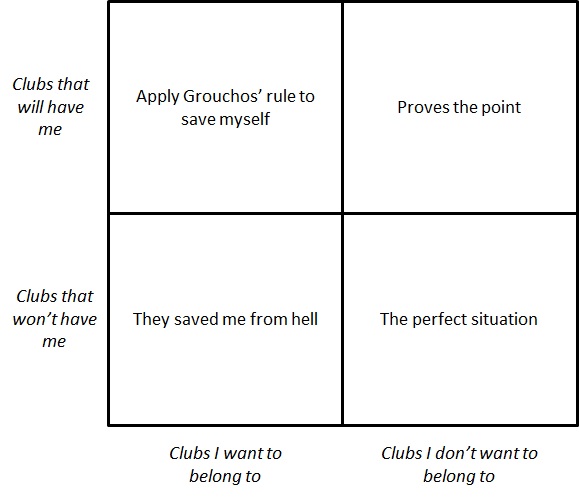
In general people that are left brained are also linear thinkers and people that are right brained are more likely to be abstract thinkers.

Hence one can understand the assumption that these pairs of descriptions are describing the same items; it’s a case of the correlation being so good that it isn’t even noticed.

And yet I know a few examples (scatter points in the wrong quadrants of the plot if you will) that defy the correlation.

So here is my current most likely hypothesis on the matter:

Abstract thinking is also divergent thinking and linear thinking is convergent thinking. The former attempts to open up a line of thought to consider many options, whereas the latter closes things down and minimises the set of considerations.

Pros and cons in both – the former may not miss opportunities but takes much longer to arrive at a conclusion; time can be a killer. And divergent thinkers can also drive convergent thinkers mad because they have too many options to pick for communications; often resulting in a null set.

In the case of, say, a divergent (abstract) thinker there is nothing to prevent each step in the ‘expanding set’ of considerations to be dealt with in a left-brained manner, i.e relying with confidence on the skills of logic, language and analytical thinking. It is unusual but it does occur – my mother is one who has this condition.

Similarly there are convergent thinkers that are quite artistic and have many of the other characteristics of right brain types, i.e. they are more confident with expressive or creative tasks. And yet they will automatically minimise any set of considerations in a proposition.

I suspect that the tendency to be either left or right brained, or to be a linear or abstract thinker is a matter of confidence. We must learn early on in life to lean a certain way and then begin to trust these characteristics.

I am sure the neural pathways that get used are the ones that become neural highways, so there is probably a case of heavy-use leading to imprinting. But we may also inherit certain characteristics as well.

Possibly the ‘scatter plot’ people – the people in the odd quadrants – have had conflicting and unusual early inheritance of both experience and genes. Unsuited parents let’s say. Or grandparents.

p.s. I did in no way ‘consider’ this problem. I first noted these quadrants in a blog yesterday and the question was posed to me, ‘why?’. Since then I have been dwelling on the problem almost entirely subconsciously. However I did formally put the information into my brain in two or three fits of consideration (as I do) and then I have let the brain-computer do its divergent thing, running thousands of scenarios to come up with the best ‘fit’. The ‘abstract’ description is apt because I don’t monitor the process consciously; to do so would be silly because it would slow down the process and stop me doing other things.

Untitled

mxx1's avatar

Abstract crunch two

Here’s an interesting observation; my mother is an abstract thinker and entirely left brained.

Yet I am also an abstract thinker but half right brained.

Which suggests that the abstract and linear dimensions might be uncorrelated to the left and right brain hemispheres.

Not as I would have expected in the absence of giving the subject any thought.

Untitled

mxx1's avatar

Abstract crunch

I was labelled quite recently as an abstract thinker.

Since then I have been thinking about this in what is possibly an abstract manner.

But is it?

It’s a simple proposition; what does ‘abstract thinker’ mean?

A linear thinker could answer this quite easily; “anyone who makes this proposition more complex than I would”.

This hypothesised abstract thinker started by considering this proposition in a twenty variable space and even started questioning the proposition.

Linearising the results of this effort for communications purposes is a process fraught by value-destroying simplifications.

But worth the effort.

And the result is [see above].

image

mxx1's avatar

Uber not

Uber is in principle a great idea…but

When I book a cab I usually get to see it (on the map on the app) drive all over the place while it tries to find my location.

This frustrates me like crazy since I know they have GPS systems supplied by Uber on their dedicated iPhones.

They must just be just useless at using them.

I think Uber needs to introduce sort of measure of the driver’s ability to use their GPS and build that into the reward structure.

image

mxx1's avatar

3-D Printed Houses

The dream of building houses with 3-D printers…it is like a slow moving train wreck within a dream.

The basic problem of building a house in the West is that the building materials now represent less than 20% of the finished cost – the rest is labour and layers and layers of services, many driven by regulations not related to making your house better or cheaper.

So the basic idea is this. If you could sit a big 3-D printer on a block of land and print a house in a day the cost of labour and services to build your house would shrink because these are, to a large degree, proportional to the time it takes to complete the house.

Even if the materials for 3-D printing a house cost more you may still save money.

But there is one little problem for 3-D printing a house…and it’s called gravity. Most of the ‘structure’ in house elements are designed to provide strength in the vertical direction (against gravity) whilst minimising the volume and cost of building materials used.

So most of the so-called 3-D house printers actually aren’t – they are printers for ‘house components’. The components are printed on their side in factory and then used to build a house later on, where they are deployed at a 90 degree angle to that which they were printed.

If one prints a house in-situu, to achieve any sort of reasonable cost, you would need one of these three scenarios:

1. An instantly setting material so you can create void spaces to save material costs where you don’t need material. This is really what is needed and a very tough technical challenge.

2. A ‘dual’ printer which prints a supporting filler to support the strength member material while it sets or dries. This support material may double up as an insulator; this only works for walls but not for span members. For span members the filler would need to be removed afterwards.


3. A solid wall where the material is somehow super-cheap and light; light enough and strong enough to create spans. This is the hardest. And again for span members it would have be supported by a filler.
This is what you call a ‘patent spoiler’.

image

mxx1's avatar

Abstract thought

I learnt today that abstract thinkers tend to have a weakness, namely the possession of idiosyncratic obsessions.

I concur.

It takes serious self assessment to identify and isolate these buggers.

The application of sheer will power is required for this linearisation. And maybe also an obsession.

image

mxx1's avatar

Favour

My lovely niece is a 21 year old Gen X/Y mystery.

I have gone out of my way dozens of occasions to help her out, sometimes at great inconvenience and/or cost.

Yesterday I asked her for my first favour (to baby-sit my daughter so that I can attend a party).

It didn’t suit and the answer was ‘no’.

Mmmmm. My problem is that my usual MO is to say nothing and give people say three strikes; she is one down.

But this is family. I might have to say something in a quiet moment.

God knows how the Gen X/Y will interpret my words…”the lips are moving but I don’t understand. I think it’s some sort of foreign language”

Which in pigeon text will look like…”d lips R moving bt I don’t undRstNd. I tink it’s som sort of 4n lngwij”

IMG-20110925-01595

mxx1's avatar

Air thought

It’s odd that I can fly from Melbourne to Sydney for $100 and yet the cab ride from the city to the airport cost me $60.

Something isn’t quite right there.

Our cabs are about 3x more expensive than they should because of government taxes and regulations as well as some self-serving cartel like behaviour within the industry.

If the taxi ride to the airport was the $20 is should be this means that air travel is 6.2x cheaper than taxi travel on a per km basis.

Which seem about right given that a plane is just a really efficient bus in the air.

image

mxx1's avatar

Smashmob

I am having a very late breakfast in a warm East Melbourne cafe.

Outside its dark and I could touch the clouds. Getting here, they were touching me with their tears, obliquely from Port Phillip Bay.

Smashmob are reverbing on the Tannoy. Low, over and over. And over.

Double mac, poached eggs, smashed beans and toast. Coffees up and the toast is brown.

Sooner or later I am going to have to stop cancelling meetings.

image

mxx1's avatar

Sucking it up

Who would knowingly share their negative feelings with someone they know will tell them to ‘suck it up’?

A martyr, a fool, or a masochist. That’s who.

All human interactions belong to at least two people. They are cannot be measured on an individual.

I believe.

When someone says ‘suck it up’ nine times out of ten they are really saying ‘I don’t care how you feel because nobody cared about how I felt when I was a kid’.

The problem is that we all end up getting what we give. It’s regression to the mean.

image

mxx1's avatar

Bunnings

I have just returned from Bunnings.

Unlike the rest of the poor souls down there I took my pushie.

A nice slow ride through the back streets. I stopped for a macchiato at the Italian gelateri. I locked my bike right at the front door at Bunnings.

They, the drivers, were log jammed on the Sydney roads as usual. And the car park was full. They all looked very stressed.

Cars…I don’t like. A nice idea at the time. It saved on straw. But really?

image

mxx1's avatar

Tax

I have been pondering tax.

In the ideal world where every transaction is recorded and traceable (i.e. there is no cash) taxation could revert to a very simple scheme.

Firstly, personal expenditure would be taxed on a ‘sliding scale’. The more you spend the higher the (GST) tax rate.

This essentially works towards levelling consumption and opportunity.

Secondly, the cumulative value of assets under control would also impact your tax rate for expenditure.

The more your assets are worth the higher your effective GST.

This works towards levelling stress and opportunity.

And that’s it. No other taxes or levies of any kind in the country. Just personal expenditure tax.

Business isn’t taxed at all and they get to reinvest more in growth. Scamming personal expenses through a business is punishable by death or automatic bankruptcy.

Electronic transfers of money in and out of the country are automatically taxed accordingly.

Taxation is done automatically on a per transaction basis. No one thinks about it. Stress free so long as the sliding scales are fair.

The expenditure tax can be automatically adjusted by government on a daily basis to match their own expenditure.

image

mxx1's avatar

Typos

In this blog I always attempt to write well.

However the first version is always a quick and dirty effort to get the ideas down

Because I am on a phone there are many typos from the Swype keyboard.

This is so frustrating that there are times I have almost defenestrated the phone.

Then there is another phase of review to fix typos and grammos. And I usually miss something anyway.

Then content is added and replaced to improve the structure

I do none of this for emails. Like so many other people my emails are essentially pigeon English.

Some young people only know how to write in pigeon English.

In time I am guessing that pigeon English will become the norm.

That’s not so bad – I reckon English was a lot more fun back before the enlightenment when people just wrote ‘anyway they felt like’.

image

mxx1's avatar

Bitcoin

Just when governments around the world were plotting the end of cash along comes bitcoin

For every action there is an opposite action of equal magnitude.

So there there goes the opportunity to do real-time incremental and automated taxation.

It’s a shame on one level but to be honest we can’t just trust the sort of people that make a habit out of influencing governments for their own benefit.

image

mxx1's avatar

Black list

My nephew, a house guest, made me watch the Blacklist mini series.

It’s not bad but it is full of extraordinary violence.

At least it’s extraordinary for me.

But probably not in America.

In the show anyone that attempts to resist arrest (say by doing a runner) is immediately shot at.

Even if the crime is jay walking!

The cops just seem so angry in America. Especially if you don’t respect their badge.

But then I have noticed that most Americans get very angry when their rights are violated or their entitlements are removed.

Just like 5 year olds.

image

mxx1's avatar

Woop woop

A couple of weeks back I was pulled over by the police on my bike.

Every day now, when I ride past that spot, I hear a ghost of the woop woop in my soul.

It’s just a little noise; enough to raise my heart beat a unit or two.

If I drove a Mercedes SUV I would probably sue for emotional damages.

image

mxx1's avatar

Time enough

I am lucky because I have

Time enough to contemplate

Which is quite a luxury

And quite unusual

And very different to time enough for thinking

And much closer to time enough for love

It’s not that lucky really

Because I wanted it

Engineered it

And got it

So there

image

mxx1's avatar

Stats and investors

Ok, this amazes me…I have just listened to a talk by an institutional investor in Australia [exact sector withheld].

Part A was all about what is wrong with the standard model for investment in their sector.

Part B was their hypothesis for an alternative approach that addresses some of the proposed issues.

Part C was them saying they are actually doing their Part B hypothesis. ‘Please give us money’.

In which case their chances of success are almost zero…by this logic.

The current model is loss making.

Their chances of having identified the problems correctly is probably 1 in 10.

Their chances of having identified a solution to the problems that works is also 1 in 10.

Their chances of executing the solution correctly is also 1 in 10 – it usually takes a few cycles of people trying for this to work.

So their chances of success are 1/10 x 1/10 x 1/10 = 1/1000

A rule of thumb is to only invest in business models that have been proven to work and also proven to be profitable. Ideally you should also invest in teams that themselves have been profitable.

Shame on those who knowingly add unnecessary risk to their investment decisions.

image

mxx1's avatar

Selfies

The problem with selfies, taken with apps that know who you (e.g. snapchat, instagram, etc), is this:

We are providing the big web companies with a perfect ‘learning set’ for facial recognition, aka biometrics, of individuals.

Privacy laws side, once they crack this they will know where we are and what we are doing at all times. Any camera will do.

Expect them to start selling this capability in the first instance with a positive spin. For example, they will sell your biometrics to the credit card companies so that facial recognition accompanies every online purchase. Or something like that.

Once in place though, you won’t own your own biometric data; Google and Facebook will. That is, they will own the data that you need to prove who you are.

And if you want to look at it very negatively, if they are subject to theft or a government mandate then you may not be able to enact any transaction for any purpose. Or someone else may be able to enact transactions on your behalf.

And unfortunately the parties that are creating this sort of power also have the means to influence governments and the media.

I can see this getting very messy and I am not usually negative on technology opportunities. This one worries me because competitive pressures force the parties that are trying to do this to out-compete each other in their creation and monetization of these capabilities. That is, if one doesn’t do it another will.

image

mxx1's avatar

Faintly odd

I have fainted four times in my life.

In a student bar in Göttingen.

In a drug den in the Hunter Valley.

In a nightclub in Valencia.

And last night at midnight at the pub in Surry Hills.

I did the pumpkin bolt and thus avoided saying goodnight 100 times over.

Similarities between these events were;

1. No eating for a day
2. Lots of drugs or alcohol
3. Lots of smoking

At one level it’s my brain saying to me “if you ain’t going to stop I’m going to do it for you”.

But then there is also a layer of built up emotional tension being released.

It’s like hitting the ctrl+alt+del keys a few times. Refresh the super ego.

image

mxx1's avatar

Business ethics

In business the whole point of ethics is that they set a higher bar than the legal minimum.

However due to competitive pressures the gap is narrowing.

Only in the practise of law does the concept of ethics get formally reduced to a legal definition. That is, the ethical bar is the same height as the legal bar.

When the rule of law equals the ethical requirements then there are no ethics!

It’s hard to define ethical behaviour (any noun that is variably both singular and plural has to be a tricky one).

But it’s much easy to define what it’s not!

image

mxx1's avatar

Joy

I have just been Telstra’d.

A euphemism for being fucked over by our former national telephony carrier and their obscure (to them and us) customer management systems.

They need to start from scratch rather than continue to upgrade their systems (that probably have vestiges of filing cabinets therein).

The only upside to the experience is that the operator that I chatted to was pleasant and very knowledgeable about footy.

He has temporarily patched the issue.

But I know as surely as the sun will rise tomorrow that this issue will repeat on me.

I know this because one question asked was “are you still using your BlackBerry?” in reference to my sixth last phone.

I suggested to him that this was a non sequitur to rival all others.

We both laughed.

image

mxx1's avatar

Market failure

I was chatting with a right wing think tank member… a thunker… and I suddenly realised their mantra.

It is couched under the terms of free markets but basically they believe that government macro policy should only be introduced that addresses ‘market failure’.

As an aside micro policy is all about putting more money into their pockets and this is ok.

Back to market failure.

We were discussing the so called Patent Box system which in a few countries give companies an extra tax discount for products protected by patents.

The thunker said there is no market failure in the patent system or related corporate investment in innovation and that the patent box is therefore unnecessary.

I countered that the same could have been argued before the patent system itself was introduced. It’s not about correcting market failures but about creating market success.

The thunker was very confused. And remains so.

image

mxx1's avatar

Old school

Some currencies depreciate very slowly…

A few weeks back I was, for the first time, fined for going through a red light on my bicycle.

Due to the increase in cyclists and an increase in shock jocks talking about cyclists, our state government is starting to enforce laws that it never has before.

Ever since that first fine I have been thoroughly furtive about riding through red lights.

So you can imagine my surprise this morning when, on the corner of Union and Edward streets, Pyrmont, I was woop-wooped by a parked and unmarked police car

WTF?

It was a young constable and an old crown sergeant. What he, the old bloke, was doing out on the beat is a mystery.

Maybe he was getting a morning’s worth of “real life experience” on the cycling blitz for his weekly meeting with the commissioner.

Anyway the old bloke opened with this pearler “do you think you own the place?”

For the non-Australians this means “do you think you can just do what you like?”

I replied; “sort of, I grew up there”, pointing to the former wharfies’ pub on the corner which is now a medical centre.

The old bloke paused and looked at me; “are you Noel’s son? “, referring to my dad who had been a crown sergeant himself before quitting the force to become a publican.

Nod affirmative.

” Well how is Noel? He was a great boss and a top bloke. [More details added for the young constable’s sake] ”

My reply followed with a short post-police force biopic.

“Give him my regard from [name withheld to protect the generous].”

Needless to say I got off without even a warning.

It’s good to see some things haven’t changed too much.

image

mxx1's avatar

Leadership styles

These are the 6 common forms of leadership promoted by HR consultants and other leeches:

The pacesetting leader leads from out front but doesn’t bother looking over its shoulder.

The authoritative leader hires minions and yells the mission at them.

The affiliative leader is that rare occurrence when the HR manager is accidentally promoted to boss.

The coaching leader is a self-serving individual who missed their real calling as a school teacher.

The coercive leader is a prick even at the worst of times.

The democratic leader hasn’t got a clue what he or she is doing, so asks the team instead.

NO, NO, NO … they have it all wrong.

The truly great leader is the LAZY leader. Too lazy to fail. Too lazy to care about screwing with people’s heads. Too lazy to be fucked up emotionally. Too lazy to be stupid.

Its not what they do but what motivates them that counts.

2009_12_25%2520282

mxx1's avatar

Blog central

When I started this blog I had no idea that it would help me stop worrying about a whole lot of stuff that isn’t worth worrying about.

Today I was approached by the Australian Council of Learned (sic) Academics for my input into some self-serving fantasy they are preparing for our tabloid right federal government.

Without a second thought or any remorse I said no and wished them well in their endeavours.

Bliss.

But what to care about?

Actually I am thinking of writing a crime novel.

I watched the Jack Irish TV series and loved it but then was appalled by the poor quality of the original books.

In fact Australia has never produced a single great crime novel.

The closest we got was ‘The Empty Beach’ by Peter Corris. But it was a case of a false dawn as the author descended into trite facsimiles of Chandler thereafter.

We have had no Dashiell Hammett, Raymond Chandler, Damon Runyon or even a John le Carre. The last two stretch the category a little I know.

Great, great authors all. Yet they don’t win major awards because of the genre. Le Carre for example has to be one of the living greats; much better than a handful of laureates that I can think of.

Even this I can’t get worked up about.

image

mxx1's avatar

Sports III

And here is the ones that I played just for fling or two.

abseiling
air hockey
archery
beach soccer
beach volleyball
billiards
bocci
canoe polo
canyoning
catamarans
caving
climbing
coits
croquet
croquet
cross-country skiing
dinghys
discus
fencing
french cricket
gridiron
hackysack
hunting
indoor cricket
javelin
karting
Kegelbahn
netball
orienteering
paintball
paragliding
petanque
racquetball
roller hockey
rugby league
scooter bulldog
shooting
shotput
skateboard
skeeler
snooker
softball
surfing
table football
volleyball
water polo
water skiing
white water canoeing
white water rafting
windsurfer

Exif_JPEG_PICTURE

mxx1's avatar

Sports II

Here is a list of sports I have played seriously but not for too long. Say a season or two.

badminton
baseball
basketball
beach cricket
beach cricket
british bulldog
centerboard skiffs – holland
cocky laura
cross country
darts
downhill mountain bike
fishing
frisbee
futsal
hash house harriers
ice skating
indoor climbing
judo
juggling
marbles
mini-golf
rugby union
running – sprints
swimming
ten pen bowling

2013-03-01 18.23.57

mxx1's avatar

Sports I

Some of these posts are more of a place to dump random information that I might otherwise misplace and I will probably never need again. Go figure.

Lola asked and I compiled a list of sports I have played. Here is a list of the ones I have played seriously.

bodyboard
bodysurfing
bushwalking
canoeing
cricket
cycling
diving
golf
gym
handball – squares
handball – wall
indoor soccer
lawn bowls
lockie pool
pool
roller blading
roller skating
rowing
running – long distance road
running – long distance track
running – middle distance
skiing
soccer
squash
table tennis
tennis
touch footy
ultimate
waveski
yachting

DSC_0329