
Mercantilism and Asylum Seekers
This is an attempt to explain the prevailing view towards ‘illegal boat immigrants’ in Australia.
There is a small number of extremely outraged people that believe we should treat asylum seekers with the utmost humanity and offer them a place to live and thrive in this vast land of ours.
The psychology of this minority is a combination of (a) placing empathy above all other concerns, and (b) a lifelong habit of being outraged by the masses, and (c) membership of a social milieu, a club if you will, for which the entry price is (a) and (b).
There is another minority of people that are scared, confused and emotionally retarded (usually from horrendous parenting). They deal with this by hating anything out of the norm, especially people that are different to them and that dare to impinge on their implied sinecures. Some call these people racists.
Generally speaking, these two minorities cancel each other out in terms of influence over the social and political processes. It’s the silent majority that is most interesting since their collective mood determines which way things swing.
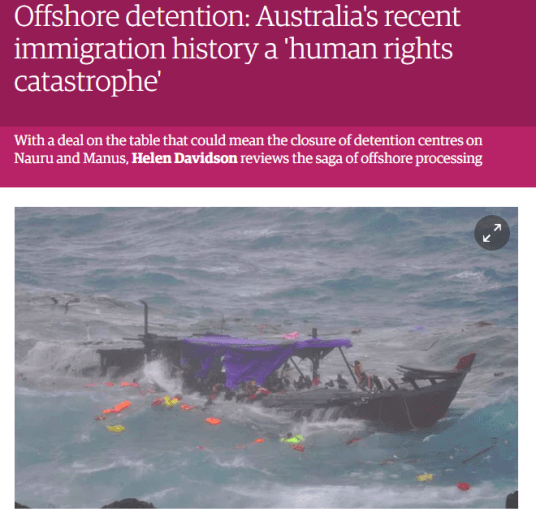
In the case of asylum seekers, the silent majority quietly and somewhat ashamedly approves of the current approach of mid-ocean interception followed by incarceration in offshore detention centers. This despite the subsequent dissonance resulting from the lack of humanity inherent in the government’s approach.
However, the truth is blindingly simple; self-interest trumps humanity.
What people do not want is an open invitation for all the asylum seekers in the Middle East and Asia to enter Australia. They fear (a) change, (b) social unrest, and, most of all, (c) a dilution of their personal wealth and future opportunities.
Oddly enough, Australia’s history would show that immigration, no matter what the source, increases overall economic opportunities and outcomes on a post-migration per capita basis.
However, the average person simply cannot comprehend that this would be the case. Which is confounding when you think about it; but let me explain why.
We in the West have had around three hundred years of Schumpeterian growth since the beginning of the industrial revolution. Effectively unlimited energy and resources, mixed with new ideas have created endlessly innovative products and services that have been used by us all to buy ‘free’ time that has been divided between ever-increasing production and consumption.
And yet the majority of people are still stuck in the pre-industrial Mercantile view of the world, where land is the source of all economic power. In this view the only way to grow value faster than your land holdings permit is to trade on advantageous terms. Mercantilist thinking is a fundamentally zero-sum way of viewing the world – you take and somehow else loses. And you certainly don’t give away land!
In Australia this mercantile view of the world is fairly easy to see through the intense focus on real estate. Letting strangers into the country would only put upwards pressure on the cost of housing, limiting one’s own opportunities.
The mystery that I have been pondering is how we manage to maintain economic growth in a Schumpeterian society when most people seem to think in a Mercantilist fashion.
And I do believe that the answer is obvious. The majority of people accept the opportunities afforded by Schumpeterian growth but they believe that they must preserve any such gains in a Mercantilist fashion, like a squirrel hoarding nuts for winter.
Which is to say, people can’t believe their good luck, or more precisely, can’t believe that their good luck will prevail. Millions of years of evolution has bred into us a fear of future deprivation that cannot be undone by three hundred years of partying.
I would therefore conclude that there probably isn’t an as-yet attempted approach to convincing Australians to treat asylum seekers with more regard. I could have suggested that we explain to them that there will be more nuts for winter if we let the asylum seekers in, but I can’t see your average Australian buying this argument.
The only persuasion that might work is settling them somewhere isolated and not letting them compete for real estate or anything else. Like Manus Island for example.
 offshore westerly