
Ferdinand & Adolf
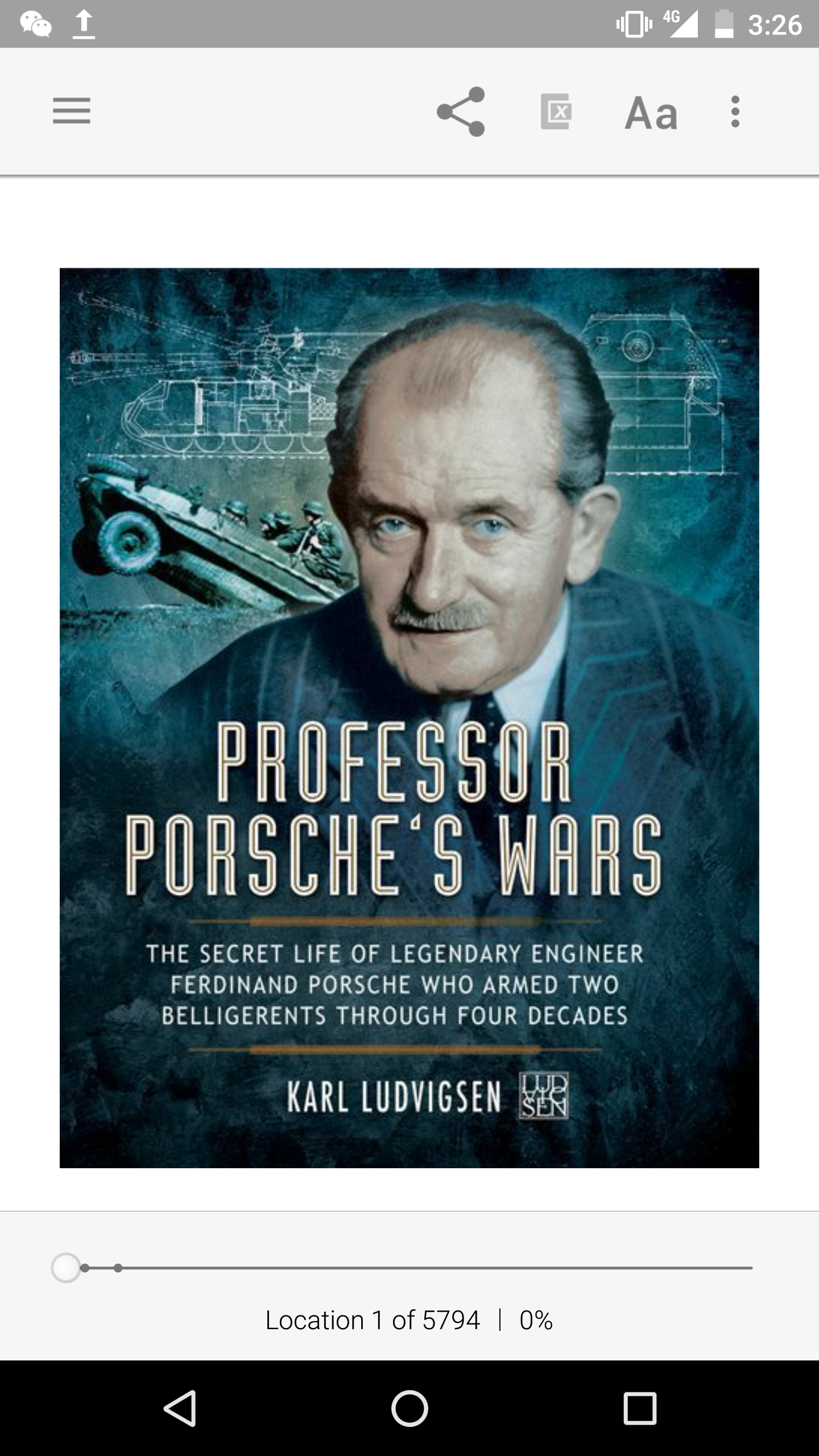
Prompted by a dodgy documentary on German WW2 tanks, viewed through total boredom on a flight, I have just finished a book on Ferdinand Porsche.
Written by a Porsche-apologist German engineer and suffering from a machine translation, it should have been hard going. But I sort of liked it.
Porsche’s wife was mentioned once by her name and yet whole pages were devoted to the arrangements of cylinder valves on a specific X-configured experimental aero engine.
Before WW1 Porsche invented the combustion-electric hybrid engine transmission system. It didn’t go into any sort of production until after his death, when his son managed to get it into German tanks after WW2. It didn’t make it’s way into a production car until the late 90’s in the Prius, almost a century after Porsche first dreamt it up.
Porsche was both a businessman and an engineer. During WW1 many of his creations made their way into action. Cars, armoured vehicles, gun transport systems, airplane engines, etc.
Between the wars his major claim to fame was the development of the Volkswagen Beetle and related company.
He also developed the first diesel boxer engine which wasn’t put into production. I mention this because it means those buggers at Subaru were lying a decade back when they released the ‘world’s first diesel boxer engine.’
Porsche was very busy as Hitler’s pet engineer in WW2 but his only significant engineering success was the military version of the Beetle, which became the German ‘Jeep’.
He totally screwed up in tank development, being far too ambitious with innovation.
In fact the German tank development program prior to and during WW2 was over-focused on large tank size and continual innovation rather than tank numbers and reduced maintenance issues.
As a result the Russians ended up overwhelming the Germans tanks on the Eastern front just with the sheer numbers of their own much simpler tanks.
This thanks to the fact that Hitler was a techie at heart. He just loved new tech way more than practical tech.
Hitler had decreed that post-war all motor engines in Europe (and elsewhere in the German empire) would be air cooled.
Air cooled engines as found in the Beetle were his signature pet love. This crusade was his entry ticket into the tech community of the day.
What I found most fascinating about the book was that it gave an entirely new insight into Germany both before and during the last world war.
Written in the context of business and high-tech engineering rather than people, policy, politics and war strategy, I suspect now have a more balanced view of the era.
Primarily because I can properly calibrate business and engineering activities because that’s what I do.
One pertinent moral to the story would be this; never let a wannabe tech-head run your country. They take way too much of their advice from self-interested and self-absorbed tech entrepreneurs, scientists and engineers.
 offshore westerly