
Radium Weed
Having spent way too much time in the surf when I was younger, from the age of thirty or so I found myself managing skin cancers. Nothing drastic mind, just the odd actinic keratosis on the face.
In the past this affliction precipitated an annual trip to the skin quack where I was assaulted with a liquid nitrogen blow torch. Think of a creme brûlée (my head) and the pâtissier with his little handheld carameliser (the liquid nitrogen applicator).
This process invariably left me looking like an accident victim for a week or so and then the skin cancers would go away for a while. When they returned it was back to the quack’s. One can think of this as expensive ongoing management of a condition, as opposed to a cure. Nice for the medical practitioners, not so good for me.
The most annoying part of the whole process was the five minute duration of the appointment. First, a cursory glance by the quack and then bang, I was out of there; a few hundred dollars lighter and looking like I had a pox. The hastiness of the treatment did not provide any sense of assurance that due care and diligence had taken place.
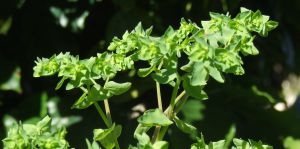
A couple of years back I came across a paper on the use of radium weed, euphorbia peplus, to treat keratosis. To cut a long story short, this is a traditional folk remedy for skin cancers which has more efficacy than any other current treatment method, including liquid nitrogen or other chemical approaches.
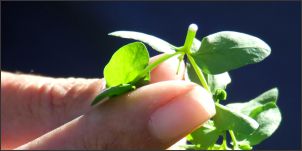
The active ingredient in radium weed is ingenol mebutate and it kills cancerous skin cells very effectively. It probably kills all skin cells, so the trick is to just apply it to the keratoses. The weed has these tiny little stalks which contain a milky latex. When snapped off these are the perfect applicator – a tiny little drop forms on the end which can be carefully transferred directly to a keratosis.
Of course the pharma industry has decided to create a synthetic version of ingenol mebutate which is mixed in a gel at exactly the same concentration as in the plant, placed in a tube labelled Picato and sold for $150 a pop. I guess the synthetic version allows for patenting whereas natural plant materials cannot be readily patented.
The recently released Picato is now considered to be the most effective treatment for keratoses.
Since radium weed is almost ubiquitous in Sydney it is easier and very much cheaper to wander out to your backyard and pick a stem or two off the weed. Apply by touching the milky drop to the afflicted areas. Allow for a week of healing in general. I have found it is much more effective than liquid nitrogen since the keratoses seem to take longer to return.
 offshore westerly