
Solar puzzle
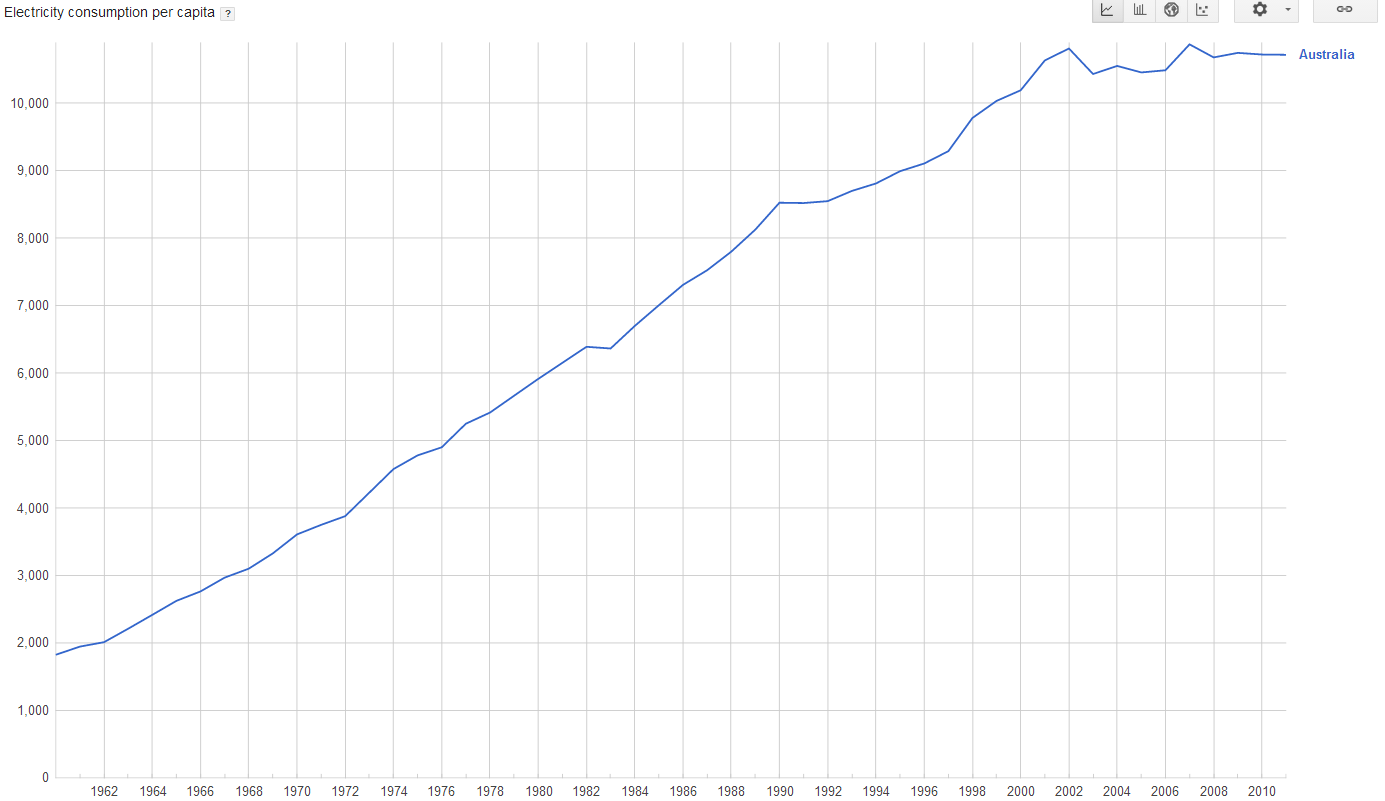
Interesting plot below. It’s Australia’s electricity consumption (per capita).
Notice the drop off in the last couple of years? Well this is accompanied by a flattening of total electricity demand and is due to the economic recession and the increased use of energy efficient technologies – things like LED light bulbs and many, many business initiatives that have been driven by cost saving incentives.
So in an environment where we have an effective drop off for demand in electricity we have also installed about 3 GW of solar panels, most of that in the last 3-4 years and exactly when demand has dropped off.
Much of the existing capacity is old power plants (e.g. coal burning) which has been fully depreciated and are therefore generating power at very low costs. New solar installations generate power at a cost of at least 2-3 times that of old coal burning stations despite the recent drop in solar costs.
So on one hand we are installing solar panels we simply don’t need from a demand point of view. But on the other hand solar panels offer far less carbon emissions.
Even weirder still, for some consumers, previously with subsidies and now substantially without, there is still an economic argument for installing solar panels.
This has a lot to do with peak pricing where the supply and demand is more favourable to self-consumption but also due to the fact that the power generators and distributors don’t mind doing a bit of cartel-style gouging.
The whole thing is pretty messed up and it doesn’t look like a favourable sector for financial investment to be honest.
If the current government really gets rid of the carbon tax and any residual direct incentives for solar, then they should, via a direct action, simply buy and ‘nuke’ a handful of the older and more polluting coal burning power stations.
This would create a ‘real’ market for new energy demand and on an ‘apples and apples’ basis solar and wind are actually cheaper, so they would win out. And we might get more gas burning distributed base-load generators at the same time.
And the wealth-creating economic benefit from a peak in infrastructure investment cannot be underestimated.
 offshore westerly