
Classic Editor
Noting that all of mankind’s digital computing and memory capacity could only emulate ca. 50 error free fully entangled logical qubits, what does this mean?
“Emulate” here means getting a digital computer to simulate what a quantum computer is theoretically capable of.
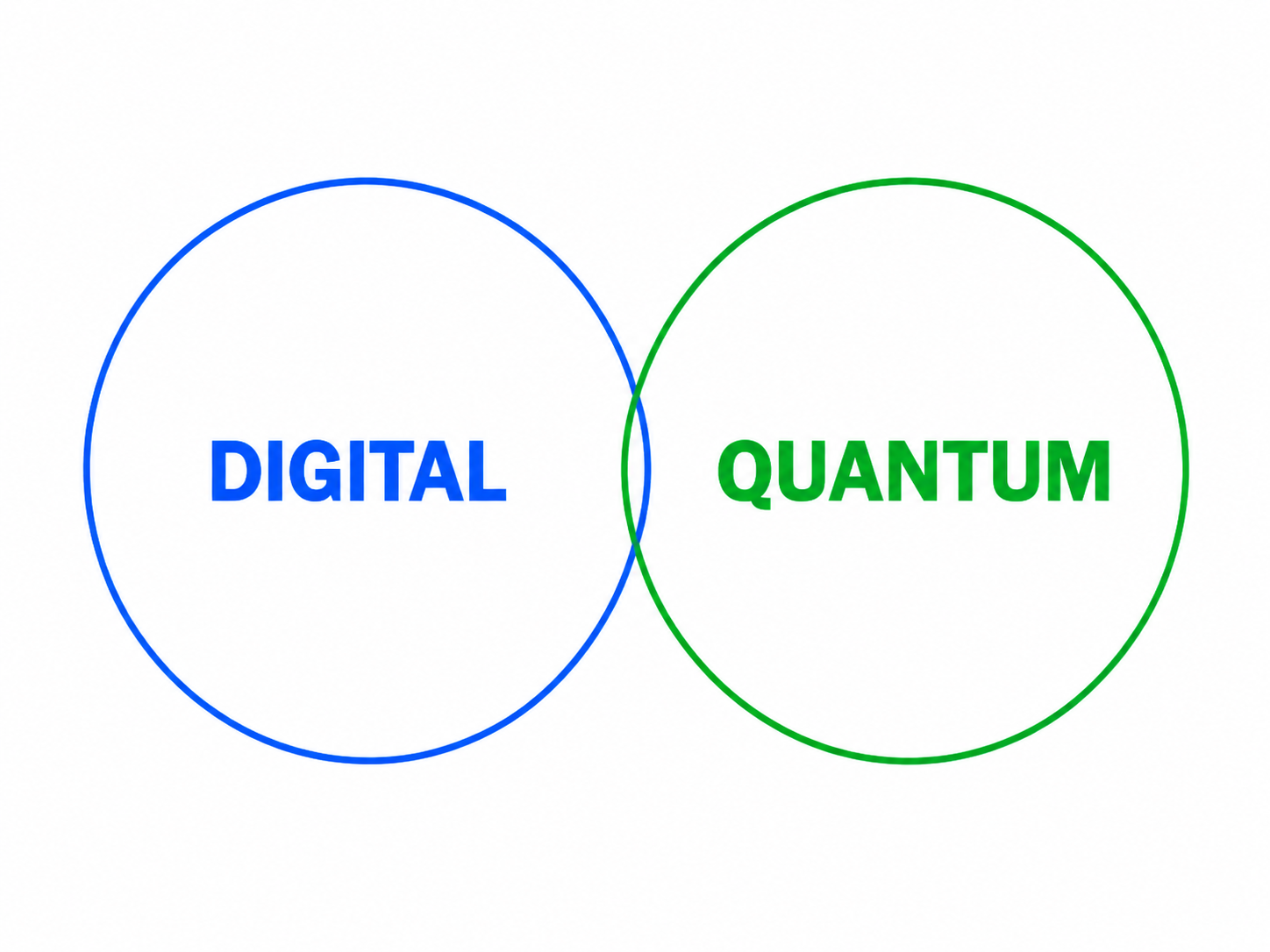
Because a quantum computer is built on a totally different set of operating principles, there is very little overlap on a Venn diagram which shows the problems that can be efficiently solved with a digital computer and a quantum computer.
They are so different to each other that they can’t even usefully simulate each other.
Which is another way of saying that the use cases for quantum computers are not those that are currently being tackled by digital computers, but only bigger or faster.
And this confuses people because they both end in the noun “computer”, but that is misleading.
A quantum computer resolves interactions between wavefunctions (amplitude and phase mostly), and it doesn’t add numbers like a digital computer.
Now for us, most information we receive arrives as waves. What we don’t know is how we process that information to turn it into actionable thingamajigs.
And yet digitizing information to digitally pre-process it before consumption has been super, super useful to date. I suspect we are facing some paradox if we try to pre-process it in the wave form in quantum computers. Possibly because we are manipulating the physical carrier of information we are introducing noise that scales with effort.
Shannon’s theorem suggests reliable processing needs error correcting redundancy below channel capacity, and continuous wavefunction processing has no such redundancy to draw on, so noise accumulates uncorrected. Although it is intended for the information channel itself, this concept may extend to meta-information.
In the end, it all comes down to how we process information.
 offshore westerly